Themes

Work and the economy

Unemployment, business, wages and the destruction of the trade unions.

37 days

  1. Day 10 Wednesday 8 February 1933

    Hitler tells the cabinet rearmament comes first: “everything for the armed forces”

    In cabinet Hitler declared that rearmament must come first in every public works decision for the coming years, and advised ministers to say nothing specific about economic policy before the election. A decree sharply raised the duties on imported livestock, meat and lard. In Staßfurt thousands of workers downed tools to bury their murdered mayor. Berlin’s six-day cycle race was postponed because of the election, and the motoring clubs cancelled their rally to the motor show.
  2. Day 11 Thursday 9 February 1933

    Hitler wants the job-creation programme to serve as cover for rearmament

    In the cabinet’s work-creation committee Hitler declared that Germany’s future depended solely on rebuilding the armed forces and that public works money should help to disguise rearmament; the committee gave the army the largest single share. Württemberg protested at party rallies being broadcast as government programmes. On Berlin’s radio a spokesman for the German cities argued that the unemployed should be left wholly to the municipalities, and new flu cases began to fall.

  3. Day 12 Friday 10 February 1933

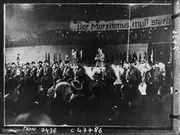
    Hitler’s Sportpalast speech goes out on every German radio station

    Hitler opened the NSDAP’s election campaign in the Berlin Sportpalast, and every German station carried the speech, introduced by Goebbels, as a government broadcast. Tens of thousands attended the funeral of three murdered Communist workers at Friedrichsfelde, though the police banned the procession. Thomas Mann gave his last lecture in Munich, the former Prussian culture minister Carl Heinrich Becker died in Berlin, and a gasholder exploded in Neunkirchen in the Saar, killing dozens.

  4. Day 13 Saturday 11 February 1933

    Hitler opens the Berlin motor show, promising tax relief and a road-building plan

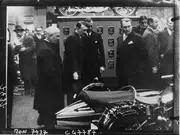
    Walking past ranks of SA men, Hitler opened the International Automobile and Motorcycle Exhibition at the Kaiserdamm, the first Chancellor, the industry noted, ever to do so, and promised motorists lower taxes, a great road-building plan and support for motor sport. That evening the radio carried Hugenberg’s speech to the new German Nationalist and Stahlhelm alliance in the Sportpalast. In a Berlin dairy shop, a milkman told a customer that half the street was living on potatoes.

  5. Day 15 Monday 13 February 1933

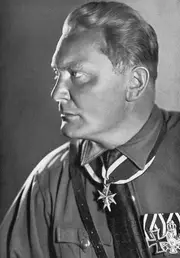
    Göring widens the purge of Prussia’s republican police chiefs

    Göring, as Reich Commissioner for the Prussian Ministry of the Interior, sent more officials loyal to the Republic on forced leave, among them the police presidents of Dortmund, Oberhausen, Stettin, Frankfurt and Breslau. The Stahlhelm told its members the coming election was a plebiscite on the “national government”. Away from politics, Bayreuth marked the fiftieth anniversary of Richard Wagner’s death and Berlin radio filled the evening with his operas.

  6. Day 16 Tuesday 14 February 1933

    Nazi deputies break up a Reichstag committee as farm foreclosures are halted

    The cabinet approved, and Hindenburg signed, a decree stopping forced auctions of farms until the end of October. In the Reichstag, Nazi members drove the chairman of the committee that guarded parliament’s rights from his seat and Julius Streicher struck a People’s Party deputy; that evening the political police searched Communist rooms in the building. Neunkirchen in the Saar buried the victims of the gas-holder explosion, Göring opened a show of modern Italian painting and the geneticist Carl Correns died in Dahlem.

  7. Day 20 Saturday 18 February 1933

    Kurt Weill’s Der Silbersee opens in three cities as the Centre’s Germania is banned

    Hindenburg signed a decree softening the 1932 cuts to war-disability and insurance pensions, and the government published steep new duties on farm produce, fish and timber. Berlin’s police president banned Germania, the leading Centre Party daily, for three issues. In Leipzig, Magdeburg and Erfurt, Kurt Weill and Georg Kaiser’s play with music Der Silbersee had its premiere, the German ice hockey team opened the World Championship in Prague with a 6–0 win, and Prussia warned against eating undercooked duck eggs.

  8. Day 22 Monday 20 February 1933

    Hitler and Göring ask leading industrialists to pay for the election

    At Göring’s official residence opposite the Reichstag, Hitler told about two dozen leading industrialists and bankers that private enterprise could not survive in a democracy; Göring added that the coming election would surely be the last for ten years, perhaps a hundred, and Hjalmar Schacht proposed a three-million-mark election fund. The same day the Prussian press service released Göring’s “shooting decree”. Göring also banned the sale of spirits on polling days, and the perjury trial of a former Berlin transport director in the Sklarek scandal opened to packed public benches.

  9. Day 23 Tuesday 21 February 1933

    Rust suspends the head of the Karl-Marx-Schule; Frick bans Communist marches in Saxony

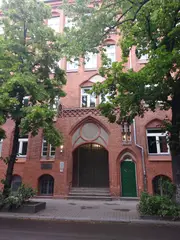
    Rust ordered the reorganisation of the Karl-Marx-Schule in Neukölln, one of the Weimar Republic’s leading reform schools, sent its head Fritz Karsen on leave and suspended three senior Berlin school officials. Frick used the decree of 4 February to ban Communist open-air meetings and marches in Saxony, and the trade union federation protested to Hindenburg against Göring’s police decree. In Berlin, thermometers on the city’s edge fell to 18 degrees below zero overnight, and the creditors of the theatre impresarios Rotter learned they would get nothing.

  10. Day 24 Wednesday 22 February 1933

    Göring makes the SA, SS and Stahlhelm an auxiliary police in Prussia

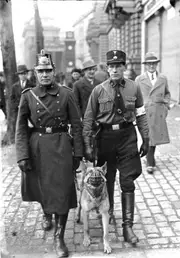
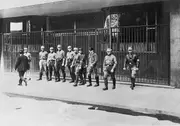
    Göring signed a decree allowing the Prussian police to call up “auxiliary police” from the ranks of “nationally minded” Germans: in practice men of the SA, SS and Stahlhelm, wearing a white armband over their own uniforms and holding full police powers while on duty. The Prussian commissioners pensioned off another wave of senior officials and began closing the secular schools, and Hitler told his followers that the enemy to be beaten on 5 March was “Marxism”. In Berlin the first film directed by Friedrich Hollaender, Ich und die Kaiserin, opened at the Gloria-Palast.

  11. Day 25 Thursday 23 February 1933

    Police search the Communist headquarters and break up the KPD’s Sportpalast rally

    In the afternoon the political police occupied and searched the Karl-Liebknecht-Haus, the Communist Party’s headquarters; in the evening a police officer dissolved the KPD’s rally in the Sportpalast while Wilhelm Pieck was speaking. Overnight men in Nazi uniform had shot a Reichsbanner leader in Großbeeren and burned down the poorhouse where he lived. Göring ordered tougher action against the opposition press. In Berlin the motor show closed after more than 400,000 visits, and Prussia relaxed its rules on men’s bathing trunks.

  12. Day 27 Saturday 25 February 1933

    Police claim to find tunnels and treasonable leaflets under the Karl-Liebknecht-Haus

    Diels’s political police announced that the closed Communist headquarters had yielded secret cellars, a tunnel and hundredweights of leaflets calling for armed revolt. The Reichsgericht lifted or shortened a series of newspaper bans, Adenauer settled his protest over Göring’s police decrees in a meeting with Göring, and Rust ordered that the secular schools take no new pupils. Berlin learned from a League of Nations report how much weight its unemployed had lost, and the Sklarek perjury trial ended with a year’s prison for the former transport director Fritz Brolat.

  13. Day 32 Thursday 2 March 1933

    Cabinet picks Potsdam’s Garrison Church for the opening of the new Reichstag

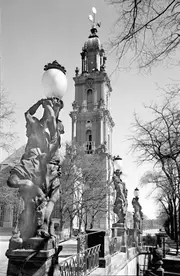
    With the Reichstag a burnt shell, the cabinet agreed that the new parliament should be opened in the Garrison Church at Potsdam, the germ of the ‘Day of Potsdam’. Göring told ministers of an alleged Communist plan of attack and complained of foreign papers accusing him of the fire; Hitler said the outcry would have died if the arsonist had been hanged at once. To win votes, the cabinet agreed to hand out cheap bread and butter to the unemployed in distressed areas. That evening Hitler spoke in the Sportpalast before members of the diplomatic corps, while in Bremen a Reichsbanner man died after a night of shooting.

  14. Day 37 Tuesday 7 March 1933

    Hitler tells the cabinet the election was a ‘revolution’ and calls for an Enabling Act

    Two days after the election Hitler told his ministers that 5 March had been a revolution, that Marxism would disappear and that an Enabling Act with a two-thirds majority was needed; he and Frick demanded that van der Lubbe be hanged, retroactively if need be. At Hindenburg’s residence the Reichstag’s opening in Potsdam’s Garrison Church was planned in detail. In Dresden, Nazi supporters whistled the conductor Fritz Busch off the podium of the State Opera. Abroad, Dollfuss began governing Austria without parliament, and the Netherlands reinforced its border against German refugees.

  15. Day 38 Wednesday 8 March 1933

    Reich takes the police in Baden, Württemberg and Saxony; Hamburg gets a Nazi mayor

    Frick took over police powers in Baden, Württemberg, Saxony and Schaumburg-Lippe and installed Nazi commissioners, leaving Bavaria as the only large state not yet under Reich control. Hamburg’s parliament elected a Senate led by the Nazi Carl Vincent Krogmann, SA men occupied the trade union house in Breslau after a shooting, and Social Democratic deputies complained in vain about the beating of prisoners. The Reich Institute reported six million unemployed at the end of February. At the Cologne opera, Nazi hecklers disrupted Fidelio after the general music director stayed away for fear of Nazi demonstrations.

  16. Day 40 Friday 10 March 1933

    Munich SA parade a Jewish lawyer barefoot; Göring will not protect ‘Jewish stores’

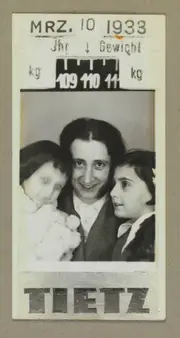
    In Munich SA auxiliary police beat the Jewish lawyer Michael Siegel, who had come to complain about a client’s arrest, and marched him barefoot through the streets with a placard round his neck. In Essen Göring declared that he would not let the police become ‘a protective force for Jewish department stores’, and SA men forced department stores to close in Mönchengladbach. Hitler told the SA and SS that the ‘national uprising’ was now to be directed from above and that harassment and disruption of business must stop. The trade unions appealed to Hindenburg. In Frankfurt, Edith Frank and her daughters had their picture taken in a department-store photo booth.

  17. Day 46 Thursday 16 March 1933

    Schacht returns to the Reichsbank; Bruno Walter’s Leipzig concert is banned

    Hans Luther resigned as president of the Reichsbank and its General Council unanimously elected Hjalmar Schacht in his place. In Leipzig the police, on the orders of Saxony’s Interior Ministry, forbade the conductor Bruno Walter’s Gewandhaus concert that evening. In Berlin Max Ophüls’s film Liebelei opened at the Atrium and the Titania-Palast, and Hitler promised the organisers of the 1936 Olympic Games his support.

  18. Day 47 Friday 17 March 1933

    Berlin’s state commissioner orders the dismissal of Jewish doctors from city hospitals

    Julius Lippert, the Nazi state commissioner for Berlin, ordered that the contracts of doctors denounced as ‘Jewish Communists and Social Democrats’ be terminated at the city’s hospitals. Hugenberg suspended Ernst Wagemann, head of the Statistical Reich Office, and the decrees creating the Propaganda Ministry and the double flag were published. That evening Kurt Gerron’s comedy Heut’ kommt’s drauf an, starring Hans Albers, had its premiere at the Gloria-Palast.

  19. Day 48 Saturday 18 March 1933

    Emergency decrees speed up treason trials and withdraw the four-pfennig coin

    Hindenburg signed two emergency decrees: one shortened procedure in treason cases, the other bundled financial, economic and legal measures, including a reform of the coinage that withdrew the four-pfennig piece. Goebbels opened the exhibition ‘Die Frau’ at the Kaiserdamm halls, Schacht spoke on the radio as the new Reichsbank president, and Frick banned the Soviet papers Izvestia and Pravda. Berlin and Potsdam were declared closed airspace for the day of the Reichstag’s opening.

  20. Day 54 Friday 24 March 1933

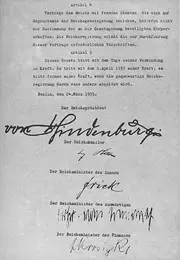
    Hindenburg signs the Enabling Act; it is published and takes effect the same day

    Hindenburg signed the ‘Law to Remedy the Distress of People and Reich’, countersigned by Hitler, Frick, Neurath and Schwerin von Krosigk; it was printed in the Reichsgesetzblatt that evening and came into force on promulgation. The Centralverein, the largest Jewish organisation, denied foreign atrocity reports while acknowledging ‘political excesses’ against Jews. Labour exchanges counted about 5.9 million unemployed, and a Berlin jury sentenced the banker Hintze to twelve years for killing the singer Gertrud Bindernagel.

  21. Day 57 Monday 27 March 1933

    New York rallies against Nazi antisemitism; Berlin gives the party a free hand

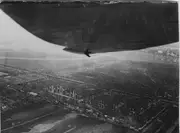
    In New York more than 20,000 people packed Madison Square Garden, with tens of thousands more in the streets outside, to protest against the persecution of Jews in Germany. In Berlin the government let it be known that it would not obstruct the Nazi party’s planned ‘defence’ against foreign ‘atrocity propaganda’, and named a boycott of Jewish shops as one of its means. Meanwhile Kruckenberg’s rebuilt rail Zeppelin glided into Berlin and shoppers were warned about dearer margarine.

  22. Day 58 Tuesday 28 March 1933

    Nazi party orders a nationwide boycott of Jewish businesses from 1 April

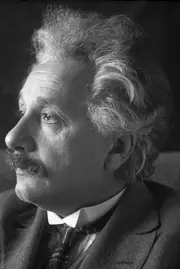
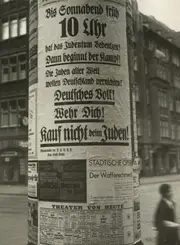
    From Munich the Nazi party leadership published its call for a boycott of Jewish shops, goods, doctors and lawyers, to begin ‘at a stroke’ on Saturday 1 April at 10:00 under a central committee led by Julius Streicher. The Catholic bishops withdrew their warnings against the Nazi movement, and Albert Einstein, landing in Belgium, broke with Prussia. In Berlin Goebbels told the film industry which films he admired.

  23. Day 61 Friday 31 March 1933

    First coordination law dissolves state parliaments; SA drives Jewish judges from courts

    The Reich government enacted the provisional law to ‘coordinate’ the states with the Reich, dissolving every state parliament except Prussia’s and refilling them by the Reichstag vote without new elections. In Berlin crowds and SA men forced Jewish judges and lawyers out of the courts, and that evening Kerrl ordered Jewish judges in Prussia to take leave. Goebbels announced that the boycott would start next morning. In the cinemas Lamprecht’s Spione am Werk opened, and Erich Pommer left Ufa.

  24. Day 63 Sunday 2 April 1933

    Boycott ‘suspended’ until Wednesday as the coordination law appears in the gazette

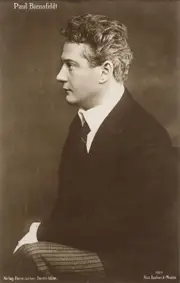
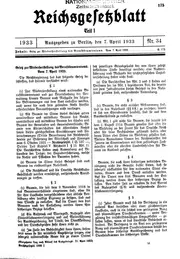
    From Munich Streicher’s committee announced that the boycott was suspended until Wednesday morning and told local committees to take down their posters. The coordination law appeared in the Reich Law Gazette, to take effect the next day, and the chairmen of 85 labour exchanges were suspended. Berlin mourned the actor Paul Biensfeldt, who had died overnight; Hertha BSC and BSV 92 drew 2–2 before 15,000 spectators, a tram rammed a Stahlhelm lorry in Neukölln, and an operetta ended in uproar at the Schiller-Theater.

  25. Day 68 Friday 7 April 1933

    Civil Service law purges Jews and opponents; Reich governors take over the states

    In a cabinet session lasting into the night, Hitler’s government adopted the law ‘for the Restoration of the Professional Civil Service’, which forced officials ‘not of Aryan descent’ into retirement and allowed political opponents to be dismissed, and a second coordination law placing Reich governors over the states. Berlin’s new Special Court gave its first sentence, a year in prison for a Jewish market trader. Unemployment was reported down by 337,000 in a fortnight, and Berlin radio chose a Nazi fighting song for its interval signal.

  26. Day 70 Sunday 9 April 1933

    Göring tells 20,000 Nazi factory-cell members it is a ‘National Socialist revolution’

    At the first general meeting of the Nazi factory cell organisation in Greater Berlin, Göring insisted that the upheaval be called a ‘National Socialist’, not merely a ‘national’, revolution; that afternoon he flew to Rome, his appointment as Prussian premier now said to be settled. The Reichstag deputy Sprenger was made Reich commissioner to ‘coordinate’ the civil servants’ associations. Hindenburg attended a Palm Sunday confirmation, and an aircraft crashed into spectators at a Nazi youth flying display in Staaken, killing two.

  27. Day 71 Monday 10 April 1933

    Hitler signs the law turning 1 May into a state ‘Holiday of National Labour’

    Hitler, Frick and Goebbels signed a law making 1 May, the labour movement’s own day, a public holiday under state control, while the official gazette published the law allowing Jewish lawyers to be struck off. Franz Ritter von Epp was appointed Reich governor of Bavaria, and in Rome Papen met Cardinal Pacelli and Mussolini as Göring flew in. On a rainy Monday in Berlin, radio listeners could hear Furtwängler conduct the Eroica, and the theatre director Viktor Barnowsky left the Komödienhaus.

  28. Day 74 Thursday 13 April 1933

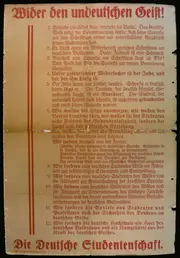
    Students post the twelve theses ‘against the un-German spirit’; first professors suspended

    From Maundy Thursday the German Student Union began posting its twelve theses ‘against the un-German spirit’, which declared the Jew the most dangerous enemy and demanded that Jewish writers publish only in Hebrew. Prussia suspended sixteen university teachers, among them Kelsen, Tillich, Horkheimer and Mannheim, and the main Jewish organisations founded a joint committee for help and reconstruction. In the House of Commons, Austen Chamberlain attacked the new regime, while restaurants learned they would have to post notices declaring whether they cooked with margarine.

  29. Day 80 Wednesday 19 April 1933

    Munich rally demands ‘Out with the Jews from the administration of justice’

    In Munich’s Circus Krone the justice ministers of Bavaria and Prussia, Hans Frank and Hanns Kerrl, spoke with Julius Streicher at a rally under the slogan ‘Out with the Jews from the administration of justice’, as Bavaria issued its rules for removing Jewish lawyers. Hindenburg received the Stahlhelm leader Seldte to hear about plans to ‘coordinate’ (gleichschalten, bring into line) the Stahlhelm with the SA. Abroad, Britain banned most Soviet imports after the Moscow engineers’ verdict and Roosevelt took the dollar off gold; at home the government threatened to act against the flood of ‘national kitsch’, from Horst Wessel pencils to swastika ice-cream parlours.

  30. Day 86 Tuesday 25 April 1933

    Cabinet passes the “overcrowding” law capping Jewish pupils and students

    Hitler’s cabinet sat until after ten at night and passed a law that limited admissions to secondary schools and universities and capped the share of “non-Aryan” pupils and students. Prussia’s culture minister suspended 25 more professors, and Hitler named the army chaplain Ludwig Müller his liaison to the Protestant churches. The labour exchanges reported unemployment down by 69,000 in the first half of April, and Berlin’s university rector explained why he had objected to two of the students’ anti-Jewish posters.

  31. Day 89 Friday 28 April 1933

    SA and SS given their own disciplinary law; Wolfgang Köhler’s protest appears in print

    The cabinet passed and published a one-sentence law putting SA and SS men under a disciplinary code to be issued by Hitler as supreme SA leader, approved the return of military courts and turned the aviation commissariat into a ministry for Göring. In the Deutsche Allgemeine Zeitung the psychologist Wolfgang Köhler defended his dismissed Jewish colleagues in what was later called the last openly anti-Nazi article published in Germany. Frick named von Tschammer und Osten Reich Sports Commissioner, and the Reichsbahn showed off a road trailer that could carry railway wagons to the door.

  32. Day 92 Monday 1 May 1933

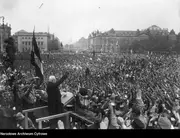
    The “Day of National Labour”: Hitler addresses a vast crowd on the Tempelhofer Feld

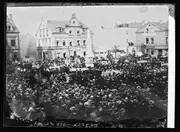
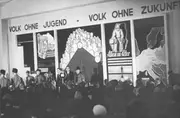
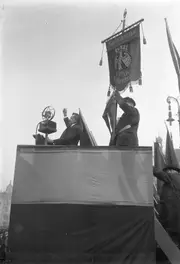
    For the first time 1 May was a paid public holiday, renamed by the regime the “Day of National Labour”. Hindenburg spoke to schoolchildren and youth groups in the Lustgarten, workers’ delegations flown in from across Germany and Austria were received at the Reich Chancellery, and in the evening Hitler announced compulsory labour service to a crowd on the Tempelhofer Feld put at one to one and a half million. Fireworks, a torchlight march and Göring’s midnight speech in the Lustgarten closed a day of spring sunshine, while Robert Ley’s committee prepared the next morning’s seizure of the trade unions.

  33. Day 93 Tuesday 2 May 1933

    SA and SS occupy the trade union offices across Germany; union leaders arrested

    At ten in the morning, the day after the “Day of National Labour”, SA and SS men occupied every building of the free trade unions in Germany, together with their newspapers and their bank. Theodor Leipart, Peter Graßmann and other leaders were taken into “protective custody”, the unions’ property was seized and Nazi commissioners took over. In Duisburg four union officials were murdered. The Hoppegarten racecourse opened its season the same afternoon.

  34. Day 94 Wednesday 3 May 1933

    The remaining union federations submit to Hitler; Göring defines the Gestapo’s powers

    Ley announced that the Christian trade unions, the Hirsch-Duncker union ring and other employees’ federations had placed themselves unconditionally under Hitler and his action committee. A circular from Göring set out the new Secret State Police Office’s tasks and its headquarters at Prinz-Albrecht-Straße 8, and the Berlin daily Tägliche Rundschau was banned until the end of May. The German National People’s Party renamed itself the “German National Front”. In Berlin a football play-off ended 3–3 after extra time.

  35. Day 95 Thursday 4 May 1933

    Purge extended to public employees; SPD leaders decide to set up an office abroad

    A second ordinance under the civil service law told public employers to give “non-Aryan” salaried employees and workers one month’s notice. At its first and last full meeting the new SPD executive decided to send Otto Wels, Hans Vogel and other members abroad to build an office in exile. Ley’s committee declared that the “German Labour Front” now stood, Hitler called for a foundation for the families of workers killed at work, and an ADGB leader escaped from “protective custody”.

  36. Day 96 Friday 5 May 1933

    Seven Nazi Reich governors appointed to rule the states for Berlin

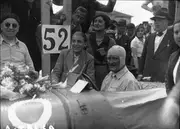
    On Hitler’s proposal Hindenburg appointed seven Reich governors (Reichsstatthalter), all of them Nazi leaders, for Württemberg, Baden, Saxony, Hesse, Bremen and Oldenburg, Anhalt and Brunswick, and Thuringia. The cabinet passed laws on tax advisers, sales premiums and a six-month freeze on new shops, and in Moscow Germany and the Soviet Union brought the extension of the Berlin Treaty into force. On the Avus the French racing driver Count Czaykowski set a world one-hour record of 213.8 km/h; Berlin’s Jewish community bulletin reported hundreds seeking help every day.

  37. Epilogue Wednesday 10 May 1933

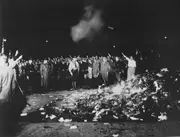
    Books burn on the Opernplatz as the German Labour Front is founded

    Late on Wednesday evening Berlin students burned an estimated 20,000 to 25,000 books on the Opernplatz, in pouring rain and in front of newsreel cameras; the works of Marx, Heinrich Mann, Kästner, Remarque, Tucholsky, Ossietzky and many others went into the fire, and Goebbels declared the age of “Jewish intellectualism” over. Books were burned in 21 other university towns the same night. That afternoon Hitler had addressed the first congress of the German Labour Front, which took the place of the destroyed trade unions under Robert Ley, and it was announced that the assets of the SPD, its newspapers and the Reichsbanner had been seized.