Day 24 of 100
Göring makes the SA, SS and Stahlhelm an auxiliary police in Prussia
Göring signed a decree allowing the Prussian police to call up “auxiliary police” from the ranks of “nationally minded” Germans: in practice men of the SA, SS and Stahlhelm, wearing a white armband over their own uniforms and holding full police powers while on duty. The Prussian commissioners pensioned off another wave of senior officials and began closing the secular schools, and Hitler told his followers that the enemy to be beaten on 5 March was “Marxism”. In Berlin the first film directed by Friedrich Hollaender, Ich und die Kaiserin, opened at the Gloria-Palast.
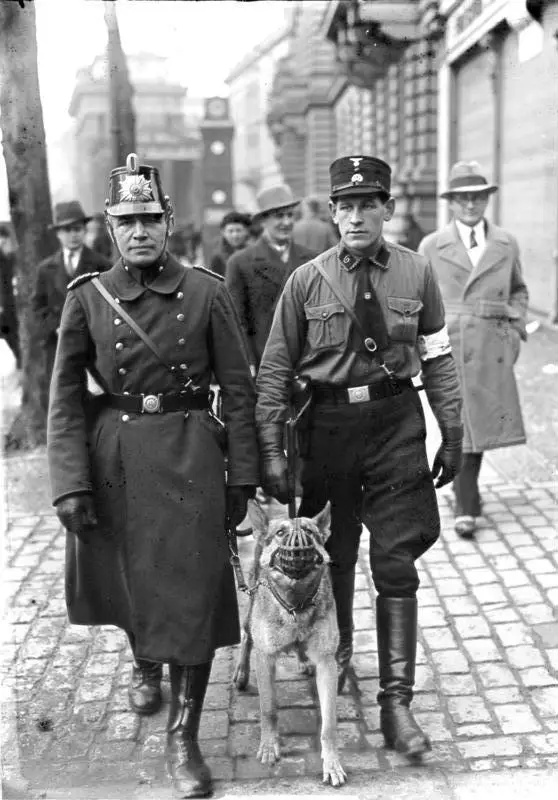

Göring’s decree of 22 February on the “call-up and use of auxiliary police” began from the claim that growing “excesses from the radical left, above all from the Communists” had made life and property unsafe and that the regular police were overstretched. The auxiliary police were to relieve them by guarding political meetings and marches and the premises of political organisations, helping at cordons and patrols, and in an emergency by protecting vital installations and public buildings. Only “honourable”, voting-age Germans “standing on national ground” could be sworn in. They would wear their own clothes, which could be the uniform of their organisation, with a stamped white armband reading “Hilfspolizei”, serve under police officers and, while on duty, have the powers and duties of regular policemen. Outside Berlin, where the minister decided, each appointment needed the district president’s approval.
The decree did not name the SA, the SS or the Stahlhelm, but they were the organisations meant: historians give quotas of 25,000 SA men, 15,000 SS men and 10,000 members of the Stahlhelm for Prussia. Coming five days after Göring’s circular promising to cover any policeman who used his gun against “enemies of the state”, it gave the Nazi party’s own formations the authority of the state against their political opponents. For two days the government kept the text back: on 23 February official sources still told enquirers that no SA or Stahlhelm man had yet been taken on as an auxiliary policeman. The text was released through the official Prussian press service on 24 February.
The rest of the day showed the same pattern of power taken by administrative act. The Reich Commissioners for Prussia pensioned off a provincial governor, three deputy governors, nine district presidents and two county chiefs, and agreed to start dismantling the secular schools from Easter. Hitler, meanwhile, called on his party to show discipline and blamed disruptions of Centre Party meetings on “provocative elements”, while in Berlin’s working-class districts the nightly shootings of the campaign went on.
Laws and decrees
Erlass des Kommissars des Reichs für das Preußische Ministerium des Innern über die Einberufung und Verwendung von Hilfspolizei vom 22. Februar 1933
Göring's decree on the call-up and use of auxiliary police
Allowed the Prussian police to call up “honourable”, voting-age Germans “standing on national ground” as auxiliary policemen with full police powers while on duty, wearing their own clothes or organisational uniforms with a white “Hilfspolizei” armband, to protect meetings, marches and party premises and, in an emergency, public buildings and vital plants. In practice it armed the SA, SS and Stahlhelm with state authority; the text was made public on 24 February.1,2,4
Politics and power
Government, terror and persecution
-
Terror Berlin, Prussian Ministry of the Interior
The auxiliary police decree
Göring, as Reich Commissioner for the Prussian Ministry of the Interior, issued his decree on the call-up and use of auxiliary police (Hilfspolizei). Recruited in practice from the SA, SS and Stahlhelm, the auxiliary policemen were to protect meetings, marches and party premises, man cordons and, in an emergency, guard vital plants and public buildings, with full police powers while on duty and a white armband as their only badge of office.1,2,3,4,12
-
The states Berlin, Prussian State Ministry
Another purge of Prussian officials, and an end to secular schools
On Göring’s proposal the Reich Commissioners for Prussia sent a provincial governor, three deputy governors, nine district presidents and two county chiefs (Landräte) into provisional retirement. On Rust’s proposal they agreed to begin phasing out the secular “collective schools” (Sammelschulen), which gave no religious instruction, from Easter 1933, and approved in principle religious instruction as a regular subject in vocational and continuation schools; Papen called a religious foundation for the young a “vital question”.6,7
-
Propaganda Berlin
Hitler: the enemy is Marxism
Hitler issued an appeal to the members of the NSDAP: “provocative elements” were trying to discredit the movement by disrupting meetings, especially those of the Centre Party, and he expected every National Socialist to show the utmost discipline. The campaign was to be aimed at one enemy, “Marxism”.8,5
-
Terror overnight, Berlin-Spandau
A night of shooting in Spandau
During the night shots were fired in two incidents in Spandau. Gerhard Schlemminger, a 20-year-old National Socialist, was killed by a shot in the back; an hour and a half later another person, whose name and party were not yet known, was killed, and two workers aged 30, Arthur Giesecke and Richard Glow, were badly wounded with stomach wounds. There was a further violent incident outside a Communist pub in the south of the city.8
-
Opposition evening, Berlin
A Social Democratic meeting broken up with riding whips
The SPD had called an election meeting for 20:00 at which the former Berlin police president Albert Grzesinski was to speak. Strong groups of Nazis gathered outside long before; the duty police officer let them into the hall early, before most Social Democrats had arrived, and they drove out the people decorating the hall with riding whips, tearing down and trampling the flags. The meeting had to be cancelled.7
-
Government 11:00, Berlin, Reich Chancellery
A deficit budget and a warning about Versailles
At the ministers’ meeting Finance Minister Schwerin von Krosigk reported a gap of 945 million marks in the draft budget for 1933, to be closed by reorganising unemployment assistance and suspending debt repayment. Foreign Minister von Neurath warned that Göring’s instructions to the Prussian police commander in the west conflicted in places with the Treaty of Versailles. The ministers agreed to propose Wilhelm Ohnesorge as state secretary of the Reich Post Ministry.5
Everyday life
What else was happening in Germany
-
Economy Berlin
Six million and forty-seven thousand out of work
The Reich Institution for Labour reported that on 15 February 6,047,000 people were registered as unemployed, 33,000 more than at the end of January but 80,000 fewer than a year earlier. Almost 2.5 million of them drew benefit from the Institution, 963,000 from unemployment insurance and 1,471,000 from emergency relief, and roughly as many again depended on municipal welfare.9
-
Film Berlin, Gloria-Palast
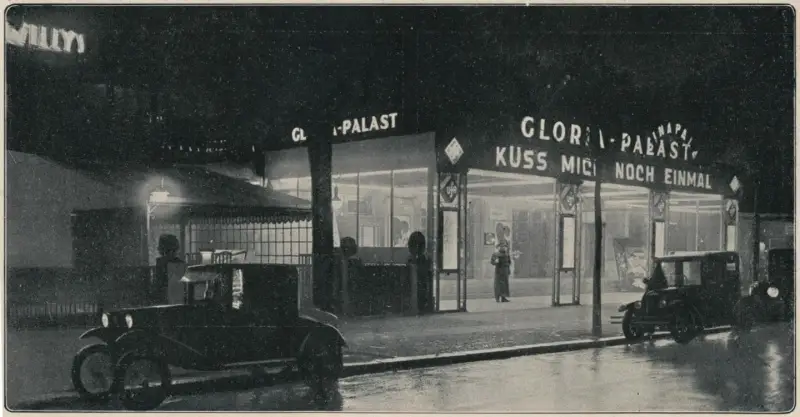
Ich und die Kaiserin opens at the Gloria-Palast
The Ufa musical comedy Ich und die Kaiserin, produced by Erich Pommer and the first film directed by the composer Friedrich Hollaender, who also wrote its songs, had its premiere at the Gloria-Palast the same day it was passed by the censors. Lilian Harvey played Juliette, the empress’s hairdresser, with Conrad Veidt, Mady Christians and Heinz Rühmann.10
-
Theatre Magdeburg
Nazi demonstrators at Der Silbersee in Magdeburg
At the second Magdeburg performance of Der Silbersee, the play with music by Georg Kaiser and Kurt Weill that had opened four days earlier, Nazi supporters staged a demonstration, and Weill became the target of antisemitic attacks. He was also asked to withdraw from the film project Kleiner Mann – was nun?.11
Voices
The enemy who must be defeated on 5 March is Marxism. Against him all propaganda, and with it the whole election campaign, is to be directed.
More pictures

Sources
- Die Einstellung von Hilfspolizei. Ein Erlaß Görings (full text of the decree of 22 February) Der Landbote (Sinsheim), via Deutsche Digitale Bibliothek Zeitungsportal, 25 February 1933, p. 1 (Amtlicher Preußischer Pressedienst)
- Hilfspolizei in Preußen. Ein Erlaß Görings Kölnische Zeitung, via Deutsche Digitale Bibliothek Zeitungsportal, 25 February 1933, p. 1 (WTB report dated Berlin, 24 February)
- Chronik 1933 (entry for 22 February) Deutsches Historisches Museum, LeMO
- Hartmut Rübner, Das Vollzugsorgan des nationalsozialistischen Polizeisystems. Zur Geschichte der Gestapo. Teil 1, Sozial.Geschichte Online 31 (2022) Universität Duisburg-Essen, DuEPublico, pp. 17–18 and note 17 (quotas of 25,000 SA, 15,000 SS and 10,000 Stahlhelm, after Peter Longerich)
- Nr. 26 Ministerbesprechung vom 22. Februar 1933, 11 Uhr; Nr. 28 (note 2, quoting Hitler’s appeal of 22 February) Bundesarchiv / Historische Kommission bei der Bayerischen Akademie der Wissenschaften, Akten der Reichskanzlei. Regierung Hitler, Band I, Dok. Nr. 26, P. 2–4; Dok. Nr. 28 (https://aktenreichskanzlei.bundesarchiv.de/dokumente/arh01d028), note 2
- Nr. 27 Sitzung der Kommissare des Reichs für Preußen, anschließend Besprechung der Kommissare. 22. Februar 1933 Bundesarchiv / Historische Kommission bei der Bayerischen Akademie der Wissenschaften, Akten der Reichskanzlei. Regierung Hitler, Band I
- Abbau der weltlichen Schulen in Preußen; Gestörte Grzesinski-Versammlung Hamburgischer Correspondent, via Deutsche Digitale Bibliothek Zeitungsportal, 23 February 1933, p. 2 (reports dated Berlin, 22 February)
- Zwei Tote in Spandau; Aufruf zu äußerster Parteidisziplin Hamburger Fremdenblatt (Reichsausgabe), via Deutsche Digitale Bibliothek Zeitungsportal, 22 February 1933, p. 1
- 6 047 000 Arbeitslose Kölnische Zeitung, via Deutsche Digitale Bibliothek Zeitungsportal, 23 February 1933, p. 10 (WTB report dated Berlin, 22 February)
- Ich und die Kaiserin filmportal.de (Deutsches Filminstitut & Filmmuseum), Zensur 22.02.1933; Uraufführung 22.02.1933, Berlin, Gloria-Palast
- 1926–1933: Rise to Fame (chronology) Kurt Weill Foundation for Music, 1933: "22 February"
- SA als Hilfspolizei? Kölnische Zeitung, via Deutsche Digitale Bibliothek Zeitungsportal, 23 February 1933, p. 7 (report dated Berlin, 23 February)
Spotted a mistake? Send a correction.