Themes

The opposition

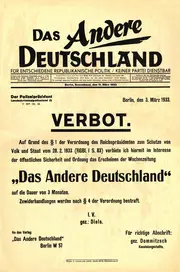
Communists, Social Democrats, trade unionists and others, banned and arrested.

50 days

  1. Day 1 Monday 30 January 1933

    Hindenburg appoints Hitler Reich Chancellor at the head of a coalition cabinet

    Reich President Paul von Hindenburg appointed Adolf Hitler Reich Chancellor of a cabinet in which only two other National Socialists sat. That evening SA, SS and Stahlhelm columns carried torches through the government quarter, and late that night a police officer and an SA man were shot dead in Charlottenburg. Elsewhere in Berlin a flu epidemic was closing school classes and the police caught two long-sought robbers.
  2. Day 4 Thursday 2 February 1933

    Göring bans Communist demonstrations as Hitler is reminded of his oath in the Reichsrat

    Göring banned all Communist demonstrations in Prussia, and the cabinet discussed a sweeping emergency decree against the press and public meetings. In the Reichsrat, the chamber of the states, a Prussian official answered Hitler’s first address by reminding him of his oath to the constitution. Berliners paid sharply more for potatoes, and Ufa’s U-boat film Morgenrot opened at the Ufa-Palast am Zoo before an audience full of officers.
  3. Day 5 Friday 3 February 1933

    Hitler tells the army chiefs of “living space in the East” as the Vorwärts is banned

    At a dinner in the army commander’s residence in the Bendlerstraße, Hitler spoke for two and a half hours to the generals and admirals, naming rearmament, conscription and perhaps the conquest of “living space in the East” as his aims. The Berlin police banned the Social Democratic Vorwärts for four days, and the cabinet approved its emergency decree. Two new films opened, one a Frederick the Great epic, the other a Berlin underworld comedy by Richard Oswald.

  4. Day 6 Saturday 4 February 1933

    Hindenburg signs a decree allowing bans on newspapers and political meetings

    Hindenburg signed the “Decree for the Protection of the German People”, which let the authorities ban political meetings and newspapers and hold suspects in police custody for up to three months. The Prussian Landtag refused to dissolve itself, and the Reich’s commissioners in Prussia dissolved every municipal council instead. Two young Communists were shot dead in Berlin overnight, and that evening the Social Democratic mayor of Staßfurt was shot in front of his house. In Berlin, new flu cases passed a thousand a day.

  5. Day 9 Tuesday 7 February 1933

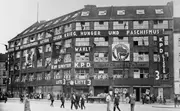
    Social Democrats fill the Lustgarten as the KPD leadership meets in secret at Ziegenhals

    In rain and wind, the Social Democrats and the Iron Front marched into the Lustgarten for their largest rally of the campaign, where Otto Wels declared that the workers’ front stood unbroken. Outside Berlin, the Communist Party’s central committee met secretly in an inn at Ziegenhals to hear Ernst Thälmann. In the Reichstag building, Nazi deputies broke up the committee meant to guard parliament’s rights. In Berlin the flu returned with more than a thousand new cases in a day.

  6. Day 10 Wednesday 8 February 1933

    Hitler tells the cabinet rearmament comes first: “everything for the armed forces”

    In cabinet Hitler declared that rearmament must come first in every public works decision for the coming years, and advised ministers to say nothing specific about economic policy before the election. A decree sharply raised the duties on imported livestock, meat and lard. In Staßfurt thousands of workers downed tools to bury their murdered mayor. Berlin’s six-day cycle race was postponed because of the election, and the motoring clubs cancelled their rally to the motor show.

  7. Day 12 Friday 10 February 1933

    Hitler’s Sportpalast speech goes out on every German radio station

    Hitler opened the NSDAP’s election campaign in the Berlin Sportpalast, and every German station carried the speech, introduced by Goebbels, as a government broadcast. Tens of thousands attended the funeral of three murdered Communist workers at Friedrichsfelde, though the police banned the procession. Thomas Mann gave his last lecture in Munich, the former Prussian culture minister Carl Heinrich Becker died in Berlin, and a gasholder exploded in Neunkirchen in the Saar, killing dozens.

  8. Day 14 Sunday 12 February 1933

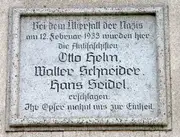
    “Bloody Sunday” in Eisleben: SA and SS storm Communist premises, killing three

    In the mining town of Eisleben, in Prussian Saxony, some 600 SA and SS men on a “propaganda march” stormed the local Communist headquarters and a workers’ sports hall, killing three Communists; an SS man also died. In Berlin about 5,000 officials of the Iron Front heard the trade union leader Peter Graßmann warn that a war of annihilation had been declared on the Republic. Sunday crowds of 65,000 filled the motor show, and the radio carried Leipzig’s commemoration of Richard Wagner.

  9. Day 15 Monday 13 February 1933

    Göring widens the purge of Prussia’s republican police chiefs

    Göring, as Reich Commissioner for the Prussian Ministry of the Interior, sent more officials loyal to the Republic on forced leave, among them the police presidents of Dortmund, Oberhausen, Stettin, Frankfurt and Breslau. The Stahlhelm told its members the coming election was a plebiscite on the “national government”. Away from politics, Bayreuth marked the fiftieth anniversary of Richard Wagner’s death and Berlin radio filled the evening with his operas.

  10. Day 16 Tuesday 14 February 1933

    Nazi deputies break up a Reichstag committee as farm foreclosures are halted

    The cabinet approved, and Hindenburg signed, a decree stopping forced auctions of farms until the end of October. In the Reichstag, Nazi members drove the chairman of the committee that guarded parliament’s rights from his seat and Julius Streicher struck a People’s Party deputy; that evening the political police searched Communist rooms in the building. Neunkirchen in the Saar buried the victims of the gas-holder explosion, Göring opened a show of modern Italian painting and the geneticist Carl Correns died in Dahlem.

  11. Day 17 Wednesday 15 February 1933

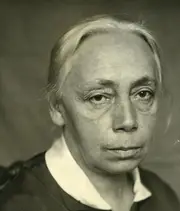
    Käthe Kollwitz and Heinrich Mann forced out of the Prussian Academy of Arts

    Under threat that the Academy would be dissolved, Käthe Kollwitz and Heinrich Mann left the Prussian Academy of Arts, and the Prussian commissioners confirmed a sweeping purge of police chiefs, naming a retired rear admiral as police president of Berlin. Vorwärts and the 8-Uhr-Abendblatt were banned for a week, and in Stuttgart someone cut the cable carrying Hitler’s speech to the radio. Abroad, Thomas Mann lectured on Wagner in Brussels and an assassin fired on Franklin D. Roosevelt in Miami.

  12. Day 18 Thursday 16 February 1933

    The states protest in the Reichsrat as Göring vows no Social Democrat will stay in office

    In the Reichsrat Bavaria and the southern states protested against Prussia being represented by Göring’s and Papen’s appointees and voted to limit the chamber to urgent business until the constitutional court had ruled. That evening Göring told journalists that no Social Democrat would be tolerated in the Prussian administration. The Reichsgericht lifted an earlier ban on Vorwärts, and the cabinet discussed taking away the court’s power to do so. At the Sportpalast the American ice hockey team beat Germany 7–2.

  13. Day 20 Saturday 18 February 1933

    Kurt Weill’s Der Silbersee opens in three cities as the Centre’s Germania is banned

    Hindenburg signed a decree softening the 1932 cuts to war-disability and insurance pensions, and the government published steep new duties on farm produce, fish and timber. Berlin’s police president banned Germania, the leading Centre Party daily, for three issues. In Leipzig, Magdeburg and Erfurt, Kurt Weill and Georg Kaiser’s play with music Der Silbersee had its premiere, the German ice hockey team opened the World Championship in Prague with a 6–0 win, and Prussia warned against eating undercooked duck eggs.

  14. Day 21 Sunday 19 February 1933

    Police break up the “Free Word” congress at the Kroll Opera

    More than a thousand writers, scholars and politicians met at the Kroll Opera to defend freedom of speech, the press, assembly and art; police dissolved the meeting when the former Prussian minister Wolfgang Heine mocked the regime. Frick told a Dresden rally that the government would not give up power even without a majority, Hitler spoke against the Centre Party in Cologne and the Reichsbanner marched in the Lustgarten. Berliners took sledges and skis to the snowbound Grunewald.

  15. Day 23 Tuesday 21 February 1933

    Rust suspends the head of the Karl-Marx-Schule; Frick bans Communist marches in Saxony

    Rust ordered the reorganisation of the Karl-Marx-Schule in Neukölln, one of the Weimar Republic’s leading reform schools, sent its head Fritz Karsen on leave and suspended three senior Berlin school officials. Frick used the decree of 4 February to ban Communist open-air meetings and marches in Saxony, and the trade union federation protested to Hindenburg against Göring’s police decree. In Berlin, thermometers on the city’s edge fell to 18 degrees below zero overnight, and the creditors of the theatre impresarios Rotter learned they would get nothing.

  16. Day 24 Wednesday 22 February 1933

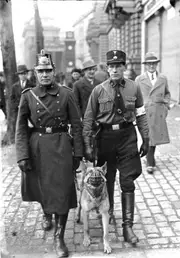
    Göring makes the SA, SS and Stahlhelm an auxiliary police in Prussia

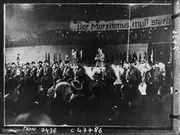
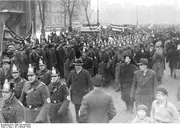
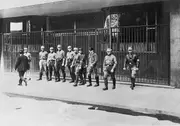
    Göring signed a decree allowing the Prussian police to call up “auxiliary police” from the ranks of “nationally minded” Germans: in practice men of the SA, SS and Stahlhelm, wearing a white armband over their own uniforms and holding full police powers while on duty. The Prussian commissioners pensioned off another wave of senior officials and began closing the secular schools, and Hitler told his followers that the enemy to be beaten on 5 March was “Marxism”. In Berlin the first film directed by Friedrich Hollaender, Ich und die Kaiserin, opened at the Gloria-Palast.

  17. Day 25 Thursday 23 February 1933

    Police search the Communist headquarters and break up the KPD’s Sportpalast rally

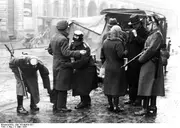
    In the afternoon the political police occupied and searched the Karl-Liebknecht-Haus, the Communist Party’s headquarters; in the evening a police officer dissolved the KPD’s rally in the Sportpalast while Wilhelm Pieck was speaking. Overnight men in Nazi uniform had shot a Reichsbanner leader in Großbeeren and burned down the poorhouse where he lived. Göring ordered tougher action against the opposition press. In Berlin the motor show closed after more than 400,000 visits, and Prussia relaxed its rules on men’s bathing trunks.

  18. Day 26 Friday 24 February 1933

    The Karl-Liebknecht-Haus is closed and the auxiliary police decree made public

    The police closed the Communist headquarters, the Karl-Liebknecht-Haus, “until further notice”, and the official Prussian press service released Göring’s decree creating an auxiliary police. Rudolf Diels took charge of the political police with its own new strike squads, and the jurist Robert Kempner was removed from the Prussian Interior Ministry. Hitler spoke to a huge crowd in Munich on the anniversary of the party programme. In Geneva the League of Nations condemned Japan’s actions in Manchuria and the Japanese delegation walked out; Max Ophüls’s Liebelei opened in Vienna.

  19. Day 27 Saturday 25 February 1933

    Police claim to find tunnels and treasonable leaflets under the Karl-Liebknecht-Haus

    Diels’s political police announced that the closed Communist headquarters had yielded secret cellars, a tunnel and hundredweights of leaflets calling for armed revolt. The Reichsgericht lifted or shortened a series of newspaper bans, Adenauer settled his protest over Göring’s police decrees in a meeting with Göring, and Rust ordered that the secular schools take no new pupils. Berlin learned from a League of Nations report how much weight its unemployed had lost, and the Sklarek perjury trial ended with a year’s prison for the former transport director Fritz Brolat.

  20. Day 28 Sunday 26 February 1933

    Uniformed police wear swastika armbands at a Nazi rally in the Lustgarten

    On the last Sunday of February uniformed Berlin police officers marched with swastika armbands at the first mass rally of the National Socialist factory cells in the Lustgarten, while police president Levetzow looked in to cheers. Police broke up a Social Democratic cultural rally in Neukölln and led the speaker Friedrich Stampfer away to the station; across the Reich, election marches ended in shootings and stabbings. Berliners went tobogganing on a second snowy Sunday, and in Prague the United States took the ice hockey world title from Canada for the first time.
  21. Day 29 Monday 27 February 1933

    The Reichstag burns, and the Nazi leadership blames a Communist uprising

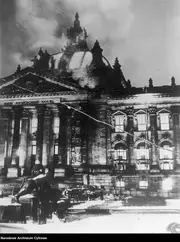
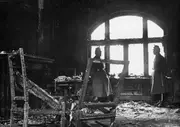
    On the evening of Monday 27 February the Reichstag building in Berlin was set alight; a young Dutchman, Marinus van der Lubbe, was arrested inside, and before the night was out Göring had declared the fire the signal for a Communist revolt, banned the left-wing press in Prussia and ordered arrests. Earlier that day the cabinet had approved a harsh new decree against ‘treason’, and SA men had fired into the flat of a Social Democratic deputy in Neukölln. In Cologne the Rosenmontag carnival procession went ahead in the sunshine.

  22. Day 30 Tuesday 28 February 1933

    The Reichstag Fire Decree suspends basic rights ‘until further notice’

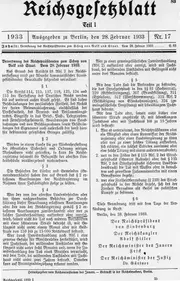
    The morning after the fire the cabinet met twice, and by the end of the day Hindenburg had signed and the government had published the decree ‘for the protection of people and state’, which suspended the Weimar constitution’s guarantees of personal liberty, free speech, a free press and assembly. Across Prussia the police and their SA auxiliaries arrested Communists and left-wing intellectuals, among them Carl von Ossietzky and Hans Litten, and the SA hoisted the swastika over the Communist headquarters. It was Shrove Tuesday: Cologne’s carnival corps paraded once more, while in Berlin Göring had the museums closed.

  23. Day 31 Wednesday 1 March 1933

    Göring promises to ‘exterminate’ Communism as the treason decree is published

    On Ash Wednesday the decree against ‘treason against the German people’ appeared in the Reichsgesetzblatt, Frick asked every state to ban the Communist press and meetings, and the Prussian press service claimed that at least ten men had set the Reichstag fire. Göring told radio listeners that the government’s aim was the extermination of Communism, Hitler spoke to some 20,000 people in Breslau, and Cardinal Bertram begged Hindenburg to protect the freedom of the vote. In Berlin, Leopold Jessner bade farewell to the State Theatre with Billinger’s Rosse, while Max Reinhardt reopened the Deutsches Theater with Hofmannsthal’s Great Theatre of the World.

  24. Day 33 Friday 3 March 1933

    Ernst Thälmann is arrested in Berlin; Göring vows ‘to destroy and exterminate’

    The Communist party’s leader, Ernst Thälmann, was arrested in a flat in Charlottenburg on Friday afternoon; he never regained his freedom. In Frankfurt Göring told a mass meeting that his measures would not be hampered by legal scruples, and in Hamburg the Social Democratic senators left the city government rather than ban their party’s newspaper. In Berlin tens of thousands queued in the pouring rain, between lines of SA men, to look at the burnt-out Reichstag chamber, and a Jewish weekly urged every Jewish voter to go to the polls on Sunday.

  25. Day 35 Sunday 5 March 1933

    Reichstag election under the emergency decree: 43.9 per cent for the NSDAP

    On a grey, rainy Sunday nearly 89 per cent of Germany’s voters went to the polls in an election held under the emergency decree, with Communist leaders in prison or in hiding and the left-wing press silenced. The NSDAP won 43.9 per cent, short of an absolute majority, but with the nationalist ‘Combat Front Black-White-Red’ the government had a majority of seats; the Social Democrats held 18.3 per cent and the Communists 12.3. That night the Reich interior minister ordered Hamburg’s police handed to a Nazi, and SA men raised the swastika on town halls. In Hamburg, Altona 93 won the city football championship in the rain.

  26. Day 36 Monday 6 March 1933

    The morning after: Reich commissioners and swastikas in Bremen, Lübeck and Hesse

    On the day after the election the Reich began taking over the states that the Nazis did not yet control. Frick used the Reichstag Fire Decree to seize police powers in Bremen and Hesse, where SA men occupied ministries and the homes of the Social Democratic state president and interior minister overnight; in Lübeck the Social Democratic senators were pushed out, and Thuringia banned the Central Association of German Jews. In Altona a 20-year-old bystander was shot dead during an SA torchlight parade. In Hamburg Karl Muck conducted Also sprach Zarathustra, and in Washington Roosevelt closed every bank in the country.

  27. Day 40 Friday 10 March 1933

    Munich SA parade a Jewish lawyer barefoot; Göring will not protect ‘Jewish stores’

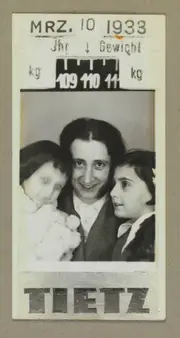
    In Munich SA auxiliary police beat the Jewish lawyer Michael Siegel, who had come to complain about a client’s arrest, and marched him barefoot through the streets with a placard round his neck. In Essen Göring declared that he would not let the police become ‘a protective force for Jewish department stores’, and SA men forced department stores to close in Mönchengladbach. Hitler told the SA and SS that the ‘national uprising’ was now to be directed from above and that harassment and disruption of business must stop. The trade unions appealed to Hindenburg. In Frankfurt, Edith Frank and her daughters had their picture taken in a department-store photo booth.

  28. Day 41 Saturday 11 March 1933

    Cabinet agrees a propaganda ministry; SA drive Jewish lawyers from Breslau’s courts

    At Hitler’s insistence the cabinet agreed to create a Reich Ministry for Popular Enlightenment and Propaganda, expected to go to Goebbels. On the eve of Remembrance Day and the Prussian local elections, SA men and crowds forced department stores and chain stores to close in Hamburg, Breslau, Frankfurt and other cities, and in Breslau SA men ordered Jewish judges and lawyers out of the courts. Magdeburg’s mayor and union leaders in Bochum were taken into ‘protective custody’ (Schutzhaft, imprisonment without trial). Hitler spoke at a rally broadcast from Berlin, and in Cologne a play about front-line soldiers had its first local performance.

  29. Day 43 Monday 13 March 1933

    Goebbels appointed Reich Minister for Popular Enlightenment and Propaganda

    Hindenburg signed the decree creating a Reich Ministry for Popular Enlightenment and Propaganda and appointed Joseph Goebbels, the Nazi Party’s propaganda chief, as its minister. In Prussia, Göring suspended the mayors of Cologne, Frankfurt, Magdeburg, Altona and Kiel and several Berlin city councillors. In Berlin the manslaughter trial of a banker accused of shooting his wife, the soprano Gertrud Bindernagel, opened before packed public benches.

  30. Day 44 Tuesday 14 March 1933

    The Weltbühne banned for six months as Goebbels is sworn in

    Berlin’s police president banned the left-wing weekly Die Weltbühne for half a year, Munich banned Das Tage-Buch, and the ban on the Social Democratic press in Prussia was extended overnight. Hindenburg swore in Goebbels as Propaganda Minister, while the Berlin papers reported that Theodor Wolff and Rudolf Olden had left for Paris. The Reichsbahn announced spring track work for some 90,000 men, and in London the Hamburg-born operetta star Anny Ahlers died after a fall.

  31. Day 45 Wednesday 15 March 1933

    Cabinet plans the Enabling Act; police and SA raid Berlin’s artists’ colony

    The cabinet discussed how to pass an enabling law: Interior Minister Frick counted the deputies needed for a two-thirds majority and suggested that Communists might be put in labour camps. Police and SA auxiliaries sealed off the artists’ colony in Wilmersdorf, searched flats and arrested fourteen people, while Goebbels told the press that its task was to ‘instruct’. In the auction rooms, Kändler’s Meissen porcelain birds went under the hammer at what a reporter called crisis prices.

  32. Day 49 Sunday 19 March 1933

    Germany and France draw 3–3 before 45,000 in Berlin’s Grunewald stadium

    On a sunny Sunday some 45,000 spectators, French supporters among them, watched Germany let slip a 3–1 lead against France in the Deutsches Stadion. In Wilmersdorf Fritz Höger’s new brick church on Hohenzollernplatz was consecrated. The same weekend Jewish judges were withdrawn from administrative posts at Berlin’s central district court, and SA auxiliary police raided the Berlin office of the exiled pacifist Professor Foerster.

  33. Day 53 Thursday 23 March 1933

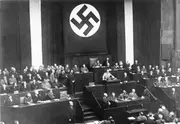
    The Reichstag passes the Enabling Act; only the Social Democrats vote against

    In the Kroll Opera House, ringed by the SS and watched from inside by armed SA men, the Reichstag passed the Enabling Act, giving Hitler’s government the power to make laws without parliament. Otto Wels explained the Social Democrats’ ‘no’; the Centre and the smaller middle parties voted yes. The former Prussian interior minister Karl Severing was arrested on his way into the building, and the Reichsrat gave its consent that evening.

  34. Day 56 Sunday 26 March 1933

    Berlin’s newly elected city council is installed at the Rathaus with Nazi salutes

    On a fine spring Sunday Berlin’s newly elected city council was sworn in at the Rathaus after church services, with the black-white-red flag and the swastika flying; the Nazi group answered with three ‘Heils’ for Hitler and the Horst Wessel song. The Zionist Federation repeated its rejection of foreign ‘atrocity’ reports, Der Angriff threatened ‘traitors’, and the radio refused to carry a German National call for the monarchy. Germany beat France at hockey in Berlin.

  35. Day 60 Thursday 30 March 1933

    Streicher’s committee issues its boycott orders; SPD leader Wels quits the International

    In Munich Julius Streicher’s boycott committee met for the first time and sent out its orders to local branches, while Nazi deputies in Prussia demanded that all Jewish teachers be removed from schools. Hindenburg received Hitler and Papen, the nationalist Ernst Oberfohren gave up his Reichstag seat and Otto Wels left the bureau of the Socialist International. Prussia tightened its rules for dance halls, and the government confirmed a national census for June.

  36. Day 79 Tuesday 18 April 1933

    Bavaria reports 5,400 people taken into ‘protective custody’ since 9 March

    A semi-official statement from Munich put the number of people taken into ‘protective custody’ (imprisonment without trial) in Bavaria since 9 March at about 5,400, of whom some 1,630 had been released, partly after Cardinal Faulhaber asked for fathers to be freed for Easter. In Rome, Göring spoke at a broadcast celebration of Hitler’s coming birthday held in his and Papen’s honour, and in Lugano Thomas Mann received the Munich ‘protest’ that settled his decision not to return. The deaths were announced of Albrecht von Graefe, a former völkisch member of the Reichstag, and of Count Dietlof von Arnim-Boitzenburg, the last president of the Prussian House of Lords.

  37. Day 84 Sunday 23 April 1933

    Tennis federation bars ‘non-Aryans’ from national teams, shutting out Daniel Prenn

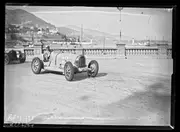
    After the Davis Cup trials in Berlin, the board of the German Tennis Federation resolved that ‘non-Aryans’ (the regime’s term for people of Jewish descent) could no longer be picked for the Davis Cup or other representative teams and that Jews should leave club boards, which shut out the Jewish player Daniel Prenn. In the plenary hall of the Prussian Landtag, the Nazi press chief Otto Dietrich told journalists the press must become a ‘sharply honed weapon’ of German politics, and Protestant leaders announced work on a new constitution for a single German Evangelical Church. Max Planck turned 75, and in Monaco Achille Varzi won the Grand Prix in record time.

  38. Day 87 Wednesday 26 April 1933

    Göring’s Prussia creates the Secret State Police Office, the Gestapo

    A Prussian law dated 26 April set up the Secret State Police Office (Geheimes Staatspolizeiamt, Gestapa) under Göring as interior minister, separating political policing from the ordinary administration; Rudolf Diels led it. The same day the Social Democrats held a Reich conference in their group’s rooms in the Reichstag building and elected Otto Wels and Hans Vogel as chairmen. Goebbels toured the Ufa film studios at Neubabelsberg, and in Munich Arno Penzias, a future Nobel laureate, was born into a Jewish family.

  39. Day 88 Thursday 27 April 1933

    Seldte joins the Nazi Party; ex-deputy Albert Funk dies in police custody

    In an evening radio address the Stahlhelm leader and Reich Labour Minister Franz Seldte announced that he was joining the Nazi Party and placing himself under Hitler. In Recklinghausen the Communist former Reichstag deputy Albert Funk died after interrogation and abuse at police headquarters. Hitler asked towns to stop renaming historic streets after him, and at Berlin Zoo a small boy lost his forearm to a bear.

  40. Day 89 Friday 28 April 1933

    SA and SS given their own disciplinary law; Wolfgang Köhler’s protest appears in print

    The cabinet passed and published a one-sentence law putting SA and SS men under a disciplinary code to be issued by Hitler as supreme SA leader, approved the return of military courts and turned the aviation commissariat into a ministry for Göring. In the Deutsche Allgemeine Zeitung the psychologist Wolfgang Köhler defended his dismissed Jewish colleagues in what was later called the last openly anti-Nazi article published in Germany. Frick named von Tschammer und Osten Reich Sports Commissioner, and the Reichsbahn showed off a road trailer that could carry railway wagons to the door.

  41. Day 90 Saturday 29 April 1933

    Hindenburg watches Göring christen the giant Junkers airliner at Tempelhof

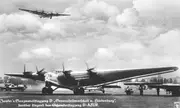
    In bright sunshine at Tempelhof airport, Göring christened a new four-engined Junkers airliner “Generalfeldmarschall von Hindenburg” in front of the President, on his first visit to the airport. The Interior Ministry ordered German merchant ships to fly the swastika flag from 1 May, the new Secret State Police Office took over the power to ban Berlin newspapers, and Göring founded an Air Defence League. Goebbels inspected the stands going up on the Tempelhofer Feld for Monday’s rally.

  42. Day 91 Sunday 30 April 1933

    Fritz Haber resigns rather than dismiss his Jewish staff

    The Nobel chemist Fritz Haber, told to dismiss the “non-Aryan” members of his Kaiser Wilhelm Institute in Dahlem, asked instead to be retired; though exempt himself as a war veteran, he refused to choose staff by race. In the Reich Labour Ministry, Seldte proclaimed his “dictatorial” leadership of the Stahlhelm and its leaders pledged allegiance to Hitler. It was a showery Sunday in Berlin; 12,000 people watched Hertha BSC win a nine-goal match, and seven miners died in an explosion near Essen.

  43. Day 92 Monday 1 May 1933

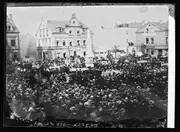
    The “Day of National Labour”: Hitler addresses a vast crowd on the Tempelhofer Feld

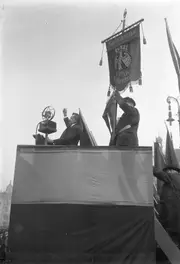
    For the first time 1 May was a paid public holiday, renamed by the regime the “Day of National Labour”. Hindenburg spoke to schoolchildren and youth groups in the Lustgarten, workers’ delegations flown in from across Germany and Austria were received at the Reich Chancellery, and in the evening Hitler announced compulsory labour service to a crowd on the Tempelhofer Feld put at one to one and a half million. Fireworks, a torchlight march and Göring’s midnight speech in the Lustgarten closed a day of spring sunshine, while Robert Ley’s committee prepared the next morning’s seizure of the trade unions.

  44. Day 93 Tuesday 2 May 1933

    SA and SS occupy the trade union offices across Germany; union leaders arrested

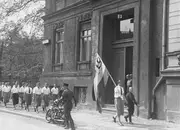
    At ten in the morning, the day after the “Day of National Labour”, SA and SS men occupied every building of the free trade unions in Germany, together with their newspapers and their bank. Theodor Leipart, Peter Graßmann and other leaders were taken into “protective custody”, the unions’ property was seized and Nazi commissioners took over. In Duisburg four union officials were murdered. The Hoppegarten racecourse opened its season the same afternoon.

  45. Day 94 Wednesday 3 May 1933

    The remaining union federations submit to Hitler; Göring defines the Gestapo’s powers

    Ley announced that the Christian trade unions, the Hirsch-Duncker union ring and other employees’ federations had placed themselves unconditionally under Hitler and his action committee. A circular from Göring set out the new Secret State Police Office’s tasks and its headquarters at Prinz-Albrecht-Straße 8, and the Berlin daily Tägliche Rundschau was banned until the end of May. The German National People’s Party renamed itself the “German National Front”. In Berlin a football play-off ended 3–3 after extra time.

  46. Day 95 Thursday 4 May 1933

    Purge extended to public employees; SPD leaders decide to set up an office abroad

    A second ordinance under the civil service law told public employers to give “non-Aryan” salaried employees and workers one month’s notice. At its first and last full meeting the new SPD executive decided to send Otto Wels, Hans Vogel and other members abroad to build an office in exile. Ley’s committee declared that the “German Labour Front” now stood, Hitler called for a foundation for the families of workers killed at work, and an ADGB leader escaped from “protective custody”.

  47. Day 97 Saturday 6 May 1933

    Students ransack Magnus Hirschfeld’s Institute for Sexual Science

    On Saturday morning about a hundred students of the Berlin College of Physical Education, with a brass band and SA students, occupied and wrecked Magnus Hirschfeld’s Institute for Sexual Science and carted off its books and archives for burning. Student squads went on to purge Berlin’s public lending libraries. The Centre Party elected the former Chancellor Brüning as its leader in place of Prelate Kaas, and the censors passed the Joseph Schmidt film “Ein Lied geht um die Welt”.

  48. Day 98 Sunday 7 May 1933

    Max Liebermann quits the Academy: art “has nothing to do with politics or ancestry”

    Max Liebermann, one of Germany’s most successful painters, gave up his honorary presidency of the Prussian Academy of Arts and resigned his membership after the Academy decided to exhibit no more works by Jewish artists. In Kiel the former Nationalist Reichstag leader Ernst Oberfohren shot himself, and in Berlin the former German tennis champion Nelly Neppach, excluded as a Jew, took her own life. Hitler addressed the SA in Kiel; Hindenburg attended the Berlin students’ semester service. Germans marked Brahms’s centenary, and Hertha BSC crashed out of the football championship 4–1 at Allenstein.

  49. Day 99 Monday 8 May 1933

    Goebbels tells Germany’s theatre directors what the “revolution” expects of the stage

    In the evening Goebbels spoke to theatre directors and actors from across Germany at the Hotel Kaiserhof, with Göring present; the upheaval, he said, was not only political but reached into every area of public life. In Breslau the left-wing lawyer Ernst Eckstein was murdered in the Dürrgoy concentration camp, and in Halle booksellers gave their “word of honour” not to sell blacklisted authors. The Reich Sports Commissioner spoke on all German radio stations, a gas explosion wrecked a house in Zehlendorf, and Gandhi began a three-week fast.

  50. Epilogue Wednesday 10 May 1933

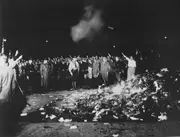
    Books burn on the Opernplatz as the German Labour Front is founded

    Late on Wednesday evening Berlin students burned an estimated 20,000 to 25,000 books on the Opernplatz, in pouring rain and in front of newsreel cameras; the works of Marx, Heinrich Mann, Kästner, Remarque, Tucholsky, Ossietzky and many others went into the fire, and Goebbels declared the age of “Jewish intellectualism” over. Books were burned in 21 other university towns the same night. That afternoon Hitler had addressed the first congress of the German Labour Front, which took the place of the destroyed trade unions under Robert Ley, and it was announced that the assets of the SPD, its newspapers and the Reichsbanner had been seized.