Day 45 of 100
Cabinet plans the Enabling Act; police and SA raid Berlin’s artists’ colony
The cabinet discussed how to pass an enabling law: Interior Minister Frick counted the deputies needed for a two-thirds majority and suggested that Communists might be put in labour camps. Police and SA auxiliaries sealed off the artists’ colony in Wilmersdorf, searched flats and arrested fourteen people, while Goebbels told the press that its task was to ‘instruct’. In the auction rooms, Kändler’s Meissen porcelain birds went under the hammer at what a reporter called crisis prices.
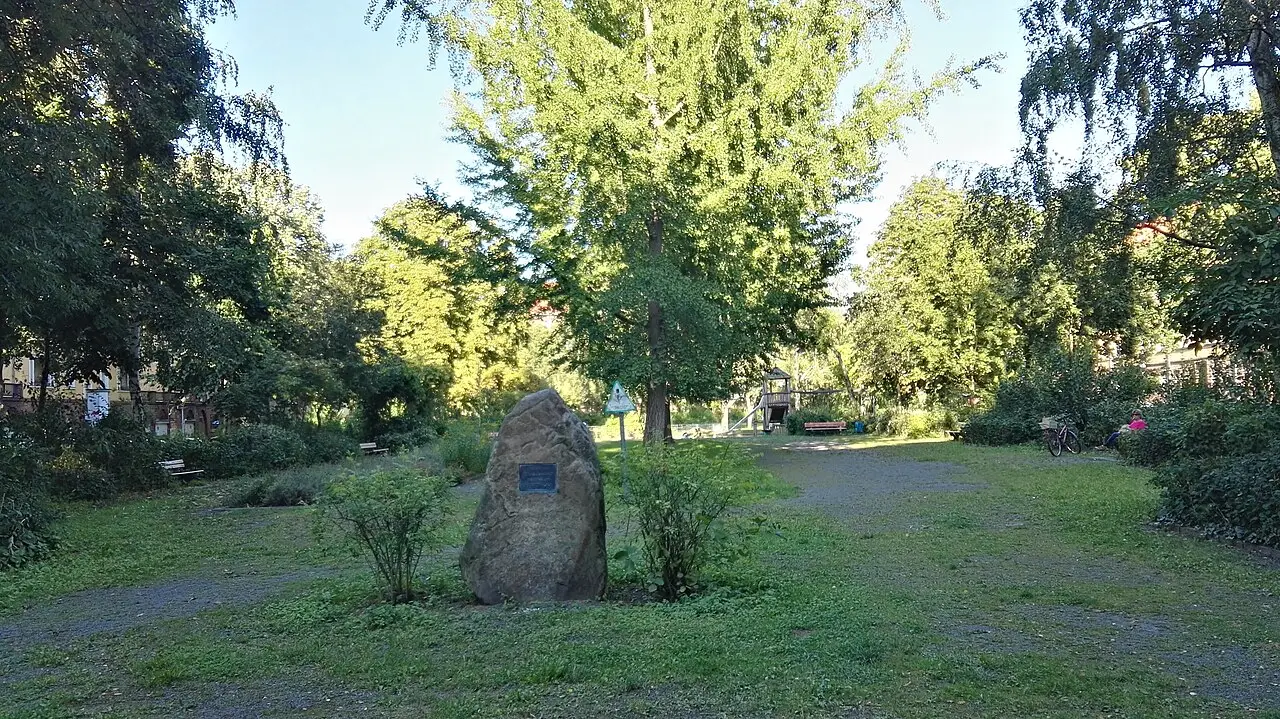

The minutes of the ministerial meeting of 15 March show the government working out the mechanics of the Enabling Act a week before the vote. Frick proposed wording modelled on the enabling law of December 1923 and calculated that, if the 81 Communist deputies were counted, 432 members would have to be present; if not, 378. He advised against formally cancelling the Communist mandates but in favour of banning the party. Göring was confident of the two-thirds majority and suggested that, if necessary, some Social Democrats could be removed from the chamber. State Secretary Meissner warned of possible difficulties in the Reichsrat.
The same afternoon, a few kilometres from the chancellery, the regime showed what lay behind these calculations: a police operation with SA men in plain clothes sealed off a whole housing estate of writers and actors and searched it flat by flat.
Laws and decrees
Erlaß über die Auflösung der Reichszentrale für Heimatdienst
Decree dissolving the Reich Central Office for Home Service
Dissolved the Reich Central Office for Home Service (Reichszentrale für Heimatdienst) with effect from 16 March 1933, in the week the new Propaganda Ministry began work.2
Politics and power
Government, terror and persecution
-
Government Berlin, Reich Chancellery
Cabinet discusses the Enabling Act
At a ministerial meeting the cabinet discussed the opening of the Reichstag and an enabling law. Frick proposed authorising the government to take ‘the measures it deems necessary in view of the distress of people and state’ and set out how many deputies had to be present for a two-thirds majority. Göring said that if necessary some Social Democrats could be expelled from the chamber. The same day Hindenburg and Hitler signed a decree dissolving the Reich Central Office for Home Service (Reichszentrale für Heimatdienst).1,2
-
Terror morning to 15:00, Berlin-Wilmersdorf, Laubenheimer Platz
Police and SA raid the artists’ colony
From the morning until 3 p.m. three police readiness units, 60 detectives and 20 SA auxiliary police in plain clothes sealed off the artists’ colony (Künstlerkolonie) around Breitenbachplatz and Laubenheimer Platz in Wilmersdorf, home to many left-wing actors and writers. Police with carbines blocked the streets; where residents barricaded themselves in, officers entered through windows from fire ladders. Fourteen people were arrested and taken to police headquarters. The police claimed to have found weapons and forged SA papers; these claims were not tested in any court.5,6
-
Propaganda midday, Berlin
Goebbels’s first press conference
At midday Goebbels addressed the press on the tasks of his ministry. Its first task, he said, was to bring about a ‘coordination’ (Gleichschaltung) between the government and the whole people; the press should not merely inform but ‘instruct’. The ministry was to have five departments: radio, press, active propaganda, film, and theatre and popular education. The same day Frick handed the supervision of radio over to him.3,4
-
Persecution Upper Silesia
Potempa murderers set free
The five Nazis condemned by the special court in Beuthen on 22 August 1932 for killing Konrad Pietzuch, a miner beaten and shot in his home at Potempa in Upper Silesia in front of his mother and brother, were released. A contemporary report attributed the release to Hitler’s own intervention.7,8
Sources disagree. A newspaper of 16 March dates the release to Wednesday 15 March at Hitler’s instigation, while a 1957 documentation in the Vierteljahrshefte für Zeitgeschichte attributes it to the amnesty, which it dates 25 March 1933.
Everyday life
What else was happening in Germany
-
Art Berlin
Kändler’s Meissen birds auctioned
A private collection of 77 Meissen porcelain birds by the 18th-century modeller Johann Joachim Kändler was sold at auction in Berlin. The sale was well attended; the reporter judged the prices far below pre-war levels but ‘fairly normal’ for a time of crisis.9
-
Economy
Free rye bread and butter for the poorest
Guidelines issued by Reich ministries for the free distribution of rye and butter to the neediest became known: millers were to grind the rye free of charge, bakers to bake bread for the wage only, against vouchers from welfare or labour offices, and the butter was to be packed in half-pound portions stamped ‘Reich aid, not for sale’.5
-
Economy
February trade surplus
Official figures put German imports in February at 347 million Reichsmarks and exports at 374 million, an export surplus of 27 million against 23 million in January.10
Voices
A ban on the KPD, on the other hand, would be expedient. … Those persons who continued to profess communism might have to be accommodated in labour camps.
I do not believe that there is such a thing as absolute objectivity. I promise that I will defend the rights of the press everywhere and always, but always on condition that the press defends the rights of the German people.
Elsewhere in the world
-
Austria
Police keep Austria’s parliament from meeting
In Vienna the Dollfuss government held that, after the resignation of the three presidents of the National Council, there was no legal basis to resume the sitting broken off on 4 March. When the third president, Dr Straffner, convened the chamber for 15 March, the police chief ordered the meeting prevented and detectives sealed off the chamber at 14:25. Straffner, with Greater German and Social Democratic deputies who had entered beforehand, declared his position constitutional and closed the sitting.4
In Berlin today
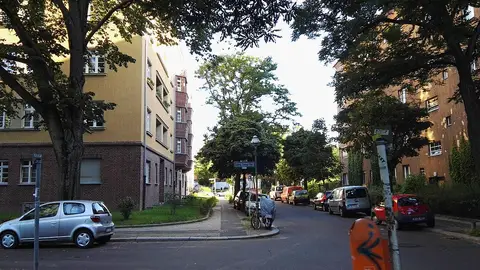

Künstlerkolonie Berlin, Ludwig-Barnay-Platz
Ludwig-Barnay-Platz (formerly Laubenheimer Platz), 14199 Berlin-Wilmersdorf
- Then
- The housing estate built in 1927–30 for actors, writers and journalists, known for its left-wing residents, was sealed off and searched by police and SA auxiliaries; fourteen people were arrested and books were burned on the square.5,6
- Today
- The estate still stands and is a listed monument. On the green of Ludwig-Barnay-Platz a boulder with a bronze plaque, unveiled in 1988, reads ‘Mahnmal für die politisch Verfolgten der Künstlerkolonie’.
More pictures

Sources
- Hans Schneider, ‘Das Ermächtigungsgesetz vom 24. März 1933’, Vierteljahrshefte für Zeitgeschichte 1 (1953), Heft 3 Institut für Zeitgeschichte, pp. 200–202, quoting the minutes of the ministerial meeting of 15 March 1933 (IMT document 2962-PS)
- Deutscher Reichsanzeiger und Preußischer Staatsanzeiger, 17 March 1933 Deutsche Digitale Bibliothek, Deutsches Zeitungsportal, p. 1, official text: 'Erlaß über die Auflösung der Reichszentrale für Heimatdienst. Vom 15. März 1933'
- Gelsenkirchener allgemeine Zeitung, 16 March 1933 Deutsche Digitale Bibliothek, Deutsches Zeitungsportal, p. 2, 'Goebbels übernimmt den Rundfunk' and report of his press address
- Wittener Volks-Zeitung, 16 March 1933 Deutsche Digitale Bibliothek, Deutsches Zeitungsportal, p. 2: conclusion of Goebbels's press address (direct speech); reports 'Wien, 15. März' on the National Council
- Bochumer Anzeiger und General-Anzeiger, 16 March 1933 Deutsche Digitale Bibliothek, Deutsches Zeitungsportal, p. 2: police report on the raid on the artists' colony ('Berlin, 15. März'); guidelines on free rye and butter
- Künstlerkolonie Bezirksamt Charlottenburg-Wilmersdorf (berlin.de)
- Laupheimer Verkündiger, 16 March 1933 Deutsche Digitale Bibliothek, Deutsches Zeitungsportal, p. 3, release of the five men convicted in the Potempa trial
- Paul Kluke, ‘Der Fall Potempa’, Vierteljahrshefte für Zeitgeschichte 5 (1957), Heft 3 Institut für Zeitgeschichte, Introduction (night of 9/10 August 1932; release under the amnesty) and text of the Beuthen judgment
- Dresdner Nachrichten (Frühausgabe), 16 March 1933 Deutsche Digitale Bibliothek, Deutsches Zeitungsportal, p. 5, 'Versteigerung von Kändler-Porzellan' (Berlin, 15 March)
- Erzgebirgischer Volksfreund, 16 March 1933 Deutsche Digitale Bibliothek, Deutsches Zeitungsportal, p. 2, February foreign trade figures
Spotted a mistake? Send a correction.