Day 78 of 100
Nobel laureate James Franck resigns his Göttingen chair in protest
On Easter Monday the physicist James Franck, a Nobel laureate protected from dismissal as a front-line veteran, asked to be released from his chair at Göttingen in protest at the treatment of Jewish Germans. In Berlin three directors of the Reichsbahn’s transport credit bank were arrested at home. At Tempelhof, holiday crowds at the Easter air show watched Ernst Udet’s aerobatics and then, unexpectedly, the aviator Hans Bertram landing at the end of his flight home from the Dutch East Indies, after his rescue in northern Australia the previous July.
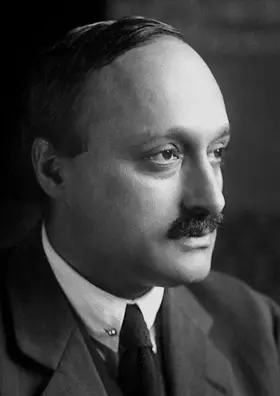

Exempt from the Civil Service law because he had fought at the front in the First World War, Franck declined to make use of the privilege while colleagues were dismissed, and said so publicly. The reaction in Göttingen was hostile: on 24 April the Göttinger Tageblatt, which had supported the NSDAP long before 1933, printed a declaration signed by 42 professors accusing him of an act of ‘sabotage’ that made the work of the ‘government of national uprising’, as the regime called itself, harder.
Politics and power
Government, terror and persecution
-
Opposition Göttingen
James Franck asks to be released from his chair
James Franck, director of the Second Physics Institute at the University of Göttingen and joint winner of the 1925 Nobel Prize in physics with Gustav Hertz, wrote to the Prussian Ministry of Culture asking to be released from his duties, and explained to the university’s rector that he would not use the exemption granted to Jewish front-line veterans. His protest was against the dismissal of Jewish and politically unwelcome colleagues.1,2
-
Persecution Berlin
Directors of the Reichsbahn credit bank arrested
On Easter Monday police arrested three directors of the Verkehrskreditbank, the bank owned by the Reichsbahn, at their homes in Berlin: Dr Prerauer, Schlesinger and von Schaeven. They had been suspended about two weeks earlier; the charges against them had not been made public.3
-
Propaganda
‘The quietest Easter in years’
The Kölnische Zeitung’s Berlin office reported on Monday evening that Easter had passed more quietly than for years, with no reports of clashes or violence, and attributed this to the ‘internal pacification’ brought by the new order. Most ministers had been out of Berlin, and Hitler had spent the holiday at his house in the Bavarian mountains. The report made no mention of the killings at Dachau earlier that week.4
-
Churches
Catholic graduates told not to stand aside
The Catholic paper Germania published an Easter appeal by the Catholic Academics’ Association telling Catholic intellectuals it would be ‘fatal’ not to face the new political and social situation squarely, and calling on its members at this ‘turning point of German history’ to rise from sleep and draw on their faith as the source of ‘constructive strength’.4
Everyday life
What else was happening in Germany
-
Transport about 16:30, Berlin, Tempelhof
Hans Bertram lands at Tempelhof
At about 16:30 the aviator Hans Bertram of Remscheid landed his Junkers W 33, registered D 1925, at Tempelhof, having left Surabaya the previous Tuesday and taken off from Athens that morning. In 1932 he had flown towards Australia, gone missing over the Timor Sea on 15 May and been found with his mechanic, Klausmann, by Aboriginal people near Wyndham in Western Australia on 4 July. Udet was among the first to shake his hand; Bertram told a reporter he was frozen through after some 14,000 kilometres in the April weather.4,5
-
Weather Berlin, Tempelhof
Blue sky, cold sun: Udet over Tempelhof
On the second day of the Easter air show the sky over Tempelhof was blue, but the sun shone so coldly that spectators felt it was winter again. Ernst Udet flew his celebrated aerobatics, landing and taking off repeatedly, rolling on one wheel, and at about 50 metres pretending to let go of the controls.4
Voices
Germans of Jewish descent [...] are being treated as aliens and enemies of the fatherland.
Elsewhere in the world
-
France
Herriot sails for America
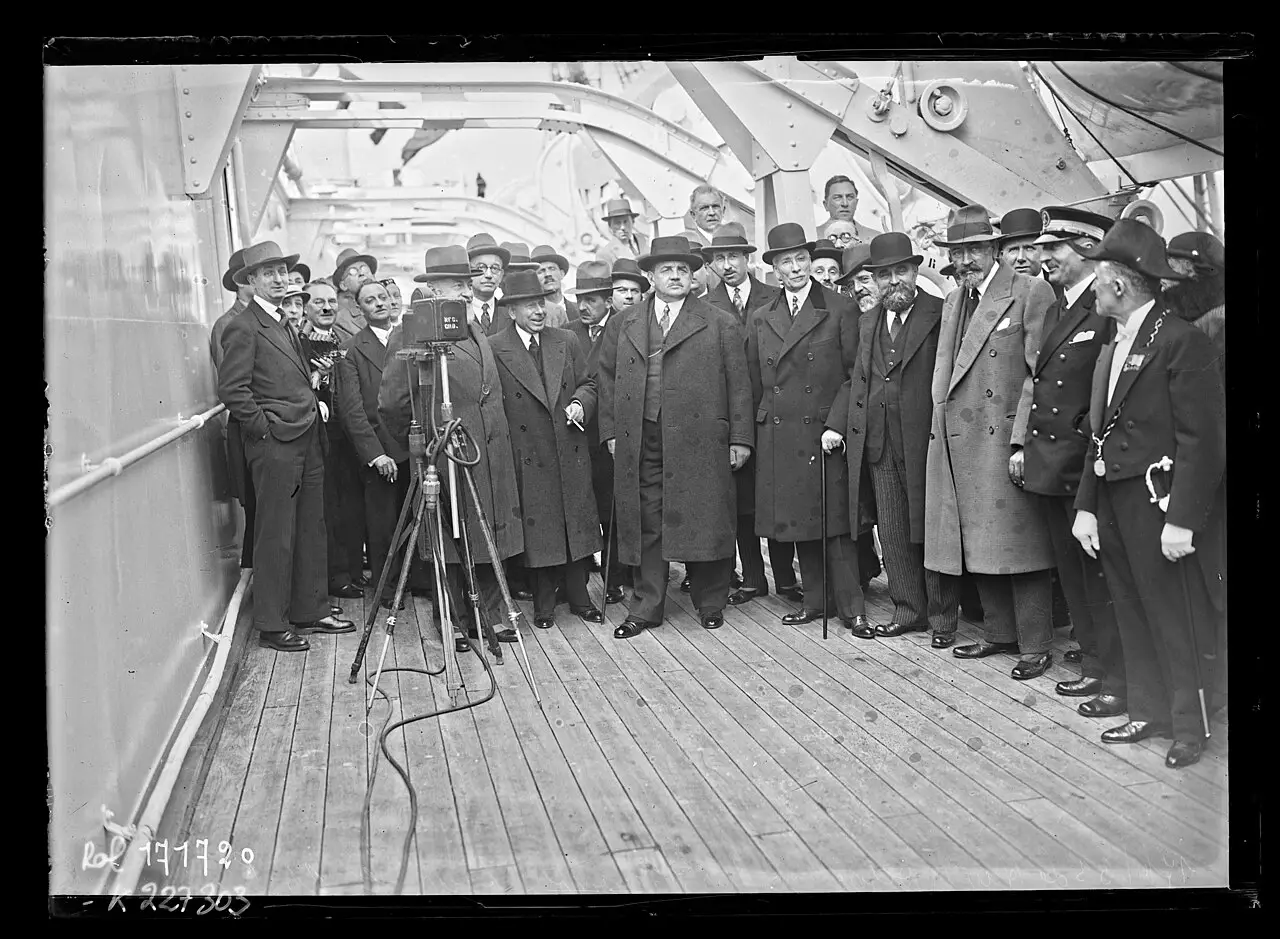
Édouard Herriot left Le Havre for the United States on the liner Ile de France, after speeches and receptions with the mayor, Léon Meyer. He said that the American government had asked for him by name as France’s envoy for the talks in Washington.4
-
Soviet Union
Vyshinsky demands conviction of the British engineers
In the Metropolitan-Vickers trial in Moscow the prosecutor, Vyshinsky, summed up, asking for all the British defendants except Gregory to be found guilty.5
In Berlin today
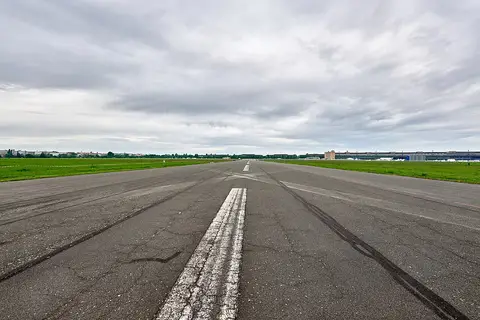

Tempelhof airfield (Zentralflughafen)
Tempelhofer Feld, Berlin (entrances from Tempelhofer Damm, Columbiadamm and Oderstraße)
- Then
- Berlin’s central airport, where the Easter air show was held on 16 and 17 April 1933 and where Hans Bertram landed at about 16:30 on Easter Monday.4,6
- Today
- Air traffic ended in 2008. Since 2010 the 300-hectare airfield, with its two runways, has been a public park, the Tempelhofer Feld; the former terminal building, now a listed building, is used for events and trade fairs.
More pictures
_-_btv1b53270157h.jpg)
Sources
- Rücktritt von James Franck und sogenannte „Gleichschaltung“ der Universität Georg-August-Universität Göttingen, Seminar für Ägyptologie und Koptologie (virtual exhibition)
- Hamburger Fremdenblatt, 19 April 1933 Deutsche Digitale Bibliothek, Zeitungsportal, Evening edition, p. 2, 'Rücktritt eines Nobelpreisträgers'
- Kölnische Zeitung, 19 April 1933 Deutsche Digitale Bibliothek, Zeitungsportal, Evening edition, p. 11 (Verkehrskreditbank)
- Kölnische Zeitung, 18 April 1933 Deutsche Digitale Bibliothek, Zeitungsportal, Morning edition, p. 1 (Easter in Berlin; Bertram; air show; Herriot), p. 2 (Catholic Academics' Association)
- Hamburger Fremdenblatt, 18 April 1933 Deutsche Digitale Bibliothek, Zeitungsportal, p. 2 (Moscow trial); evening edition, p. 3 (Bertram at Tempelhof)
- Park Tempelhofer Feld Berlin.de
Spotted a mistake? Send a correction.