Day 31 of 100
Göring promises to ‘exterminate’ Communism as the treason decree is published
On Ash Wednesday the decree against ‘treason against the German people’ appeared in the Reichsgesetzblatt, Frick asked every state to ban the Communist press and meetings, and the Prussian press service claimed that at least ten men had set the Reichstag fire. Göring told radio listeners that the government’s aim was the extermination of Communism, Hitler spoke to some 20,000 people in Breslau, and Cardinal Bertram begged Hindenburg to protect the freedom of the vote. In Berlin, Leopold Jessner bade farewell to the State Theatre with Billinger’s Rosse, while Max Reinhardt reopened the Deutsches Theater with Hofmannsthal’s Great Theatre of the World.
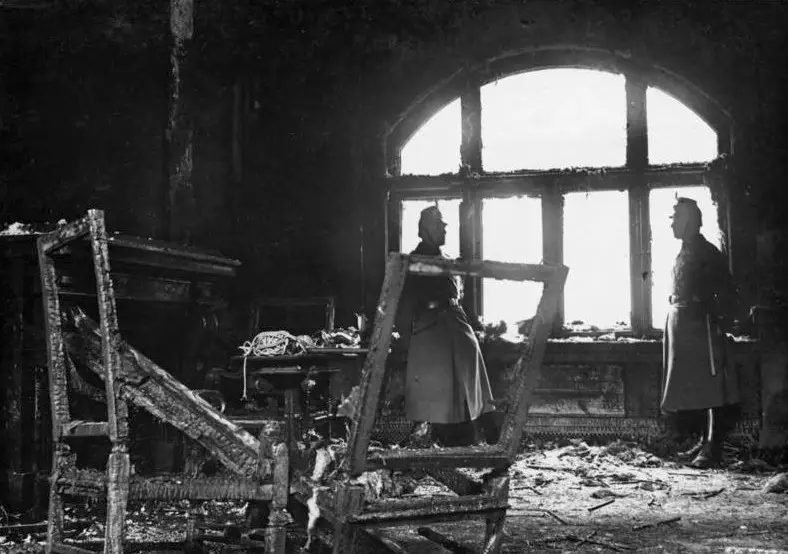

Two days after the fire the government turned the official version into policy. The Prussian press service now claimed that the fire could only have been laid by at least ten people who knew the building intimately, and pointed at the Communist deputies Ernst Torgler and Koenen; it offered no proof. Using the new emergency decree, Frick asked the state governments to silence the Communist party entirely, while Hitler, in a letter to Württemberg’s state president Bolz, told the head of a state government that he had no right to criticise the Reich government in public, even as he denied any intention of intervening in the south German states. The Catholic bishops, through Cardinal Bertram, appealed to Hindenburg to guarantee that every citizen could vote on 5 March without fear; the President replied the next day that he would do everything in his power.
Laws and decrees
Verordnung des Reichspräsidenten gegen Verrat am Deutschen Volke und hochverräterische Umtriebe
Decree against Treason against the German People and Treasonable Activities
Promulgated on 1 March. Its press clause (§ 6), punishing anyone who printed, distributed or stocked writings inciting violence against the state or a political mass strike, took effect the next day; the rest, including the death penalty for serious betrayal of military secrets and harsher penalties for publishing state secrets, on the fourth day after promulgation.1
Verordnung über Krankenversicherung
Decree on Health Insurance (halving the sick-note fee)
Adopted by the cabinet that morning and signed the same day, so that it would be felt before the election: the fee for a health-insurance sick note fell from 50 to 25 pfennigs, and the government took powers to make the sickness funds cheaper and simpler and to supervise them more closely. Announcing it on the radio, the government said that family members of the unemployed and pensioners would be exempt from the fee and that the change would apply from 2 March; the decree itself, published on 3 March, mentions neither.2,5
Politics and power
Government, terror and persecution
-
Propaganda Berlin
Prussian press service: ‘at least ten’ arsonists
The official Prussian press service claimed that carrying in the incendiary material had needed at least seven people and setting the fires at least ten, all of them familiar with every room of the Reichstag, and that ‘the most urgent suspicion’ therefore fell on the Communist deputies. It said three witnesses had seen van der Lubbe with the deputies Ernst Torgler and Koenen in the building hours before the fire, and denied that Torgler had given himself up voluntarily. Van der Lubbe continued to say that he had acted alone.4
-
Persecution Berlin
Frick asks every state to silence the Communist party
Citing the decree of 28 February, the Reich interior minister asked all state governments to ban every Communist periodical until further notice, to forbid all Communist meetings and marches, including meetings indoors, and to seize all Communist printed matter, leaflets and posters.5
-
Propaganda evening, Berlin; Breslau
Göring on the radio, Hitler in Breslau
In the evening Göring spoke on the Berlin station to justify the emergency decree, repeating that the fire had been the beacon for a Communist civil war and declaring that the government’s struggle aimed not at defence but at the extermination of Communism. Hitler spoke to about 11,000 people in the Jahrhunderthalle in Breslau; his speech was relayed to some 9,000 more in the nearby exhibition hall and to crowds at loudspeakers in six squares of the city.5
-
The states Berlin; Stuttgart
Hitler rebukes Württemberg’s state president
Hitler replied to a protest from Bolz, the Centre party state president of Württemberg, against a campaign speech in which Frick had threatened a state government that had called a Reich government appeal empty phrases and had failed to prevent the sabotage of a broadcast Hitler speech in Stuttgart; Frick had also told Württemberg’s envoy that the Reich would not accept that its executive power ended at the river Main. Hitler insisted that state leaders had no business attacking the Reich government at party meetings, but assured Bolz that, as a south German himself, nothing was further from his mind than threatening the Reich’s intervention in the affairs of the south German states.2
-
Churches Breslau; Berlin
Cardinal Bertram appeals to Hindenburg for a free vote
Writing from Breslau on behalf of the Fulda Bishops’ Conference, Cardinal Bertram told Hindenburg that bishops were hearing from all parts of the country of deep fears that voters would not be free on 5 March, and asked him to use the full authority of his office to guarantee that everyone could vote without threat. Hindenburg answered on 2 March that he would do everything in his power to secure the freedom of the vote, adding that he was convinced the Reich government had the same intention.3
Everyday life
What else was happening in Germany
-
Theatre evening, Berlin
Jessner’s farewell and Reinhardt’s return on the same night
Leopold Jessner, who had sued the Prussian state over his contract, left the State Theatre on the Gendarmenmarkt early by agreement, though his contract ran to the end of 1934; his last production there, the premiere of Richard Billinger’s peasant drama Rosse, was warmly applauded, author and director taking calls. The same evening the Deutsches Theater reopened under its new management, Achaz and Neft, with Max Reinhardt staging Hofmannsthal’s Das große Welttheater, with Klöpfer, Hermine Körner and Novotná in the cast. The Social Democratic Vorwärts had written that there was naturally no room for artists like Jessner under the new regime; a nationalist critic instead credited Rosse to the ‘new spirit’ brought in by the theatre’s new Intendant, Dr Ulbrich, and his dramaturge Johst.6,7,8
-
Theatre Berlin
Theatres dark for the election
Several Berlin theatres, remembering the empty houses of earlier election campaigns, closed for the weeks before and after the vote to avoid losses; one announced that it would stay shut from 27 February until 8 March because of the election.8,9
-
Economy
A cheaper sick note
From 2 March members of the statutory sickness funds paid 25 pfennigs instead of 50 for a sick note (Krankenschein), and family members of the unemployed and of pensioners, who had not paid for their own sick notes, were now exempted as well.5
Voices
Not for any single party do I write this plea, at the last hour, for the protection of free elections and guaranteed rights, but in foresight of the fateful consequences that the violation of right and law must bring in its widest effects.
Elsewhere in the world
-
Switzerland (League of Nations)
Disarmament conference votes against professional armies
In Geneva the General Commission of the Disarmament Conference decided, in line with French proposals for a uniform militia system on the Continent, that professional armies and troops serving beyond the planned short term should not be allowed alongside it, a question that directly touched German interests. The German press stressed that the decision did not bind Germany.5,10
More pictures

Sources
- Verordnung des Reichspräsidenten gegen Verrat am Deutschen Volke und hochverräterische Umtriebe (28.02.1933) documentArchiv.de, Reichsgesetzblatt 1933 I, S. 85–87; promulgated 1 March 1933 (§ 11 on entry into force)
- Akten der Reichskanzlei. Regierung Hitler 1933–1945, Bd. I: Nr. 36, Ministerbesprechung vom 1. März 1933, 10.30 Uhr; Nr. 39, Der Reichskanzler an den Württembergischen Staatspräsidenten Bolz, 1. März 1933 Historische Kommission bei der Bayerischen Akademie der Wissenschaften / Bundesarchiv, Band I, p. 136 (Nr. 36) and pp. 141–145 (Nr. 39, online at /protokoll/arh01d039)
- Akten der Reichskanzlei. Regierung Hitler 1933–1945, Bd. I: Nr. 40, Der Vorsitzende der Fuldaer Bischofskonferenz Kardinal Bertram an den Reichspräsidenten, Breslau, 1. März 1933 Historische Kommission bei der Bayerischen Akademie der Wissenschaften / Bundesarchiv, Band I, p. 145, with Hindenburg's reply of 2 March in the editorial note
- Hamburger Fremdenblatt, Reichsausgabe, Abend-Ausgabe Nr. 60, 1 March 1933 Deutsche Digitale Bibliothek, Zeitungsportal, p. 7, 'Der amtliche Bericht über die Brandstiftung'
- Hamburgischer Correspondent, Morgenausgabe, 2 March 1933 Deutsche Digitale Bibliothek, Zeitungsportal, p. 1 ('Verordnung über Krankenversicherung', 'Die KPD-Presse soll verboten werden', 'Göring begründet die Notverordnung'); p. 2 (Hitler in Breslau; 'Genfer Beschluß ohne Deutschland')
- Neue Mannheimer Zeitung, 2 March 1933 Deutsche Digitale Bibliothek, Zeitungsportal, p. 2, 'Jeßner geht, Reinhardt kommt wieder'
- Vorwärts, 24 February 1933 Deutsche Digitale Bibliothek, Zeitungsportal (Bibliothek der Friedrich-Ebert-Stiftung), p. 3, on Jessner's departure from the State Theatre
- Nachrichten für Stadt und Land (Oldenburg), 7 March 1933 Deutsche Digitale Bibliothek, Zeitungsportal, p. 13, 'Von den Berliner Bühnen'
- Vorwärts, 26 February 1933 Deutsche Digitale Bibliothek, Zeitungsportal (Bibliothek der Friedrich-Ebert-Stiftung), p. 8, theatre advertisements (Deutsches Theater, 'Mittwoch, 1. März, Erstaufführung'; a theatre closed 27 February to 8 March 'wegen der bevorstehenden Wahl')
- Kölnische Zeitung, 2 March 1933 Deutsche Digitale Bibliothek, Zeitungsportal, p. 2, 'Die politische Arbeit in Genf: Kein Berufsheer neben ...'
Spotted a mistake? Send a correction.