Day 66 of 100
Hitler Youth takes over the youth associations; the Rotter brothers ambushed in exile
The Hitler Youth occupied the offices of the Reich Committee of German Youth Associations in Berlin, and Baldur von Schirach took over its leadership. Einstein wrote to the Prussian Academy rejecting its charges; Hitler answered Hindenburg on the Jewish veterans and spoke to the farmers’ council; Kerrl told Jewish notaries to stop working. In Liechtenstein the Berlin theatre impresarios Alfred and Fritz Rotter were ambushed; Alfred and his wife fell to their deaths. Prussia ordered a strict Good Friday.

The ‘coordination’ (Gleichschaltung) of German society was now reaching organisations that had nothing to do with the state. The Reich Committee of German Youth Associations was the umbrella body of the country’s youth leagues; the Hitler Youth simply occupied its offices and declared that it had been dominated by a ‘Marxist wing’. On the same day the legal profession saw the next step after the boycott, as Jewish notaries in Prussia were ‘urgently advised’ to stop practising, and from his Belgian refuge Einstein rejected the charges of the Prussian Academy.
Laws and decrees
Erste Verordnung zum Vorläufigen Gesetz zur Gleichschaltung der Länder mit dem Reich
First Ordinance under the Provisional Law for the Coordination of the States
Set the procedure for reconstituting the state parliaments and municipal councils: lists were to be submitted by the parties’ representatives from the Reichstag election of 5 March, and votes cast for the ‘Sozialistische Kampfgemeinschaft’ and the ‘Kampfgemeinschaft der Arbeiter und Bauern’ were treated as Communist substitutes and disregarded. It was proclaimed on the Deutschlandsender at 22:30.2
Gesetz zur Abwehr politischer Gewalttaten
Law for the Prevention of Political Acts of Violence
Promulgated on 5 April: allowed the death penalty, life imprisonment or up to fifteen years in a penitentiary for bombings, politically motivated arson, poisoning and sabotage of railways, with trial before the special courts.3
Politics and power
Government, terror and persecution
-
Propaganda morning, Berlin
Hitler Youth occupies the Reich Committee of Youth Associations
In the morning the Hitler Youth, led by members of the Nazi youth leadership, occupied the Berlin offices of the Reich Committee of German Youth Associations (Reichsausschuss der deutschen Jugendverbände), the umbrella body of the youth leagues. The Nazi youth leader Baldur von Schirach took over its leadership himself; his press office claimed the change was necessary because a strong ‘Marxist wing’ had controlled the committee.1
-
Persecution Berlin
Jewish notaries told to stop practising
Kerrl instructed all Prussian appeal and district court presidents to ‘urgently recommend’ to Jewish notaries, ‘in their own interest’, that they refrain from exercising their office until further notice, claiming that public order was endangered if Germans had to accept documents certified by Jewish notaries. Those who refused were to be warned of the consequences.7
-
Opposition Le Coq-sur-Mer, Belgium
Einstein answers the Academy
From Le Coq near Ostend, Einstein wrote to the Prussian Academy of Sciences denying that he had taken part in any ‘atrocity agitation’. He confirmed that he had told the press he was giving up his Prussian citizenship because equality before the law and freedom of speech no longer existed in Germany, and described the country’s condition as a psychological sickness of the masses. The Academy published the letter on 11 April with a hostile commentary.4
-
Government Berlin
Hitler answers Hindenburg and courts the farmers
Replying to Hindenburg’s letter of the day before, Hitler wrote that the planned civil service law would make allowances for Jews who had served or been wounded in the war, while defending the ‘cleansing’ of the public service. At the 63rd plenary meeting of the German Agricultural Council in the former Prussian House of Lords he declared that the German peasant had perhaps had the greatest share in the nation’s turning point. He and Hindenburg also cabled condolences to Roosevelt on the loss of the airship Akron.5,6
Everyday life
What else was happening in Germany
-
Theatre about 15:00, Gaflei, Liechtenstein
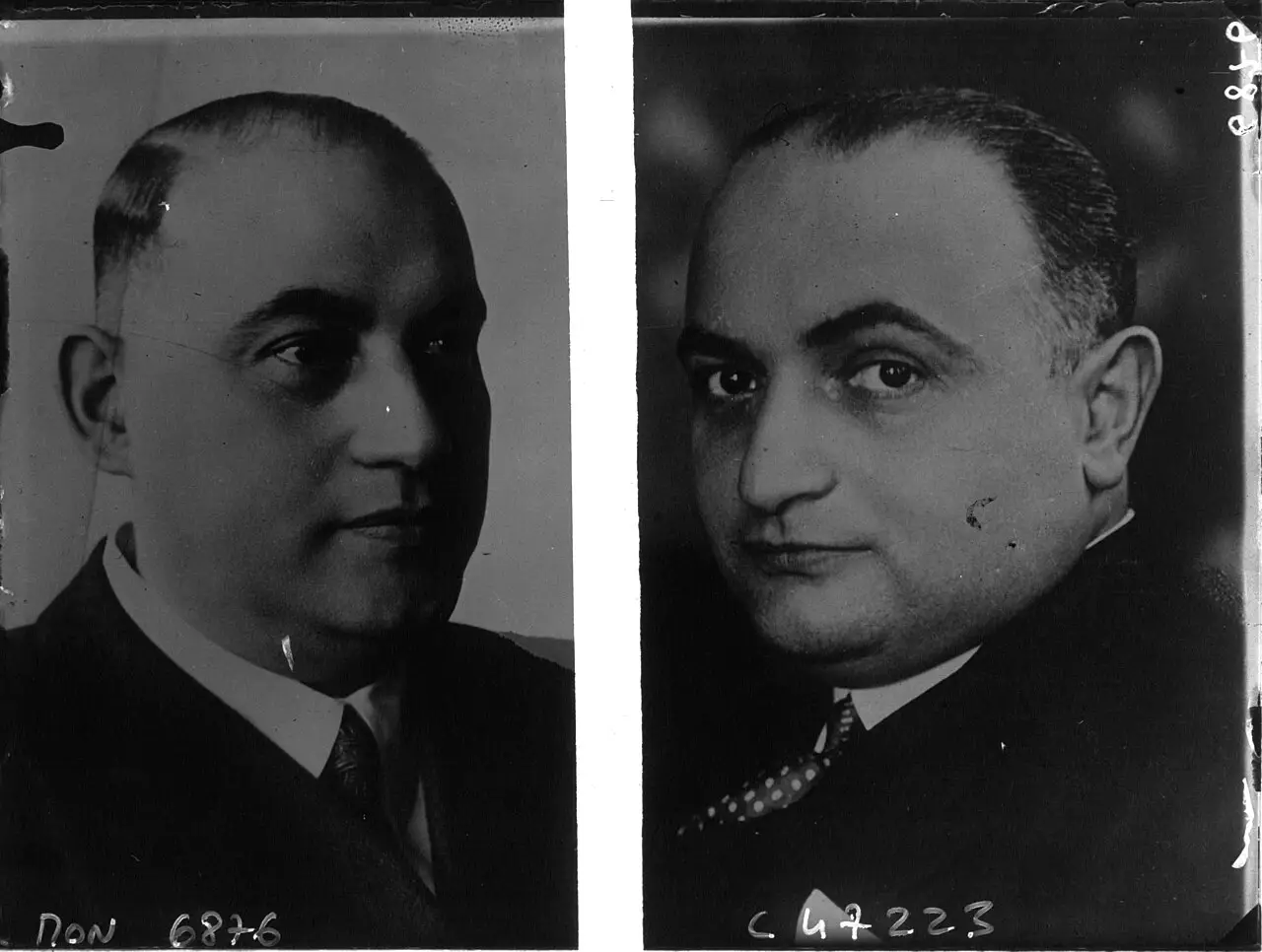
Berlin’s Rotter brothers ambushed in Liechtenstein
Alfred and Fritz Rotter, former Berlin theatre directors who had fled the city after the collapse of their theatre concern and were under investigation there for fraud, were staying at a hotel in Vaduz. Lured to the mountain inn at Gaflei, whose landlord was part of the plot, they were attacked at about 3 in the afternoon by seven young men with revolvers, Germans and Liechtensteiners, who tried to kidnap them. Fritz Rotter was forced into a car but jumped out and raised the alarm; Alfred Rotter, his wife and a Mrs Wolf fled down the rocky slope and fell. Rescuers found Alfred Rotter and his wife dead that night. Several suspects were arrested.9,10
-
Religion Prussia
A strict Good Friday ordered
Ahead of Good Friday on 14 April, the Prussian interior ministry told all police authorities to enforce the protection of the holy day with the utmost strictness. The Zentralinstitut für Erziehung und Unterricht in Berlin was to decide which films might be shown, a ‘strict standard’ was to be applied to theatre performances, and larger sporting events were not allowed.8
More pictures


Sources
- Godesberger Volkszeitung, 6 April 1933: ‘Vorstoß auf die Jugendverbände’ (Berlin, 5 April) Deutsche Digitale Bibliothek, Zeitungsportal, p. 1
- Erste Verordnung zum Vorläufigen Gesetz zur Gleichschaltung der Länder mit dem Reich (05.04.1933) documentArchiv.de, RGBl. 1933 I, S. 171
- Gesetz zur Abwehr politischer Gewalttaten (04.04.1933) documentArchiv.de, RGBl. 1933 I, S. 162; promulgated 5 April 1933
- Jeversches Wochenblatt, 12 April 1933: Einstein’s letter from Le Coq of 5 April (TU, Berlin, 11 April) Deutsche Digitale Bibliothek, Zeitungsportal, p. 2
- ‘Restoring’ Germany’s Civil Service (reading with the Hindenburg–Hitler letters of 4 and 5 April 1933) Facing History & Ourselves
- Harburger Anzeigen und Nachrichten, 5 April 1933: Hitler before the German Agricultural Council; condolences on the Akron Deutsche Digitale Bibliothek, Zeitungsportal, p. 1
- Sächsische Elbzeitung, 5 April 1933: ‘Amtsenthebung jüdischer Notare’ (Berlin, 5 April) Deutsche Digitale Bibliothek, Zeitungsportal, p. 2
- Schwäbischer Merkur, 6 April 1933: ‘Schärferer Schutz des Karfreitags’ (Berlin, 5 April) Deutsche Digitale Bibliothek, Zeitungsportal, p. 3
- Stadtanzeiger für Castrop-Rauxel, 7 April 1933: ‘Das Ende der Rotters’ (Vaduz, 6 April) Deutsche Digitale Bibliothek, Zeitungsportal, p. 11
- Münsterländische Volkszeitung, 7 April 1933: ‘Alfred Rotter und Frau tot’ (CNB, Bern, 6 April) and the Rotter bankruptcy proceedings Deutsche Digitale Bibliothek, Zeitungsportal, p. 2
Spotted a mistake? Send a correction.