Day 49 of 100
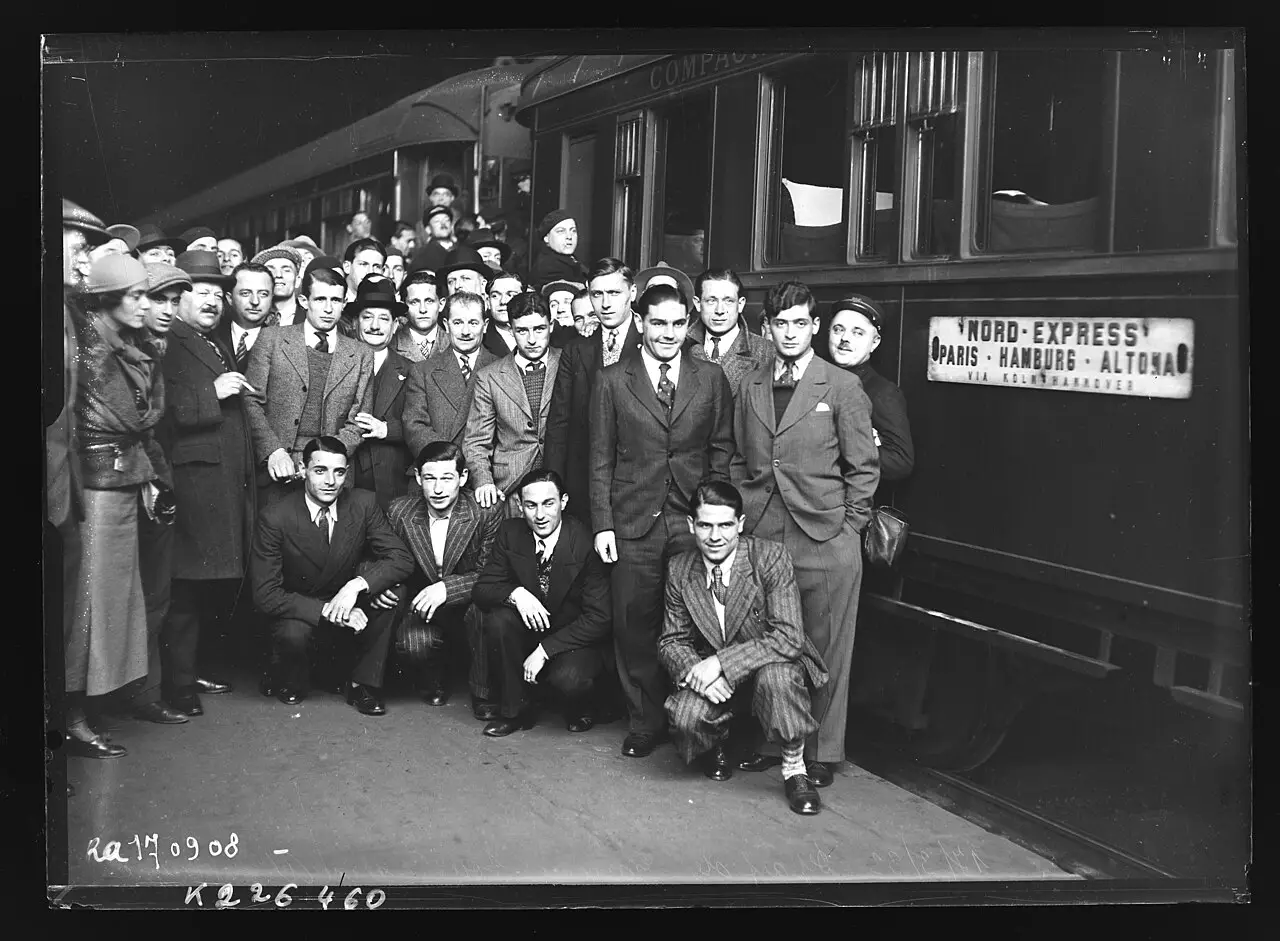
Germany and France draw 3–3 before 45,000 in Berlin’s Grunewald stadium
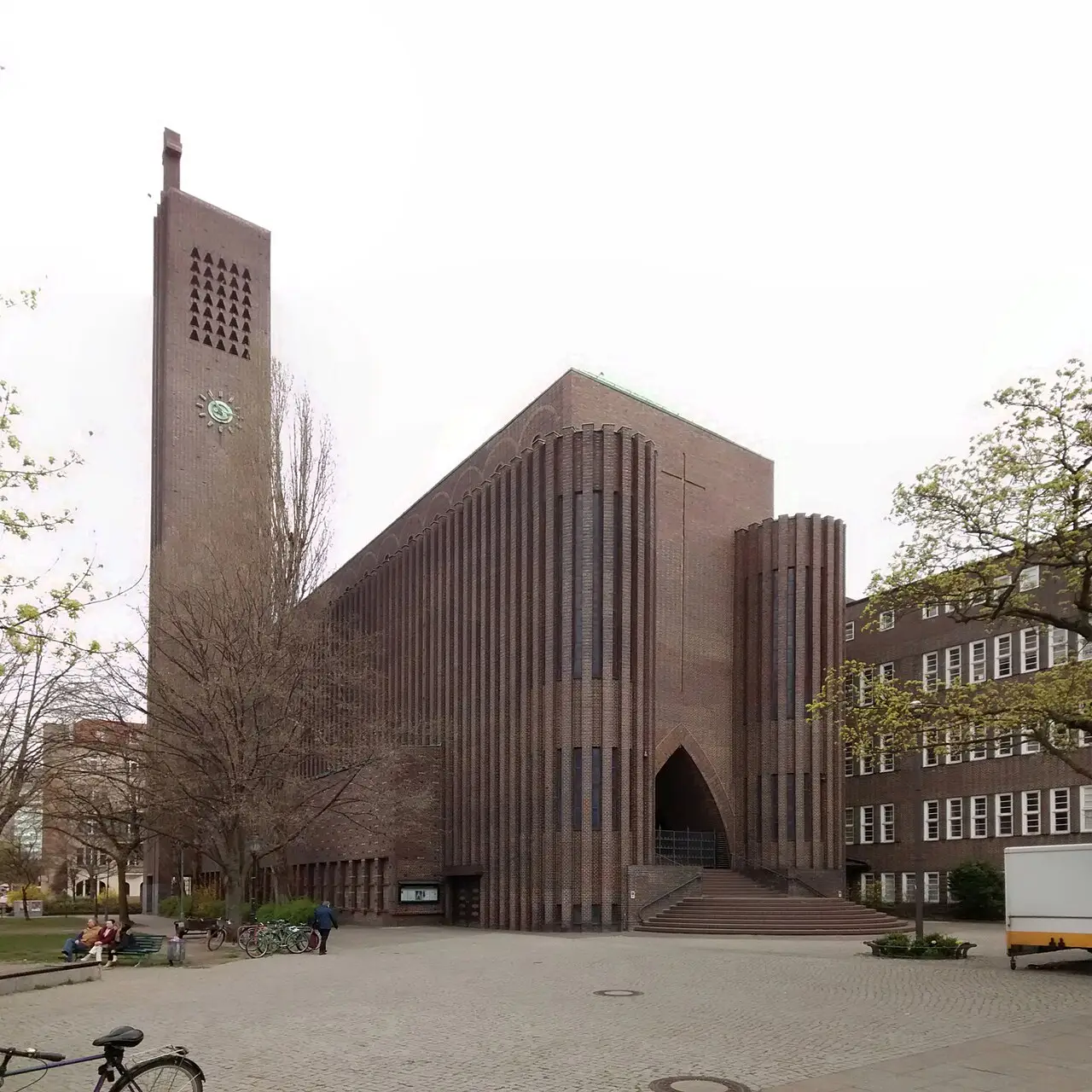
On a sunny Sunday some 45,000 spectators, French supporters among them, watched Germany let slip a 3–1 lead against France in the Deutsches Stadion. In Wilmersdorf Fritz Höger’s new brick church on Hohenzollernplatz was consecrated. The same weekend Jewish judges were withdrawn from administrative posts at Berlin’s central district court, and SA auxiliary police raided the Berlin office of the exiled pacifist Professor Foerster.
_-_btv1b53267971s.jpg)
Politics and power
Government, terror and persecution
-
Persecution Berlin
Jewish judges removed from posts at Berlin’s central district court
According to the Telegraphen-Union, all Jewish judges at the Amtsgericht Berlin-Mitte were being withdrawn from administrative posts, and from the new business year on 1 April all Jewish judges were to be taken out of the criminal departments of the Kriminalgericht, the summary court and the juvenile court. The same measures were under way at Landgericht I.7
-
Persecution afternoon, Berlin
SA raid on the Berlin office of the pacifist Foerster
On Sunday afternoon an SA auxiliary police unit forced its way into the flat of Hans Schwann, Berlin representative of the pacifist Professor Foerster, who was living in Paris. Schwann had already fled to Paris; card indexes and papers were seized. The raid was made public only a week later.8
-
Propaganda Berlin
No school on the day of the Reichstag’s opening
Frick asked the education ministries of the states by express letter to cancel lessons on 21 March, the day the ‘first Reichstag elected in the new spirit’ would meet in Potsdam. Goebbels called on the population to show ‘before all the world’ on that Tuesday that the German people had risen again from ‘disgrace and humiliation’.9
Everyday life
What else was happening in Germany
-
Sport Berlin, Deutsches Stadion
Germany 3, France 3
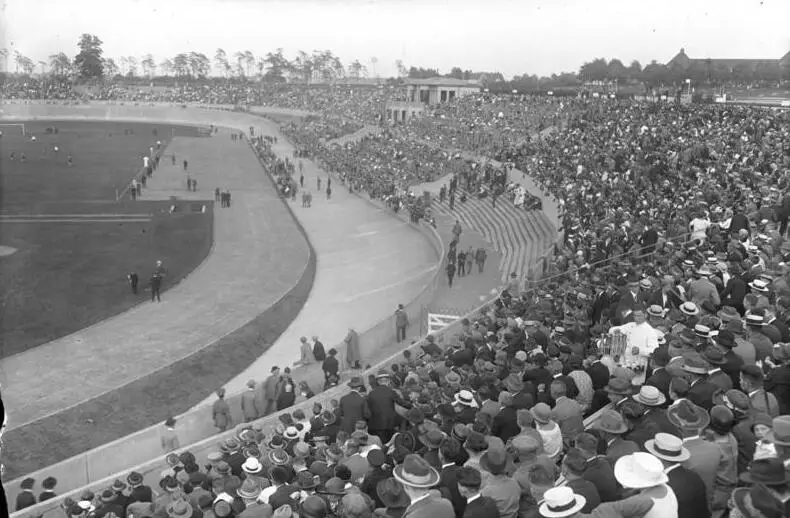
In the Deutsches Stadion in the Grunewald about 45,000 spectators saw the second football international between Germany and France end 3–3. Germany led 3–1, but France drew level in the closing stage. Paris evening papers praised the Berlin crowd’s conduct, noting that the Marseillaise had been received with the usual honours.1,2
Sources disagree. Reports of the French support differ, from about 500 visitors (Badische Presse) to 2,500 (Hamburger Fremdenblatt).
-
Weather Berlin
Sunshine after a wet Saturday
After Saturday’s rain, Sunday in Berlin brought unbroken sunshine; from midday groups of supporters streamed out to the Grunewald, and on Kaiserdamm cars could move only at walking pace.2
-
Religion morning, Berlin-Wilmersdorf, Hohenzollernplatz
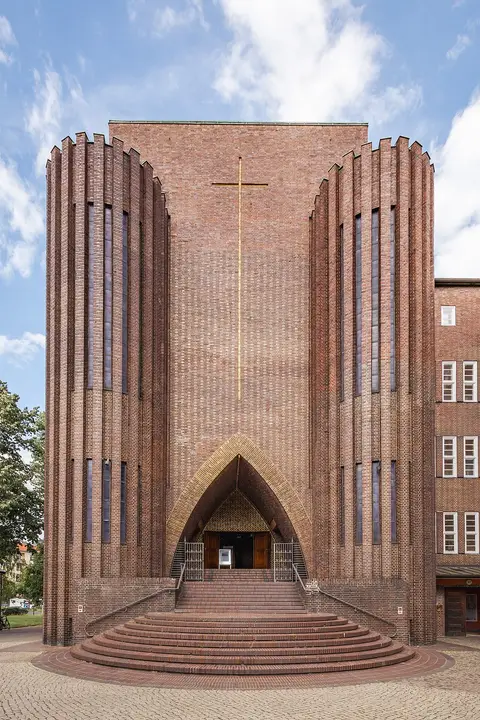
Höger’s church on Hohenzollernplatz consecrated
The new Protestant church on Hohenzollernplatz in Wilmersdorf, a brick building by the Hamburg architect Fritz Höger designed with Ossip Klarwein, was consecrated with a festival service. Chorales played from the roof of the parish hall opened the ceremony; the crowds were so large that police had to cordon off the area, and shortly after 10:30 a procession of church elders carried the chalice, Bible and font round the building.3,4
-
Sport Berlin, Grosses Schauspielhaus
Berlin wins the gymnasts’ three-cities contest
In the sold-out Grosses Schauspielhaus the 25th anniversary three-cities gymnastics contest between Berlin, Hamburg and Leipzig ended in a surprise: Berlin, the outsider, exploited small weaknesses in the visiting teams to win.2
Voices
The coming Tuesday shall show the whole world that the German people, united in its estates and tribes, has risen again from disgrace and humiliation.
Elsewhere in the world
-
Italy and United Kingdom
MacDonald and Mussolini discuss a four-power pact
An official communiqué on Prime Minister MacDonald’s talks with Mussolini in Rome kept the international press busy on Sunday evening. Mussolini had put forward a draft understanding between the four Western powers, Britain, France, Germany and Italy, on the main political questions; the German and French ambassadors were kept informed.10
In Berlin today
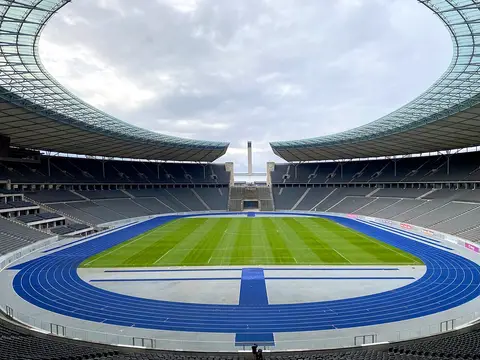

Deutsches Stadion (site of the Olympiastadion)
Olympischer Platz 3, 14053 Berlin-Westend
- Then
- The Deutsches Stadion, opened in 1913 inside the Grunewald racecourse, where some 45,000 people watched Germany draw 3–3 with France.1,6
- Today
- In December 1933 Hitler approved plans that included demolishing the Deutsches Stadion; the Olympiastadion, built in 1934–36 for the Olympic Games, now stands on the site.
msu-2023-0I9A9591-.jpg)
Kirche am Hohenzollernplatz
Hohenzollerndamm 202–203, 10717 Berlin-Wilmersdorf
- Then
- The new brick church by Fritz Höger and Ossip Klarwein was consecrated with a festival service before large crowds.3,4,5
- Today
- The church, parish hall and rectory survive and are a listed monument (Hohenzollerndamm 202–203); the Deutsche Stiftung Denkmalschutz funded work on the ensemble in 2022.
More pictures


Sources
- Badische Presse (Montagsausgabe), 20 March 1933 Deutsche Digitale Bibliothek, Deutsches Zeitungsportal, p. 7, sports supplement: 'Deutschland – Frankreich 3:3' (Berlin, 19 March)
- Hamburger Fremdenblatt (Reichsausgabe), 20 March 1933 Deutsche Digitale Bibliothek, Deutsches Zeitungsportal, p. 10, sports page: the match and the scene in the Grunewald; three-cities gymnastics contest
- Hamburger Fremdenblatt (Reichsausgabe), 20 March 1933 Deutsche Digitale Bibliothek, Deutsches Zeitungsportal, p. 3, consecration of the church on Hohenzollernplatz
- Ev. Kirche am Hohenzollernplatz Deutsche Stiftung Denkmalschutz
- Kirche am Hohenzollernplatz, Obj.-Dok.-Nr. 09011455 Landesdenkmalamt Berlin, Denkmaldatenbank
- Geschichte des Olympiastadions Olympiastadion Berlin GmbH, Sections '1909–1916 Deutsches Stadion' and '1930–1933 Planung für Umbau'
- Godesberger Volkszeitung, 20 March 1933 Deutsche Digitale Bibliothek, Deutsches Zeitungsportal, p. 2, Jewish judges at the Amtsgericht Berlin-Mitte
- Dresdner Nachrichten, 26 March 1933 Deutsche Digitale Bibliothek, Deutsches Zeitungsportal, p. 3, raid on the Berlin office of Professor Foerster 'last Sunday'
- Biberacher Zeitung, 20 March 1933 Deutsche Digitale Bibliothek, Deutsches Zeitungsportal, p. 1, Goebbels's appeal; 'Schulfrei am Dienstag' (Berlin, 19 March)
- General-Anzeiger (Bonn), 20 March 1933 Deutsche Digitale Bibliothek, Deutsches Zeitungsportal, p. 1, 'Mussolinis Entwurf einer Verständigung der vier Westmächte' (Rome, 19 March)
Spotted a mistake? Send a correction.