Day 38 of 100
Reich takes the police in Baden, Württemberg and Saxony; Hamburg gets a Nazi mayor
Frick took over police powers in Baden, Württemberg, Saxony and Schaumburg-Lippe and installed Nazi commissioners, leaving Bavaria as the only large state not yet under Reich control. Hamburg’s parliament elected a Senate led by the Nazi Carl Vincent Krogmann, SA men occupied the trade union house in Breslau after a shooting, and Social Democratic deputies complained in vain about the beating of prisoners. The Reich Institute reported six million unemployed at the end of February. At the Cologne opera, Nazi hecklers disrupted Fidelio after the general music director stayed away for fear of Nazi demonstrations.
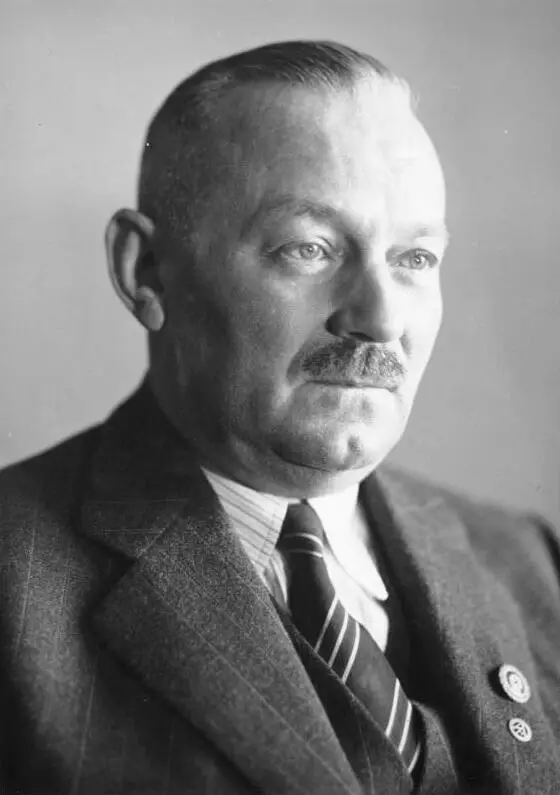

With Hamburg, Bremen, Lübeck and Hesse already in hand, the Reich interior minister used the Reichstag Fire Decree on 8 March to take over the police in four more states. Only Bavaria and the states already governed by the Nazis kept control of their own police, as a Hamburg paper noted. In Prussia, which the Reich had ruled through commissioners since July 1932, the commissioners retired 18 senior officials and agreed that civil servants might attend the rallies of organisations supporting the ‘government of national uprising’ in uniform. When the Social Democratic Reichstag deputies Löbe and Hertz complained that prisoners were being mistreated in police and court prisons by unofficial guards, the commissioners merely took note.
Politics and power
Government, terror and persecution
-
The states Berlin; Karlsruhe; Stuttgart; Dresden; Bückeburg
Four more states lose control of their police
Citing the Reichstag Fire Decree, Frick took over the police powers of Schaumburg-Lippe, Baden, Württemberg and Saxony and appointed as Reich commissioners: for Schaumburg-Lippe, Matthäi, a municipal official from Marl; for Baden, the Nazi Landtag deputy Wagner; for Württemberg, the Reichstag deputy von Jagow of Esslingen; and for Saxony, the Reichstag deputy and former naval lieutenant von Killinger. In Saxony a senior army commander had at first been considered. The government of Schaumburg-Lippe resigned.1,2,3
-
The states 16:00, Hamburg, Rathaus
Hamburg elects a Nazi-led Senate
With the Communist deputies absent, Hamburg’s Bürgerschaft elected a new Senate of six Nazis, two German Nationalists, two Stahlhelm men and one member each of the German People’s Party and the State Party. Carl Vincent Krogmann, the Nazis’ candidate and son of a well-known Hamburg merchant, became First Mayor with 79 votes of the 160-member house; the former mayor Petersen gave up his seat. Krogmann named the revival of Hamburg’s trade and shipping as the new Senate’s most urgent task.2,4,5,1
-
Terror 07:00, Breslau
SA occupy the trade union house in Breslau
Shortly after 07:00 an SA column of about 250 men marched past the trade union house in Breslau. According to the police, shots were fired at the end of the column from the building and a house opposite; another account said the SA had come to hoist the swastika and that a Reichsbanner group of eleven men inside resisted. Five SA men were wounded, and one, the 20-year-old Herbert Wellisch, died in hospital; an SA car on its way to the hospital struck and killed a woman cyclist. Several people inside the building, including the caretaker and a cleaner, were badly hurt. SA and police occupied the building and raised the swastika.4
Sources disagree. The police report blamed shots from the building; another account had the SA arrive to raise the swastika and the defenders resist.
-
Persecution Berlin
Prussian purge and complaints of prisoner abuse
The Reich commissioners governing Prussia retired 18 district presidents, deputy district presidents, police presidents and county heads, and appointed three new deputy district presidents. The Social Democratic deputies Löbe and Hertz asked whether factual Social Democratic leaflets would be allowed in the coming municipal elections and complained of prisoners being mistreated by unofficial guards in police and court prisons; the complaints were noted without action. Göring proposed letting the ‘joyful demonstrations’ with swastika flags on public buildings run their course for a few days. In Berlin the ban on the Communist Rote Fahne was extended by six months to 28 August.3,6,7
-
Parliament Berlin; Potsdam
The Reichstag will sit in the Kroll Opera
Because converting the ‘Langer Stall’ in Potsdam would take too long, it was decided that the Reichstag’s working sessions would be held in the Kroll Theatre in Berlin; the opening was expected on 21 March. The Prussian State Council filed a suit at the State Court against the Reich commissioners for Prussia.2,5
Everyday life
What else was happening in Germany
-
Music evening, Cologne, Opera House
Heckling at the Cologne Fidelio
Because demonstrations by Nazis were feared, the general music director Szenkar did not conduct Beethoven’s Fidelio at the Cologne opera; Meinhardt von Zallinger took his place. In the dungeon scene the singer of Pizarro, Schmidt-Scherf, was interrupted by antisemitic shouts. Josef Witt, spokesman of the stage employees’ association, assured the audience that the singer was not a Jew. To cries of ‘We want a German theatre!’ others replied ‘We want an artistic theatre!’, and the audience drowned the hecklers in applause; the rest of the performance passed undisturbed.2
-
Economy
Six million unemployed
The Reich Institute for Employment reported that the spring easing of the labour market had begun in the second half of February: at the end of the month about 6,002,000 people were registered as unemployed at the labour exchanges, 45,000 fewer than in mid-February. About 2,443,000 recognised ‘welfare unemployed’ depended on municipal relief, and the voluntary labour service occupied some 195,000 people.2
-
Society Prussia
Göring orders the suppression of nudism
The Prussian press service published a circular of 3 March in which Göring, while welcoming the use of ‘sun, air and water’ for the people’s health, called the nudist movement a ‘cultural aberration’ and ordered the police to watch nudist associations closely and withdraw the bathing places and grounds made available to them, with the aim of destroying the movement.4
-
Weather Cologne
Mild and bright
Cologne recorded a maximum of about 11 degrees, with the sky partly clearing by the next morning.2
Elsewhere in the world
-
United States
Banks begin to reopen
Treasury Secretary Woodin issued an order relaxing the bank holiday where safeguards against hoarding existed, so that urgent needs for money could be met; a large number of banks across the country reopened their counters for limited payments.3
More pictures

Sources
- Hamburgischer Correspondent, Morgenausgabe, 9 March 1933 Deutsche Digitale Bibliothek, Zeitungsportal, p. 2, 'Weitere Reichskommissare'
- Kölnische Zeitung, 9 March 1933 Deutsche Digitale Bibliothek, Zeitungsportal, p. 1 ('Weitere Reichskommissare', '6 002 000 Arbeitslose', Prussian State Council suit); p. 8 ('Kundgebungen im Opernhaus', weather)
- Dresdner neueste Nachrichten, 9 March 1933 Deutsche Digitale Bibliothek, Zeitungsportal, p. 2 (Rote Fahne ban; Washington, 8 March); p. 3 (Schaumburg-Lippe)
- Hamburger Fremdenblatt, Reichsausgabe, Nr. 67, 8 March 1933 Deutsche Digitale Bibliothek, Zeitungsportal, p. 1 ('Senatswahl', 'Schwere Schießerei in Breslau'); p. 3 ('Bekämpfung der Nacktkulturbewegung')
- Hamburger Fremdenblatt, Reichsausgabe, Abend-Ausgabe Nr. 68, 9 March 1933 Deutsche Digitale Bibliothek, Zeitungsportal, p. 2 (Krogmann; Kroll Theatre; new Reich commissioners)
- Akten der Reichskanzlei. Regierung Hitler 1933–1945, Bd. I: Nr. 49, Aufzeichnung des Ministerialdirektors Landfried über eine Chefbesprechung im Preußischen Staatsministerium am 8. März 1933 Historische Kommission bei der Bayerischen Akademie der Wissenschaften / Bundesarchiv, Band I, pp. 181–182
- Akten der Reichskanzlei. Regierung Hitler 1933–1945, Bd. I: Nr. 48, Sitzung der Kommissare des Reichs für Preußen, 8. März 1933 Historische Kommission bei der Bayerischen Akademie der Wissenschaften / Bundesarchiv, Band I, pp. 172–181
Spotted a mistake? Send a correction.