Day 89 of 100
SA and SS given their own disciplinary law; Wolfgang Köhler’s protest appears in print
The cabinet passed and published a one-sentence law putting SA and SS men under a disciplinary code to be issued by Hitler as supreme SA leader, approved the return of military courts and turned the aviation commissariat into a ministry for Göring. In the Deutsche Allgemeine Zeitung the psychologist Wolfgang Köhler defended his dismissed Jewish colleagues in what was later called the last openly anti-Nazi article published in Germany. Frick named von Tschammer und Osten Reich Sports Commissioner, and the Reichsbahn showed off a road trailer that could carry railway wagons to the door.

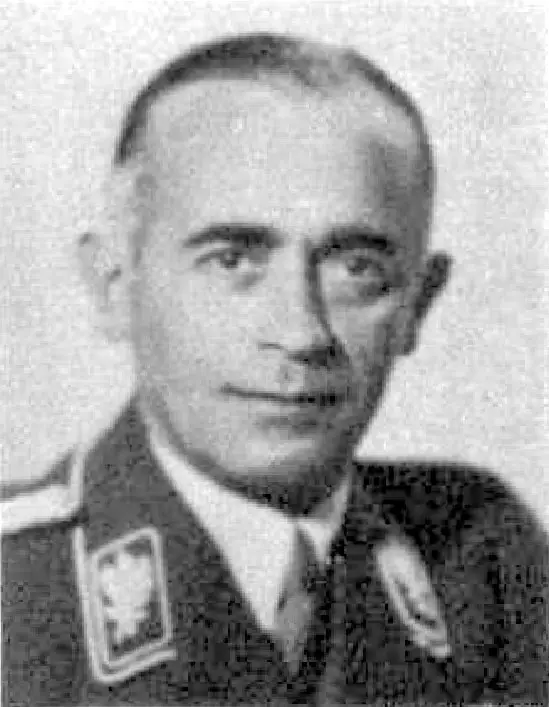
The disciplinary law gave the party’s armed formations a public-law status of their own, with punishment of their members’ breaches of discipline governed by rules set by Hitler. On the same day Göring, as Prussian interior minister, reminded the police that only the regular police authorities could make arrests and that “commissioners for special duties” had no power to order them.
Laws and decrees
Gesetz betreffend die Dienststrafgewalt über die Mitglieder der SA. und SS.
Law on disciplinary authority over members of the SA and SS
Passed by the cabinet and promulgated on 28 April. Members of the SA and SS became subject to a public-law disciplinary authority under regulations issued by Hitler as supreme SA leader. It was repealed by the law on the unity of party and state of 1 December 1933.1,2
Politics and power
Government, terror and persecution
-
Government Berlin
Disciplinary law for the SA and SS
The Reich cabinet passed a law placing members of the SA and SS under a public-law disciplinary authority, according to regulations to be issued by the Reich Chancellor as supreme SA leader. It was signed by the Reich Chancellor and the Reich Interior Minister and promulgated the same day; the official explanation said it was to allow breaches of discipline and order to be punished.1,2,3
-
Military Berlin
Military courts to return; Göring becomes aviation minister
The cabinet also passed a law reintroducing military jurisdiction, expected to take effect on 1 October, heard the Reich Labour Minister’s plan for job creation, and accepted a presidential decree converting the Reich Commissariat for Aviation into a Ministry of Aviation under Göring.2
-
Terror Berlin
Göring: only the police may arrest
In a decree published on 28 April, Göring stated that only the regular police authorities had the power to arrest, acting on their own assessment and on orders only from him, his state secretary or their responsible superiors; “commissioners for special duties” did not count. Police detention on suspicion of corruption was to stop. He threatened to punish breaches without mercy.3
-
Terror early morning, Berlin-Charlottenburg
Mass police raid in Charlottenburg
In the early morning a special police unit, the Kommando z. b. V. Wecke, sealed off several large blocks of flats in a part of Charlottenburg the police described as a Communist stronghold, using about 600 men. Searches were expected to last into the afternoon; the police reported finding some rifles, other weapons and Communist leaflets.4
-
Opposition Berlin
Wolfgang Köhler’s “Conversations in Germany”
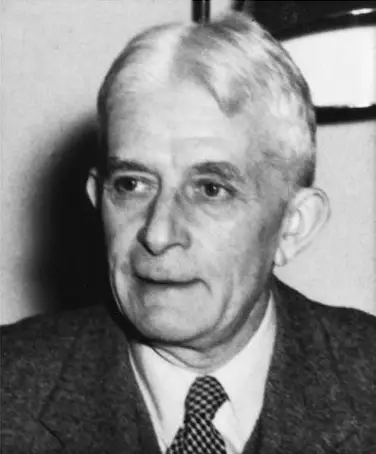
The Deutsche Allgemeine Zeitung printed an article by Wolfgang Köhler, director of the Psychological Institute at Berlin University, protesting against the dismissal of Jewish scholars such as the physicist James Franck and defending the patriotism of those who would not join the Nazi Party. Expecting to be arrested, Köhler and members of his institute spent the night playing chamber music; no one came.6
-
Opposition Berlin
Salaried employees’ union federation dissolves itself
An extraordinary congress of the General Free Federation of Salaried Employees (AfA-Bund), the white-collar partner of the free trade unions, met in Berlin. After a short report by its chairman Stähr, delegates of the member unions voted to dissolve the federation with effect from 30 April.5
Everyday life
What else was happening in Germany
-
Sport Berlin
A Reich Sports Commissioner
Interior Minister Frick appointed von Tschammer und Osten Reich Sports Commissioner at the Reich Interior Ministry, a new post with authority over German sport.2
-
Transport Berlin, Anhalter Bahnhof
A railway wagon on rubber tyres
At the Anhalter Bahnhof, in front of the Reichsbahn’s director-general Dorpmüller, invited guests and the press, the railway demonstrated its first road vehicle for carrying whole goods wagons, the “mobile siding” invented by Reichsbahn official Culemeyer and built with the Gotha wagon works: two low chassis on sixteen rubber-tyred wheels, pulled by a motor tractor, to deliver wagons from door to door.7
-
Society Berlin
Bank clerks’ association bars Jews
The German Bank Employees’ Association (Deutscher Bankbeamtenverein) announced that it would no longer accept Jews as members.3
-
Births and deaths Berlin
Horst Faas born in Berlin
Horst Faas was born in Berlin. He grew up during the war and, like all German boys, had to join the Hitler Youth. As a photographer for the Associated Press he became known above all for his coverage of the Vietnam War, which brought him the first of his two Pulitzer Prizes.8
Voices
They believe that only the quality of a human being should determine his worth, that intellectual achievement, character, and obvious contributions to German culture retain their significance whether a person is Jewish or not.
More pictures

Sources
- Gesetz betreffend die Dienststrafgewalt über die Mitglieder der SA. und SS. vom 28. April 1933 documentArchiv.de, text after RGBl. 1933 I S. 230, with note on promulgation
- Biberacher Zeitung, 29 April 1933 Deutsche Digitale Bibliothek, Zeitungsportal, p. 3, cabinet report and "Ernennung des Reichssportkommissars" (Berlin, 28 April)
- Erzgebirgischer Volksfreund, 29 April 1933 Deutsche Digitale Bibliothek, Zeitungsportal, p. 6, "Preußischer Erlaß über Zuständigkeit bei Verhaftungen" and the SA/SS law; p. 5, item on the Bankbeamtenverein (all Berlin, 28 April)
- Freiberger Anzeiger und Tageblatt, 29 April 1933 Deutsche Digitale Bibliothek, Zeitungsportal, p. 6, "Großrazzia in Charlottenburg" (Berlin, 28 April)
- Weißeritz-Zeitung, 29 April 1933 Deutsche Digitale Bibliothek, Zeitungsportal, p. 15, "Auflösung des Afa-Bundes" (Berlin, 28 April)
- One Man Against the Nazis — Wolfgang Köhler Mary Henle, American Psychologist 33 (October 1978); copy in the MPG.PuRe repository, pp. 939–940
- Der Rottumbote, 29 April 1933 Deutsche Digitale Bibliothek, Zeitungsportal, p. 6, "Güterwagen frei ins Haus" (Berlin, 28 April)
- Horst Faas, AP combat photographer, dies at 79 Associated Press, in the Portland Press Herald, 11 May 2012
Spotted a mistake? Send a correction.