Day 80 of 100
Munich rally demands ‘Out with the Jews from the administration of justice’
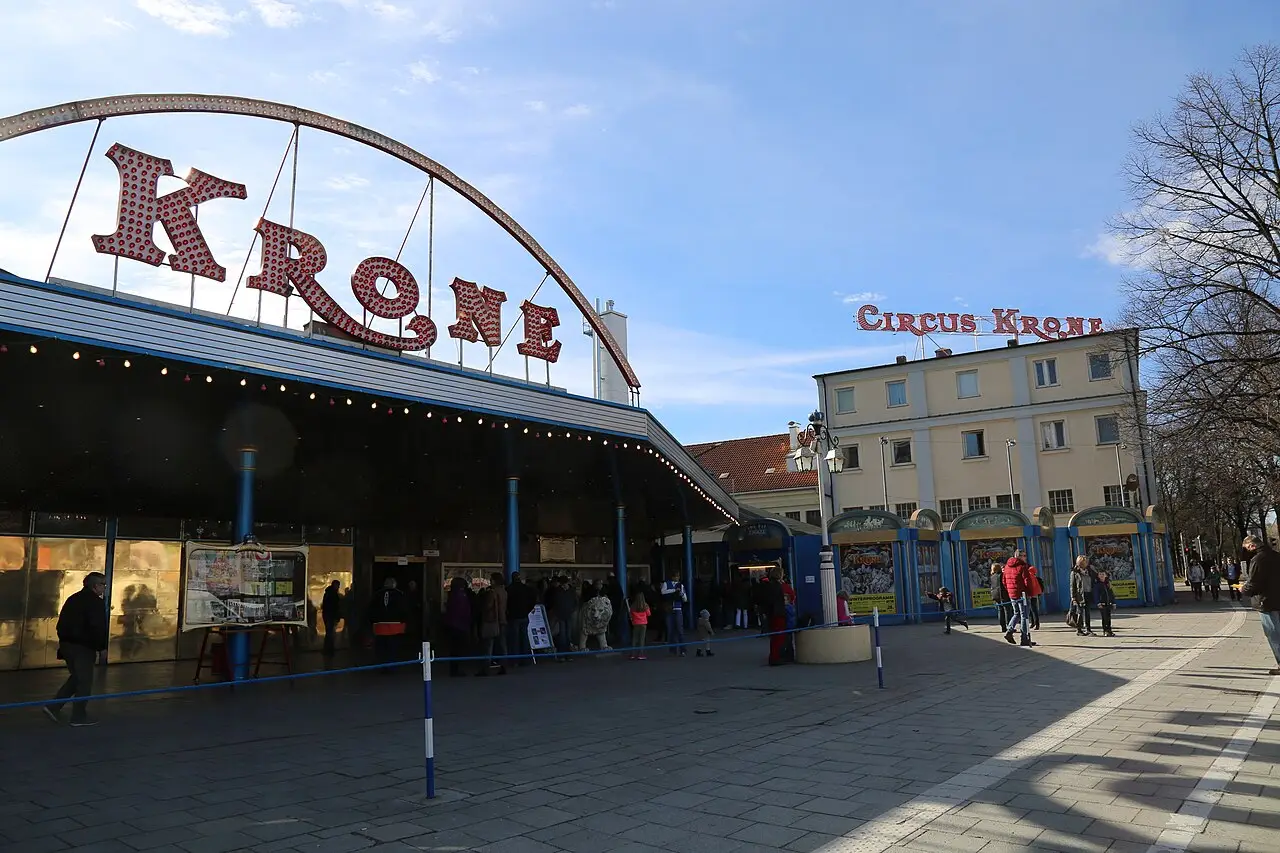
In Munich’s Circus Krone the justice ministers of Bavaria and Prussia, Hans Frank and Hanns Kerrl, spoke with Julius Streicher at a rally under the slogan ‘Out with the Jews from the administration of justice’, as Bavaria issued its rules for removing Jewish lawyers. Hindenburg received the Stahlhelm leader Seldte to hear about plans to ‘coordinate’ (gleichschalten, bring into line) the Stahlhelm with the SA. Abroad, Britain banned most Soviet imports after the Moscow engineers’ verdict and Roosevelt took the dollar off gold; at home the government threatened to act against the flood of ‘national kitsch’, from Horst Wessel pencils to swastika ice-cream parlours.

The Munich rally showed how the April laws were being read by those charged with applying them. The Reich law of 7 April allowed Jewish lawyers to be struck off but exempted veterans and those admitted before 1914. At Circus Krone, Bavaria’s justice minister Hans Frank told the audience that his ministry would carry out the Reich law out of discipline towards Hitler, but that the goal Hitler had set was the removal of Jews from the administration of justice altogether. The invitations sent to Munich lawyers made the same point with the slogan ‘Out with the Jews from all public offices and from the legal profession’.
Politics and power
Government, terror and persecution
-
Persecution evening, Munich, Circus Krone
Jurists’ rally in Circus Krone
Munich’s lawyers were invited to a mass rally that evening in the Circus Krone building, where the Bavarian and Prussian justice ministers, Hans Frank and Hanns Kerrl, the Prussian ministerial director Roland Freisler and the Franconian Nazi leader Julius Streicher spoke. The slogan was ‘Out with the Jews from the administration of justice’. Frank and Kerrl had met that afternoon at the Bavarian Justice Ministry to discuss the Reich law on lawyers’ admission, and Bavaria’s implementing rules for it appeared the same evening. The Reich law allowed Jewish lawyers to be struck off until 30 September but exempted those admitted before August 1914, front-line veterans and those whose fathers or sons had fallen.1,2,5
-
Government Berlin
Hindenburg hears Seldte on the Stahlhelm and the SA
Reich President Hindenburg, an honorary member of the Stahlhelm, received its first federal leader, Labour Minister Seldte, who reported on his talks with Hitler at Berchtesgaden about ‘coordinating’ the Stahlhelm with the SA. A meeting of the Stahlhelm’s federal council planned for the afternoon was put off to the next day.2
-
Government
Cabinet meeting cancelled
The cabinet meeting planned for the day did not take place: Hitler decided to stay in Bavaria and return to Berlin only on Friday, and the first cabinet meeting after Easter was set for Saturday.3
-
Foreign policy Rome
Göring at the parliamentary trade conference in Rome
At the opening of the international parliamentary trade conference in Rome, Göring spoke first after Mussolini. No country could overcome the crisis alone, he said; Italy had been the first to defeat ‘Bolshevism’, the primacy of politics over economics had to be recognised, and there should be ‘neither victors nor vanquished’.2
Everyday life
What else was happening in Germany
-
Economy Berlin
The government threatens action against ‘national kitsch’
Manufacturers were cashing in on the ‘national uprising’ (nationale Erhebung, the Nazis’ name for their takeover) with ever more kitsch: a ‘game of the national uprising’ that ‘every German’ must own, pencils printed with the Horst Wessel song, ‘swastika’ ice-cream parlours and ‘Frederick the Great’ dance halls. Informed sources said the government would act in the sharpest form; Goebbels had raised legal measures with Hitler over Easter, and firms were warned that money spent on such goods would be lost once a law was passed.4,3
-
Society morning, Berlin
Hitler’s birthday donation handed out in Berlin
The ‘Hitler birthday donation’ had raised about 90,000 marks in cash in Berlin so far, with food donations worth more than 70,000 marks. Distribution of the gifts began in the morning at 160 points across the city’s 20 districts; at some the crowds were so large that police were needed to keep traffic moving.2
-
Society Bonn
The Crown Prince’s eldest son gets engaged
In Bonn, Prince Wilhelm of Prussia, eldest son of the Crown Prince, became engaged to Dorothea von Salviati, from a family of north Italian origin. The prince, born on 4 July 1906, had studied law and economics, was working on an estate in Upper Silesia and was a battalion leader in the Stahlhelm.2
-
Transport
Elly Beinhorn reaches Nairobi; Do X to tour Europe
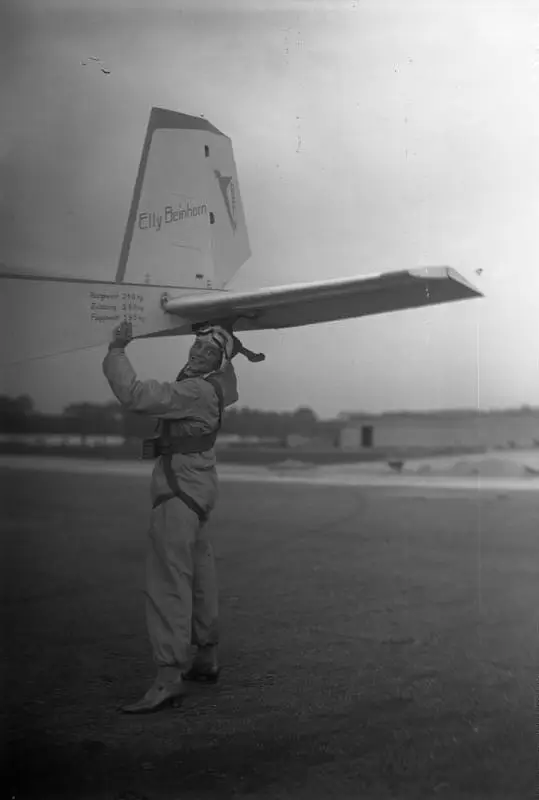
The aviator Elly Beinhorn reached Nairobi on her flight through Africa, having covered about 3,900 km from Cairo; on Easter Sunday she had flown back to drop supplies to the crew of a British military aircraft that had escorted her and made a forced landing in the southern Sudan. The Dornier Do X flying boat, now owned by Lufthansa, was to set out on 1 May on a tour of Europe lasting several months.2
Voices
We carry out the Reich laws because we owe discipline to the Führer. But we also know that he has set as his goal the removal of the Jews from the administration of justice, and that we must follow him in this.
Elsewhere in the world
-
United States
Roosevelt takes the dollar off gold
President Roosevelt reimposed the ban on gold exports and let the dollar find its own level against other currencies. He rejected the Treasury’s phrase ‘controlled inflation’, saying the United States did not intend to pay its bills with printed paper money but would stop fighting speculative attacks on the dollar.2
-
United Kingdom
Embargo on Soviet goods after the Moscow verdict
After nine hours’ deliberation the Supreme Court in Moscow sentenced the British engineer Thornton to three years and MacDonald to two years in prison, ordered Monkhouse, Nordwall and Cushny to leave the Soviet Union within three days, and acquitted Gregory; Russian co-defendants received up to ten years. That morning the King signed at Windsor the proclamation bringing into force the ban on imports from the Soviet Union.3
More pictures

Sources
- Einladung zu einer »Massenkundgebung« im Münchner Zirkus Krone Jüdisches Museum Berlin, Online-Schaukasten 1933
- Kölnische Zeitung, 20 April 1933 Deutsche Digitale Bibliothek, Zeitungsportal, Morning edition, p. 1 (birthday donation; Hindenburg and Seldte), p. 2 (Munich rally; Göring in Rome), p. 3 (engagement; Do X), p. 5 (Roosevelt); evening edition, p. 11 (Beinhorn)
- Hamburger Fremdenblatt, 19 April 1933 Deutsche Digitale Bibliothek, Zeitungsportal, Morning edition, p. 1 (cabinet; Moscow verdict; embargo proclamation); evening edition, p. 2 (Goebbels on 'national kitsch')
- Kölnische Zeitung, 19 April 1933 Deutsche Digitale Bibliothek, Zeitungsportal, Evening edition, p. 11 ('Berlin, 19. April': kitsch)
- Gesetz über die Zulassung zur Rechtsanwaltschaft (07.04.1933) documentArchiv.de, §§ 1–3
Spotted a mistake? Send a correction.