Day 8 of 100
Presidential decree removes Prussia’s elected government; Papen dissolves the Landtag
Hindenburg transferred the last powers of Otto Braun’s elected Prussian government to the Reich Commissioner, Papen, who then dissolved the Prussian Landtag together with its president, Kerrl, over the objection of Konrad Adenauer. The same day Hindenburg assured Bavaria that no one planned to override the states. In Staßfurt a headmaster told his school of the murdered mayor; in Berlin the flu began, briefly, to ebb.
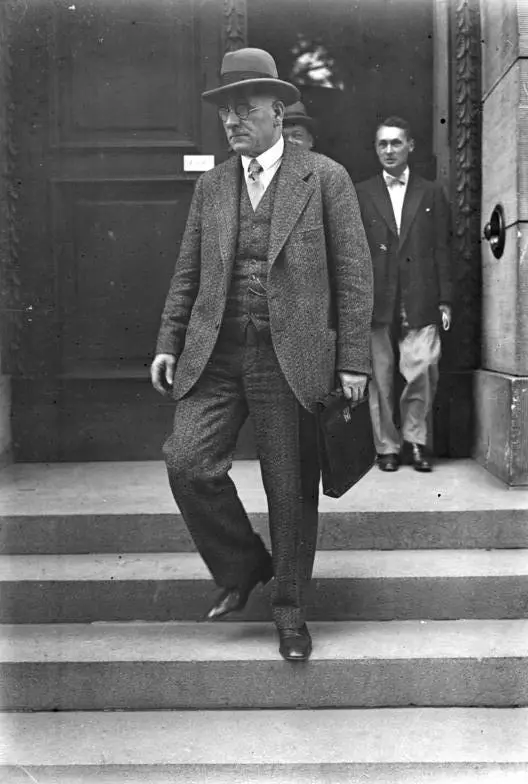

Since the “Prussian coup” of 20 July 1932 Prussia had had two governments: Reich commissioners running the ministries, and Otto Braun’s cabinet, which the State Court had confirmed in its right to represent Prussia in the Reichsrat and towards the Landtag. The decree of 6 February simply handed those remaining rights to the Reich Commissioner, citing the confusion caused by two sets of instructions to officials. With Braun’s seat in the three-man body that could dissolve the Landtag now in Papen’s hands, Papen and the Landtag president Kerrl dissolved the parliament the same day, with effect from 4 March; the State Council president, Konrad Adenauer, refused to take part and declared the act invalid. Prussia would vote on 5 March together with the Reich.
Laws and decrees
Verordnung des Reichspräsidenten zur Herstellung geordneter Regierungsverhältnisse in Preußen
Decree of the Reich President for the Restoration of Orderly Government in Prussia
Declared that Prussia’s conduct towards the State Court judgment of 25 October 1932 had caused confusion endangering the public good, and transferred to the Reich Commissioner for Prussia the powers that judgment had left to the Prussian State Ministry; in force on promulgation.1
Verordnung des Reichspräsidenten zum Schutze des deutschen Volkes
Decree of the Reich President for the Protection of the German People
The decree signed on 4 February, allowing bans on political meetings and newspapers and police custody of up to three months, was promulgated in the Reichsgesetzblatt, coming into force on 7 February.6
Verordnung zur Reichstagswahl
Ordinance on the Reichstag election (voting while travelling)
Set up polling stations for travellers holding voting certificates in major railway stations for the election of 5 March, including the Anhalter, Friedrichstraße, Görlitzer, Lehrter, Potsdamer, Schlesischer and Stettiner stations and Zoologischer Garten in Berlin, with voting hours fitted to train traffic.8
Politics and power
Government, terror and persecution
-
The states Berlin
Braun government stripped of its remaining rights
A decree issued under Article 48 transferred to the Reich Commissioner for Prussia and his appointees the powers that the State Court’s judgment of 25 October 1932 had left with the Prussian State Ministry. The official explanation said that government with divided authority had proved unworkable: rights such as pardons had gone unexercised, and officials could no more serve two masters than soldiers could. Hindenburg signed; Papen countersigned for the Chancellor.1,2,12
-
Parliament Berlin
Prussian Landtag dissolved over Adenauer’s protest
Taking Braun’s place in the three-man college of Prime Minister, Landtag president and State Council president, Papen voted with Kerrl to dissolve the Prussian Landtag with effect from 4 March. Konrad Adenauer, president of the State Council, refused to take part in the vote and declared both the removal of the Braun government and the dissolution legally invalid.3,4
-
The states
Hindenburg reassures Bavaria
Replying to Prime Minister Held, Hindenburg assured Bavaria that neither the Reich government nor he himself had plans to destroy the sovereignty of the states or to replace their governments with Reich commissioners. He saw no need to receive the Bavarian minister Schäffer, since Papen had reported on his talk with him the previous day.5
-
Propaganda
Newspaper bans spread
The government’s decree for the “protection of the German people” was promulgated, coming into force the next day. In Silesia the district governor in Breslau banned the Waldenburg newspaper Schlesische Bergwacht from 6 to 8 February for printing the SPD’s election appeal. State secretary Lammers informed the President’s office that the press had been told Hitler had not broken off relations with the Centre Party, whose fifteen written questions he regarded as a delaying tactic.4,6,7
Everyday life
What else was happening in Germany
-
Education Staßfurt
A Staßfurt school mourns its mayor
In the hall of the Staßfurt Reformrealgymnasium the headmaster, Heinrich Hawickhorst, gave an address of mourning for Hermann Kasten, recalling how the mayor had brought greenery, flowers and new housing to a grimy town. His closing wish that Kasten might rest in peace in a fatherland of peace was later quoted by the town’s historians against what followed.9
-
Society Berlin
Flu eases in Berlin’s hospitals
By Monday morning Berlin’s hospitals reported 373 free beds, and admissions of flu patients had fallen sharply over the weekend. The AOK recorded only 338 new cases in the 48 hours from Saturday to Monday midday, against 1,055 in the single day before, and fewer school classes were being closed; the respite would last barely a day.4,10
Voices
Our First Mayor is dead. Dead! Not passed away after a long life, in contemplative old age ... but fallen by cowardly assassination.
In Berlin today
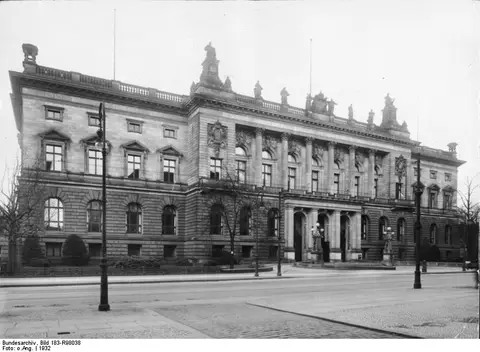

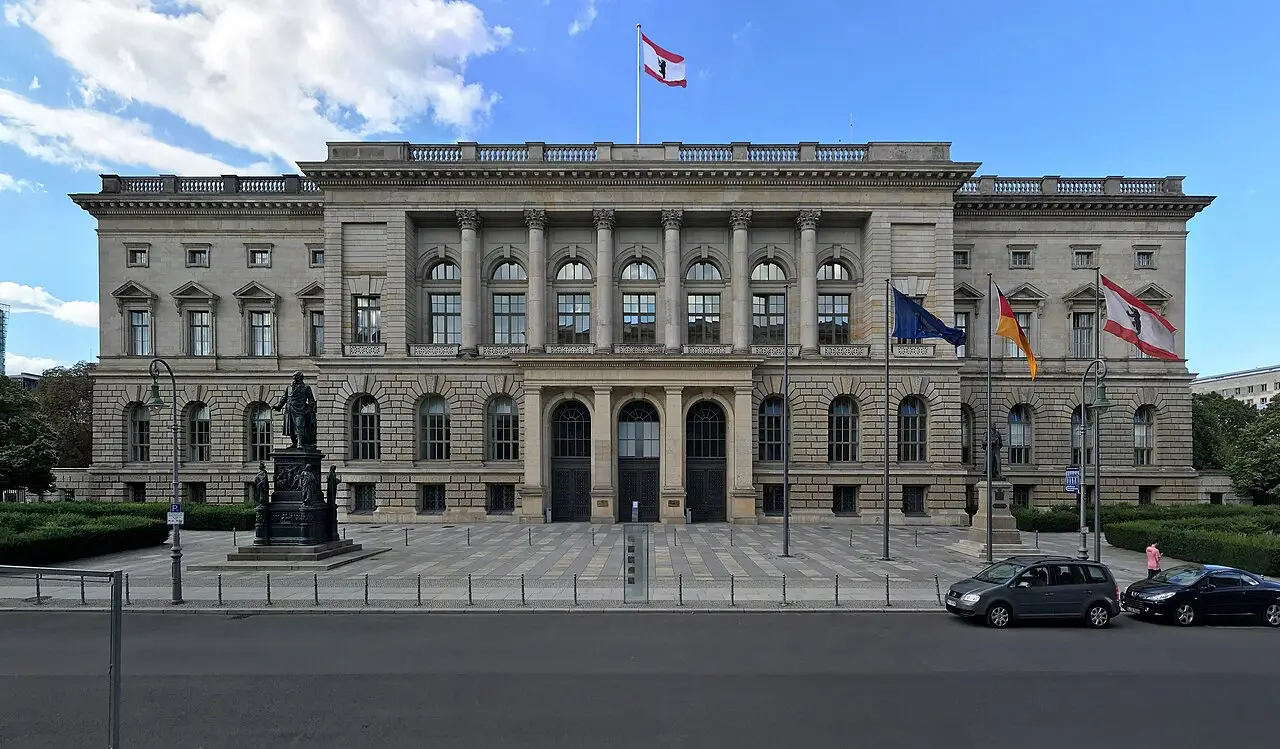
Former Prussian Landtag
Niederkirchnerstraße 5 (then Prinz-Albrecht-Straße), 10117 Berlin
More pictures

Sources
- Verordnung des Reichspräsidenten zur Herstellung geordneter Regierungsverhältnisse in Preußen. Vom 6. Februar 1933 documentArchiv.de, RGBl. 1933 I S. 43
- Akten der Reichskanzlei. Regierung Hitler 1933–1945, Bd. I, Nr. 13: Chefbesprechung vom 4. Februar 1933, 13 Uhr Bundesarchiv / Historische Kommission bei der Bayerischen Akademie der Wissenschaften, note 5 (WTB report of 6 February 1933 on the reasons for the decree)
- Akten der Reichskanzlei. Regierung Hitler 1933–1945, Bd. I, Nr. 14: Sitzung der Kommissare des Reichs für Preußen, 4. Februar 1933 Bundesarchiv / Historische Kommission bei der Bayerischen Akademie der Wissenschaften, note 8 (dissolution of the Landtag on 6 February with effect from 4 March)
- Vorwärts, Morgenausgabe Nr. 59–63, 7 February 1933 Deutsche Digitale Bibliothek, Zeitungsportal, p. 1, 'Ereignisse der letzten drei Tage'; p. 2, report from Waldenburg on the ban of the Schlesische Bergwacht; p. 3, 'Grippewelle geht zurück'
- Akten der Reichskanzlei. Regierung Hitler 1933–1945, Bd. I, Nr. 15: Der Bayerische Ministerpräsident Held an den Reichspräsidenten, München, 4. Februar 1933 Bundesarchiv / Historische Kommission bei der Bayerischen Akademie der Wissenschaften, note 3 (Hindenburg's reply of 6 February)
- Verordnung des Reichspräsidenten zum Schutze des Deutschen Volkes. Vom 4. Februar 1933 documentArchiv.de, § 26 and note 3 (promulgated 6 February 1933)
- Akten der Reichskanzlei. Regierung Hitler 1933–1945, Bd. I, Nr. 16: Staatssekretär Lammers an das Büro des Reichspräsidenten, 6. Februar 1933 Bundesarchiv / Historische Kommission bei der Bayerischen Akademie der Wissenschaften, R 43 I/1310, S. 137–139
- Verordnung zur Reichstagswahl. Vom 6. Februar 1933 documentArchiv.de, RGBl. 1933 I S. 49–51, § 1
- »… gefallen durch feigen Meuchelmord«. Hermann Kasten Stadt Staßfurt (J. Kleemann, T.-A. Matzke, T. Hoffmann, 2013), pp. 2–3
- Vorwärts, Morgenausgabe Nr. 65, 8 February 1933 Deutsche Digitale Bibliothek, Zeitungsportal, p. 3, 'Neue Grippewelle'
- Geschichte: Ein Haus mit Geschichte Abgeordnetenhaus von Berlin
- Akten der Reichskanzlei. Regierung Hitler 1933–1945, Bd. I, Nr. 2: Ministerbesprechung vom 31. Januar 1933, 16 Uhr Bundesarchiv / Historische Kommission bei der Bayerischen Akademie der Wissenschaften, note 7 (the State Court judgment of 25 October 1932 and the rights left to the Braun government)
Spotted a mistake? Send a correction.