Day 64 of 100
Max Reinhardt ousted from the Deutsches Theater; Germans now need exit visas
The management of the Deutsches Theater announced, after a meeting with a Prussian ministry commissioner, that Max Reinhardt would have no further part in its artistic direction. The coordination law came into force, and the Interior Minister required every German leaving the country to obtain an exit visa. The pro-Nazi ‘German Christians’ opened their first national conference in Berlin. Hindenburg presented the aviator Elly Beinhorn with the Hindenburg Cup.
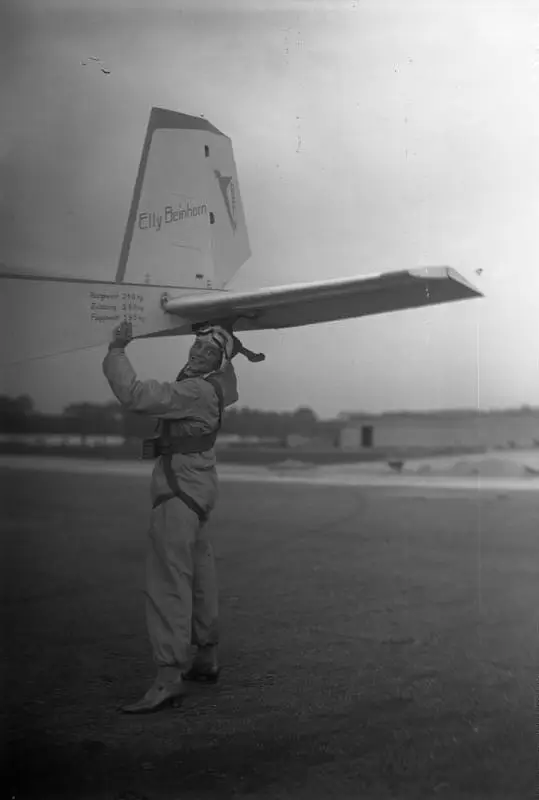

The removal of Max Reinhardt, announced in a single paragraph, showed how the new order reached into the theatres: the decision was taken after a meeting with Hans Hinkel, the Nazi commissioner at the Prussian culture ministry, and the management promised that the theatre would in future ‘take account of German culture’. One press report added his original surname, Goldmann, in brackets. On the same day the new exit-visa rule made it harder for anyone to leave the country unobserved.
Laws and decrees
Vorläufiges Gesetz zur Gleichschaltung der Länder mit dem Reich
Provisional Law for the Coordination of the States with the Reich
Came into force the day after its promulgation in the Reich Law Gazette of 2 April: state governments could legislate without parliaments, and the state parliaments (except Prussia’s) and municipal councils outside Prussia were dissolved and reconstituted according to the Reichstag vote of 5 March 1933.2
Bekanntmachung über die vorübergehende Wiedereinführung des Ausreisesichtvermerks
Notice on the Temporary Reintroduction of the Exit Visa
Dated 1 April and published on 3 April, this notice of the Reich Minister of the Interior, based on the Passport Ordinance of 10 June 1919, required all German citizens to obtain an exit visa from the authorities before crossing the border to leave the Reich, until further notice; the visa was free of charge and valid for a set period. It took effect on 4 April 1933.3,4
Politics and power
Government, terror and persecution
-
Government Berlin
The coordination law comes into force
Published in No. 29 of the Reich Law Gazette, issued on 2 April, the provisional coordination law came into force on 3 April under the Enabling Act’s rule that its laws took effect the day after promulgation. The dissolution of the state parliaments and their reconstitution by the Reichstag vote now began.2
-
Persecution Berlin
Exit visas for all Germans leaving the Reich
The Reich Interior Minister announced that, until further notice, every German citizen crossing the border to leave the Reich needed an exit visa (Ausreisesichtvermerk), as had already been required in Bavaria. Issued free of charge by the visa authorities, it would be valid for a fixed period; the rule was to take effect on 4 April.3,4
-
Churches afternoon, Berlin, former Prussian House of Lords, Leipziger Straße
‘German Christians’ hold their first national conference
The pro-Nazi Protestant ‘Faith Movement of German Christians’ held a public rally on Monday afternoon in the packed chamber of the former Prussian House of Lords, attended by Wilhelm Kube, Oberpräsident of Brandenburg and Berlin, and Prince August Wilhelm of Prussia. Its leader, Pastor Joachim Hossenfelder, called for one powerful Protestant Reich Church in place of the 29 regional churches; earlier he had set out the movement’s ideas in a radio talk.5
Everyday life
What else was happening in Germany
-
Theatre Berlin, Deutsches Theater, Schumannstraße
Max Reinhardt removed from the Deutsches Theater
The Achaz-Neft management of the Deutsches Theater announced that, after a meeting with Hans Hinkel, commissioner for special duties at the Prussian culture ministry, it had decided that Max Reinhardt would have nothing more to do with the theatre’s artistic direction. It vouched that the theatre would in future ‘take account of German culture’. The premiere of Kurt Kluge’s play Ewiges Volk was announced for Tuesday.1,6
-
Science Berlin
Elly Beinhorn receives the Hindenburg Cup
Hindenburg presented the aviator Elly Beinhorn, Germany’s most successful woman pilot, with the Hindenburg Cup, together with a prize of 10,000 marks, chiefly for the prestige her long-distance flights had won for Germany abroad. Her latest journey had kept her at the controls, with few breaks, for eight months.7
In Berlin today
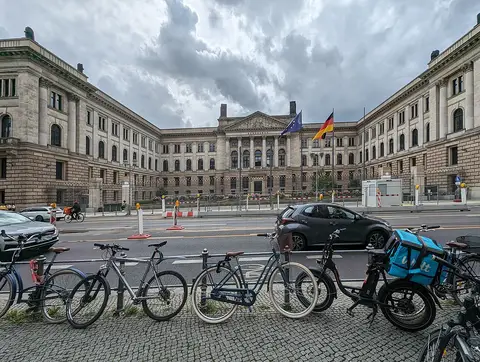

Former Prussian House of Lords (Bundesrat)
Leipziger Straße 3–4, 10117 Berlin-Mitte
- Then
- The ‘German Christians’ opened their first national conference with a crowded public rally in the chamber of the former Prussian House of Lords, demanding a single Reich Church.5,8
- Today
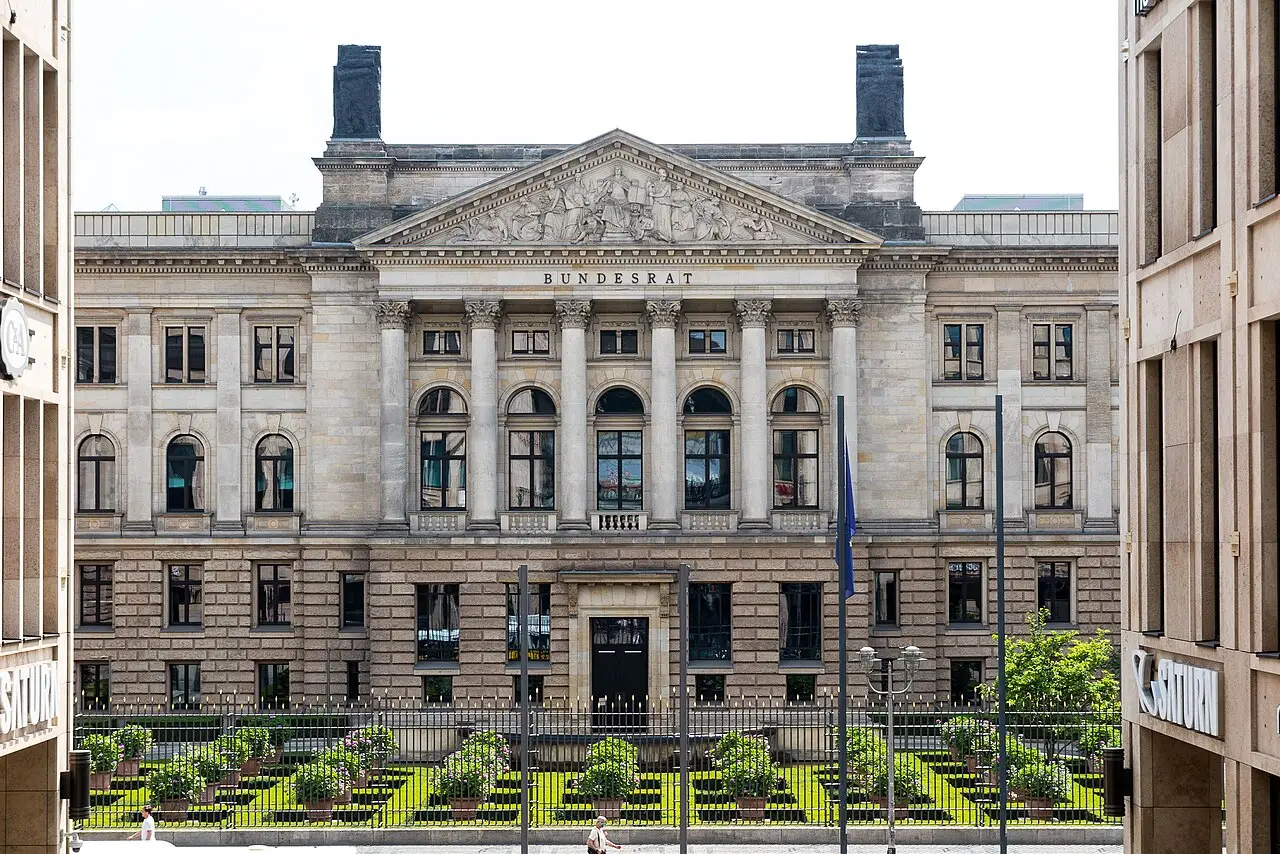
- The building, completed in 1904 for the Prussian House of Lords, has been the seat of the Bundesrat, the chamber of the German federal states, since September 2000.
More pictures


Sources
- Biberacher Zeitung, 4 April 1933: ‘Bereinigung der deutschen Bühne – Keine Reinhardt-Inszenierungen mehr in Berlin’ (Berlin, 3 April) Deutsche Digitale Bibliothek, Zeitungsportal, p. 3
- Bergedorfer Zeitung, 3 April 1933: ‘Gleichschaltungsgesetz tritt heute in Kraft’ (Berlin, 3 April) Deutsche Digitale Bibliothek, Zeitungsportal, p. 1
- Gütersloher Volks-Zeitung, 5 April 1933: ‘Der Ausreisesichtvermerk – Vorübergehende Wiedereinführung’ (Berlin, 3 April) Deutsche Digitale Bibliothek, Zeitungsportal, p. 3
- Neckar-Bergstrass-Post, 3 April 1933: ‘Der Ausreise-Sichtvermerk’ (Berlin, 2 April) Deutsche Digitale Bibliothek, Zeitungsportal, p. 3
- Schwelmer Zeitung, 4 April 1933: ‘Reichstagung Deutscher Christen’ (Berlin, 3 April) Deutsche Digitale Bibliothek, Zeitungsportal, p. 1
- Jahreschronik 1933 Deutsches Historisches Museum, LeMO, entry 3.4.
- Lokal-Anzeiger für Stadt und Land, 5 April 1933: Elly Beinhorn and the Hindenburg Cup Deutsche Digitale Bibliothek, Zeitungsportal, p. 4
- Das Gebäude des Bundesrates Bundesrat
Spotted a mistake? Send a correction.