Day 29 of 100
The Reichstag burns, and the Nazi leadership blames a Communist uprising
On the evening of Monday 27 February the Reichstag building in Berlin was set alight; a young Dutchman, Marinus van der Lubbe, was arrested inside, and before the night was out Göring had declared the fire the signal for a Communist revolt, banned the left-wing press in Prussia and ordered arrests. Earlier that day the cabinet had approved a harsh new decree against ‘treason’, and SA men had fired into the flat of a Social Democratic deputy in Neukölln. In Cologne the Rosenmontag carnival procession went ahead in the sunshine.
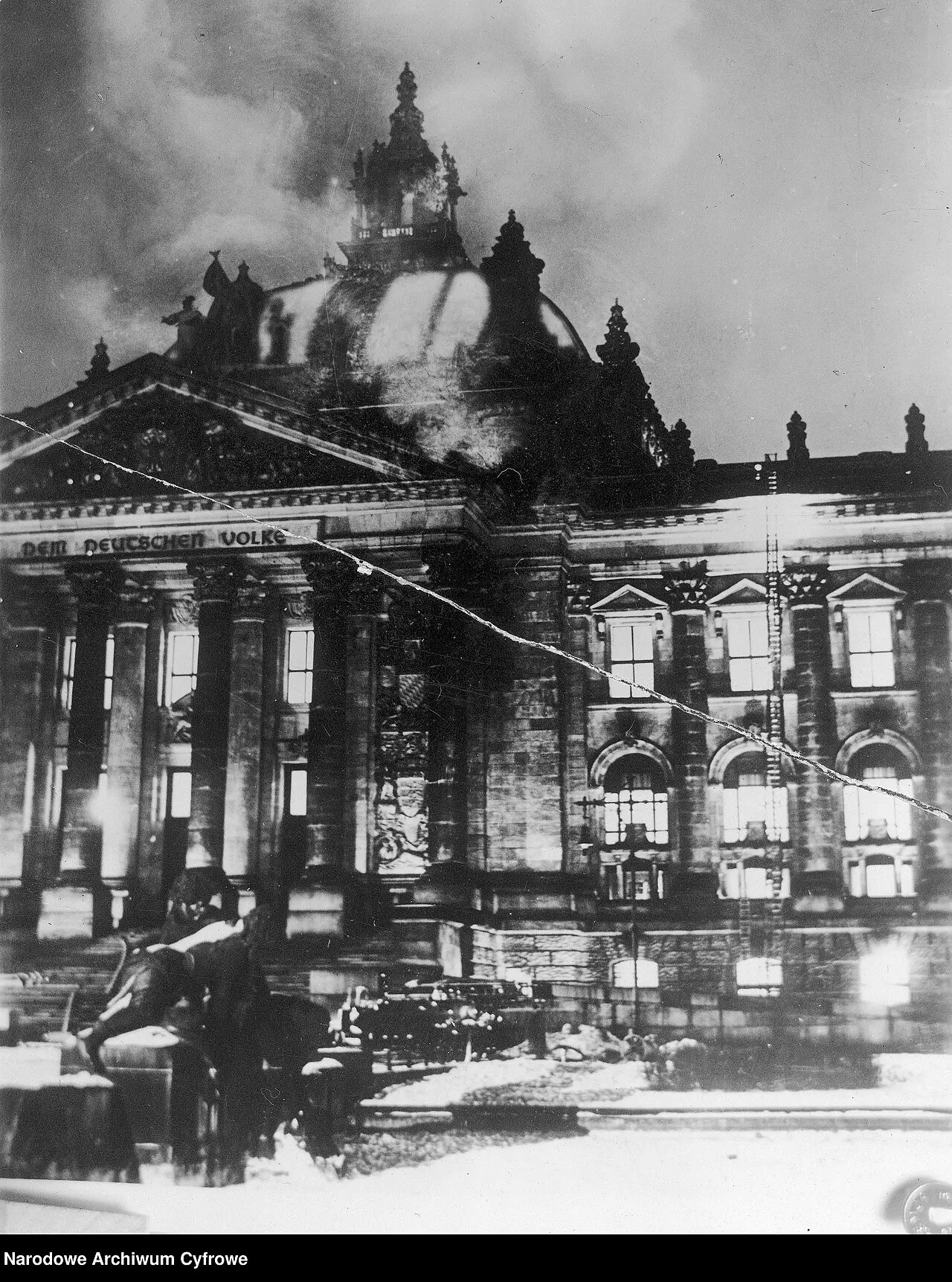

Four weeks after Hitler’s appointment, Germany was a week away from the Reichstag election of 5 March. Göring, as Reich commissioner for the Prussian interior ministry, controlled the largest police force in the country and had already issued his so-called shooting decree and raised an auxiliary police. On 23 February the political police had searched and closed the Karl-Liebknecht-Haus, the Communist party’s Berlin headquarters. The pro-government press claimed that plans for terror had been found there; the head of the Prussian political police, Diels, later wrote that the search had turned up some interesting printed matter but nothing sensational.
Shortly after 21:00 a man climbed onto a balcony of the empty Reichstag, kicked in a window and began setting fires, first with firelighters and, when those ran out, with strips torn from his own shirt. Passers-by noticed that something was wrong soon after 21:05, and the first report reached the fire brigade at 21:13. At about 21:26 the building’s house inspector, Alexander Scranowitz, and a police officer, Helmut Poeschel, seized a young man stripped to the waist in the Bismarck Hall: Marinus van der Lubbe, a 24-year-old Dutch bricklayer and left-wing radical, who at once called the fire a protest. Moments later the smouldering plenary chamber burst into flames. At 21:42 the highest alarm level was called; by about 23:00 the fire was under control, but the wood-panelled chamber was gutted.
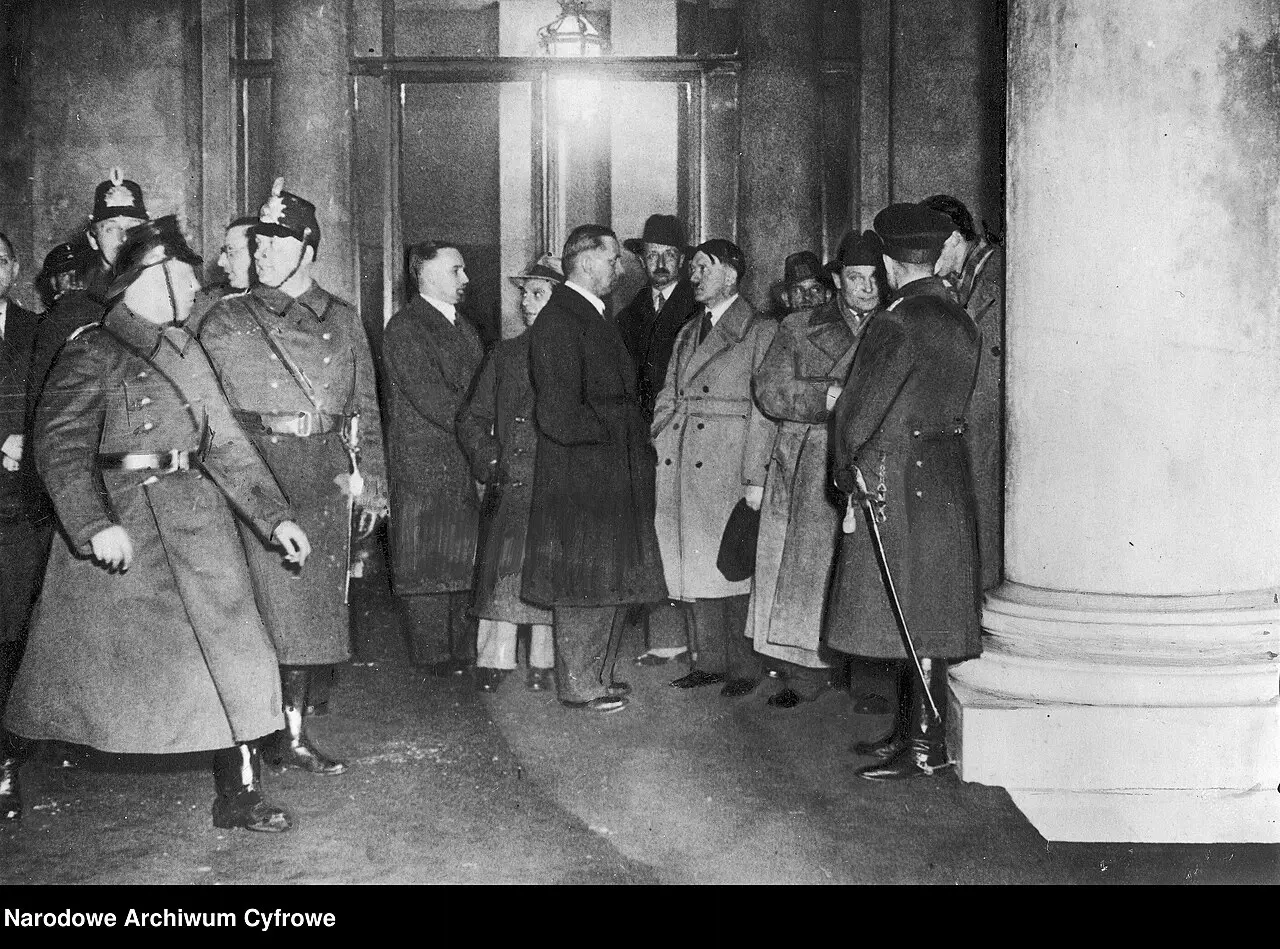
Göring, who was also president of the Reichstag, reached the burning building about twenty minutes before Hitler and Goebbels, who arrived soon after 22:00. Within hours the Nazi leadership presented the fire as the beacon for a Communist uprising. An official Prussian statement issued during the night claimed that van der Lubbe was a Communist and had admitted links to the Social Democrats, and that plundering and civil war had been planned for the next morning. It announced bans on the Communist and Social Democratic press in Prussia, arrest warrants for two Communist deputies, ‘protective custody’ (Schutzhaft, imprisonment without trial) for the party’s other deputies and officials, and the calling-up of the auxiliary police. Mass arrests began that night.
Van der Lubbe insisted that he had acted alone. At the trial before the Reich Court in Leipzig in autumn 1933 his co-defendants, the Communist parliamentary leader Ernst Torgler and the Bulgarians Georgi Dimitrov, Blagoi Popov and Vasil Tanev, were acquitted for lack of evidence; van der Lubbe was sentenced to death and executed on 10 January 1934, and German justice set the verdict aside some 75 years later. Whether he alone set the fire is still argued over. What is not in doubt is the use made of it: the emergency decree signed the next day suspended the basic rights of the Weimar constitution, and the state of emergency it created was never lifted before 1945.
Politics and power
Government, terror and persecution
-
Terror 03:15, Berlin-Neukölln, Geygerstraße
SA men fire into a Social Democratic deputy’s flat in Neukölln
At about 03:15 two uniformed SA men forced their way into the fourth-floor flat of Kurt Löwenstein, Social Democratic member of the Reichstag and Berlin city councillor, in the Geygerstraße. Löwenstein and his wife barricaded the bedroom and telephoned the police; the intruders fired through the bedroom door, leaving eight bullet holes, and smashed the bookcases, chairs and lamps in his study. Nobody in the building came to help. One of the two men was arrested when the police riot squad arrived.6
-
Government 16:15, Berlin, Reich Chancellery
Cabinet approves a sweeping decree against ‘treason’
At its afternoon meeting the cabinet agreed in principle to Justice Minister Gürtner’s draft decree, which made the betrayal of military secrets punishable by death and made it a crime to print or distribute writings that called for a political general strike or mass strike. Hitler asked for a higher minimum sentence for publishing state secrets, and at Frick’s and Popitz’s suggestion the measure was renamed a decree against ‘treason against the German people’. The same meeting took up Frick’s request to lift the ban on civil servants appearing in uniform at political events, Hitler arguing that police officers should for the time being be allowed to wear party badges on duty. Hindenburg signed the treason decree the next day.5
-
Parliament about 21:00 to 23:00, Berlin, Platz der Republik
The Reichstag building is set on fire
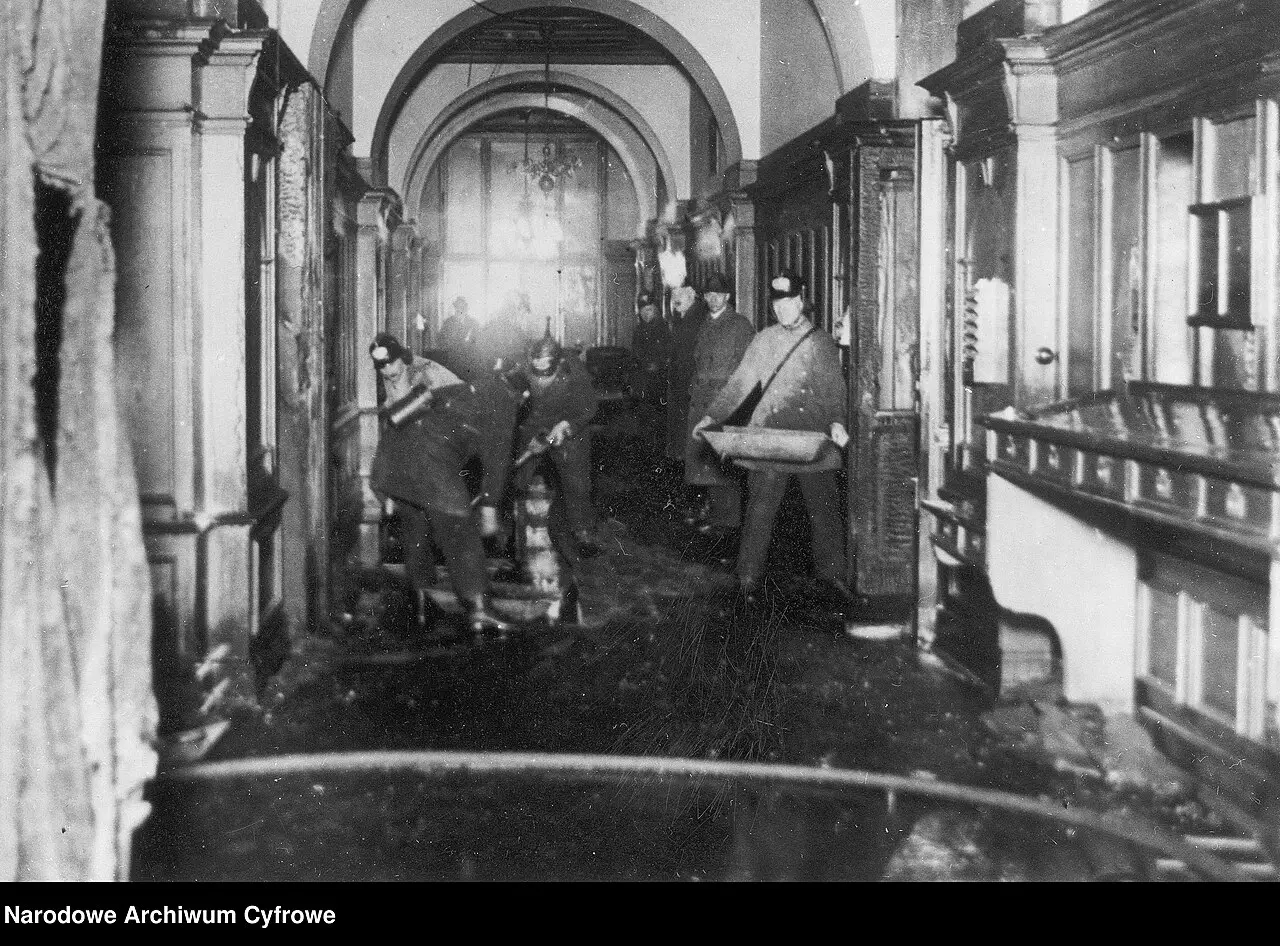
The fire was started shortly after 21:00 and first reported to the fire brigade at 21:13. Marinus van der Lubbe was arrested in the Bismarck Hall at about 21:26, and the plenary chamber flared up a minute or so later. The highest alarm was called at 21:42 and the fire was under control by about 23:00. The chamber with its benches, galleries and the glass ceiling below the dome was destroyed. Thousands of onlookers gathered on the Platz der Republik behind police cordons.1,2,3,7,8
Sources disagree. Van der Lubbe said he acted alone and many historians accept this, while others hold that he cannot have done it alone and suspect the Nazis made use of him; the regime’s claim of a Communist plot was rejected even by the Reich Court in December 1933.
-
Propaganda overnight, Berlin
Göring declares the fire a Communist signal for civil war
During the night the Prussian government issued a statement calling the fire the worst act of Bolshevik terror yet seen in Germany and the signal for a bloody uprising, a claim for which no evidence was ever produced. Asserting that the arsonist had admitted links to the Social Democrats, it banned all Social Democratic newspapers, magazines, leaflets and posters in Prussia for fourteen days and the Communist press for four weeks. Arrest warrants were issued against two leading Communist deputies, and the party’s other deputies and officials were to be taken into ‘protective custody’. Public buildings were put under police guard and the auxiliary police were called up. By the morning newspapers were reporting 130 arrests in Berlin.1,2,8
Everyday life
What else was happening in Germany
-
Society Cologne
Rosenmontag in Cologne
Cologne’s Rosenmontag procession went ahead in spite of the election campaign. The morning began with sunshine and a blue sky before clouding over. About 40,000 visitors travelling on Sunday return tickets arrived at the main station during the morning, and the large hotels reported up to three-quarters of their rooms taken. The police said the procession passed without the slightest disturbance; the fire brigade’s main task was a spectator kicked by a horse on the Marsplatz, along with about a dozen people who fainted.9
-
Radio Berlin
Carnival records on the Berlin wireless
The Berlin station’s evening programme included the writer Richard Euringer reading his own poems at 18:30, a programme of carnival gramophone records at 19:10, a brass band concert at 20:15 and dance music after the late news. The national transmitter at Königs Wusterhausen relayed a carnival concert from Stuttgart.6
-
Theatre Berlin
Verdi and Goethe on a Monday night
Berlin’s theatre listings for the evening included La Traviata at the State Opera Unter den Linden at 20:00, the second part of Goethe’s Faust at the Prussian State Theatre (Staatliches Schauspielhaus), and Martha at the Municipal Opera in Charlottenburg.6
-
Film
Liebelei passes the film censor
Max Ophüls’s film of Arthur Schnitzler’s Liebelei, with Magda Schneider, Wolfgang Liebeneiner and Gustaf Gründgens, was passed by the German film censors with a ban on young audiences. It had already opened in Vienna on 24 February; its first German screening followed in Leipzig on 10 March and its Berlin premiere on 16 March, after which Ophüls had to leave Germany.10
Voices
The Reichstag is burning! The news is met with disbelief. Something inside the Reichstag may be on fire, perhaps. But the Reichstag itself, that enormous stone building?
In Berlin today
,_Reichstag_--_2021_--_8761.jpg)
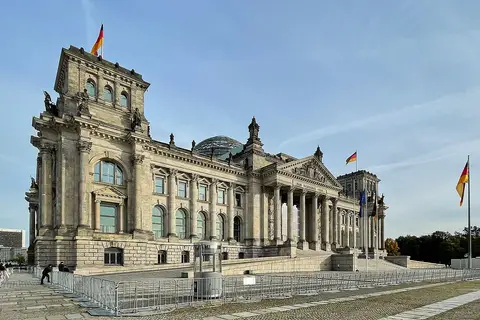
Reichstag building
Platz der Republik 1, Berlin-Tiergarten
- Then
- Set on fire on the evening of 27 February 1933; the plenary chamber burned out. The Reichstag never again met in the building, gathering instead in the Kroll Opera House a few hundred metres away.1,4
- Today
- The rebuilt building houses the German Bundestag. In front of it, towards the Scheidemannstraße, a memorial of 96 cast-iron plates set up in 1992 names Reichstag deputies of the Weimar Republic who were murdered under Nazi rule.
More pictures


Sources
- 27. Februar 1933: Reichstagsbrand in Berlin Deutscher Bundestag, Textarchiv
- Der Reichstagsbrand 1933 – aufgeklärt und doch diskutiert (Sven Felix Kellerhoff, #volksbundhistory) Volksbund Deutsche Kriegsgräberfürsorge
- Geschichte der Berliner Feuerwehr: Reichstagsbrand Berliner Feuerwehr
- Mahnmal zur Erinnerung an die ermordeten Reichstagsabgeordneten Bundeszentrale für politische Bildung (bpb)
- Akten der Reichskanzlei. Regierung Hitler 1933–1945, Bd. I: Nr. 30, Ministerbesprechung vom 27. Februar 1933, 16.15 Uhr (with editorial notes to Nr. 32 on the search of the Karl-Liebknecht-Haus) Historische Kommission bei der Bayerischen Akademie der Wissenschaften / Bundesarchiv, Band I, pp. 119–125 (Nr. 30, items 6 and 7) and p. 129 (Nr. 32, note on the Karl-Liebknecht-Haus)
- Vorwärts, Abend-Ausgabe Nr. 98, 27 February 1933 Deutsche Digitale Bibliothek, Zeitungsportal (Bibliothek der Friedrich-Ebert-Stiftung), p. 1 (attack on Löwenstein); p. 4 (radio and theatre listings for Monday 27 February)
- Vorwärts, Morgen-Ausgabe Nr. 99, 28 February 1933 Deutsche Digitale Bibliothek, Zeitungsportal (Bibliothek der Friedrich-Ebert-Stiftung), p. 1, 'Riesenbrand im Reichstag'
- Hamburger Fremdenblatt, Reichsausgabe, 28 February 1933 Deutsche Digitale Bibliothek, Zeitungsportal, p. 1, 'Der Reichstag brennt', '130 Verhaftungen in Berlin' and the Prussian government's statement
- Kölnische Zeitung, Morgen-Ausgabe Nr. 116, 28 February 1933 Deutsche Digitale Bibliothek, Zeitungsportal, p. 3, 'Der Kölner Rosenmontagszug'
- Liebelei (1933) filmportal.de (Deutsches Filminstitut & Filmmuseum)
Spotted a mistake? Send a correction.