Day 85 of 100
Decree shutting Jewish doctors out of health-insurance practice is published
The official gazette published the Reich Labour Minister’s ordinance of 22 April, which told the doctors’ associations to withdraw health-insurance admission from “non-Aryan” doctors and from those accused of communist activity. Hitler handed two of his powers as Reich governor of Prussia to Göring’s cabinet, and the Mecklenburg church dispute reached the Chancellery. The sports pages reported that Germany’s Davis Cup team had been named without Daniel Prenn, after the tennis federation declared that Jewish players could no longer be members.

Most Germans were insured through the statutory health funds, so a doctor without admission to them (Kassenzulassung) lost most of his patients. The ordinance applied the logic of the 7 April civil service law to self-employed doctors. It left the work of exclusion to the doctors’ own associations, and they acted fast. Exceptions covered front-line veterans, doctors in practice before August 1914 and those whose fathers or sons had fallen in the war. According to a later ministry report cited by the Deutsches Ärzteblatt, the Berlin association alone excluded 1,144 doctors. The number of “non-Aryan” health-insurance doctors in Germany fell from 5,308 to 3,641 by spring 1934.
Laws and decrees
Verordnung über die Zulassung von Ärzten zur Tätigkeit bei den Krankenkassen
Ordinance on the admission of doctors to work for the health-insurance funds
Dated 22 April and published on 24 April. The doctors’ associations were to withdraw health-insurance admission from “non-Aryan” doctors and from doctors accused of communist activity, with exceptions for front-line veterans, doctors in practice before August 1914 and those whose fathers or sons had fallen in the war.1,2
Politics and power
Government, terror and persecution
-
Persecution Berlin
Jewish doctors to lose health-insurance admission
The Reichsanzeiger, the government gazette, printed the Reich Labour Minister’s ordinance of 22 April on doctors’ admission to the health-insurance funds. It instructed the doctors’ associations (Kassenärztliche Vereinigungen) to end the admission of “non-Aryan” doctors (the regime’s term for people of Jewish descent) and of doctors said to have been active as communists. Appeals had to be lodged within two weeks and did not suspend the decision.1,2
-
The states Berlin
Hitler passes Prussian governor’s powers to Göring’s cabinet
Under the second “coordination” (Gleichschaltung) law Hitler himself held the post of Reich governor (Reichsstatthalter) for Prussia. He now handed two of its powers to the Prussian State Ministry led by Göring: appointing and dismissing state officials and judges, and the right of pardon. He kept the power to appoint the Prussian prime minister and ministers, to dissolve the Landtag and to sign Prussian laws.3
-
Churches Berlin; Mecklenburg-Schwerin
Mecklenburg church commissioner put on hold
Mecklenburg’s prime minister, Granzow, saw the Reich Interior Minister Frick and then Hitler about the state commissioner he had placed over the Protestant church. Newspapers reported that the commissioner would stop working for now, though his appointment was not withdrawn. On the Sunday before, pastors in Rostock had read a protest against the appointment from their pulpits.4
-
Terror Berlin
Police occupy Soviet oil company offices in Berlin
A large police detachment occupied and searched the administrative building of Derop, the German sales company for Soviet petroleum products. A commissioner was installed with orders to purge the management and staff of “communist elements”.5
-
Persecution Magdeburg
Bible Students’ headquarters in Magdeburg occupied
Police searched and occupied the German headquarters of the International Bible Students (Jehovah’s Witnesses) in Magdeburg, which served Germany, Austria and Czechoslovakia. Its printing works was shut and the machines were provisionally seized. Several German states had already banned the group’s meetings. According to Witness histories, the property was handed back after the search found nothing incriminating and the US State Department intervened.6,7
Everyday life
What else was happening in Germany
-
Sport
Davis Cup team named without Daniel Prenn
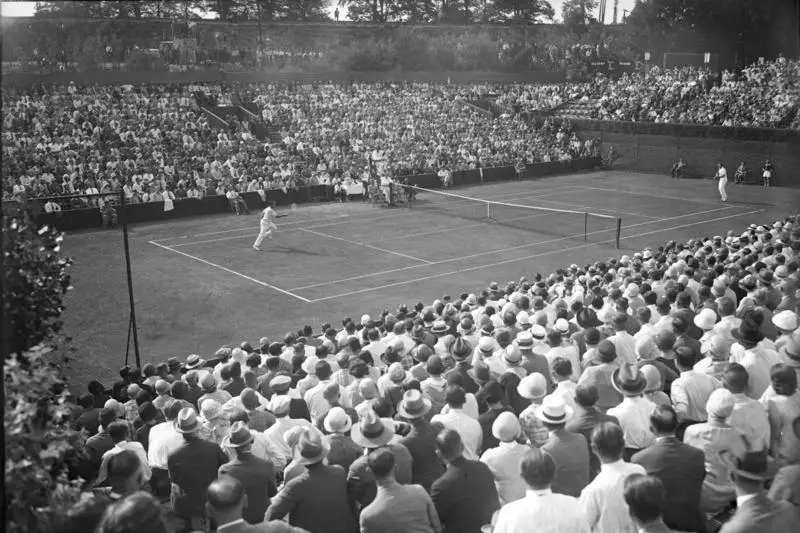
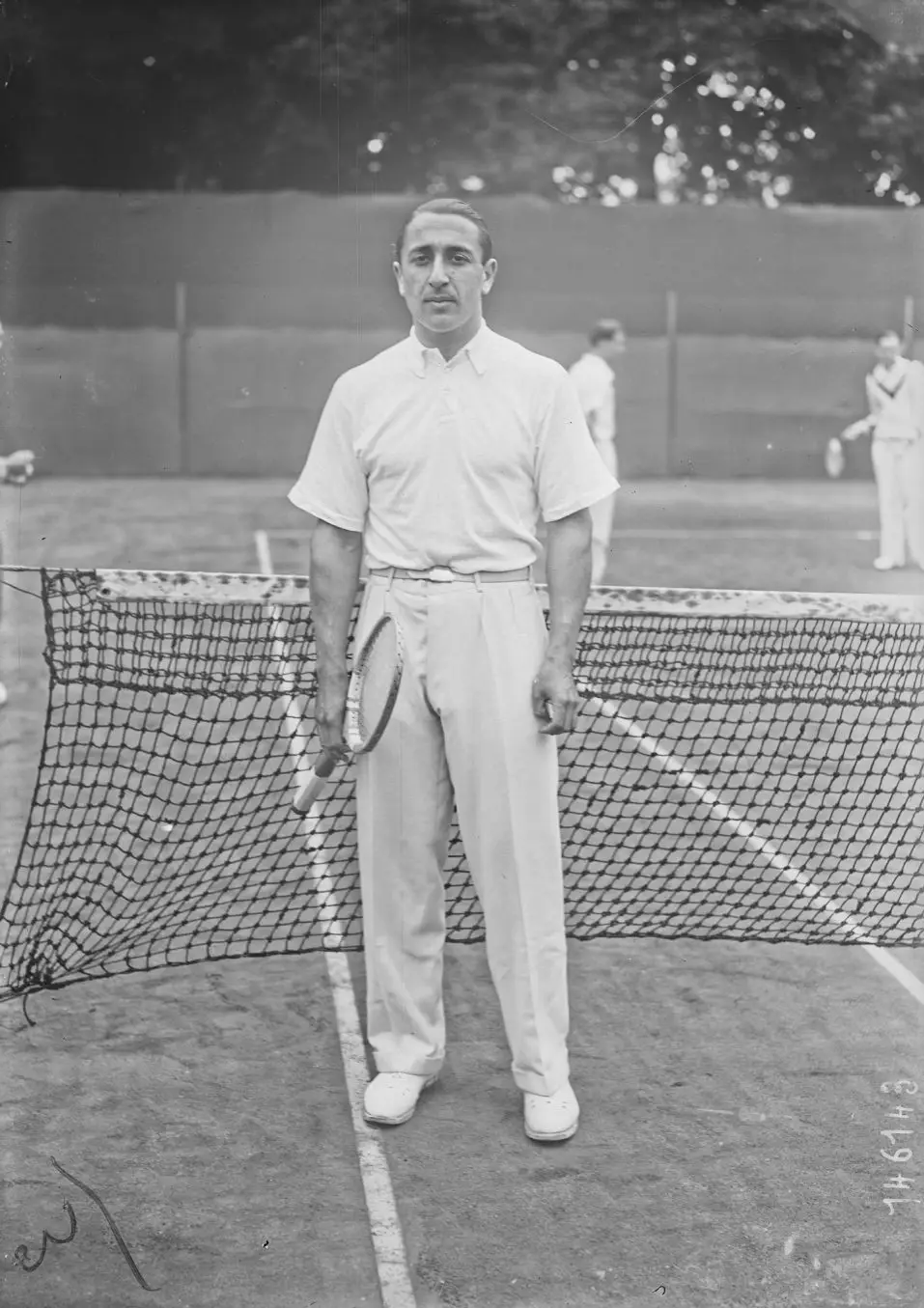
The sports pages of 24 and 25 April reported that the German Tennis Federation had declared that Jewish sportsmen could no longer be members, and that on Sunday evening in Berlin it had named its Davis Cup team for the opening tie against Egypt at Wiesbaden on 5–7 May: Gottfried von Cramm, Eberhard Nourney, Jaenecke and Fritz Kuhlmann. Missing was Daniel Prenn, the previous year’s most successful German player. The federation also announced that clubs and individuals applying to join would be checked for “Marxist” or other “anti-state” activity.8,10
-
Economy Berlin
Grocers’ wholesale prices in Berlin
Sworn experts of the Berlin Chamber of Industry and Commerce published the day’s wholesale prices paid by Berlin grocers, per 100 kilograms delivered: wheat flour 27 to 33 Reichsmarks, rye flour 25 to 26, oat flakes 32 to 33, yellow peas 32 to 34, small lentils 37 to 43 and Rangoon rice 18 to 19.9
-
Press
Only morning papers on 1 May
It was announced in Berlin that on 1 May, the new “Day of National Labour”, the only newspapers allowed to appear would be those that normally published Monday-morning editions.3
More pictures

Sources
- Deutscher Reichsanzeiger und Preußischer Staatsanzeiger, Nr. 95, 24 April 1933 Deutsche Digitale Bibliothek, Zeitungsportal (Universitätsbibliothek Mannheim), p. 1, contents of the official section
- Vor 80 Jahren: Ausschluss jüdischer Ärzte aus der Kassenpraxis Deutsches Ärzteblatt (Thomas Gerst), issue 16/2013
- Sächsische Volkszeitung, 25 April 1933 Deutsche Digitale Bibliothek, Zeitungsportal, p. 2, "Die Statthalterschaft in Preußen" and "Erscheinen der Zeitungen am 1. Mai" (Berlin, 24 April)
- Hannoverscher Kurier, 25 April 1933 Deutsche Digitale Bibliothek, Zeitungsportal, p. 2, report from Berlin, 24 April, on the Mecklenburg church commissioner
- Erzgebirgischer Volksfreund, 25 April 1933 Deutsche Digitale Bibliothek, Zeitungsportal, p. 2, item datelined Berlin, 24 April, on Derop
- Eibenstocker Tageblatt, 25 April 1933 Deutsche Digitale Bibliothek, Zeitungsportal, p. 4, "Haussuchung bei den Ernsten Bibelforschern"
- Magdeburg: Chronik der Zeugen Jehovas Archiv Vegelahn, entry for 24 April 1933
- Rhein- und Ruhrzeitung, 24 April 1933 Deutsche Digitale Bibliothek, Zeitungsportal, p. 4, "Ohne Daniel Prenn"
- Deutscher Reichsanzeiger und Preußischer Staatsanzeiger, 25 April 1933 Deutsche Digitale Bibliothek, Zeitungsportal (Universitätsbibliothek Mannheim), p. 2, "Preisnotierungen für Nahrungsmittel" (Berlin, 24 April)
- Lippspringer Anzeiger, 25 April 1933 Deutsche Digitale Bibliothek, Zeitungsportal, p. 12, "Ohne Prenn" and "Deutschlands Davispokalelf"
Spotted a mistake? Send a correction.