Day 18 of 100
The states protest in the Reichsrat as Göring vows no Social Democrat will stay in office
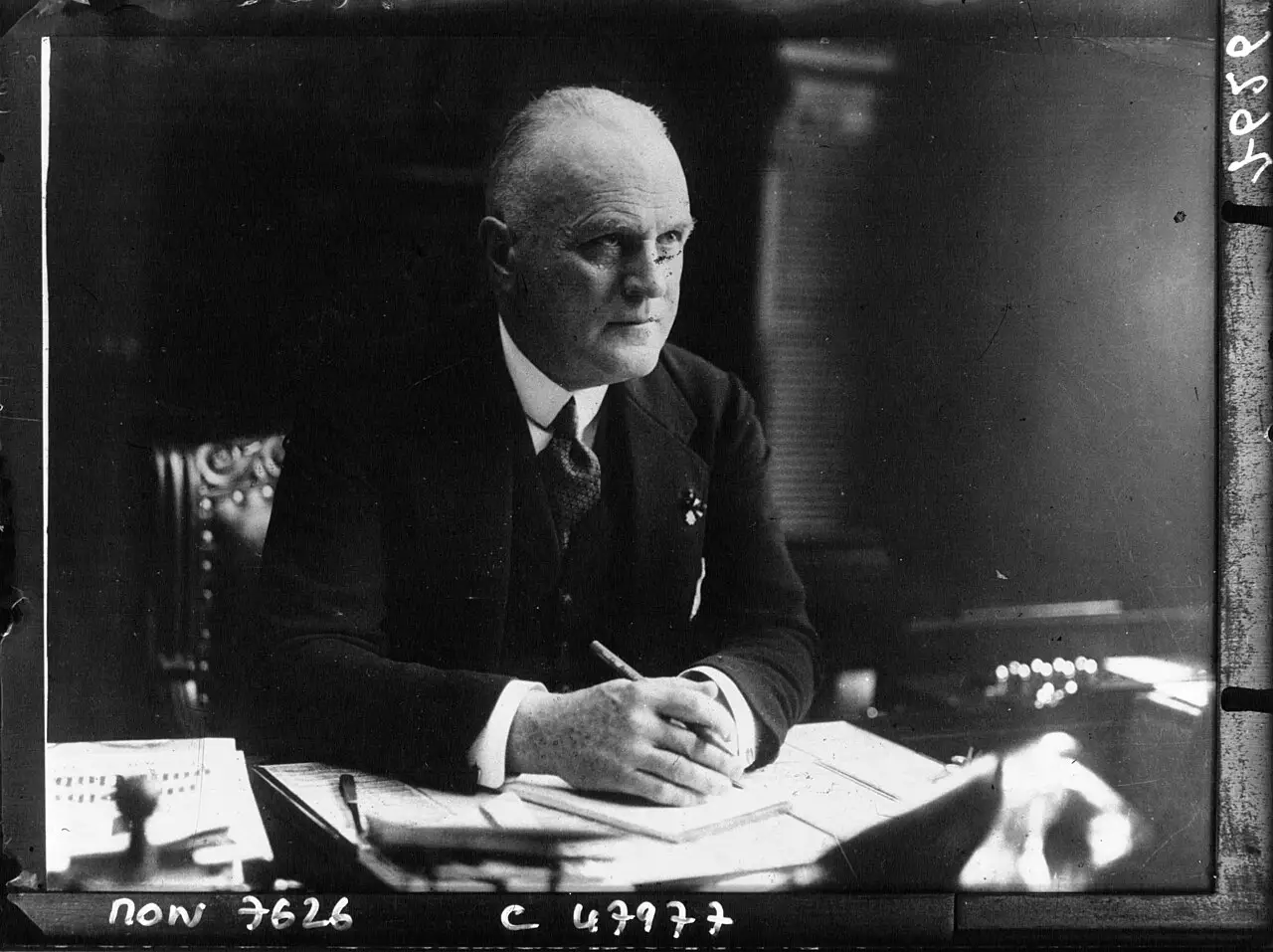
In the Reichsrat Bavaria and the southern states protested against Prussia being represented by Göring’s and Papen’s appointees and voted to limit the chamber to urgent business until the constitutional court had ruled. That evening Göring told journalists that no Social Democrat would be tolerated in the Prussian administration. The Reichsgericht lifted an earlier ban on Vorwärts, and the cabinet discussed taking away the court’s power to do so. At the Sportpalast the American ice hockey team beat Germany 7–2.

Politics and power
Government, terror and persecution
-
The states 17:00, Berlin, Reichstag building
The Reichsrat protests and limits itself to urgent business
For the first time Prussia was represented in the Reichsrat by plenipotentiaries named by the Reich Commissioners; the delegates of the deposed Braun government stayed away. Bavaria’s representative, Ministerial Director Sperr, read a formal protest that Reich commissioners had no place in a chamber meant to give the states a voice independent of the Reich, and Baden and Hesse joined him; the representative of the Rhine Province protested on behalf of the Braun ministers that any Prussian votes cast by the commissioners were invalid. Frick replied that only the President’s decree of 6 February counted. Thuringia, Mecklenburg-Schwerin, Mecklenburg-Strelitz, Oldenburg, Brunswick, Anhalt and Lippe accepted the new order. A motion from Baden, made for Bavaria, Saxony, Württemberg, Baden, Hesse and the Hanseatic cities, to restrict the Reichsrat to especially urgent business until the Staatsgerichtshof had decided the Prussian case, was carried by 39 votes to 26 with one abstention.2,1
-
The states evening, Berlin, Prussian State Ministry
Göring: no Social Democrat will be tolerated in the administration
At an evening reception that Papen gave for the German and foreign press in the Prussian State Ministry (Social Democratic and Communist journalists were not invited, and the Centre Party press stayed away), Göring said he was determined to carry the purge of the Prussian administration, and above all of the police, through to the end. No Social Democrat, he said, would be tolerated in the administration any longer; the leading posts had to go to reliable party men, and the middle and lower ranks would follow. The present state of affairs was only a first stage, he added, and the period of struggle would last “a few years”, after which, he claimed, the party appointees would make way for career officials again.2
-
Government 16:15, Berlin, Reich Chancellery
Court lifts a Vorwärts ban, and Frick wants the court sidelined
In the morning the Reichsgericht upheld the Social Democratic Vorwärts’ complaint and lifted the three-day ban imposed on it at the beginning of February. At the ministers’ meeting that afternoon Frick complained that the ruling had damaged the government’s authority and proposed that appeals against newspaper bans should go to the Reich Interior Minister instead of the court. Hugenberg objected that it was premature, and no decision was taken. The ministers also discussed the cutting of the Stuttgart broadcast cable and approved a decree softening cuts in social insurance and war pensions.1,4
-
Persecution Berlin
Tempo and two left-wing weeklies banned
Berlin’s police president banned the Berlin daily Tempo until 23 February inclusive over an article headed “Ill humour in the Burgstraße: shares under pressure”, which he said gave a deliberately false picture of the stock exchange and endangered vital interests of the state. He also banned until 31 March the weekly Arbeiterpolitik, organ of the breakaway Communist Party Opposition, and Arbeiterecho, paper of the Free Workers’ Union of Germany.4
-
The states morning, Berlin
Admiral von Levetzow takes over the Berlin police
Magnus von Levetzow, the retired rear admiral appointed the day before, took up his post as Berlin’s police president. In an interview he described the office as “a new, honourable command in the service of the Fatherland” and said he would build on mutual trust with the men under him.3
-
Opposition Berlin
The Reichsbanner gathers in Berlin
The republican Reichsbanner Schwarz-Rot-Gold opened its national assembly in Berlin, which was to run until 19 February. At a press conference its leader Karl Höltermann declared that the fighting strength of the German working class was being underestimated.5
Everyday life
What else was happening in Germany
-
Sport 20:15, Berlin, Sportpalast
American ice hockey visitors beat Germany 7–2
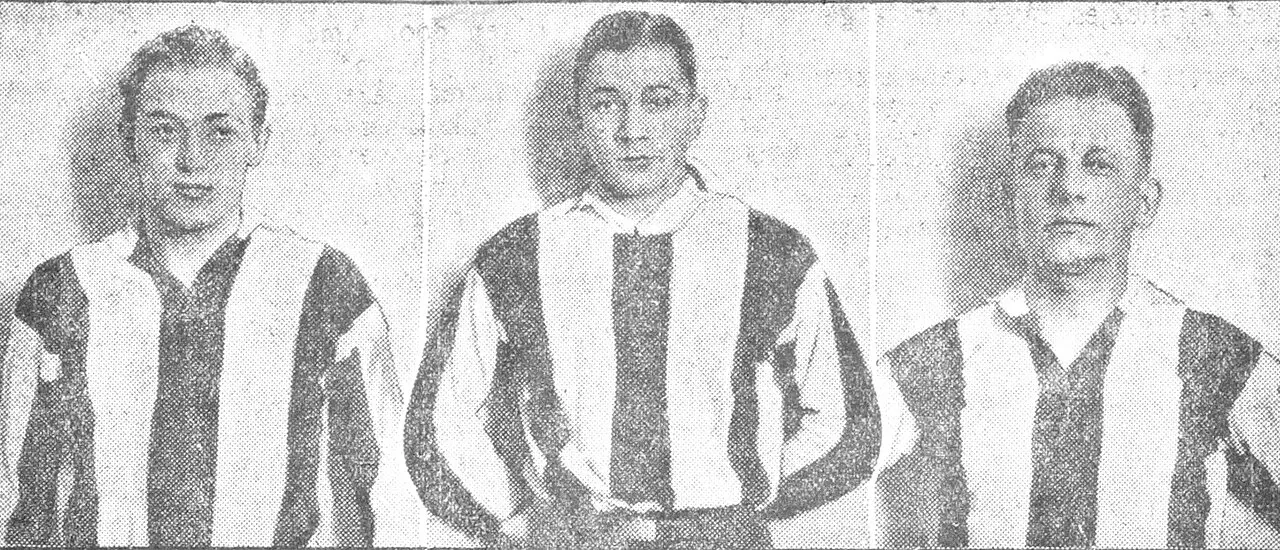
The Massachusetts Rangers, who were to represent the United States at the World Championship in Prague, played the German national team twice at the Berlin Sportpalast, a final rehearsal for the tournament. After a narrow 2–1 win on the Wednesday, the Americans won the return match on Thursday evening 7–2 in front of a large crowd. Between the periods the Hungarian world pair-skating champions Rotter and Szollás, and Hilde Holovsky, gave exhibitions.6,7,8
-
Sport Berlin-Wilmersdorf
Danish tennis players lead in Wilmersdorf
In the indoor tennis hall at Wilmersdorf the club match between Berlin’s Blau-Weiß and Boldklubben 93 of Copenhagen began, and the Danish guests ended the first day in the lead.8
-
Transport Berlin
Cheap Easter tickets announced
The Reichsbahn announced that it would again sell reduced-price holiday return tickets for Easter, which fell on 16 April. They would be valid from 6 April, the Thursday before Palm Sunday, to 19 April, with outward journeys allowed from 6 to 9 and 13 to 18 April.9
Elsewhere in the world
-
United States
Hindenburg’s congratulations after the Miami attack
Hindenburg and the Reich government instructed the German ambassador in Washington to convey to President Hoover their satisfaction that the attempt on the life of President-elect Roosevelt had failed.10
More pictures

Sources
- Nr. 22 Ministerbesprechung vom 16. Februar 1933, 16.15 Uhr Bundesarchiv / Historische Kommission bei der Bayerischen Akademie der Wissenschaften, Akten der Reichskanzlei. Regierung Hitler, Band I, P. 8, 15, 16, 17 with notes 49–58
- Badens Initiative (Reichsrat); Görings großer Beamtenschub Neue Mannheimer Zeitung, via Deutsche Digitale Bibliothek Zeitungsportal, 17 February 1933, p. 1
- Der neue Berliner Polizeipräsident über seine Aufgaben. Heute Vormittag Amtsübernahme Annener Zeitung, via Deutsche Digitale Bibliothek Zeitungsportal, 16 February 1933, p. 7
- Das erste Vorwärts-Verbot aufgehoben; Neue Presseverbote. „Tempo“ und zwei Wochenzeitungen Westfälische Zeitung (Bielefeld), via Deutsche Digitale Bibliothek Zeitungsportal, 17 February 1933, p. 2 (reports dated Berlin, 16 February)
- Hauptversammlung des Reichsbanners Kölnische Zeitung, via Deutsche Digitale Bibliothek Zeitungsportal, 17 February 1933, p. 8
- Eishockey Deutschland–USA (preview) Hamburger Fremdenblatt (Reichsausgabe), via Deutsche Digitale Bibliothek Zeitungsportal, 15 February 1933, p. 14
- Die Massachusetts Rangers im Berliner Sportpalast Sächsische Elbzeitung, via Deutsche Digitale Bibliothek Zeitungsportal, 18 February 1933, p. 10
- Dänemarks Tennisspieler führen im Tenniskampf gegen Berlin Kölnische Zeitung, via Deutsche Digitale Bibliothek Zeitungsportal, 17 February 1933, p. 10
- Festtagsrückfahrkarten zu Ostern Kölnische Zeitung, via Deutsche Digitale Bibliothek Zeitungsportal, 17 February 1933, p. 3 (report dated Berlin, 16 February)
- Glückwünsche des Reichspräsidenten Kölnische Zeitung, via Deutsche Digitale Bibliothek Zeitungsportal, 16 February 1933, p. 7
Spotted a mistake? Send a correction.