Day 33 of 100
Ernst Thälmann is arrested in Berlin; Göring vows ‘to destroy and exterminate’
The Communist party’s leader, Ernst Thälmann, was arrested in a flat in Charlottenburg on Friday afternoon; he never regained his freedom. In Frankfurt Göring told a mass meeting that his measures would not be hampered by legal scruples, and in Hamburg the Social Democratic senators left the city government rather than ban their party’s newspaper. In Berlin tens of thousands queued in the pouring rain, between lines of SA men, to look at the burnt-out Reichstag chamber, and a Jewish weekly urged every Jewish voter to go to the polls on Sunday.
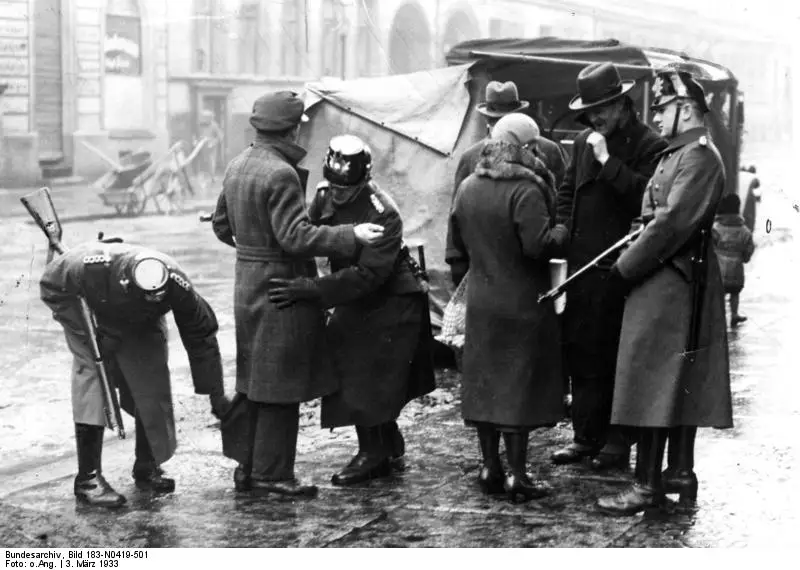

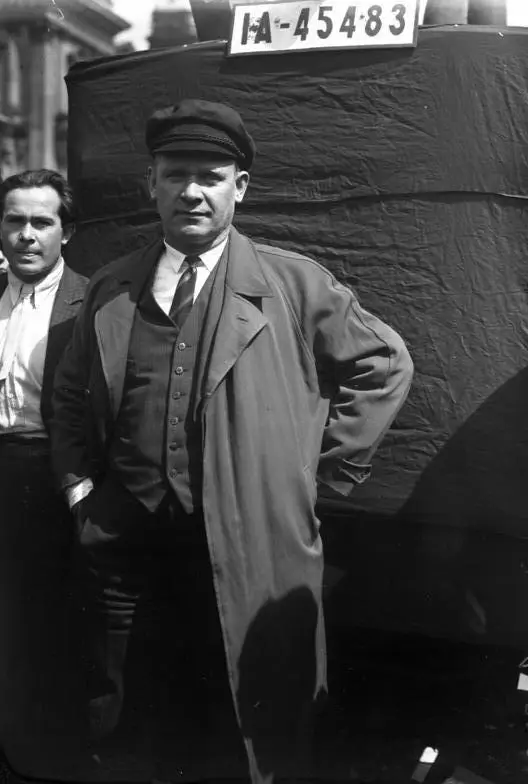
Thälmann had gone underground after the Reichstag fire. A Hamburg docker by origin, at the head of the Communist party since 1924 and its candidate for Reich President in 1925 and 1932, he was hiding in a flat in the Lützower Straße in Charlottenburg when police officers came for him on the afternoon of 3 March. He spent the rest of his life in solitary confinement, in Berlin-Moabit, Hanover and Bautzen, until in August 1944 he was taken to Buchenwald and murdered there. On the same evening Göring, speaking in Frankfurt, made plain what the emergency decree of 28 February meant in practice: the fight against Communism would be waged by the ‘brown battalions’, unhampered by the law.
Politics and power
Government, terror and persecution
-
Terror afternoon, Berlin-Charlottenburg, Lützower Straße
Thälmann arrested in Charlottenburg
Police arrested Ernst Thälmann, chairman of the Communist party and a Reichstag deputy, in a house in the Lützower Straße in Charlottenburg on Friday afternoon. According to the press he had come from Hamburg at the start of the action against the Communists and had found lodging with a Communist lathe operator; he was said to have spent the days in an allotment garden and come to the small room only late in the evening. The police reported finding piles of Communist papers and claimed that stoves had been heated to burn others. He was handed to the political police.1,2,3
-
Propaganda evening, Frankfurt am Main, Festhalle
Göring in Frankfurt: ‘not to do justice, but to destroy’
Speaking in the Festhalle in Frankfurt am Main, Göring announced ‘the signal to attack along the whole line’ against Communism and said his measures would not be hampered by legal considerations. He would fight not only with the police; the ‘brown battalions’ would wage the ‘death struggle’. In future, he said, only those from the ‘national forces’ would enter the state, and he told the Communists they would never see the new parliament from the inside.4
-
The states Hamburg
Hamburg’s Social Democratic senators resign
The Reich government asked Hamburg’s Senate to ban the Social Democratic Hamburger Echo for fourteen days. Unwilling to comply, the Social Democratic members of the Senate, Mayor Ross and Senators Schönfelder, Krause, Neumann, Eisenbarth and Ehrenteit, left the city government ‘to spare the Senate difficulties’; the remaining senators carried on its business for the time being.6
-
Propaganda 20:15, Hamburg
Hitler in Hamburg
Hitler spoke in the exhibition halls at the Hamburg zoo, which were overfilled early; police and SA diverted the overflow to halls and squares across the city where the speech was relayed by loudspeaker. Units of police in steel helmets from Altona and Schwerin marched in behind the flags. Hitler attacked the ‘men of November 1918’ and the parties that had ruled since.3
-
Persecution Berlin; Thuringia
More arrests of Social Democrats
‘Protective custody’ orders were issued against an editor of the banned Social Democratic Vorwärts and against the Berlin city councillor Ahrens, and a member of the Vorwärts staff was taken into custody on Friday. In Thuringia the interior ministry announced an investigation into a claim that a Communist deputy had ‘announced’ the Reichstag fire at an election meeting on the evening of 27 February, a story the press printed without proof.2,3,4
Everyday life
What else was happening in Germany
-
Society 14:00 to 17:00, Berlin, Reichstag
Queueing in the rain to see the burnt-out Reichstag
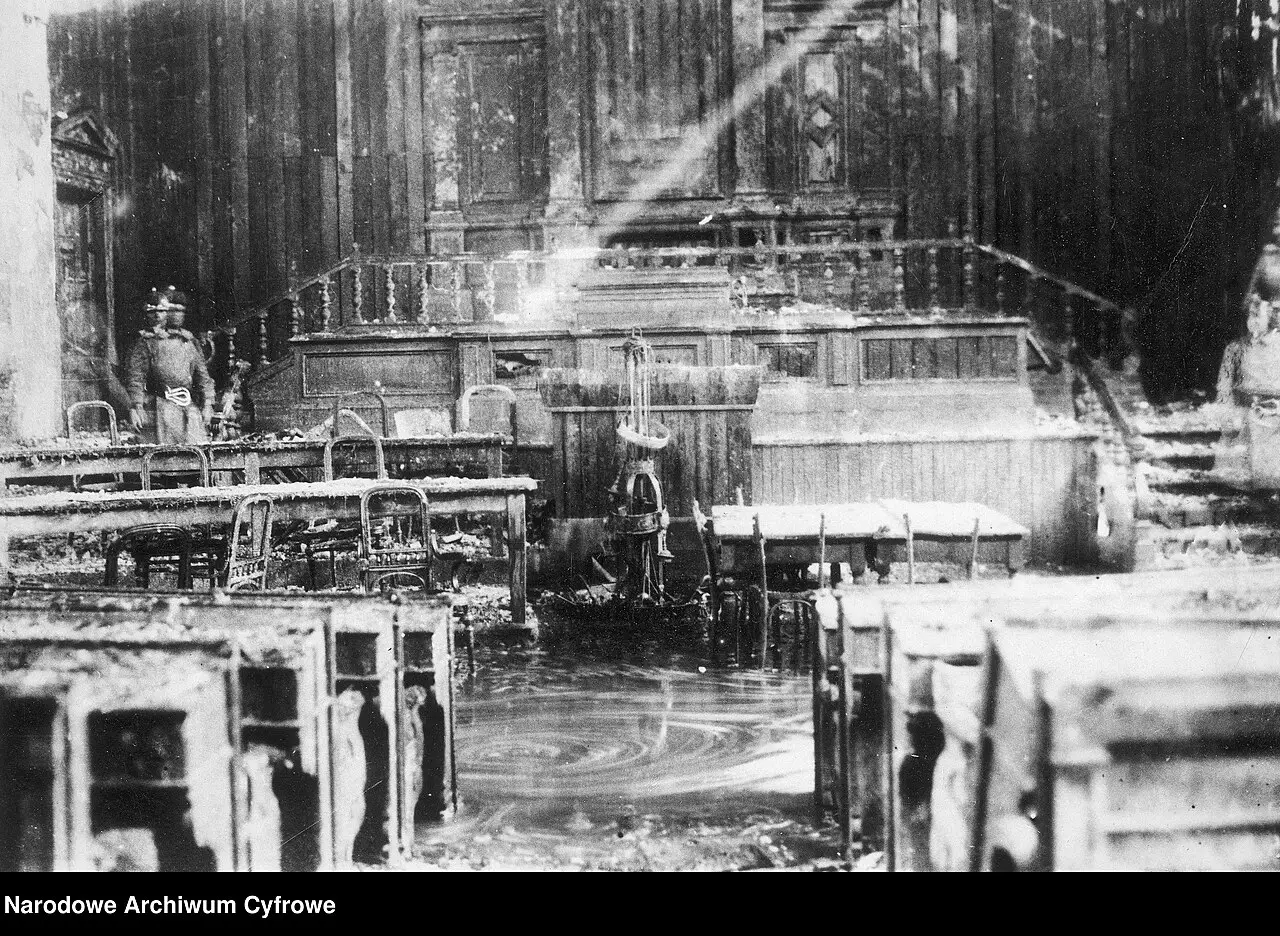
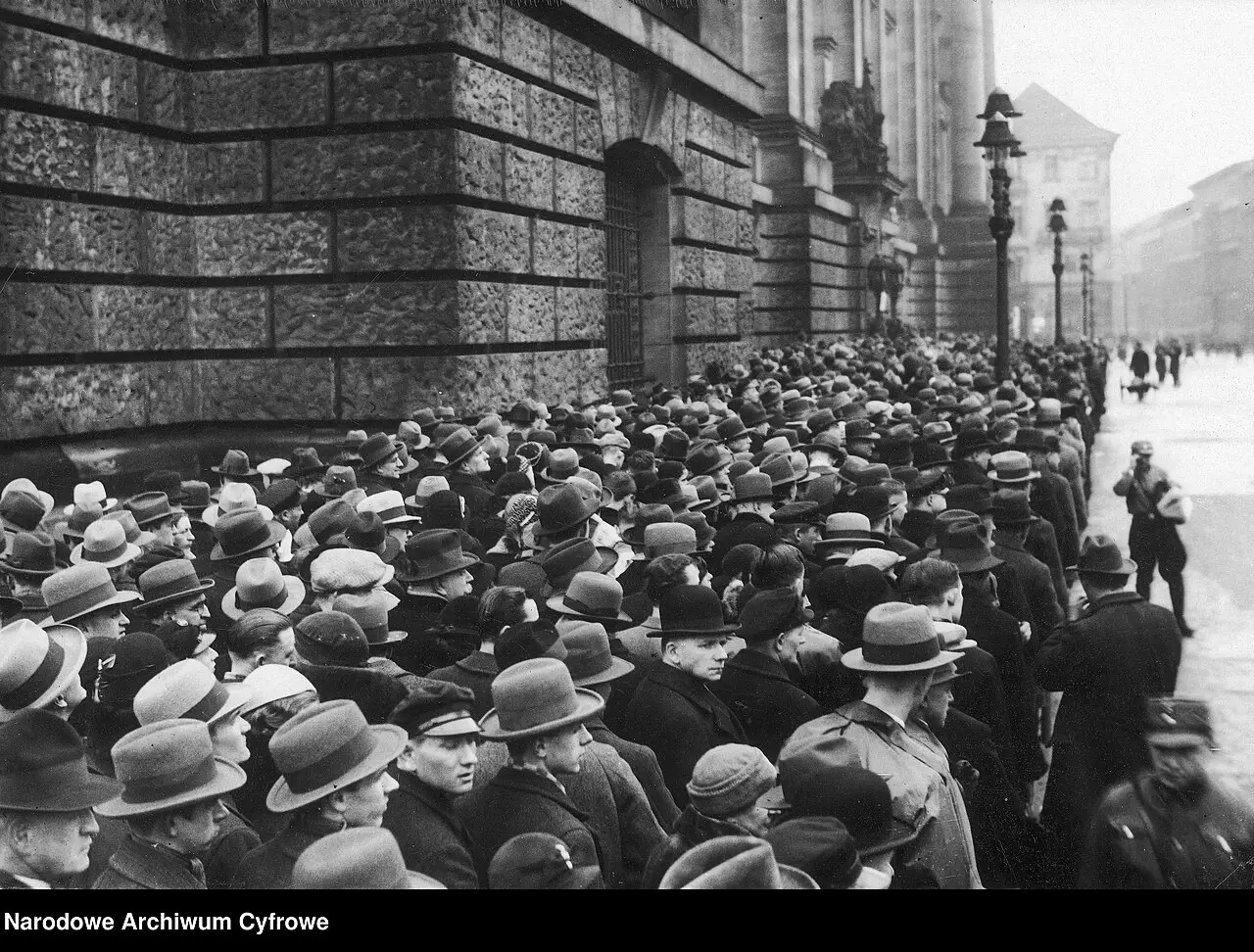
At 14:00 the gutted plenary chamber of the Reichstag was opened to the public. Crowds had gathered at the main entrance long before, in pouring rain; chains of SA men led them through the deputies’ cloakroom, the lobby and the restaurant, pointing out the places where fires had been laid, into the roofless chamber, where rain fell through the broken glass ceiling onto the rubble. By 17:00 several tens of thousands had filed through. The press presented the visit as an object lesson in the work of ‘Communist arsonists’.4,5,7
-
Radio Berlin
Listeners warned against jamming government broadcasts
An official notice said that recent attempts to disrupt government broadcasts had led to greater vigilance, and that anyone who deliberately switched on electrical equipment or made their receiver howl by feedback in order to interfere with reception would be prosecuted under the telecommunications law and could go to prison.8
-
Religion Leipzig
A Jewish weekly urges its readers to vote
The Leipziger Jüdische Wochenschau led with an article by Alfred Hirschberg, deputy syndic of the Central Association of German Citizens of Jewish Faith, calling on every Jewish voter to go to the polls on 5 March and vote for a party that allowed Jews a share in the country’s life. The paper also carried an interview with Rabbi Abba Hillel Silver of Cleveland, who had been in Berlin when Hitler took office and had found German Jews deeply dejected but not in despair.9
Voices
My measures will not be hampered by legal considerations. Here I do not have to do justice, only to destroy and exterminate.
We German Jews never wanted, and do not want today, a separate fate as citizens. We want to share in the hardships of Germany’s present just as in the blessings of Germany’s future.
Elsewhere in the world
-
Japan
Earthquake and tsunami on the Sanriku coast
In the early hours of Friday a severe earthquake struck off the north-east coast of Honshu, followed by a great tidal wave that swept away fishing villages in Iwate, Miyagi and Aomori prefectures; in the coastal town of Kamaishi more than a thousand houses were washed away and a fire destroyed some two thousand more buildings. First reports spoke of hundreds of dead; by the next day estimates had risen to at least two thousand.6,7
More pictures



Sources
- Ernst Thälmann (biography) Gedenkstätte Deutscher Widerstand
- Hamburgischer Correspondent, Morgenausgabe, 4 March 1933 Deutsche Digitale Bibliothek, Zeitungsportal, p. 1, 'Thälmann verhaftet'
- Hamburger Fremdenblatt, Reichsausgabe, Abend-Ausgabe Nr. 63, 4 March 1933 Deutsche Digitale Bibliothek, Zeitungsportal, p. 12, 'Hitler in Hamburg' and 'Thälmann in Berlin verhaftet'
- Ohligser Anzeiger, 4 March 1933 Deutsche Digitale Bibliothek, Zeitungsportal, p. 1, 'Die KPD nicht mehr im Reichstag!' (Göring in Frankfurt, TU report), 'Der Brand vorher angekündigt', 'Öffentliche Besichtigung'
- Weißeritz-Zeitung, 4 March 1933 Deutsche Digitale Bibliothek, Zeitungsportal, p. 4, 'Zehntausende besichtigen das Trümmerfeld im Reichstag'
- Gütersloher Volks-Zeitung, 4 March 1933 Deutsche Digitale Bibliothek, Zeitungsportal, p. 7, Hamburg Senate statement (TU, 3 March) and 'Tokio, 3. März' earthquake report
- Gelsenkirchener allgemeine Zeitung, 4 March 1933 Deutsche Digitale Bibliothek, Zeitungsportal, p. 1, 'Die Katastrophe in Japan' and 'Das Trümmerfeld im Reichstag ist zur Besichtigung freigegeben worden'
- Kölnische Zeitung, 4 March 1933 Deutsche Digitale Bibliothek, Zeitungsportal, p. 1, official notice on interference with broadcasts (Berlin, 3 March) and 'Thälmann verhaftet'
- Leipziger Jüdische Wochenschau, Nr. 9, 3 March 1933 Deutsche Digitale Bibliothek, Zeitungsportal, p. 1, Alfred Hirschberg, 'Die nächste Aufgabe'; interview with Rabbi Abba Hillel Silver
Spotted a mistake? Send a correction.