Day 10 of 100
Hitler tells the cabinet rearmament comes first: “everything for the armed forces”
In cabinet Hitler declared that rearmament must come first in every public works decision for the coming years, and advised ministers to say nothing specific about economic policy before the election. A decree sharply raised the duties on imported livestock, meat and lard. In Staßfurt thousands of workers downed tools to bury their murdered mayor. Berlin’s six-day cycle race was postponed because of the election, and the motoring clubs cancelled their rally to the motor show.
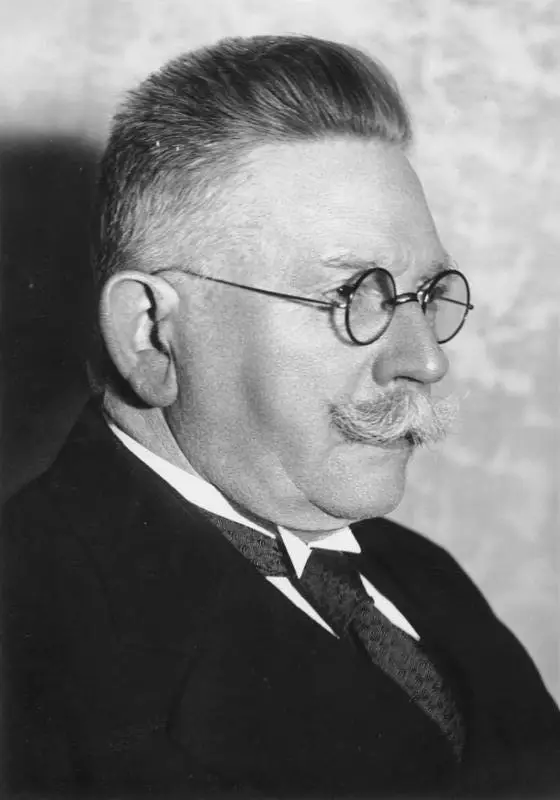

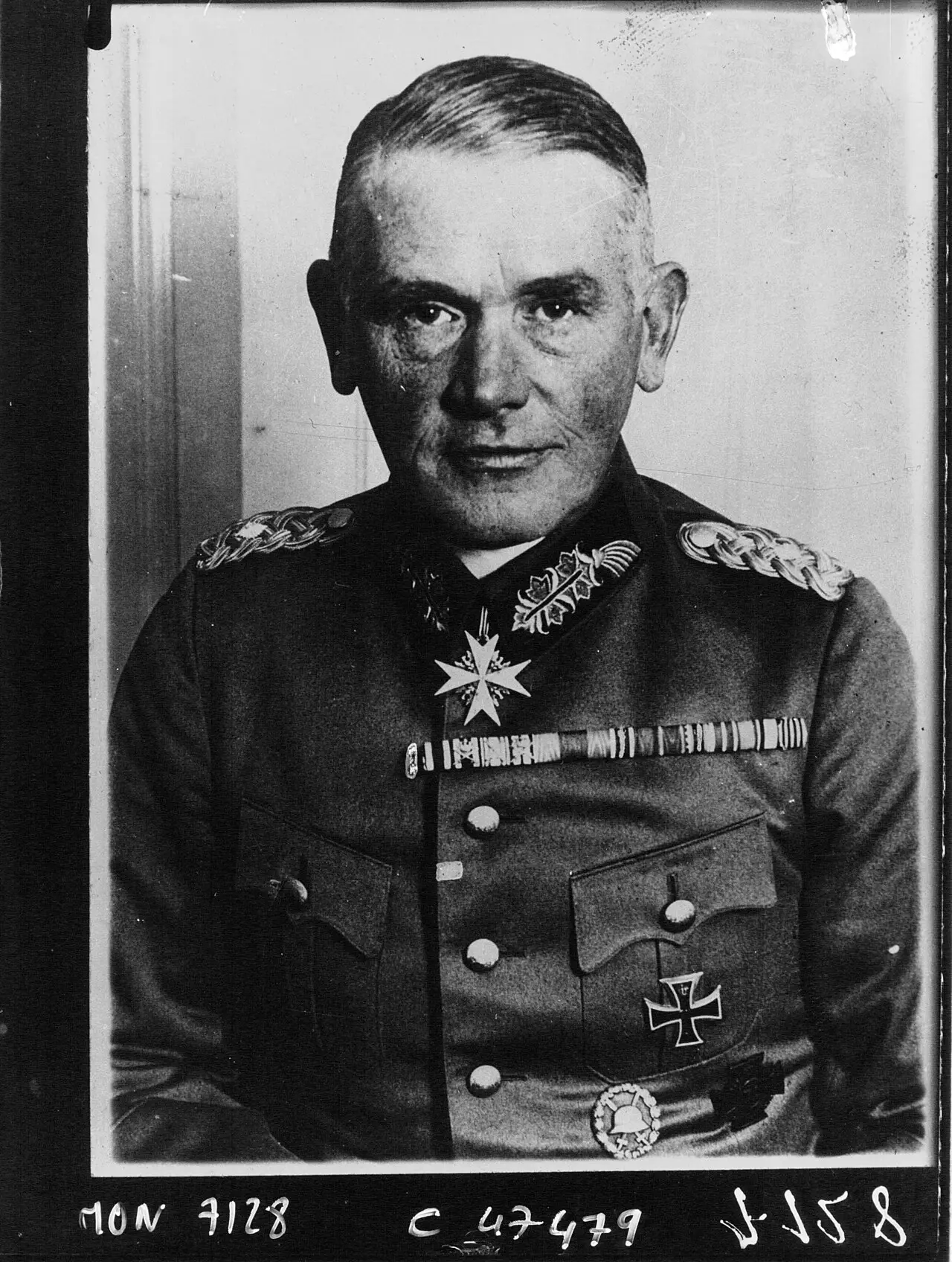
The cabinet minutes of 8 February record, nine days into the government, the priority that would shape the regime’s economics. Discussing a request for 2.5 million marks for a reservoir in Upper Silesia, Hitler said that Germany was negotiating abroad for military equality, that theoretical equality must be followed by actual rearmament, and that the next five years must be devoted to making the German people capable of bearing arms again. Every publicly funded job-creation scheme was to be judged by that measure: for the next four to five years the supreme principle must be “everything for the armed forces”. The defence minister, Blomberg, asked for the army’s immediate needs to be met first, and the cabinet decided to examine the whole 1933 budget before funding anything else.
The same meeting showed the campaign calculations. The finance minister advised preparing a large omnibus finance decree quietly and publishing it only after the election. Frick wanted quick, visible benefits before 5 March; Hitler agreed that a sharper tax on department stores would be the most popular tax of all, but told ministers to avoid any detailed economic programme, since none could win the 18 to 19 million votes the government needed.
Laws and decrees
Verordnung über Zolländerungen
Decree on changes to customs duties
With trade treaties with Sweden, the Netherlands and Yugoslavia expiring, brought higher autonomous duties into force from 15 February: per 100 kg, cattle from 27 to 50 marks, sheep from 22.50 to 45, pigs from 32 to 50, meat to between 100 and 280, and lard from 12.50 to 50. The government said the lard duty would help domestic pig farming; the agriculture minister expected lard prices to rise.1
Zweite Verordnung zur Durchführung der Arbeitsbeschaffung
Second implementing ordinance on work creation
Allowed the executive boards of municipalities and municipal associations to take up work-creation loans until the result of the new local elections was announced, since the Prussian councils had just been dissolved.1
Politics and power
Government, terror and persecution
-
Military 16:30, Berlin, Reich Chancellery
“Everything for the armed forces”
At the 16:30 cabinet meeting Hitler said the next five years must be devoted to restoring Germany’s capacity to bear arms and that public job-creation measures should be judged by whether they served that end. Germany’s position in the world, and that of its economy, depended on its armed forces. Göring argued that road-building mattered more than waterways; Blomberg asked that the army’s basic material needs come first.1
-
Propaganda Berlin, Reich Chancellery
Radio time reserved for ministers’ speeches
Frick told the cabinet that party advertising would remain barred from the radio, but not speeches by ministers. Hitler’s speech on 10 February was to be broadcast for an hour on all stations, introduced by a ten-minute report, and Hugenberg’s on the following day. The cabinet also agreed that no minister would appear before the Reichstag’s standing committee, and that the government’s “general balance sheet” would be sent to households by mass mailing.1
-
Economy 18:30, Berlin, Reich Chancellery
Work creation committees set up
In the evening Hitler constituted the cabinet committees for work creation and rural settlement. The Reich Commissioner for Work Creation, Gereke, explained that of the 500 million marks in the “immediate programme” inherited from Schleicher, 400 million were for states and municipalities and 100 million for Reich projects, for which far larger claims had already been lodged.2
-
The states Berlin
Prussia to vote on 5 March
The Reich’s commissioners in Prussia fixed the election of the dissolved Prussian Landtag for 5 March, the same day as the Reichstag election.3
-
Opposition noon, Staßfurt and Schönebeck
Staßfurt buries Hermann Kasten
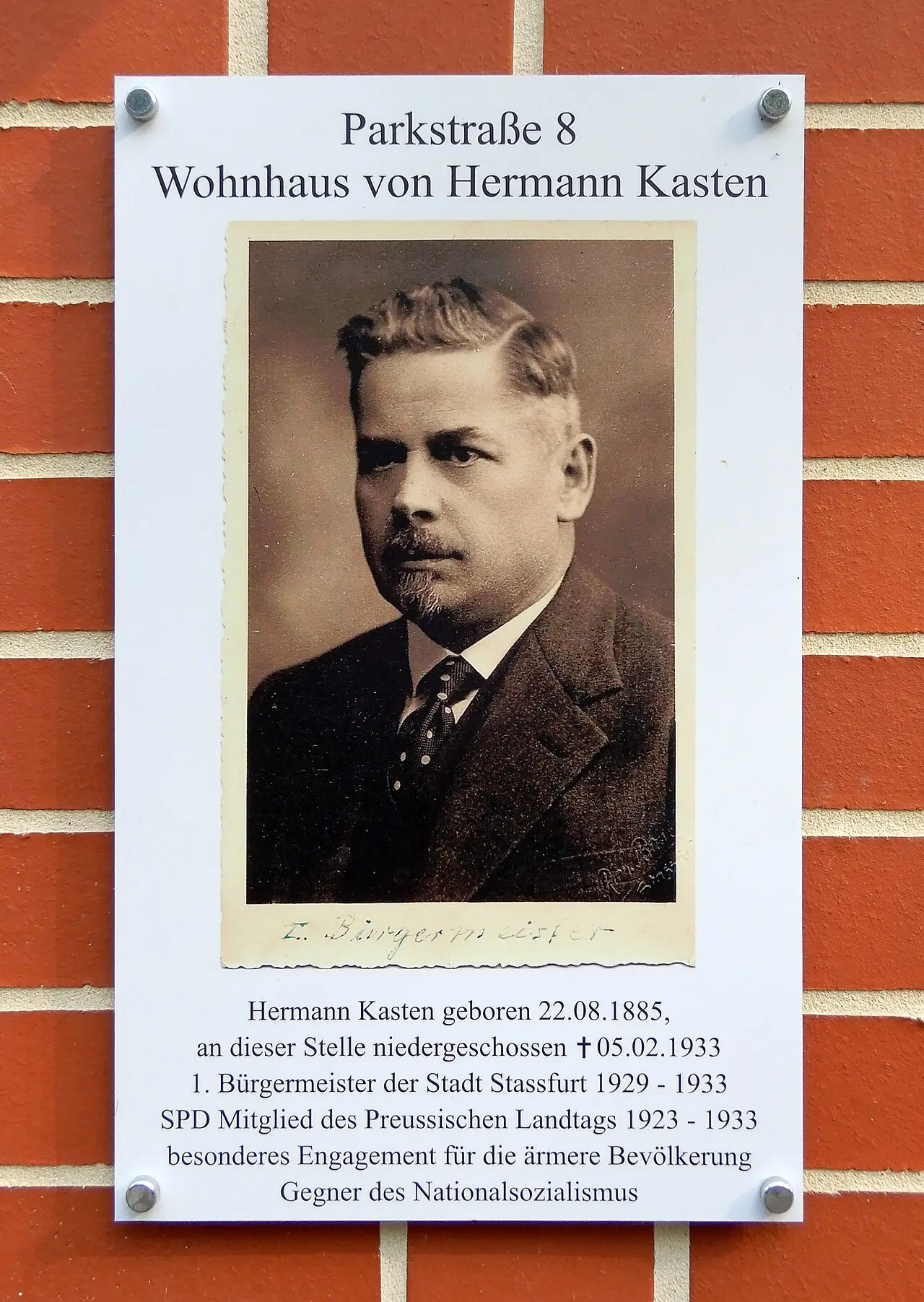
On the day of the murdered mayor’s funeral, more than 7,000 workers stopped work at noon on the decision of their works councils, and tens of thousands lined the route as the coffin was taken from Staßfurt to the eastern cemetery at Schönebeck. The historian Beatrix Herlemann has called the burial a first silent demonstration of resistance.4
Everyday life
What else was happening in Germany
-
Sport Berlin, Sportpalast
Six-day race postponed for the election
The Berlin six-day cycle race, planned for 3 to 9 March in the Sportpalast, was moved because of the Reichstag election; no new date had been fixed, though the organisers intended 8 to 14 March. The Sportpalast also announced visits from the Massachusetts Rangers, the American ice-hockey team bound for the world championship in Prague.5
-
Transport
Motoring clubs call off their motor-show rally
The ADAC, the Automobilclub von Deutschland and the German Motorcyclists’ Association cancelled their joint rally to the forthcoming international motor show, because the government had not granted motorists the tax relief they had hoped for.5
-
Sport
Too poor for the away fixture
Previewing the new season of the workers’ football league, the Vorwärts noted that the club Minerva had often travelled to Luckenwalde with a weakened team, because unemployed players simply could not raise the fare.5
-
Theatre evening, Berlin, Admiralspalast, Friedrichstraße
A new Lydia beside Richard Tauber
At the Theater im Admiralspalast, where Jaromír Weinberger’s new operetta Frühlingsstürme (Spring Storms) was still running with Richard Tauber, Mary Losseff sang the part of Lydia for the first time in place of Jarmila Novotná; the Vorwärts found she brought a lighter touch to the production.6
-
Radio 20:00
Coriolanus in a new translation
The Deutschlandsender at Königs Wusterhausen broadcast Shakespeare’s Coriolanus at 20:00 in the first performance of a new translation by Hans Rothe, preceded in the afternoon by a talk on Shakespeare and politics.5
Voices
For the next four to five years the supreme principle must be: everything for the armed forces.
More pictures
_-_btv1b90345500.jpg)
_Hermann_Kasten.jpg)
Sources
- Akten der Reichskanzlei. Regierung Hitler 1933–1945, Bd. I, Nr. 17: Ministerbesprechung vom 8. Februar 1933, 16.30 Uhr Bundesarchiv / Historische Kommission bei der Bayerischen Akademie der Wissenschaften, R 43 I/1459, S. 343–354, items 1–9 with notes 11, 13–14, 21–22, 33–34
- Akten der Reichskanzlei. Regierung Hitler 1933–1945, Bd. I, Nr. 18: Sitzung der Ausschüsse der Reichsregierung für Arbeitsbeschaffung und ländliche Siedlung, 8. Februar 1933, 18.30 Uhr Bundesarchiv / Historische Kommission bei der Bayerischen Akademie der Wissenschaften, R 43 II/540, Bl. 32–33
- Akten der Reichskanzlei. Regierung Hitler 1933–1945, Bd. I, Nr. 14: Sitzung der Kommissare des Reichs für Preußen, 4. Februar 1933 Bundesarchiv / Historische Kommission bei der Bayerischen Akademie der Wissenschaften, note 8 (VO der Kommissare des Reichs vom 8. 2. 1933, MinBlPriV S. 115)
- »… gefallen durch feigen Meuchelmord«. Hermann Kasten Stadt Staßfurt (J. Kleemann, T.-A. Matzke, T. Hoffmann, 2013), quoting Beatrix Herlemann (2001), p. 3
- Vorwärts, Abendausgabe Nr. 66, 8 February 1933 Deutsche Digitale Bibliothek, Zeitungsportal, p. 6, 'Vor der neuen Fußballserie', 'Noch kein Sechstagetermin', 'Plakettenfahrt ... abgesagt', 'USA.-Eishockeymannschaft in Berlin'; p. 4, 'Rundfunk am Abend'
- Vorwärts, Abendausgabe Nr. 68, 9 February 1933 Deutsche Digitale Bibliothek, Zeitungsportal, p. 3, '"Frühlingsstürme" neubesetzt'
Spotted a mistake? Send a correction.