Day 55 of 100
Goebbels tells the radio chiefs that broadcasting now belongs to the government
At the Haus des Rundfunks in Berlin, Goebbels told the heads of all German radio companies that radio was the most important instrument for influencing the masses and that the government would give it its instructions. Göring told the foreign press that reports of atrocities were lies and blamed Jews and Marxists abroad. Berlin’s fire chief was suspended, a Berlin court upheld a Nazi defendant’s objection to a Jewish judge, and the plaque recalling the Weimar constitution was removed from the theatre in Weimar.
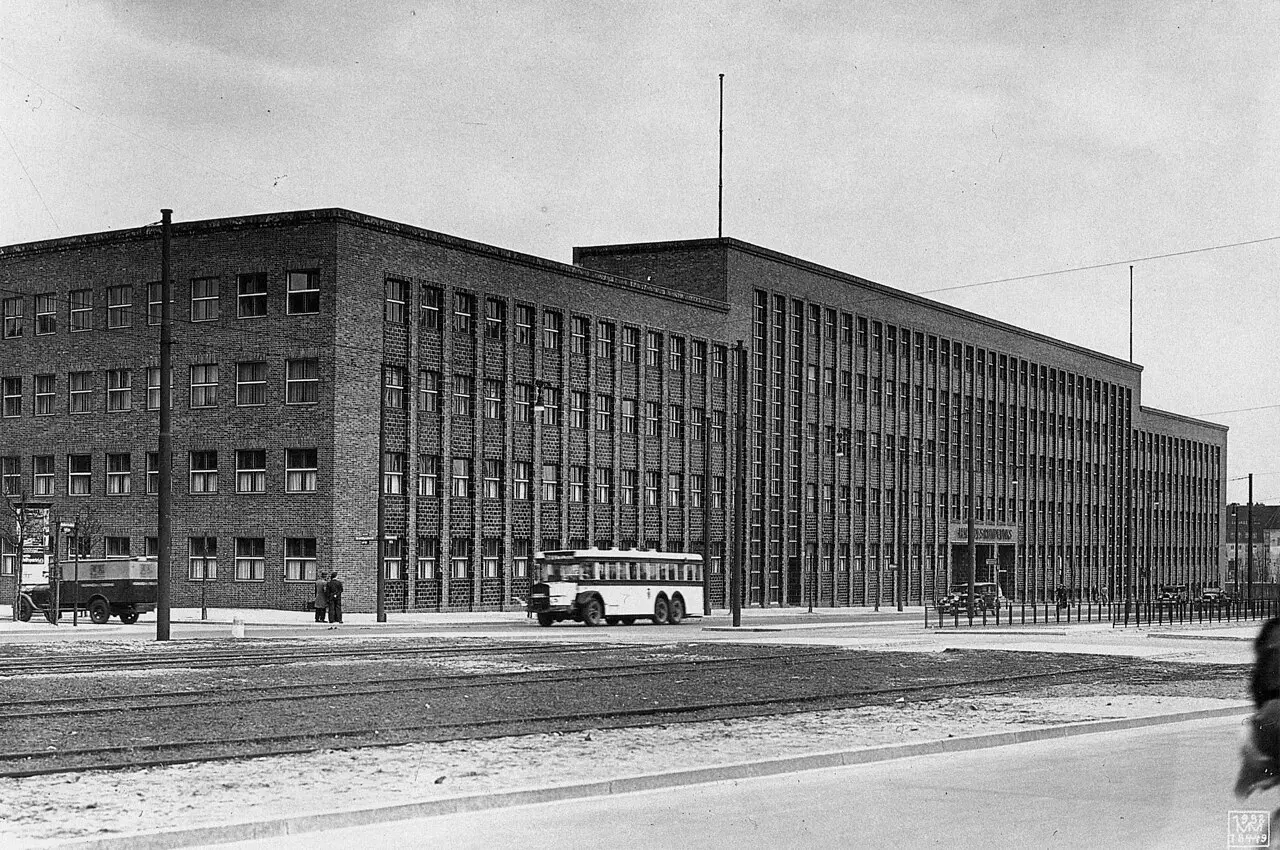

Twelve days after the Propaganda Ministry was created, Goebbels went to the Haus des Rundfunks in Charlottenburg to address the managers (Intendanten) and directors of all the German broadcasting companies, and also the staff of the Berlin stations. He told them that the ‘national revolution’ would take over the radio stations too, that the government would issue the instructions and that radio must above all never be boring. From 1 April the Deutschlandsender was to broadcast a nightly ‘Hour of the Nation’, carried by every station. The recording of the speech survives in the German Broadcasting Archive.
The same day Göring received foreign correspondents to deny what the regime called ‘atrocity propaganda’ (Greuelpropaganda, its term for foreign reports of violence in Germany). He conceded only ‘some regrettable incidents’, insisted that no one would be persecuted merely for being a Jew, and blamed Marxism and ‘Jewry’ abroad for the campaign against Germany. Inside Germany the reshaping of public life went on at every level, from the removal of Berlin’s chief fire officer to new Nazi provincial governors and police chiefs in Prussia.
Politics and power
Government, terror and persecution
-
Propaganda Berlin, Haus des Rundfunks, Masurenallee
Goebbels addresses the radio chiefs at the Haus des Rundfunks
Goebbels told the directors of all German broadcasting companies that radio was not an end in itself: it belonged to the new Germany, would be placed in the service of ‘national reconstruction’, and would receive its instructions from the government. Speaking to the staff of the three Berlin radio companies, he said every employee had to affirm the government’s aims inwardly, that opportunists were not wanted, and that radio should help win over the parts of the nation not yet behind the government.1,2,3
-
Propaganda Berlin
Göring tells foreign journalists the atrocity reports are lies
Receiving the foreign press, Göring said that apart from some regrettable incidents nothing had happened except that some people had lost their posts and some thousands of Communists had been arrested. The government would never tolerate anyone being persecuted only because he was a Jew, he said; Jewish officials had been dismissed only because they were Social Democrats. He blamed Marxism and ‘Jewry’ abroad for the campaign, said no Social Democratic paper would appear in Germany while the party’s press abroad ‘slandered’ the country, Some of the journalists were then given passes to inspect the prisons.4
-
Persecution Berlin
Court accepts a Nazi defendant’s objection to a Jewish judge
At Berlin’s Landgericht II the merchant Bruno Liebmann, due to be tried for loan fraud before the 7th criminal chamber, declared at the start of the hearing that as a registered Nazi Party member he refused to be tried by a Jewish judge. The chamber to which the objection was referred upheld it.6
-
The states Berlin
Berlin’s chief fire officer suspended
Lord Mayor Sahm suspended Berlin’s chief fire officer, Gempp. Officially it was said that Gempp had not merely tolerated but encouraged Communist ‘infiltration’ of the fire brigade to a degree that seriously endangered public safety, and that further charges might lead to disciplinary proceedings.2
-
The states Weimar
Weimar constitution plaque taken down
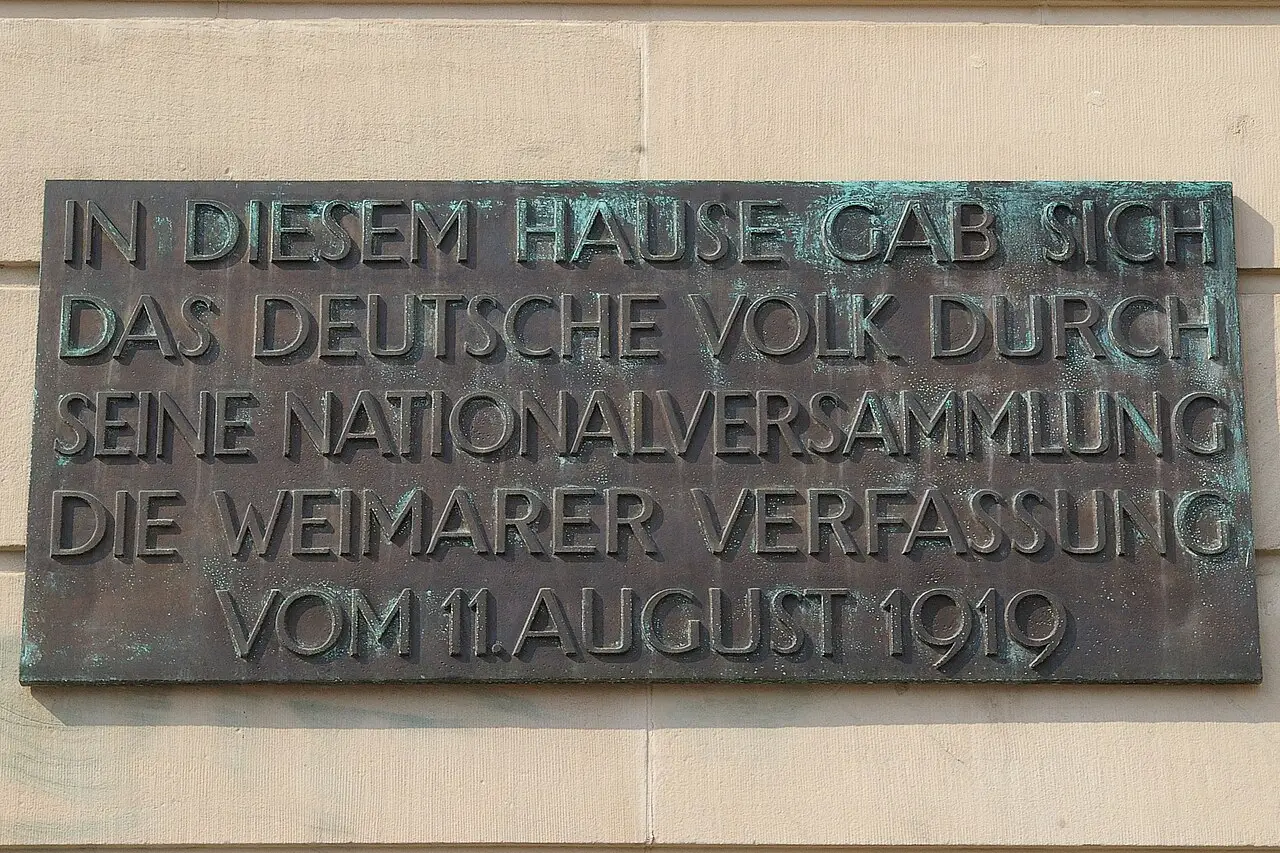
On the orders of Thuringia’s education minister, Wächtler, the bronze plaque by the left main entrance of the German National Theatre in Weimar, which recalled that the National Assembly had given the German people its constitution in that building, was removed.2,10
-
Government Berlin
New Nazi provincial governors and police chiefs in Prussia
Acting on Göring’s proposals, the Reich commissioners for Prussia retired four provincial governors (Oberpräsidenten) and appointed five new ones, among them the Nazi Landtag group leader Wilhelm Kube for Brandenburg and Berlin. Count Helldorf, a member of the Prussian Landtag, became police president of Potsdam, and the Reichstag deputy Edmund Heines police president of Breslau; several district presidents were also replaced.2,7
Sources disagree. The Hamburger Fremdenblatt printed the appointments in its issue of Sunday 26 March, while other papers carried them under a ‘Berlin, 26 March’ dateline, so the exact day of the decision is not certain.
Everyday life
What else was happening in Germany
-
Radio
An ‘Hour of the Nation’ every evening
Goebbels announced that from 1 April the Deutschlandsender, designated the Reich station, would broadcast an ‘Hour of the Nation’ daily from 7 to 8 p.m., to be carried by all other German stations, which would otherwise keep their own programmes.2
-
Music Berlin
Georg Schumann wins the Beethoven Prize
The Prussian State Beethoven Prize, founded by the Prussian State Ministry in 1927, was awarded on the proposal of its board by the Prussian Academy of Arts to the composer Georg Schumann.5
-
Sport Berlin
A German Air Sports Association is founded
At the Flugverbandshaus in Berlin the founding meeting of the German Air Sports Association (Deutscher Luftsportverband) was held. It was to unite all German aviation clubs ‘on a national basis’; the German Air Council was dissolved, and the meeting unanimously proposed the First World War fighter pilot Bruno Loerzer as president.4
-
Society Berlin
Doctors’ associations accept a Nazi commissioner
The boards of the two leading medical associations, the Deutscher Ärztevereinsbund and the Hartmannbund, appointed Dr Gerhard Wagner, chairman of the National Socialist German Physicians’ League, as commissioner for both. The boards and their staff stayed in office to work ‘in trusting cooperation’ with him.6
Voices
I consider radio to be the most modern and the most important instrument of mass influence there is. I am also of the opinion – one should not say this out loud – that in the long run radio will displace the newspaper.
Elsewhere in the world
-
Austria
Vienna without newspapers
Social Democratic typesetters in Vienna had struck the previous day after the government imposed pre-censorship on the Arbeiter-Zeitung and Das Kleine Blatt. On 25 March only the official Wiener Zeitung and, later in the morning, the Heimatschutz paper appeared.8
In Berlin today
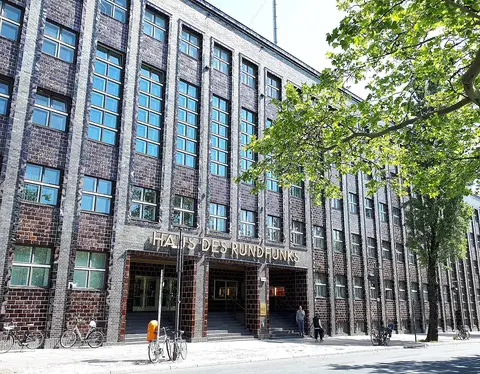

Haus des Rundfunks
Masurenallee 10/14, Charlottenburg-Westend
- Then
- Built by Hans Poelzig in 1929–30 and opened on 31 January 1931 as Germany’s second purpose-built broadcasting house; here Goebbels addressed the heads of the German radio companies and the staff of the Berlin stations.1,3,9
- Today
- A listed building and, since 2003, the headquarters of Rundfunk Berlin-Brandenburg (rbb); from 1957 it housed Sender Freies Berlin, after serving the Soviet-run Berliner Rundfunk from 1945 to 1952.
More pictures

Sources
- Joseph Goebbels: Zwei Reden über die Aufgaben des Reichsministeriums für Volksaufklärung und Propaganda (15./25. März 1933) German History in Documents and Images (German Historical Institute Washington), Part II, address at the Haus des Rundfunks; from DRA recording C 1117, printed in Heiber, Goebbels-Reden I
- Hamburger Fremdenblatt (Reichsausgabe), 26 March 1933 Deutsche Digitale Bibliothek, Deutsches Zeitungsportal, p. 1: Goebbels to the radio directors (Berlin, 25 March); Gempp suspended; Weimar plaque removed; Prussian appointments
- Freiberger Anzeiger und Tageblatt, 26 March 1933 Deutsche Digitale Bibliothek, Deutsches Zeitungsportal, p. 6, 'Goebbels über das Ziel des deutschen Rundfunks' (Berlin, 25 March)
- Hamburger Fremdenblatt (Reichsausgabe), 26 March 1933 Deutsche Digitale Bibliothek, Deutsches Zeitungsportal, p. 2: 'Kein Ausnahmerecht im Reich oder in Preußen' (Göring to the foreign press); 'Deutscher Luftsport-Verband' (both Berlin, 25 March)
- Hamburger Fremdenblatt (Reichsausgabe), 26 March 1933 Deutsche Digitale Bibliothek, Deutsches Zeitungsportal, p. 3, 'Prof. Schumann erhält den Beethoven-Preis' (Berlin, 25 March)
- Sächsische Volkszeitung, 26 March 1933 Deutsche Digitale Bibliothek, Deutsches Zeitungsportal, p. 2: 'Kommissarischer Leiter des deutschen Ärztevereinsbundes'; 'Ablehnung eines jüdischen Richters' (both Berlin, 25 March)
- Wilhelmsburger Zeitung, 27 March 1933 Deutsche Digitale Bibliothek, Deutsches Zeitungsportal, p. 5, 'Fünf neue Oberpräsidenten in Preußen ernannt'
- Dortmunder Zeitung, 26 March 1933 Deutsche Digitale Bibliothek, Deutsches Zeitungsportal, p. 2, 'Zeitungssetzerstreik in Wien' (Vienna, 25 March)
- Ehem. Haus des Rundfunks (Berliner Rundfunk) Landesdenkmalamt Berlin, Building history 1929–2003
- Echo der Gegenwart, 27 March 1933 Deutsche Digitale Bibliothek, Deutsches Zeitungsportal, p. 1, 'Weimar ohne Erinnerungstafel' (Weimar, 25 March)
Spotted a mistake? Send a correction.