Day 61 of 100
First coordination law dissolves state parliaments; SA drives Jewish judges from courts
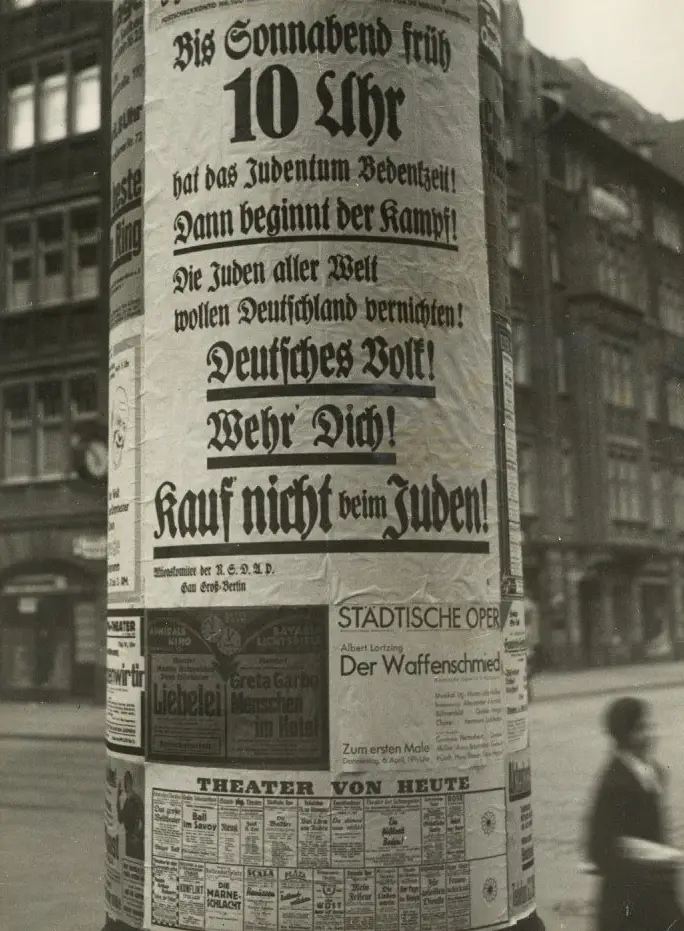
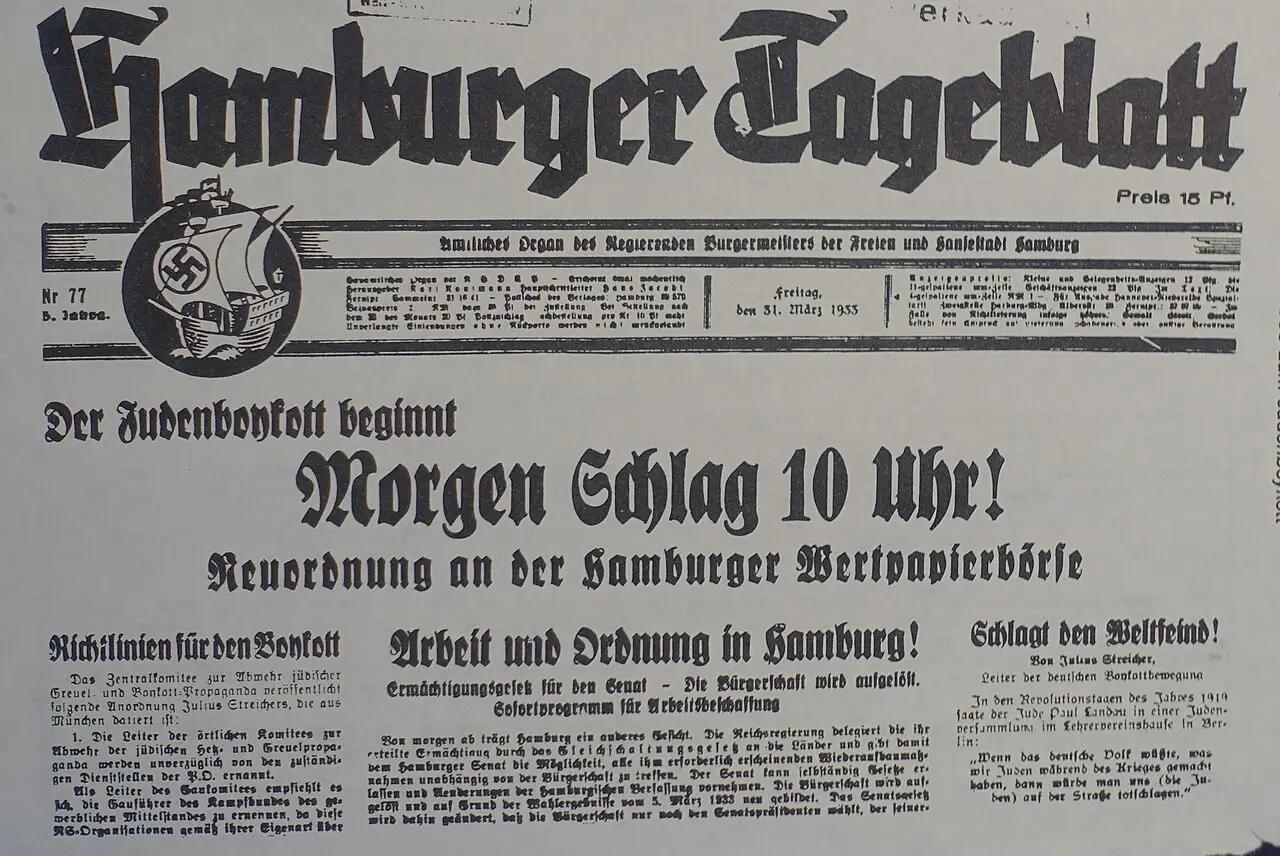
The Reich government enacted the provisional law to ‘coordinate’ the states with the Reich, dissolving every state parliament except Prussia’s and refilling them by the Reichstag vote without new elections. In Berlin crowds and SA men forced Jewish judges and lawyers out of the courts, and that evening Kerrl ordered Jewish judges in Prussia to take leave. Goebbels announced that the boycott would start next morning. In the cinemas Lamprecht’s Spione am Werk opened, and Erich Pommer left Ufa.
_No_copyright.jpg)
The ‘Provisional Law for the Coordination of the States with the Reich’, made by the cabinet under the powers of the Enabling Act, began the dismantling of German federalism. It allowed state governments to make laws without their parliaments, even where these departed from the state constitutions. It dissolved all state parliaments except the Prussian Landtag elected on 5 March, and reconstituted them, together with municipal councils outside Prussia, on the basis of each state’s Reichstag vote. Communist votes were simply discarded. There were to be no new elections: the Reichstag result of 5 March was simply carried over to the states and towns.
In the courts, the purge ran ahead of the law. On Friday morning a large crowd forced its way into Berlin’s Landgericht I and Amtsgericht Mitte demanding the immediate removal of Jewish judges and lawyers; the court presidents closed both buildings and declared Sunday hours. The Kammergericht was also brought to a standstill. In Cologne SA and SS men held some sixty Jewish judges and lawyers for several hours. That evening Hanns Kerrl, Reich commissioner for the Prussian justice ministry, told the presiding judges of all Prussian appeal courts to have every Jewish judge apply for leave at once, and to bar from the buildings any who refused.
Kerrl justified his order as a way of preventing the population from resorting to ‘self-help’, which he said would endanger the authority of the courts. Late in the evening Goebbels told the press that the boycott would begin on Saturday ‘with full force and iron discipline’, then be suspended until Wednesday; if the foreign ‘atrocity agitation’ had stopped by then, life would return to normal, otherwise the boycott would resume. In Berlin the Nazi factory-cell organisation ordered its representatives in Jewish firms to demand two months’ advance wages for non-Jewish staff and the dismissal without notice of employees ‘of the Jewish race’, whatever their religion.
Laws and decrees
Vorläufiges Gesetz zur Gleichschaltung der Länder mit dem Reich
Provisional Law for the Coordination of the States with the Reich
Allowed state governments to legislate without their parliaments, even in departure from the state constitutions; dissolved all state parliaments except the Prussian Landtag and reconstituted them, and municipal councils outside Prussia, according to each state’s votes in the Reichstag election of 5 March 1933, with Communist votes disregarded and no new elections.1
Verordnung über die vorläufige Regelung der Flaggenführung
Ordinance on the Provisional Regulation of Flags
Brought the service flags of civil Reich authorities into line with the black-white-red colours restored on 12 March: the Reich Post flag became black-white-red with a gold posthorn, Reich vessels were also to fly the swastika flag, and merchant ships could fly black-white-red in place of the republican merchant flag.2
Politics and power
Government, terror and persecution
-
Government Berlin
Cabinet enacts the first coordination law
Meeting on Friday, the Reich cabinet finally adopted the provisional law on the coordination of the states with the Reich, signed the same day by Hitler and Interior Minister Frick. State governments could now pass laws on their own; state parliaments and, outside Prussia, municipal councils were dissolved and to be reformed according to the 5 March Reichstag vote, with no seats for the Communists.1
-
Persecution morning, Berlin; Cologne; Hamm
Crowds and SA force Jewish judges out of Berlin courts
In the morning a large crowd pushed into Landgericht I and Amtsgericht Mitte demanding the immediate removal of Jewish judges and lawyers; the presidents of both courts closed the buildings for the day. The Kammergericht was also halted. In Cologne some sixty Jewish judges and lawyers were taken into ‘protective custody’ (Schutzhaft, detention without trial) for several hours, and Jewish lawyers were barred from the appeal court in Hamm.3,6
-
Persecution evening, Berlin
Kerrl orders Jewish judges in Prussia to take leave
Kerrl instructed all presiding judges of Prussian appeal courts, chief prosecutors and prison authorities to urge every serving Jewish judge to apply for leave at once and to grant it immediately; those who refused were to be barred from the court buildings. Jewish assessors’ appointments were revoked, Jewish lay judges were no longer to be summoned, and Jewish prosecutors and prison officials were to be sent on leave. From 10:00 the next morning only a quota of Jewish lawyers, in proportion to the Jewish share of the population, was to be admitted to the courts.4
-
Propaganda evening, Berlin
Goebbels: boycott on Saturday, then a pause until Wednesday
Late in the evening Goebbels told German journalists that the boycott would be carried out on Saturday and then suspended until 10:00 on Wednesday 5 April, and resumed only if the foreign reports had not stopped. Earlier he had spoken to some 7,000 Berlin party officials in the Wilmersdorf tennis halls, a speech broadcast on all stations.5
-
Persecution Berlin
Berlin factory cells told to purge Jewish firms
The Nazi factory-cell organisation (NSBO) for Greater Berlin ordered its representatives in Jewish businesses to demand at 10:00 on Saturday two months’ advance pay for all non-Jewish workers and employees. They were to act as ‘personnel commissars’, prevent any dismissal of Christian staff and secure the dismissal without notice of employees ‘of the Jewish race’, regardless of their religion.5
Everyday life
What else was happening in Germany
-
Film Berlin, Gloria-Palast
Spione am Werk opens at the Gloria-Palast
Gerhard Lamprecht’s spy drama Spione am Werk, shot at the Ufa studios in Neubabelsberg and starring Karl Ludwig Diehl and Brigitte Helm, had its premiere at the Gloria-Palast in Berlin. The censors had passed it the day before but banned it for young people.7
-
Film Berlin
Erich Pommer leaves Ufa
Ufa announced that its celebrated head of production Erich Pommer had ceased work at the company on 31 March, two days after its board had decided to dissolve his contract along with those of other Jewish staff.8
-
Economy
Cost of living edges down
The Reich cost-of-living index for March was put at 116.6, 0.3 per cent below February. Food stood at 106.2, rent at 121.3 and heating and lighting at 136.6; eggs and butter in particular had become cheaper.9
Voices
I had said ‘yes’! ... What a humiliation, to declare promptly to unauthorised people who asked that I was Aryan, something I set no store by. What a disgrace, to buy with it the right to be left in peace behind my file! Caught off guard even now! Failed the first test! I could have slapped my own face.
In Berlin today
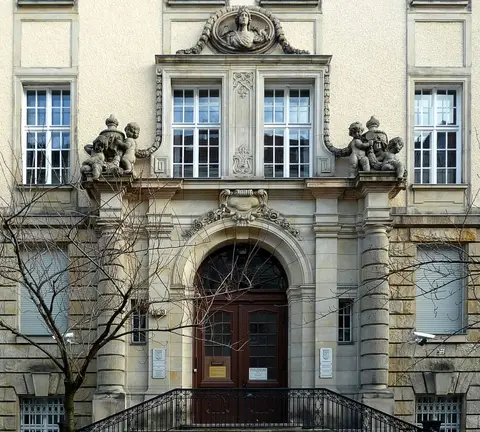

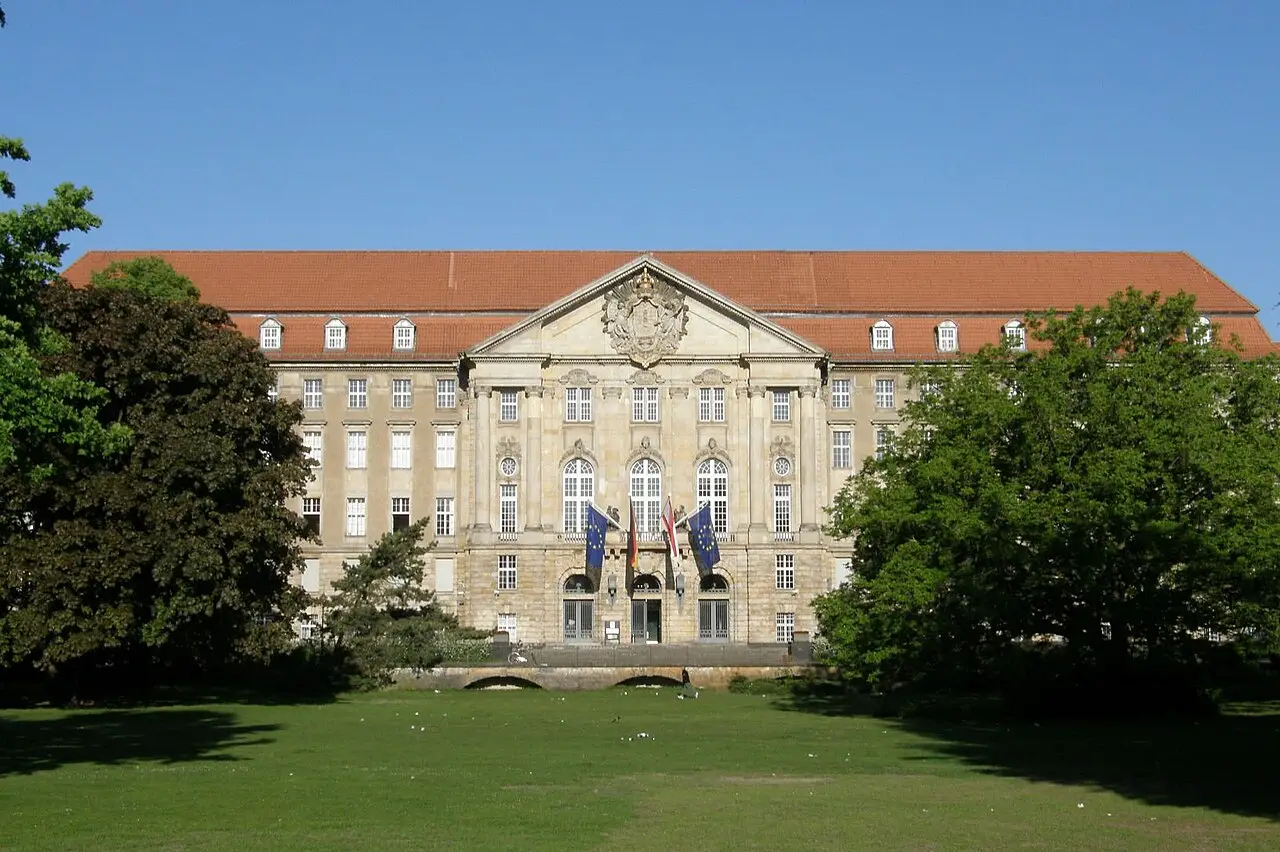
Kammergericht
Elßholzstraße 30–33, 10781 Berlin-Schöneberg
- Then
- SA men entered Prussia’s highest court; hearings involving Jewish judges, prosecutors or lawyers were broken off, and those concerned had to take off their robes and leave by a staircase lined with SA men.6,10
- Today
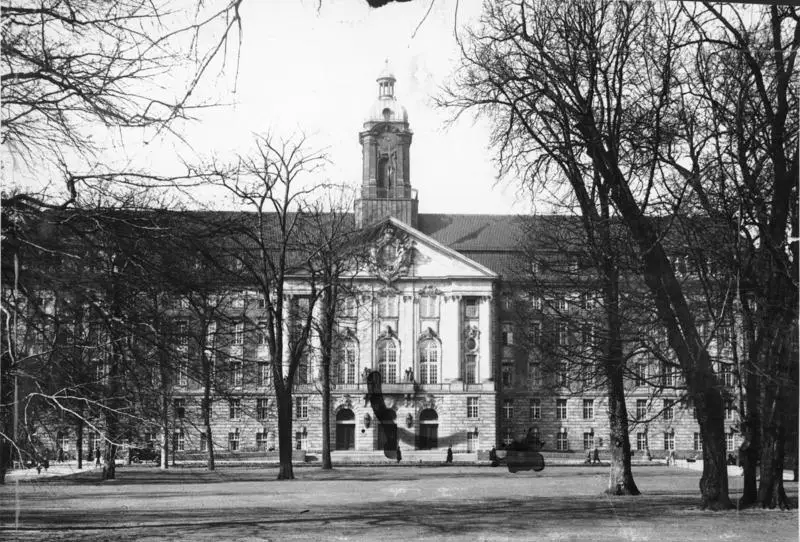
- The Kammergericht again sits in the building by the Kleistpark. To the left of the main entrance a memorial plaque commemorates the Jewish jurists of Berlin persecuted between 1933 and 1945.
More pictures



Sources
- Vorläufiges Gesetz zur Gleichschaltung der Länder mit dem Reich (31.03.1933) documentArchiv.de, RGBl. 1933 I, S. 153–154
- Verordnung über die vorläufige Regelung der Flaggenführung (31.03.1933) documentArchiv.de, RGBl. 1933 I, S. 179
- Kölnische Zeitung, evening edition, 31 March 1933: Berlin courts (telegram, Berlin, 31 March) Deutsche Digitale Bibliothek, Zeitungsportal, p. 8
- Hannoverscher Kurier, 1 April 1933: Kerrl’s order to the Prussian courts Deutsche Digitale Bibliothek, Zeitungsportal, p. 4
- Eibenstocker Tageblatt, 1 April 1933: ‘Boykott zunächst nur heute, gegebenenfalls Fortsetzung am Mittwoch’; ‘Mitteilung der Berliner NSBO’ (Berlin, 31 March) Deutsche Digitale Bibliothek, Zeitungsportal, p. 1
- Tillmann Krach, Georg D. Falk, Sebastian Felz: ‘NS-Terror gegen jüdische Richter und Rechtsanwälte’ Legal Tribune Online
- Spione am Werk (1932/1933) filmportal.de (DFF – Deutsches Filminstitut & Filmmuseum), Uraufführung (DE): 31.03.1933, Berlin, Gloria-Palast; Zensur 30.03.1933, Jugendverbot
- Gießener Anzeiger, 4 April 1933: ‘Erich Pommer verläßt die Ufa’ (after the Vossische Zeitung) Deutsche Digitale Bibliothek, Zeitungsportal, p. 2
- Dortmunder Zeitung, 1 April 1933: ‘Reichsindexziffer für die Lebenshaltungskosten’ (Berlin, 31 March) Deutsche Digitale Bibliothek, Zeitungsportal, p. 14
- Kammergericht: Geschichte des Gebäudes (Die Gedenktafeln) Land Berlin, Kammergericht (berlin.de)
Spotted a mistake? Send a correction.