Day 23 of 100
Rust suspends the head of the Karl-Marx-Schule; Frick bans Communist marches in Saxony
Rust ordered the reorganisation of the Karl-Marx-Schule in Neukölln, one of the Weimar Republic’s leading reform schools, sent its head Fritz Karsen on leave and suspended three senior Berlin school officials. Frick used the decree of 4 February to ban Communist open-air meetings and marches in Saxony, and the trade union federation protested to Hindenburg against Göring’s police decree. In Berlin, thermometers on the city’s edge fell to 18 degrees below zero overnight, and the creditors of the theatre impresarios Rotter learned they would get nothing.

Laws and decrees
Verordnung des Reichsministers des Innern über das Verbot kommunistischer Demonstrationen im Freistaat Sachsen
Ordinance banning Communist demonstrations in Saxony
Banned open-air meetings and processions of the KPD and its auxiliary organisations in Saxony until further notice, with prison for organisers, speakers and those providing a site and fines of up to 150 Reichsmarks for participants; based on § 5 of the decree of 4 February and in force from 22 February.4
Politics and power
Government, terror and persecution
-
Persecution Berlin-Neukölln
The Karl-Marx-Schule taken in hand
Citing long-standing complaints against the “spirit and constitution” of the Karl-Marx-Schule in Berlin-Neukölln, the acting Prussian Minister of Culture, Bernhard Rust, ordered the school’s reorganisation and sent its director, the reform educator Fritz Karsen, on leave; steps were also taken to withdraw Karsen’s lectureship on foreign school systems at Berlin University. At the same time the vice-president of Berlin’s provincial school board, König, and the department heads Israel and Kommerow were suspended with immediate effect.1,2,3
-
The states Saxony
Communist meetings and marches banned in Saxony
Reich Interior Minister Frick used the decree “for the protection of the German people” to ban all open-air meetings and processions organised by the KPD and its auxiliary organisations in Saxony until further notice. Organisers, speakers and anyone providing a site faced prison; participants a fine of up to 150 Reichsmarks.4
-
Opposition Berlin
The trade unions appeal to Hindenburg
On behalf of its executive, the chairman of the social-democratic trade union federation (ADGB), Peter Graßmann, wrote to Hindenburg about Göring’s circular to the Prussian police. It created two kinds of law in Germany, the letter said: privileges for the SA, SS and Stahlhelm and the government parties, and exceptional measures against whatever organisations Göring chose to call hostile to the state. Appealing to Hindenburg as the wartime commander of millions of ex-servicemen in the unions’ ranks, it protested that the decree made broad sections of the people fair game for political arbitrariness.5
-
Economy 16:15 and 17:00, Berlin, Reich Chancellery
Cabinet: cheaper sick certificates, help for small business
In two meetings in the late afternoon the cabinet decided to halve the much-resented 50-pfennig fee for a sickness certificate and to announce a reform of the health insurance funds, with Hitler arguing that a cut presented the right way would bring “a good political success”. It also agreed to give 30 million marks to credit institutions of the commercial middle class; at Göring’s insistence 8 million intended for consumer co-operatives was struck out. A Reich Commissioner for the commercial middle class was to be appointed, and the Post Minister confirmed that government propaganda could be sent to every household as unaddressed mail.6
-
Election Berlin
Eight national lists admitted for the election
The Reich election committee approved eight of the nine national lists submitted by the deadline of midnight on 20 February and rejected the ninth. One candidate, Flume, was struck off the list of the Kampffront Schwarz-Weiß-Rot because his written consent was missing.7
-
Persecution Berlin
Frick warns the states of a Communist rising
In a “strictly confidential” letter to the state governments Frick claimed that the Communist headquarters in Berlin had told its local groups in East Prussia that the KPD planned an armed putsch on 1 May and should acquire as many weapons as possible.8
Everyday life
What else was happening in Germany
-
Weather overnight, Berlin
Eighteen degrees of frost
After a week of returning winter, the night to Tuesday was the coldest yet: in Berlin’s outer districts the thermometer fell to 18 degrees below freezing.9
-
Theatre Berlin-Charlottenburg, Amtsgericht
Nothing for the Rotters’ creditors
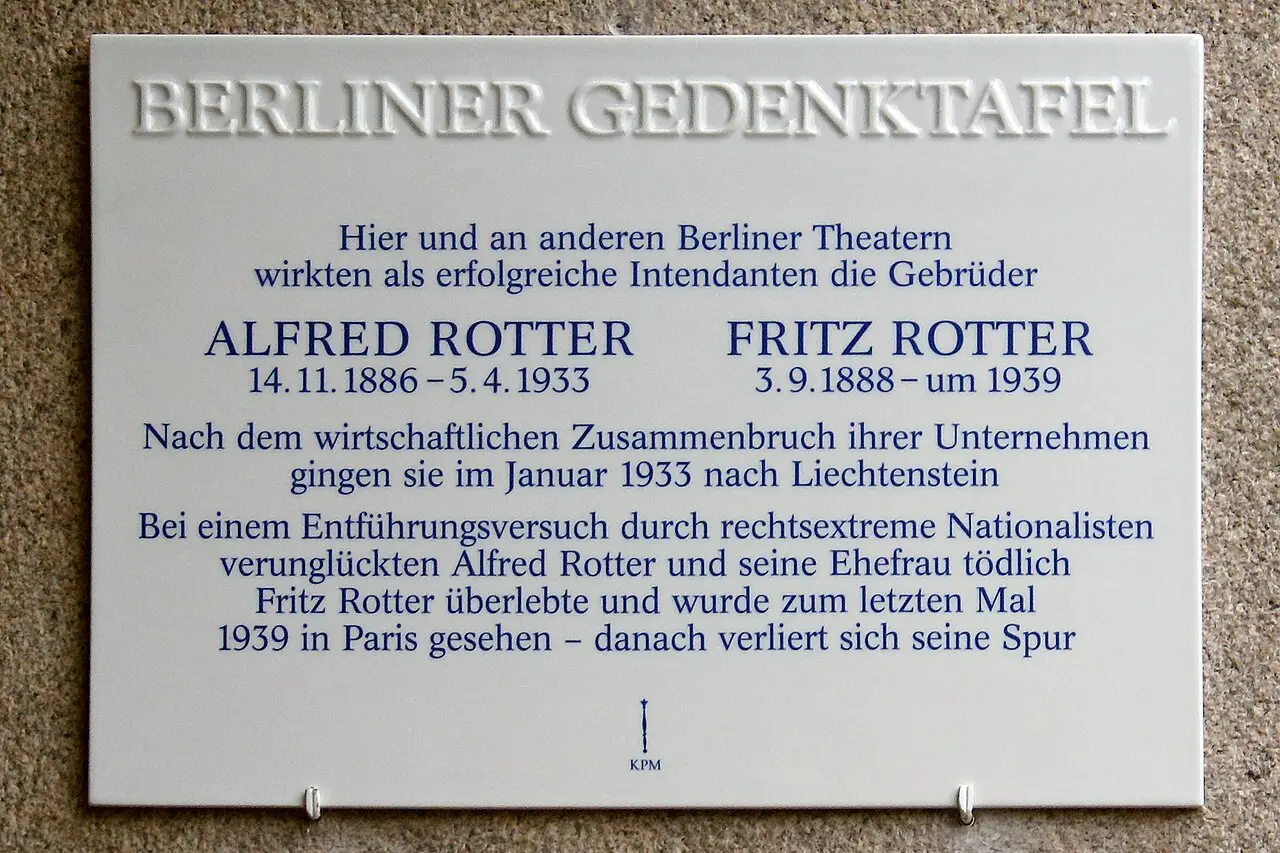
A crowded creditors’ meeting in the bankruptcy of Alfred and Fritz Rotter, whose company had run a string of Berlin theatres, heard at the Charlottenburg district court that both preferential and ordinary creditors would get nothing. The receiver could not yet draw up a balance sheet because the books were still with the public prosecutor, and the legal relations between the theatre companies in the Rotter group were obscure; the debts were put at about 3.9 million marks.10
-
Economy Berlin
Bechstein seeks terms with its creditors
The piano makers C. Bechstein, founded eighty years earlier and famous worldwide, had to ask their creditors for a settlement. The firm blamed the collapse of its exports on prohibitive tariffs in its main markets and on the fall of sterling and the currencies tied to it.11
In Berlin today
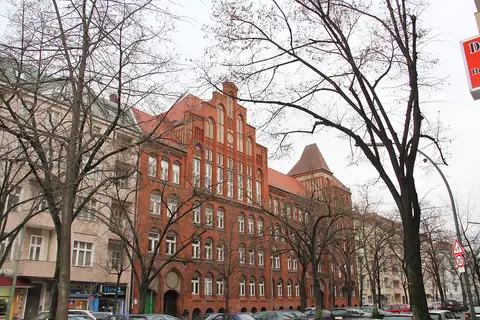

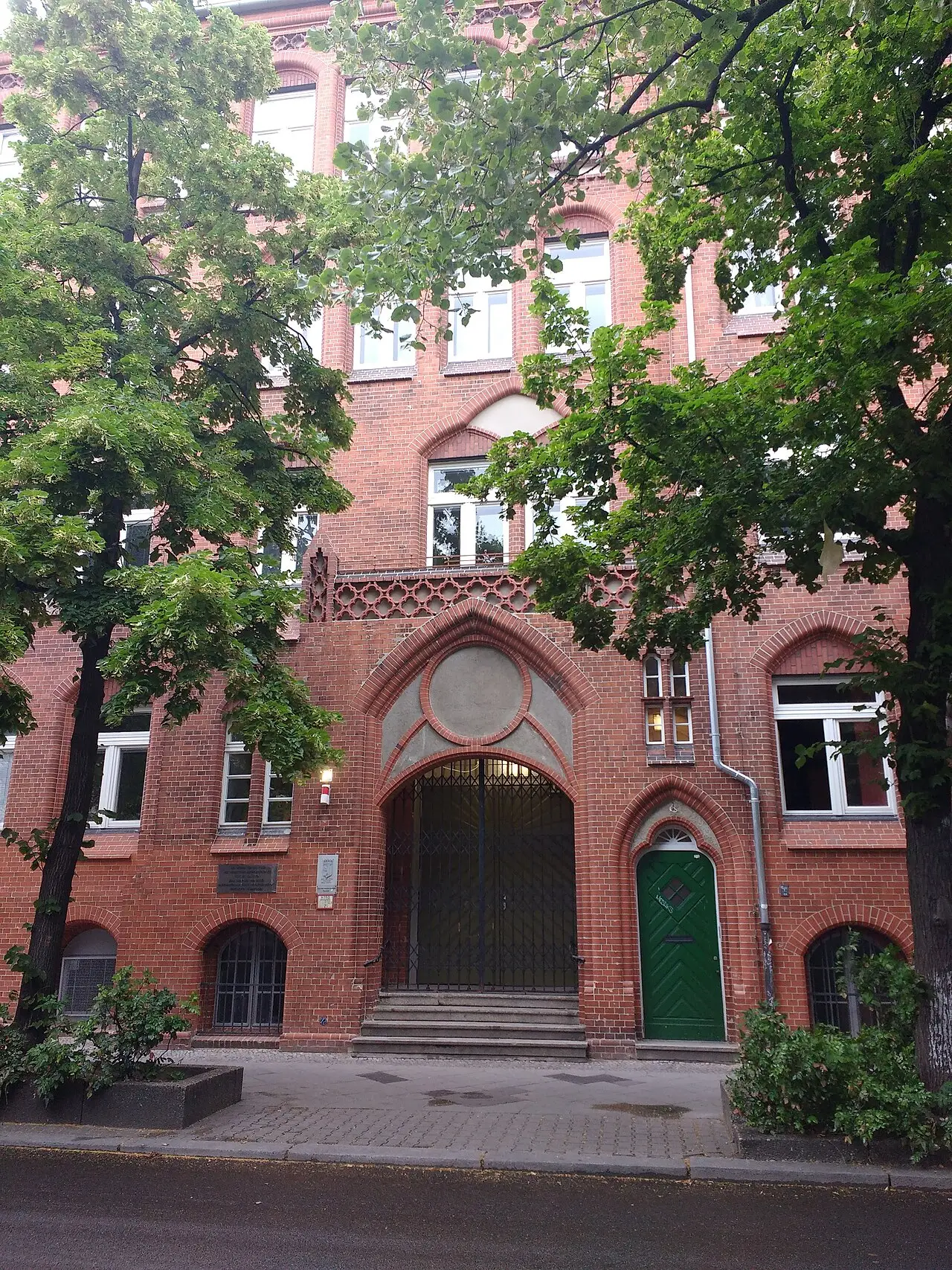
Karl-Marx-Schule (today Ernst-Abbe-Gymnasium)
Sonnenallee 79, 12045 Berlin-Neukölln
- Then
- Fritz Karsen’s reform school, one of the most important of the Weimar Republic, which Rust ordered to be reorganised on 21 February 1933 while Karsen was sent on leave.3
- Today
- The school is today the Ernst-Abbe-Gymnasium. A bronze plaque unveiled in 1989 beside the entrance recalls that the reform educator Fritz Karsen taught here from 1921 to 1933 and commemorates the teachers persecuted under National Socialism.
More pictures

Sources
- Umorganisation der Karl-Marx-Schule Kölnische Zeitung, via Deutsche Digitale Bibliothek Zeitungsportal, 22 February 1933, p. 2 (Amtlicher Preußischer Pressedienst, Berlin, 21 February)
- Berliner Schulwesen wird gesäubert Dresdner Nachrichten, via Deutsche Digitale Bibliothek Zeitungsportal, 22 February 1933, p. 1 (report dated Berlin, 21 February)
- Fritz Karsen (memorial plaque, Sonnenallee 79) Gedenktafeln in Berlin (Aktives Museum Faschismus und Widerstand in Berlin / Gedenkstätte Deutscher Widerstand)
- Verordnung des Reichsministers des Innern über das Verbot kommunistischer Demonstrationen im Freistaat Sachsen (21.02.1933) documentArchiv.de, Source given: Reichsgesetzblatt 1933 I, S. 78
- Herr Reichspräsident! Ein Schreiben des Allgemeinen Deutschen Gewerkschafts-Bundes Vorwärts, via Deutsche Digitale Bibliothek Zeitungsportal, 23 February 1933, p. 2
- Nr. 24 Kabinettssitzung vom 21. Februar 1933, 16.15 Uhr; Nr. 25 Ministerbesprechung vom 21. Februar 1933, 17 Uhr Bundesarchiv / Historische Kommission bei der Bayerischen Akademie der Wissenschaften, Akten der Reichskanzlei. Regierung Hitler, Band I, Dok. Nr. 25, P. 1, 6, 7; Dok. Nr. 24 (https://aktenreichskanzlei.bundesarchiv.de/dokumente/arh01d024), P. 4
- Acht Reichswahlvorschläge Kölnische Zeitung, via Deutsche Digitale Bibliothek Zeitungsportal, 21 February 1933, evening edition, p. 8
- Nr. 33 Das Preußische Ministerium des Innern an den Kommissar z.b.V. Daluege, 28. Februar 1933 (note 2, quoting Frick’s letter of 21 February) Bundesarchiv / Historische Kommission bei der Bayerischen Akademie der Wissenschaften, Akten der Reichskanzlei. Regierung Hitler, Band I, Note 2
- Wiederkehr des Winters Vorwärts, via Deutsche Digitale Bibliothek Zeitungsportal, 23 February 1933, p. 3
- 3,9 Millionen Rotter-Passiven Kölnische Zeitung, via Deutsche Digitale Bibliothek Zeitungsportal, 22 February 1933, p. 3 (report dated Berlin, 21 February)
- Schwierigkeiten der C. Bechstein, Pianofortefabrik Neue Mannheimer Zeitung, via Deutsche Digitale Bibliothek Zeitungsportal, 21 February 1933, p. 5
Spotted a mistake? Send a correction.