Day 46 of 100
Schacht returns to the Reichsbank; Bruno Walter’s Leipzig concert is banned
Hans Luther resigned as president of the Reichsbank and its General Council unanimously elected Hjalmar Schacht in his place. In Leipzig the police, on the orders of Saxony’s Interior Ministry, forbade the conductor Bruno Walter’s Gewandhaus concert that evening. In Berlin Max Ophüls’s film Liebelei opened at the Atrium and the Titania-Palast, and Hitler promised the organisers of the 1936 Olympic Games his support.
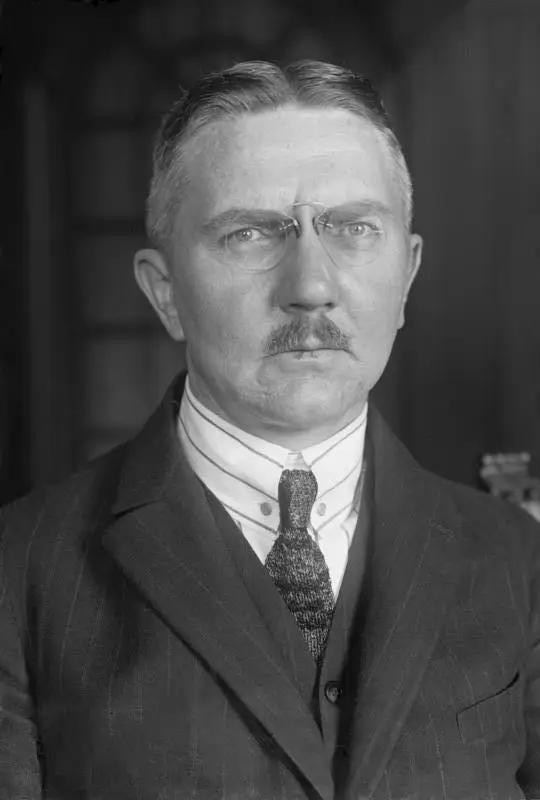

Hjalmar Schacht, a former president of the Reichsbank, came back on the day Hans Luther stepped down. Luther told Hindenburg in a long letter that obstacles in his own person stood in the way of the close cooperation between government and central bank that currency, credit and economic policy required in all important questions.
Politics and power
Government, terror and persecution
-
Economy Berlin, Reichsbank
Luther resigns; Schacht elected Reichsbank president
At a meeting of the Reichsbank’s General Council, President Hans Luther announced his resignation, and the Council unanimously elected his predecessor, Hjalmar Schacht, to succeed him. In a letter to the Reich President, Luther explained that obstacles in his person were hampering the necessary cooperation between the government and the Reichsbank.1,2
-
The states Breslau, Passau, Zwickau
Honorary citizenships and new street names
Breslau announced that it would make Hitler an honorary citizen and rename its former Schlossplatz ‘Adolf-Hitler-Platz’. Passau and Zwickau conferred honorary citizenship on Hindenburg and Hitler, and streets and squares in many towns were to bear the names of Hitler, Hindenburg and Schlageter.7
Everyday life
What else was happening in Germany
-
Music evening, Leipzig
Bruno Walter’s Gewandhaus concert forbidden
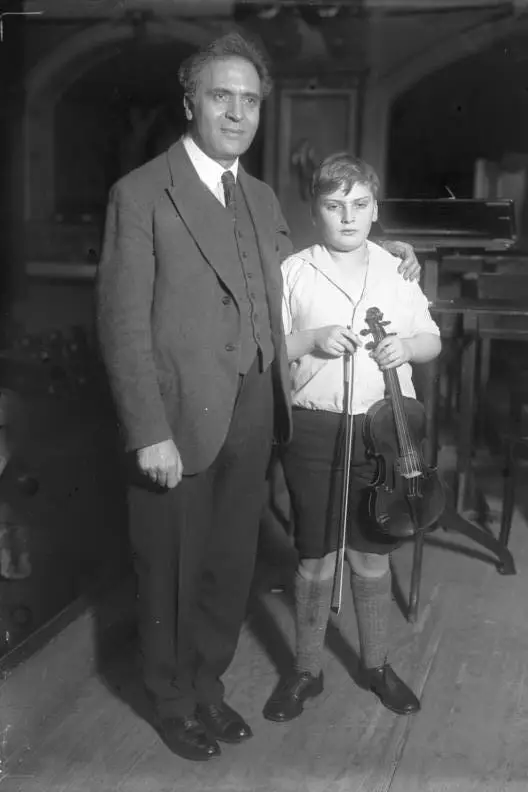
Leipzig police announced that the Gewandhaus concert to be conducted that evening by Bruno Walter, a former Bavarian general music director who had also worked at Berlin’s Städtische Oper, could not take place, on the orders of the Saxon Interior Ministry. Days later Goebbels objected to Walter conducting his fourth concert with the Berlin Philharmonic, and Walter withdrew.3,4
-
Film Berlin, Atrium and Titania-Palast
Ophüls’s Liebelei opens in Berlin
Max Ophüls’s film of Arthur Schnitzler’s Liebelei, with Magda Schneider, Wolfgang Liebeneiner, Luise Ullrich and Gustaf Gründgens, began its Berlin run at the Atrium and the Titania-Palast after a German first showing in Leipzig on 10 March. Ophüls was present for the premiere; soon afterwards he had to leave Germany.5
-
Sport Berlin, Reich Chancellery
Hitler receives the Olympic organisers
Hitler received Theodor Lewald, chairman of the organising committee for the 1936 Olympic Games in Berlin, together with Berlin’s lord mayor Heinrich Sahm. After Lewald explained the purpose of the Games, Hitler called sport indispensable for strengthening German youth and promised to support the Games in every respect.6
-
Radio
Almost four and a half million radio licences
On 1 March Germany had 4,480,251 registered radio listeners, 52,651 more than a month earlier. Of these, 551,693, or 12.5 per cent, were exempted from the licence fee.8
Elsewhere in the world
-
United Kingdom
MacDonald presents a disarmament plan at Geneva
In an extraordinary session of the main committee of the Disarmament Conference, attended by the French premier Daladier, British Prime Minister Ramsay MacDonald presented a draft convention and appealed for concessions from all sides. A Berlin report noted that the plan recognised Germany’s equality in theory but fell short of it in practice.9
In Berlin today


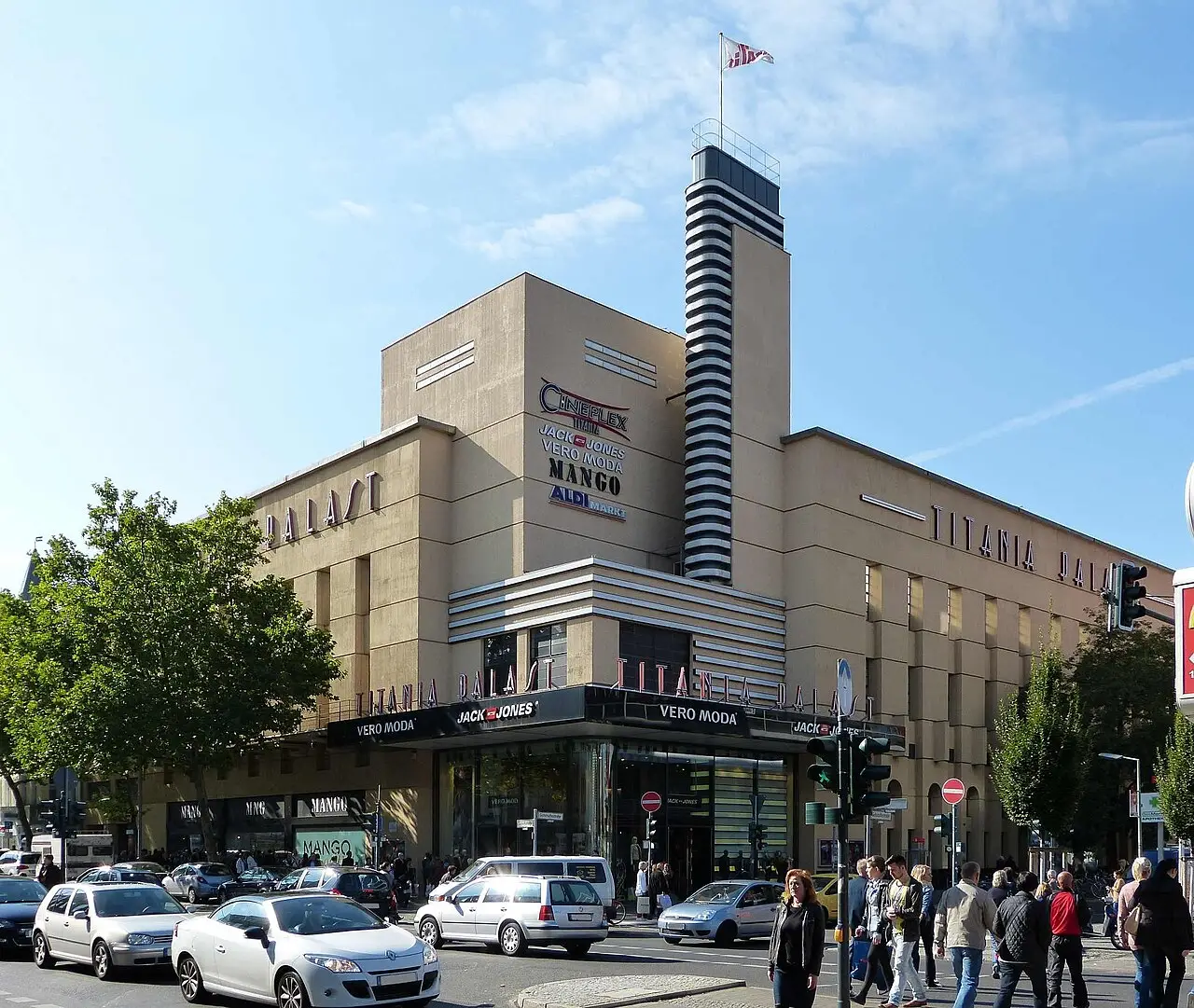
Titania-Palast
Schloßstraße 4–5, 12163 Berlin-Steglitz
- Then
- One of the two Berlin cinemas where Max Ophüls’s Liebelei began its run on 16 March, in the last days before its director left Germany.5,10
- Today
- The cinema palace of 1928 survived the war and is a listed building (since 1984), used commercially. A Berlin memorial plaque unveiled in 1989 recalls its opening, the Philharmonic’s first post-war concert there in 1945 and the founding of the Free University in 1948.
More pictures


Sources
- Jahreschronik 1933 LeMO, Deutsches Historisches Museum, Entry for 16 March
- Der sächsische Erzähler (Bischofswerdaer Tageblatt), 17 March 1933 Deutsche Digitale Bibliothek, Deutsches Zeitungsportal, p. 2, Reichsbank General Council; Luther's letter to the Reich President
- Aachener Anzeiger, 16 March 1933 Deutsche Digitale Bibliothek, Deutsches Zeitungsportal, p. 10, 'Leipziger Bruno Walter-Konzert darf nicht stattfinden' (Leipzig, 16 March)
- Kölnische Zeitung, 17 March 1933 Deutsche Digitale Bibliothek, Deutsches Zeitungsportal, p. 8, arts pages: Goebbels's objection and Walter's withdrawal from the Berlin concert
- Liebelei (1932/1933) filmportal.de (Deutsches Filminstitut & Filmmuseum), Screenings: Erstaufführung (DE) 10.03.1933 Leipzig; Kinostart (DE) 16.03.1933, Berlin, Atrium, Titania-Palast; cast and review
- Freiberger Anzeiger und Tageblatt, 17 March 1933 Deutsche Digitale Bibliothek, Deutsches Zeitungsportal, p. 6, Hitler receives Lewald and Sahm ('Berlin, 16. März')
- Schwelmer Zeitung, 17 March 1933 Deutsche Digitale Bibliothek, Deutsches Zeitungsportal, p. 2, honorary citizenships for Hitler and Hindenburg
- Freiberger Anzeiger und Tageblatt, 17 March 1933 Deutsche Digitale Bibliothek, Deutsches Zeitungsportal, p. 5, number of radio listeners on 1 March 1933
- Westfälische neueste Nachrichten, 17 March 1933 Deutsche Digitale Bibliothek, Deutsches Zeitungsportal, p. 2, 'Macdonald entwickelt in Genf seinen Plan' (Geneva, 16 March)
- Titania-Palast Gedenktafeln in Berlin (Aktives Museum Faschismus und Widerstand / Gedenkstätte Deutscher Widerstand)
Spotted a mistake? Send a correction.