Day 96 of 100
Seven Nazi Reich governors appointed to rule the states for Berlin
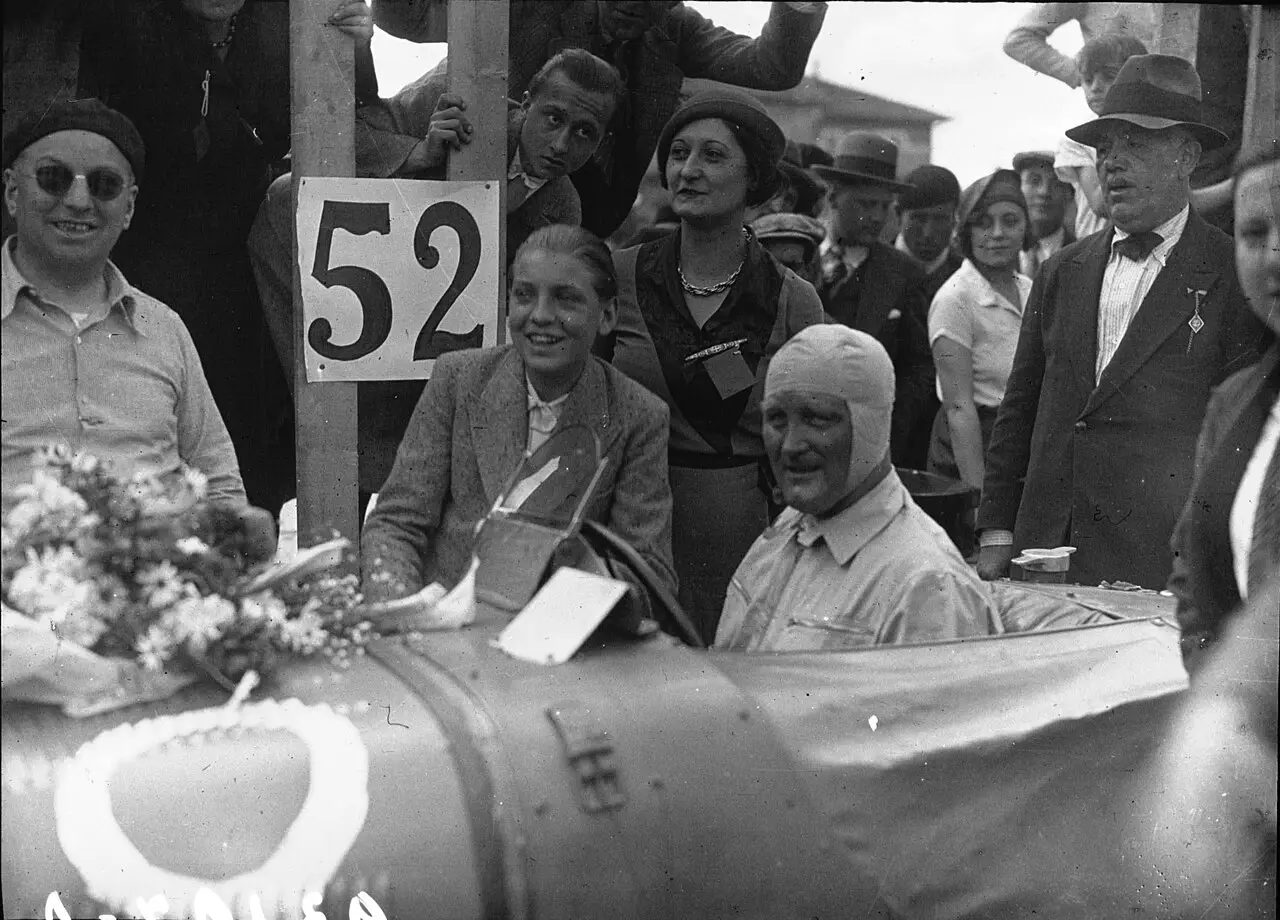
On Hitler’s proposal Hindenburg appointed seven Reich governors (Reichsstatthalter), all of them Nazi leaders, for Württemberg, Baden, Saxony, Hesse, Bremen and Oldenburg, Anhalt and Brunswick, and Thuringia. The cabinet passed laws on tax advisers, sales premiums and a six-month freeze on new shops, and in Moscow Germany and the Soviet Union brought the extension of the Berlin Treaty into force. On the Avus the French racing driver Count Czaykowski set a world one-hour record of 213.8 km/h; Berlin’s Jewish community bulletin reported hundreds seeking help every day.

The men appointed were the Nazi leaders already in charge of their states: the state presidents Murr in Württemberg and Wagner in Baden, the Gauleiters Mutschmann in Saxony, Sprenger in Hesse and Loeper in Anhalt and Brunswick, and the ministers-president Röver in Bremen and Oldenburg and Sauckel in Thuringia. Wagner, for example, had been Gauleiter of Baden since 1925 and Reich commissioner there since earlier in 1933. Governors for Mecklenburg, Lippe, Hamburg and Lübeck had still to be named.
Politics and power
Government, terror and persecution
-
The states evening, Berlin
Seven Reich governors appointed
On the evening of Friday 5 May Hindenburg, on Hitler’s proposal, appointed Murr (Württemberg), Wagner (Baden), Mutschmann (Saxony), Sprenger (Hesse), Röver (Bremen and Oldenburg), Loeper (Anhalt and Brunswick) and Sauckel (Thuringia) as Reich governors.1
-
Economy Berlin
Cabinet: tax advisers, premiums and shops
The cabinet passed a law on the admission of tax advisers, which the press called a “coordination” like that of the civil service: representatives of professional associations and trade unions would no longer be admitted. It also banned sales premiums (Zugaben), with vouchers to be redeemed by 31 December, and passed a law to protect retail trade that froze the opening of new shops for six months to stop the growth of large stores.2
-
Foreign policy Moscow
German–Soviet treaty extension in force
In Moscow the German ambassador von Dirksen and People’s Commissar Litvinov exchanged the ratifications of the protocol of 24 June 1931 extending the Berlin Treaty of 1926 and the 1929 conciliation agreement, bringing the extension into force.3
-
Propaganda afternoon, Berlin, Lustgarten
Labour Front rally in the Lustgarten
In the afternoon Ley’s action committee called Berlin’s workers and employees to a mass rally in the Lustgarten, where the crowd filled the space from the palace to the museum and the arsenal. Ley told them that class struggle and hatred had been overcome.4
Everyday life
What else was happening in Germany
-
Sport Berlin, Avus
World one-hour record on the Avus
The French racing driver Count Czaykowski set a new one-hour world record for cars over 3,000 cc on the Avus, covering 213.8 kilometres in a 4.9-litre Bugatti and beating the British driver Eyston’s record of 210.393 km/h, set in a Panhard the year before. His fastest lap averaged 217 km/h.6
-
Religion Berlin
“Hundreds every day”: the Jewish community bulletin
The May issue of the Berlin Jewish community’s bulletin, which appeared on the first Friday of the month, reported that so many people were turning to the Central Office for Jewish Economic Aid that hundreds came for advice every day, and warned that rumours of large funds were untrue. It listed sixteen advice centres, announced that unemployed Jewish musicians had formed a chamber orchestra and choir to give concerts in the Prinzregentenstraße synagogue on 22 and 29 May, and described the new Central Committee of German Jews for Help and Reconstruction, which brought welfare, retraining and emigration aid together.7
-
Film Berlin
A Berlin film letter
A Berlin correspondent wrote that the city’s theatre programme had not changed overnight and that the Kabarett der Komiker was now said to be under Nazi management. Of two new films near the Memorial Church, the Italian “Black Shirts” at the Ufa-Palast drew huge crowds, while the Nazi film “Under the Black Storm Flag” at the Capitol played to empty seats; the ban on five new films had left a gap in the premieres.8
Elsewhere in the world
-
United States
Schacht arrives in New York
Reichsbank President Schacht arrived in New York harbour early in the morning, welcomed by a deputy chief of protocol representing President Roosevelt, and went on to Washington. He told reporters that the United States must take the lead in pulling the world economy out of decline and that Germany would pay its private debts and keep its currency stable.5
In Berlin today
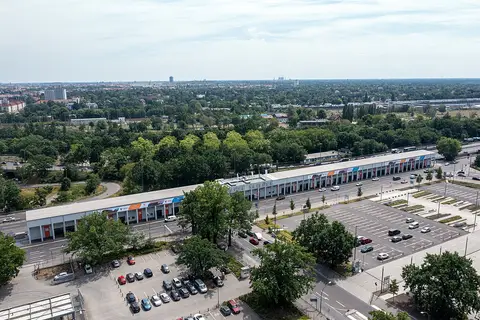

Avus
Avus grandstand, Halenseestraße, 14055 Berlin-Westend
- Then
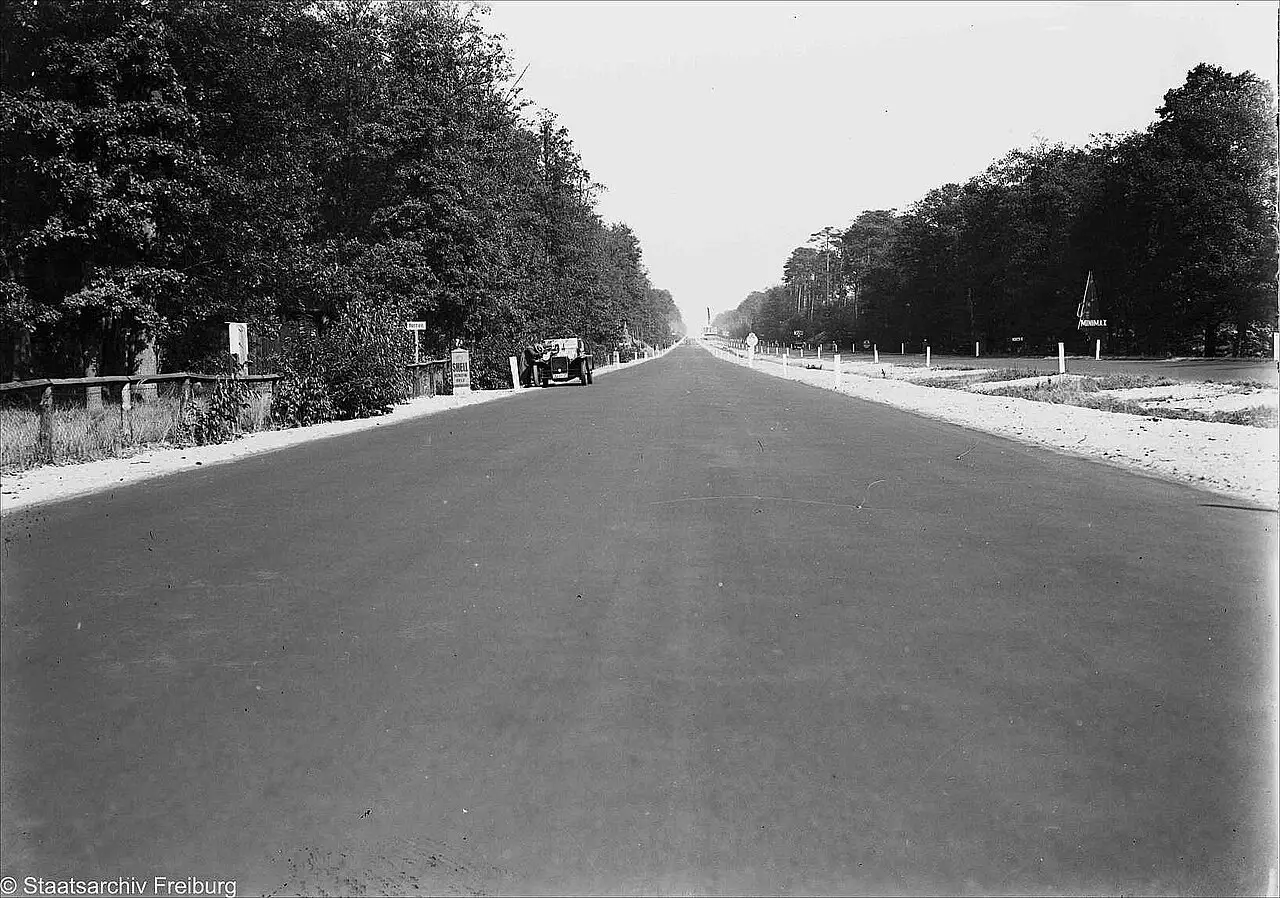
- On 5 May 1933 Count Czaykowski set a world one-hour record of 213.8 km/h on the Avus, then a private race and test track through the Grunewald.6,9
- Today
- The Avus is part of the A 115 motorway. At its northern end the grandstand of 1936–37 and the round tower of the former administration building, now a motorway service station, are listed monuments; racing ended in 1998.
More pictures

Sources
- Schwelmer Zeitung, 6 May 1933 Deutsche Digitale Bibliothek, Zeitungsportal, p. 1, "Die neuen Männer" (Berlin, 5 May)
- Münsterischer Anzeiger, 6 May 1933 Deutsche Digitale Bibliothek, Zeitungsportal, p. 1, cabinet report (Berlin, 5 May)
- Bottwartal-Bote, 6 May 1933 Deutsche Digitale Bibliothek, Zeitungsportal, p. 2, "Deutsch-russischer Vertrag verlängert" (Berlin, 5 May)
- Biberacher Zeitung, 6 May 1933 Deutsche Digitale Bibliothek, Zeitungsportal, p. 3, "Massenkundgebung der Berliner Arbeitnehmer" (Berlin, 5 May)
- Hamburgischer Correspondent, 6 May 1933 Deutsche Digitale Bibliothek, Zeitungsportal, p. 2, "Schacht in USA" (Berlin, 5 May)
- Sächsische Volkszeitung, 6 May 1933 Deutsche Digitale Bibliothek, Zeitungsportal, p. 2, "Graf Czaykowski fährt 213,8 Stundenkilometer" (Berlin, 5 May)
- Gemeindeblatt der Jüdischen Gemeinde zu Berlin, 23. Jg., Nr. 5, May 1933 Deutsche Digitale Bibliothek, Zeitungsportal (Deutsches Exilarchiv), pp. 126–127 (portal pages 2–3), on the Central Committee, the Central Office for Economic Aid and the musicians' community
- Westfälische neueste Nachrichten, 5 May 1933 Deutsche Digitale Bibliothek, Zeitungsportal, p. 2, "Film und Kunst in Berlin"
- Denkmaldatenbank: AVUS, Raststätte und Tribüne Landesdenkmalamt Berlin
Spotted a mistake? Send a correction.