Day 22 of 100
Hitler and Göring ask leading industrialists to pay for the election
At Göring’s official residence opposite the Reichstag, Hitler told about two dozen leading industrialists and bankers that private enterprise could not survive in a democracy; Göring added that the coming election would surely be the last for ten years, perhaps a hundred, and Hjalmar Schacht proposed a three-million-mark election fund. The same day the Prussian press service released Göring’s “shooting decree”. Göring also banned the sale of spirits on polling days, and the perjury trial of a former Berlin transport director in the Sklarek scandal opened to packed public benches.
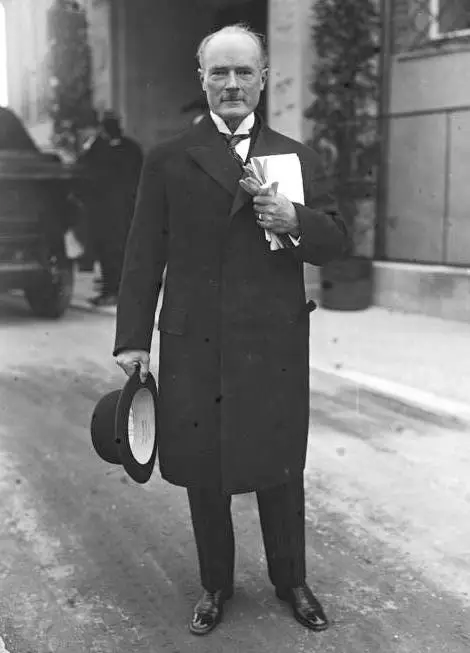

The meeting of 20 February brought Hitler face to face with the men whose money the government parties needed for a campaign of rallies, broadcasts and posters. According to the German text later produced at Nuremberg, Hitler told them that private enterprise could not be maintained in an age of democracy, that the coming election would be the last and that there would be no retreat whatever its result. Göring added that the sacrifice would be easier to bear if they realised the election of 5 March would be the last for ten years, perhaps for a hundred. After Hitler left, Schacht proposed an election fund of three million marks, to be shared between the NSDAP and its nationalist partners; according to a letter written the next day by Fritz Springorum of Hoesch, three-quarters were to go to the NSDAP and a quarter to the Black-White-Red bloc.
Only a brief notice of the meeting appeared in the press, naming Gustav Krupp von Bohlen und Halbach, president of the Reich Association of German Industry, and Wilhelm von Opel among those present. On the same day the official Prussian press service published the circular in which Göring had told the police three days earlier to shield the SA and SS and to shoot at “enemies of the state” without hesitation.
Laws and decrees
Runderlass des Kommissars des Reichs für das Preußische Ministerium des Innern an alle Polizeibehörden vom 17. Februar 1933
Göring's circular to the Prussian police (the "shooting decree")
Made public the instruction that the Prussian police should cooperate with the SA, SS and Stahlhelm, act against “enemies of the state” with the harshest means and use firearms without regard to the consequences, under Göring’s promise of cover.6
Politics and power
Government, terror and persecution
-
Economy afternoon, Berlin, Reichstag President's palace
The secret meeting with industry
On Göring’s invitation about twenty-five industrialists and bankers, among them Gustav Krupp von Bohlen und Halbach, Albert Vögler of the United Steelworks, the banker Kurt von Schröder and four members of the I.G. Farben board, met Hitler in the afternoon at the Reichstag President’s palace. Hjalmar Schacht, the former president of the Reichsbank, acted as host. Hitler spoke at length about the danger of communism and the alliance with the German Nationalists and stressed the need for the two parties to win a majority; Krupp thanked him. After Hitler left, Schacht proposed an election fund of about three million Reichsmarks.1,2,3,4,5
Sources disagree. Accounts differ on the number present (about 20 in Schnitzler’s affidavit, 25 in the prosecution’s summary and in Krupp’s memorandum).
-
Terror Berlin
The “shooting decree” made public
The official Prussian press service released the text of Göring’s circular of 17 February to all police authorities: the police were to avoid any appearance of hostility to the SA, SS and Stahlhelm, support “national” propaganda, act against organisations “hostile to the state” with the harshest means and use their firearms if necessary without regard to the consequences, with Göring’s promise of cover.6
-
The states Münster; Berlin
Westphalia’s provincial governor removed
Johannes Gronowski, governor (Oberpräsident) of the province of Westphalia, had protested to Göring against the planned ban on the Centre press and applied for leave to give weight to his objection. Although the ban had been lifted the day before, he did not withdraw his request, and Göring now relieved him of his duties.7
-
The states Prussia
No new appointments in the towns before the local elections
Göring ordered the provincial governors and district presidents to stop municipalities making appointments and promotions before the Prussian local elections of 12 March, having heard that many councils intended to fill posts while they still could; for Berlin he imposed a general freeze on appointments and promotions of municipal officials.8
-
Propaganda Berlin; Munich
Frick asks Bavaria to ban the Münchner Neueste Nachrichten
The Reich Interior Ministry asked the Bavarian government to ban the Münchner Neueste Nachrichten for three days for spreading the “untrue report” that Hitler had blocked the abolition of the sick-certificate fee. Instead of complying, the Bavarian government referred the request to the Reichsgericht, as the decree of 4 February allowed.9
Everyday life
What else was happening in Germany
-
Society Prussia
No schnapps on polling days
Göring issued an order banning the serving and retail sale of spirits in Prussia on Saturday 4 and Sunday 5 March, the Reichstag and Landtag election weekend, and again on 11 and 12 March, the weekend of the local elections, until closing time. Offenders faced detention or a fine.6
-
Crime Berlin, Landgericht III
The Brolat perjury trial opens
Before a crowded public gallery the jury court of Berlin’s Landgericht III began hearing the case against Fritz Brolat, former director of the Berlin transport company BVG, accused of having knowingly sworn false evidence in October 1929 about his dealings with the brothers Sklarek. Brolat denied all guilt. The presiding judge, Truppner, forbade the press photographers in court to take pictures.5
-
Society Prussia
Suburban smallholdings in demand
The Prussian press service reported that since the suburban smallholding scheme began under the emergency decree of October 1931, some 8,400 settler holdings had been completed in Prussia with Reich money and about 5,600 more were under construction, while work on a further 2,100 would start as soon as the weather allowed.10
Voices
That the sacrifice asked for surely would be much easier for industry to bear if it realized that the election of March 5th will surely be the last one for the next ten years, probably even for the next hundred years.
In Berlin today
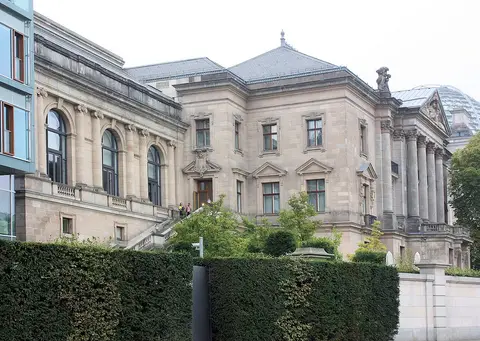

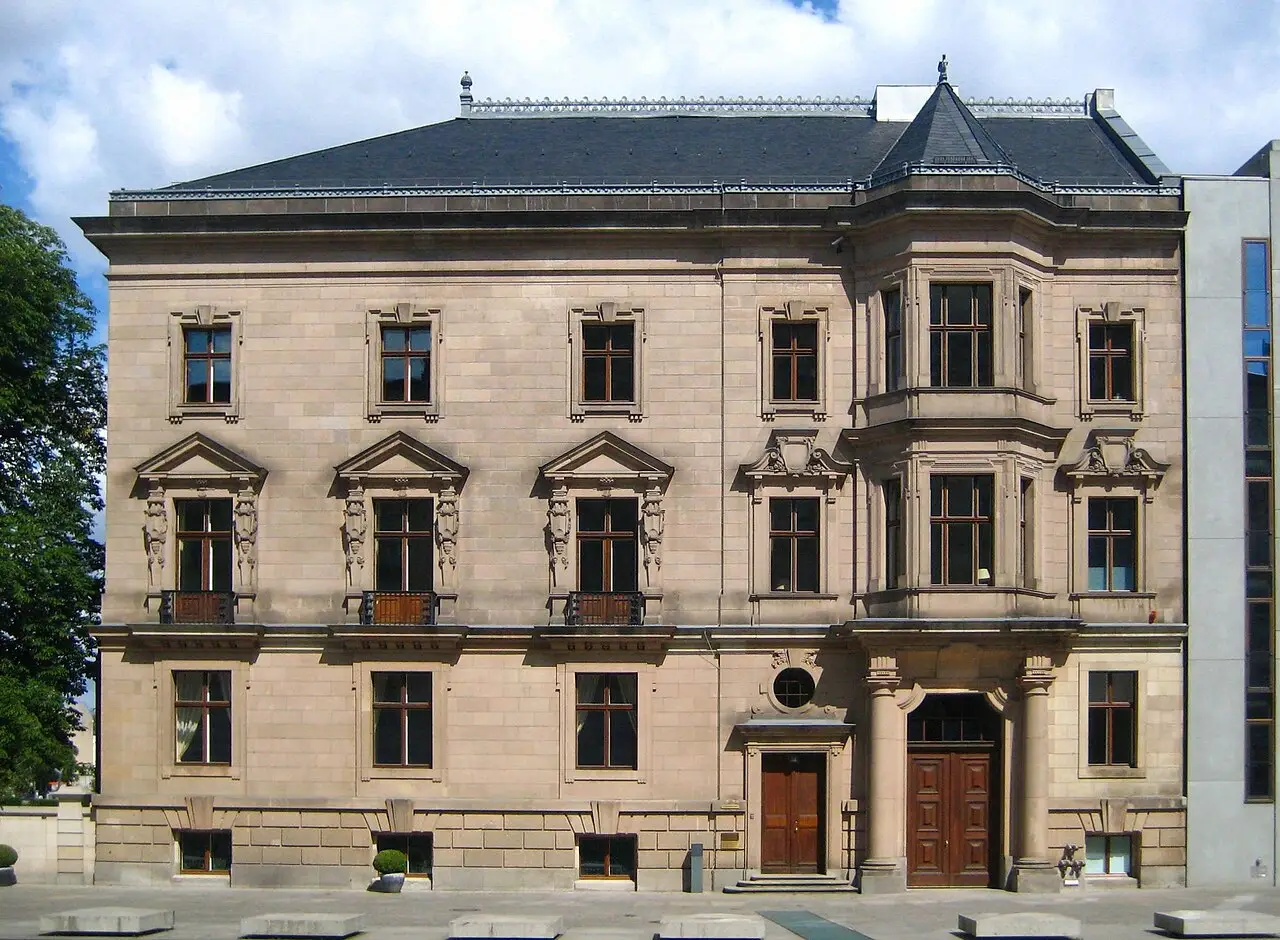
Reichstag President's palace (Reichstagspräsidentenpalais)
Friedrich-Ebert-Platz 2, 10117 Berlin-Mitte
More pictures

Sources
- Chronik 1933 (entry for 20 February) Deutsches Historisches Museum, LeMO
- Georg von Schnitzler on Hitler’s Appeal to Leading German Industrialists on February 20, 1933 (Affidavit, November 10, 1945) German History in Documents and Images (German Historical Institute Washington), from Nazi Conspiracy and Aggression, vol. VII, Doc. EC-439
- Nazi Conspiracy and Aggression, Volume I, Chapter VIII (quoting documents D-203, D-204 and EC-439) Avalon Project, Yale Law School, Section 2, "Collaboration of the industrialists in rearmament"
- Udo Wengst, Der Reichsverband der Deutschen Industrie in den ersten Monaten des Dritten Reiches, Vierteljahrshefte für Zeitgeschichte 28 (1980) Institut für Zeitgeschichte München, p. 97 and notes 12–14 (Springorum to Reusch, 21 February 1933)
- Industrielle beim Kanzler; Brolat bestreitet jede Schuld Kölnische Zeitung, via Deutsche Digitale Bibliothek Zeitungsportal, 21 February 1933, p. 2 (reports dated Berlin, 20 February)
- Nationale Belange. Göring an die Polizei; Branntweinverbot an den Wahltagen Hamburgischer Correspondent, via Deutsche Digitale Bibliothek Zeitungsportal, 21 February 1933, p. 1 (reports dated Berlin, 20 February)
- Oberpräsident Gronowski von seinen Dienstgeschäften entbunden Kölnische Zeitung, via Deutsche Digitale Bibliothek Zeitungsportal, 21 February 1933, p. 1
- Einstellungs- und Beförderungssperre vor den preußischen Gemeindewahlen Kölnische Zeitung, via Deutsche Digitale Bibliothek Zeitungsportal, 20 February 1933, evening edition, p. 6
- Dr. Frick fordert Verbot der „Münchener Neuesten Nachrichten“ Dresdner Nachrichten, via Deutsche Digitale Bibliothek Zeitungsportal, 21 February 1933, p. 2
- Siedlerstellen gefragt Hamburgischer Correspondent, via Deutsche Digitale Bibliothek Zeitungsportal, 21 February 1933, p. 2 (Amtlicher Preußischer Pressedienst, Berlin, 20 February)
- Die Liegenschaften des Bundestages Deutscher Bundestag, No. 2: ehemaliges Reichstagspräsidentenpalais, Deutsche Parlamentarische Gesellschaft, Friedrich-Ebert-Platz 2
Spotted a mistake? Send a correction.