Day 15 of 100
Göring widens the purge of Prussia’s republican police chiefs
Göring, as Reich Commissioner for the Prussian Ministry of the Interior, sent more officials loyal to the Republic on forced leave, among them the police presidents of Dortmund, Oberhausen, Stettin, Frankfurt and Breslau. The Stahlhelm told its members the coming election was a plebiscite on the “national government”. Away from politics, Bayreuth marked the fiftieth anniversary of Richard Wagner’s death and Berlin radio filled the evening with his operas.
_Zorgiebel,_pr%C3%A9fet_(de)_police_de_Berlin_(pr%C3%A8s_de_la_station_de_m%C3%A9tro_Vavin)_-_btv1b53197489j.jpg)
Politics and power
Government, terror and persecution
-
The states Prussia
More republican officials sent on forced leave in Prussia
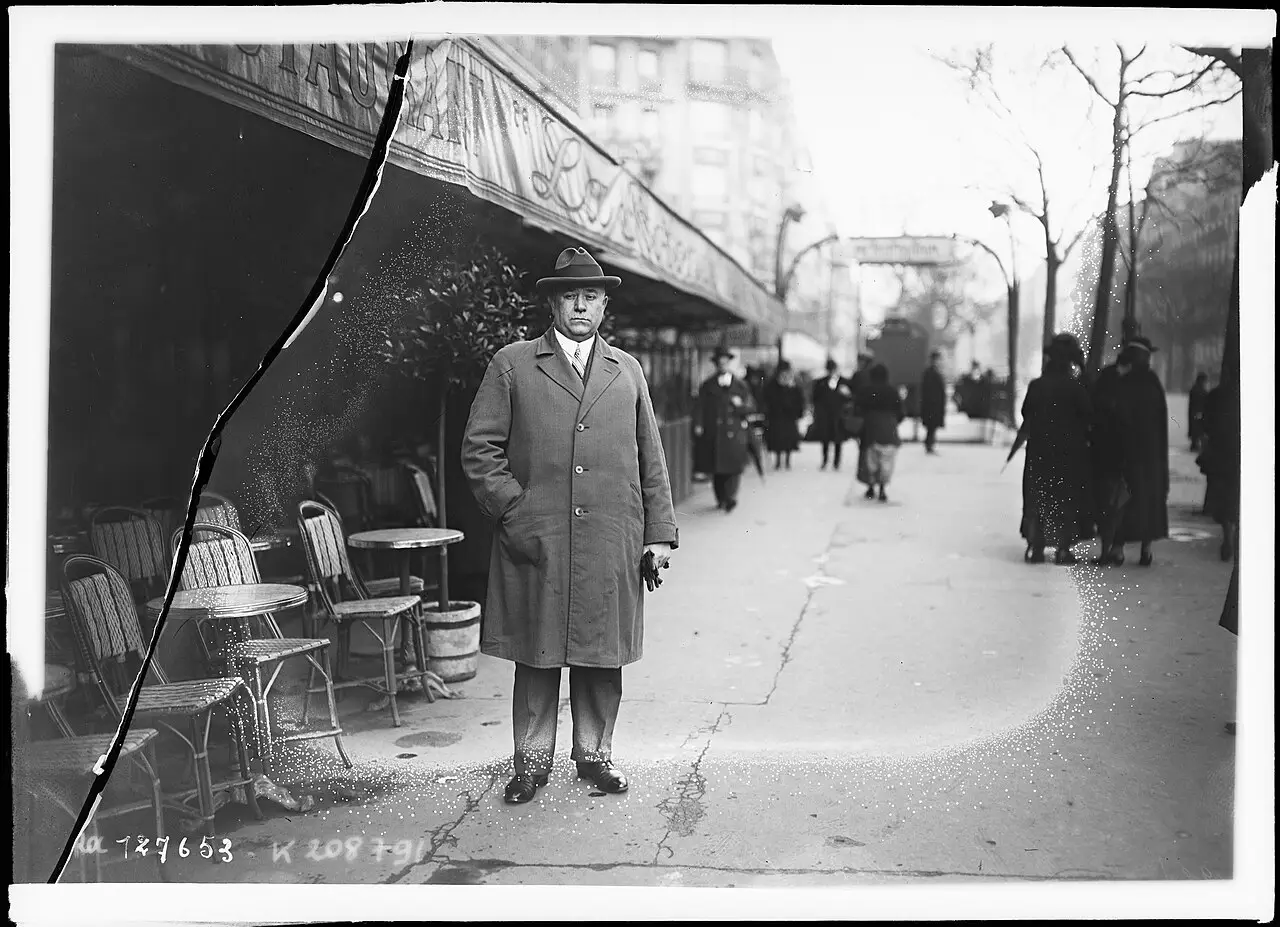
Hermann Göring, acting as Reich Commissioner (Reichskommissar) for the Prussian Ministry of the Interior, pressed on with removing officials loyal to the Republic. On 13 February the Wolff news agency reported that the police presidents of Oberhausen (Weyer, a Centre Party member), Dortmund (Karl Zörgiebel), Stettin (Maier), Frankfurt am Main (Steinberg) and Breslau (Thaiß) had been placed on leave until further notice, together with the Oberhausen police commander, Colonel Quast, and Bier, deputy district president in Cologne. The district presidents of Kassel, Ferdinand Friedensburg of the State Party, a former deputy police president of Berlin, and of Wiesbaden, Ehrler, a Social Democrat, were also removed. The Hamburger Fremdenblatt noted that the leave was a first step towards taking these men out of service altogether.1,2
-
The states Berlin; Munich
The states brace for Thursday’s Reichsrat
The Reichsrat, the chamber of the federal states, was formally summoned for a plenary session on Thursday 16 February at 17:00. Its agenda held only minor bills; what mattered was that Prussia would for the first time be represented by plenipotentiaries named by the Reich Commissioner, and several state governments said they would have preferred to wait for the Staatsgerichtshof (the constitutional court) to rule on who spoke for Prussia. From Munich came reports of unease at the Reich Interior Ministry’s dispatch of an envoy to Darmstadt, which the Bavarian press read as a warning that Hesse must follow Berlin’s “suggestions”.4
-
Election Berlin
Stahlhelm calls the election a plebiscite on the government
The leaders of the Stahlhelm, the nationalist ex-servicemen’s league, issued an election appeal declaring that the vote on 5 March was in effect a plebiscite for or against the “national government”. Because a joint list with the NSDAP had failed, the Stahlhelm had helped found the Kampffront Schwarz-Weiß-Rot (Black-White-Red Battle Front), and the appeal pointed to its honorary members Field Marshal von Mackensen and Vice-Chancellor von Papen, and to its own leader Franz Seldte, now Reich Labour Minister, as the front’s standard-bearers.3
-
Opposition Berlin
Communist unions propose joint action to the free trade unions
According to the Communist press, the Berlin district committee of the Revolutionary Trade Union Opposition (RGO) wrote to the local committee of the social-democratic trade union federation (ADGB) proposing a joint meeting to agree common “measures of struggle”, while the Communist metalworkers’ union asked the Berlin branch of the German Metalworkers’ Union to call joint workplace meetings.5
-
Economy Berlin
Germany ends tariff concessions to France
The government announced that it had used the fourteen-day notice clause in the Franco-German supplementary trade agreement of 28 December 1932 to cancel, from 1 March 1933, the tariff bindings on a range of agricultural and industrial goods. The official statement said the list had been kept short to avoid unsettling trade between the two countries.6
Everyday life
What else was happening in Germany
-
Music Bayreuth; Amsterdam
Bayreuth marks fifty years since Wagner’s death
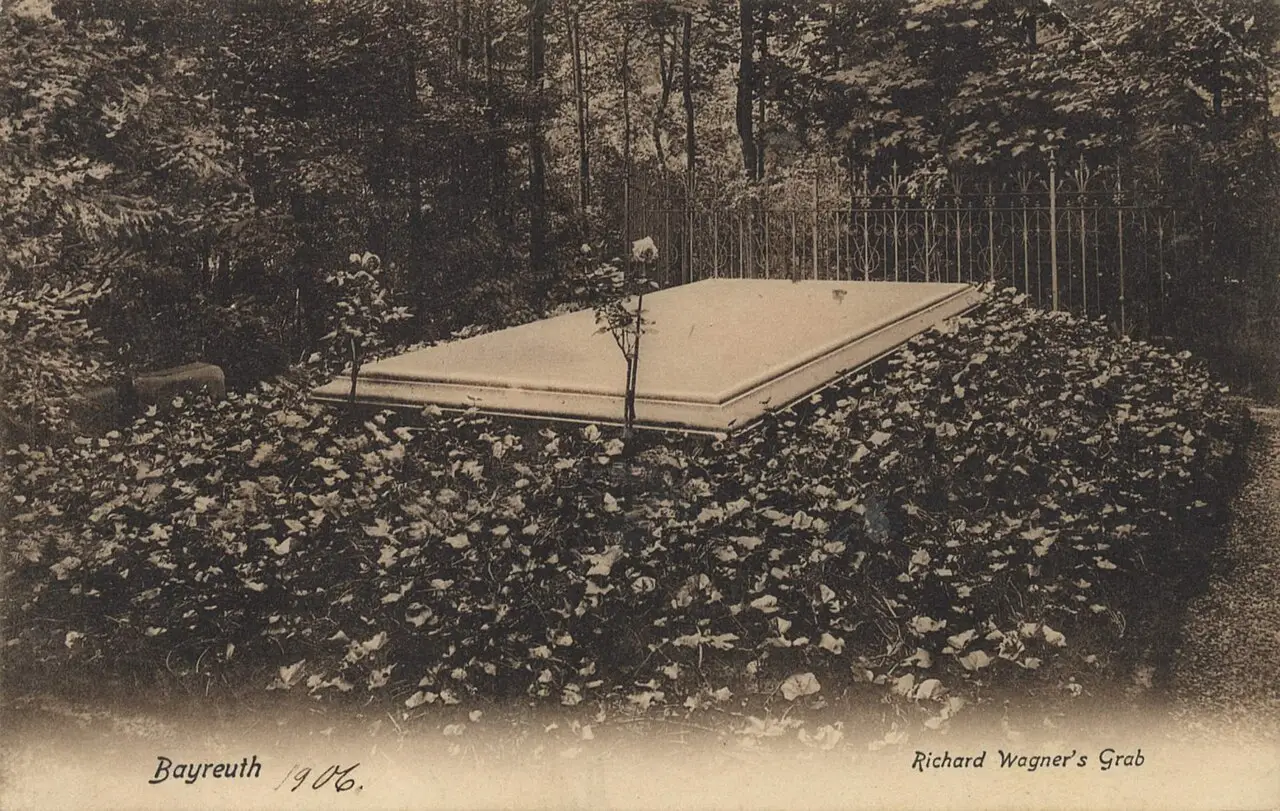
On the fiftieth anniversary of Richard Wagner’s death, thousands came to Haus Wahnfried in Bayreuth. The town’s council of elders, led by Mayor Popp, laid laurel wreaths on the grave of Richard and Cosima Wagner and presented Winifred Wagner, widow of the composer’s son Siegfried, with the freedom of the town. Honorary citizenship was also voted to Daniela Thode, Countess Blandine Gravina, Eva Chamberlain and the conductor Arturo Toscanini, and the new grounds below the Festspielhaus were to be named Richard-Wagner-Park. Schools held small ceremonies, and in Amsterdam the Wagner Society filled the large hall of the Concertgebouw for a memorial evening.7,8
-
Radio evening, Berlin
A Wagner evening on the air
Berlin’s Funkstunde scheduled a relay of Der fliegende Holländer from the Städtische Oper at 20:03, followed at 21:00 by a repeat of the national broadcast of the memorial hour from Bayreuth. The Deutschlandsender at Königs Wusterhausen carried Tristan und Isolde from Leipzig from 19:45. Earlier in the afternoon the Berlin station offered a talk on the German passenger cars at the International Motor Show.9
-
Economy Berlin
Eggs scarce at the Berlin market
The Berlin egg market reported a shortage of goods. Wholesale prices were quoted by the piece: the largest fully fresh German eggs, 65 grams and over, fetched about 10½ Reichspfennig, smaller grades between 7 and 9½. Danish and Swedish eggs sold at similar prices, while Chinese imports, the cheapest on the list, went for about 7 Reichspfennig.10
More pictures
.jpg)
Sources
- Beurlaubungen in Preußen (Wolff report, Berlin, 13 February) Neue Mannheimer Zeitung, via Deutsche Digitale Bibliothek Zeitungsportal, 13 February 1933, p. 2
- Politischer Abbau Hamburger Fremdenblatt (Reichsausgabe), via Deutsche Digitale Bibliothek Zeitungsportal, 13 February 1933, p. 1
- Aufruf des Stahlhelms Kölnische Zeitung, via Deutsche Digitale Bibliothek Zeitungsportal, 13 February 1933, p. 5
- Die Sitzung des Reichsrats; Bayrische Befürchtungen Kölnische Zeitung, via Deutsche Digitale Bibliothek Zeitungsportal, 14 February 1933, p. 2 (reports dated Berlin and Munich, 13 February)
- Bemühungen um rote Einheitsfront Kölnische Zeitung, via Deutsche Digitale Bibliothek Zeitungsportal, 14 February 1933, p. 1 (report dated Berlin, 13 February)
- Kündigung gegen Frankreich Hamburgischer Correspondent, via Deutsche Digitale Bibliothek Zeitungsportal, 14 February 1933, p. 2 (official statement, Berlin, 13 February)
- Bayreuths neue Ehrenbürger Harburger Anzeigen und Nachrichten, via Deutsche Digitale Bibliothek Zeitungsportal, 13 February 1933, p. 2
- Wagner-Gedenkfeiern Grenzwarte (Bocholt), via Deutsche Digitale Bibliothek Zeitungsportal, 15 February 1933, p. 9
- Rundfunk am Abend: Montag, 13. Februar Vorwärts, via Deutsche Digitale Bibliothek Zeitungsportal, 13 February 1933, p. 4
- Eier. Berlin, 13. Februar (market report) Hamburger Fremdenblatt (Reichsausgabe), via Deutsche Digitale Bibliothek Zeitungsportal, 13 February 1933, p. 13
Spotted a mistake? Send a correction.