Day 50 of 100
Himmler announces the first concentration camp, at Dachau; cabinet adopts the Enabling Act
At a midday press briefing in Munich, Heinrich Himmler announced that a concentration camp for 5,000 Communist, Reichsbanner and Social Democratic functionaries would open near Dachau on Wednesday. In Berlin Hitler met Centre Party leaders and the cabinet approved the final text of the Enabling Act, which went to the Reichstag as a bill. Berlin renamed Reichskanzlerplatz after Hitler, Jewish prosecutors were barred from courtrooms, Robert Siodmak’s last German film opened, and the publisher Louis Ullstein died.
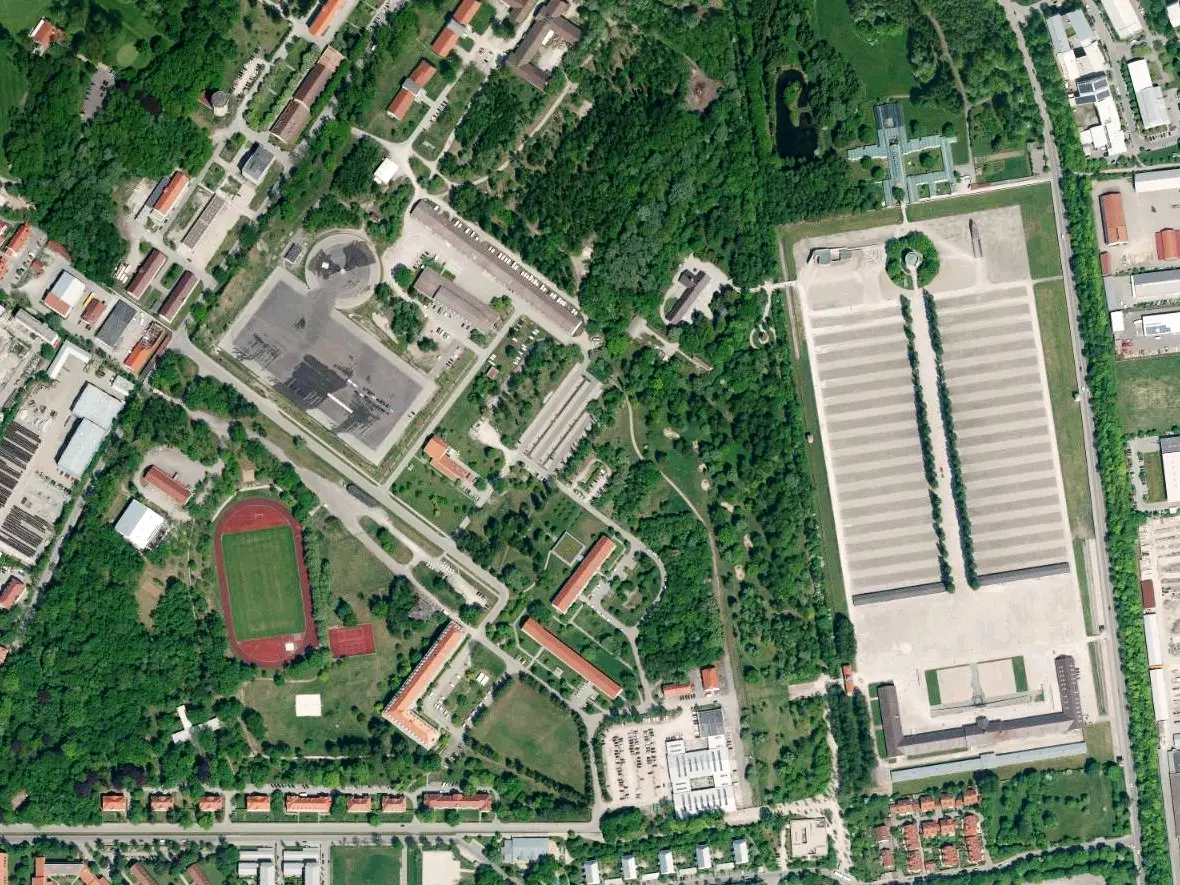

The Dachau Concentration Camp Memorial dates the announcement of the camp to this day. Himmler, the acting police president of Munich and Reichsführer-SS, told the press that ‘protective custody’ (Schutzhaft, imprisonment without trial) could no longer be kept up in individual cells. All Communist, Reichsbanner and other ‘Marxist’ functionaries would be gathered in a camp near Dachau with room for 5,000 people; releasing Communist functionaries was out of the question. The next morning newspapers printed it beside reports of the final preparations at Potsdam.
Himmler framed the camp as a response to danger. At the same briefing he claimed that Communist agents had planned an attack on Hitler in Munich and warned that, at ‘the first shot’, the population would unleash a bloodbath and a pogrom. The reports rest on his word alone; they cite no other evidence for the plot.
In Berlin, the morning’s politics turned on the Enabling Act. Hitler met representatives of the Centre Party. At the ministerial meeting that followed he reported that they had accepted the need for the law and asked only for a small committee to be kept informed of measures taken under it; Neurath proposed writing down what had been agreed, but this appears not to have been done. The cabinet then approved the bill in the form in which the Reichstag would pass it three days later.
The text went far beyond the enabling laws of the 1920s. The government could now make laws, not merely decrees, and these could depart from the constitution; it could also conclude treaties and pass the budget without parliament. Its reservations protected the existence of the Reichstag and Reichsrat and the rights of the Reich President, and the powers were to lapse after four years or if the present government was replaced.
Laws and decrees
Gesetz zur Behebung der Not von Volk und Reich
Law to Remedy the Distress of People and Reich (Enabling Act)
The cabinet approved the final draft: for four years the government could enact laws, including laws departing from the constitution and budget and treaty laws, without the Reichstag or Reichsrat.3
Politics and power
Government, terror and persecution
-
Terror midday, Munich
Dachau camp announced
At a press briefing in Munich at midday, Heinrich Himmler, acting police president of Munich, announced that the first concentration camp, with a capacity of 5,000, would open near Dachau on Wednesday. All Communist, Reichsbanner and other ‘Marxist’ functionaries were to be concentrated there, since, he said, they could not be kept in the courts’ cells and could not be released.1,2
-
Government morning, Berlin, Reich Chancellery
Centre Party talks and cabinet approval of the Enabling Act
Hitler met representatives of the Centre Party. At the ministerial meeting that began at 11:15 he reported that they saw the need for an enabling law and asked only for a small committee to be kept informed; he expected their support, which would raise Germany’s prestige abroad. The cabinet approved the text of the bill, which was submitted to the Reichstag by the Nazi and German National parliamentary groups.3
-
Persecution Berlin
Jewish prosecutors barred from appearing in court
The Prosecutor-General at Berlin’s Landgericht I and the chief prosecutors at Landgerichte II and III ordered that Jewish public prosecutors should no longer represent the prosecution at trials, unless important pending cases would suffer.4
-
Propaganda Berlin
Reichskanzlerplatz becomes Adolf-Hitler-Platz
The Berlin police president renamed Reichskanzlerplatz in Charlottenburg ‘Adolf-Hitler-Platz’ and the Hugo-Preuss-Brücke at Lehrter Bahnhof, named after the author of the Weimar constitution, ‘Admiral-Scheer-Brücke’. Göring ordered that the Platz der Republik in front of the Reichstag be called Königsplatz again. Lord Mayor Sahm had the portraits of the Prussian kings, removed after the revolution of 1918, rehung in the city hall’s council chamber.4,5
Everyday life
What else was happening in Germany
-
Film Berlin, Capitol am Zoo
Siodmak’s Brennendes Geheimnis opens at the Capitol
Robert Siodmak’s film of Stefan Zweig’s story Brennendes Geheimnis (The Burning Secret), with Willi Forst, Hilde Wagener and Alfred Abel, had its premiere at the Capitol am Zoo. It was Siodmak’s last German film: the Propaganda Ministry banned it, reportedly because its title was thought to allude to the Reichstag fire, and in April Siodmak, the son of a Polish Jew, left for Paris.6,7
-
Music evening, Berlin, Philharmonie
Richard Strauss conducts in Bruno Walter’s place
Bruno Walter, barred from conducting days earlier, did not lead the fourth concert of his series with the Berlin Philharmonic, given in the Philharmonie on 19 and 20 March; Richard Strauss conducted in his place.8
-
Births and deaths morning, Berlin
Louis Ullstein dies
Louis Ullstein, chairman of the supervisory board of the Ullstein publishing house, died in Berlin that morning aged 69. He had founded the Berliner Abendpost and, in 1898, the Berliner Morgenpost, and had devoted himself above all to the Berliner Illustrirte Zeitung.9
Voices
As I see things, I am convinced that at the first shot that is fired, such bitterness will sweep through the majority of the population that we shall experience in Germany a bloodbath and a pogrom such as world history has never seen.
In Berlin today
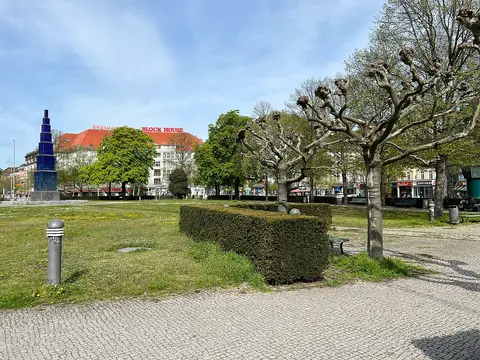

Theodor-Heuss-Platz (Adolf-Hitler-Platz 1933–1945)
Theodor-Heuss-Platz, 14052 Berlin-Westend
More pictures

Sources
- „Mit uns fing alles an“ – Die ersten Häftlinge des KZ Dachau 1933 KZ-Gedenkstätte Dachau, 'Am 20. März 1933 verkündete Heinrich Himmler … die Eröffnung des KZ Dachau'
- Der Führer (Karlsruhe), 21 March 1933 Deutsche Digitale Bibliothek, Deutsches Zeitungsportal, p. 1, Himmler's press briefing: alleged plot against Hitler; 'Erstes Konzentrationslager für 5000 Bolschewiken'
- Hans Schneider, ‘Das Ermächtigungsgesetz vom 24. März 1933’, Vierteljahrshefte für Zeitgeschichte 1 (1953), Heft 3 Institut für Zeitgeschichte, pp. 201–203, minutes of the ministerial meeting of 20 March 1933 (IMT document 2963-PS)
- Der sächsische Erzähler (Bischofswerdaer Tageblatt), 21 March 1933 Deutsche Digitale Bibliothek, Deutsches Zeitungsportal, p. 2, Jewish prosecutors; royal portraits in the Berlin city hall (Berlin, 20 March)
- Dresdner Nachrichten (Frühausgabe), 21 March 1933 Deutsche Digitale Bibliothek, Deutsches Zeitungsportal, p. 3, renaming of Reichskanzlerplatz, Hugo-Preuß-Brücke and Platz der Republik
- Brennendes Geheimnis (1932/1933) filmportal.de (Deutsches Filminstitut & Filmmuseum), Uraufführung (DE) 20.03.1933, Berlin, Capitol am Zoo; credits
- Robert Siodmak filmportal.de (Deutsches Filminstitut & Filmmuseum), Biography: ban of 'Brennendes Geheimnis'; move to Paris in April 1933
- Süddeutsche Zeitung (Stuttgart), 21 March 1933 Deutsche Digitale Bibliothek, Deutsches Zeitungsportal, p. 4, 'Auch Bruno Walter kaltgestellt'
- Gütersloher Volks-Zeitung, 21 March 1933 Deutsche Digitale Bibliothek, Deutsches Zeitungsportal, p. 14, 'Louis Ullstein †' (Berlin, 20 March)
- Theodor-Heuss-Platz Kauperts Straßenführer durch Berlin, Former names: Reichskanzlerplatz (c. 1906–1933), Adolf-Hitler-Platz (1933–1945), Reichskanzlerplatz (1947–1963)
Spotted a mistake? Send a correction.