Day 88 of 100
Seldte joins the Nazi Party; ex-deputy Albert Funk dies in police custody
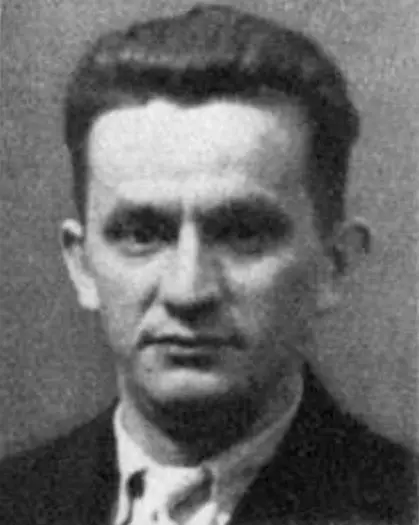
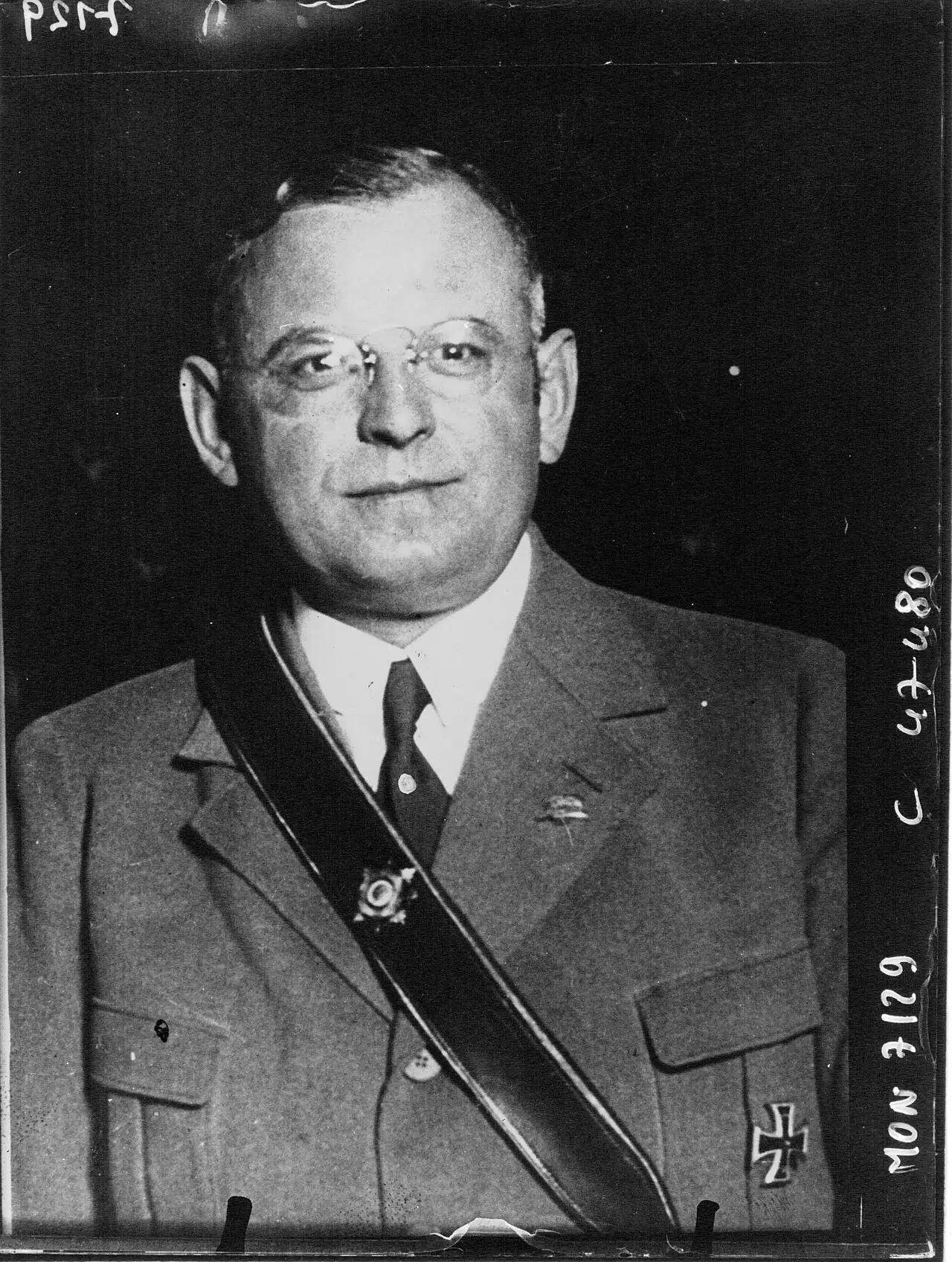
In an evening radio address the Stahlhelm leader and Reich Labour Minister Franz Seldte announced that he was joining the Nazi Party and placing himself under Hitler. In Recklinghausen the Communist former Reichstag deputy Albert Funk died after interrogation and abuse at police headquarters. Hitler asked towns to stop renaming historic streets after him, and at Berlin Zoo a small boy lost his forearm to a bear.

Politics and power
Government, terror and persecution
-
Government evening, Berlin
Seldte joins the NSDAP and submits to Hitler
Speaking on the radio in the evening, Franz Seldte, founder of the Stahlhelm and Reich Labour Minister, said that after talks with Hitler that day he saw no future for parties, only “one great unity” against which opposition was impossible. He announced his entry into the Nazi Party and placed himself and the Stahlhelm under Hitler’s leadership. He had cancelled his annual address to the Stahlhelm in Dresden to stay in Berlin.1,2
-
Terror Recklinghausen
Albert Funk dies after torture in Recklinghausen
Albert Funk, a miner, trade unionist and Communist Reichstag deputy from 1930 to 1932, had been arrested in Dortmund on 16 April. On 27 April he was taken to Recklinghausen police headquarters, interrogated and beaten. He fell from the third floor into the courtyard and died the same day in the Prosper Hospital. In 1949 a court in Bochum found beyond doubt that the torture had driven him to jump, and sentenced the Gestapo officer responsible for the interrogation to twelve years’ penal servitude.3
-
Propaganda
Hitler: do not rename historic streets
The Nazi Party’s press office published a statement by Hitler: many towns were renaming streets and squares after him, and while he was glad of the honour, he asked them not to change historic names, warning against repeating the “error” of the revolutionaries of 1918.6
-
Economy Berlin
German–Dutch trade agreement signed
A German–Dutch economic agreement was signed in Berlin. State Secretary von Rohr told the press that it was tied to the government’s new regulation of the German fats market, so the Netherlands could not be given unlimited export quotas.6
-
Persecution Berlin
Former Prussian finance minister’s property seized
A Berlin court ordered the seizure of the property of Klepper, the former Prussian finance minister and head of the Prussian central cooperative bank. It amounted mainly to the furniture of his rented Berlin villa; the authorities claimed he had moved his other assets abroad. Klepper was in Finland, and efforts were under way to have him extradited.6
Everyday life
What else was happening in Germany
-
Society evening, Berlin, Zoologischer Garten
Boy mauled by a bear at Berlin Zoo
In the evening a young boy, Herbert Kasper, climbed unnoticed over the outer railing of the Alaskan bear’s enclosure at Berlin Zoo and fed the animal scraps of bread and nuts. The bear seized his right forearm and pulled him against the bars; a visitor freed him, unconscious. He lost the forearm and was taken to hospital. Newspapers noted that he was the son of a couple long out of work.8,9
-
Music Berlin
Director of the Berlin music academy removed
Rust, the Prussian culture minister, placed Professor Schünemann on leave with immediate effect as director of the Academy of Music (Hochschule für Musik) in Berlin and appointed Dr Stein, a full professor at Kiel University and general music director, as his successor.7
-
Economy afternoon, Berlin
Nazi rally at the Berlin Stock Exchange
In the afternoon Nazi members among the brokers held a rally in the bond hall (Rentensaal) of the Berlin Stock Exchange. The speaker told them the party slogan “common good before self-interest” applied above all to the exchange, which he called indispensable to the economy.6
Voices
Giant fireworks at Tempelhof on 1 May; prelude to another firework display, which will be staged with free admission and the costs paid afterwards.
In Berlin today
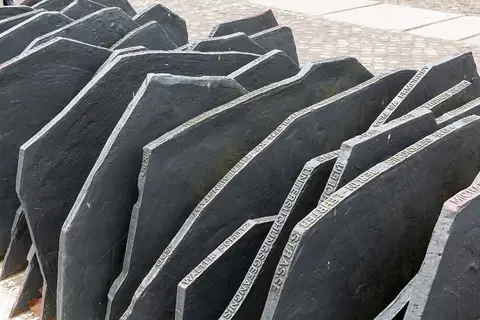

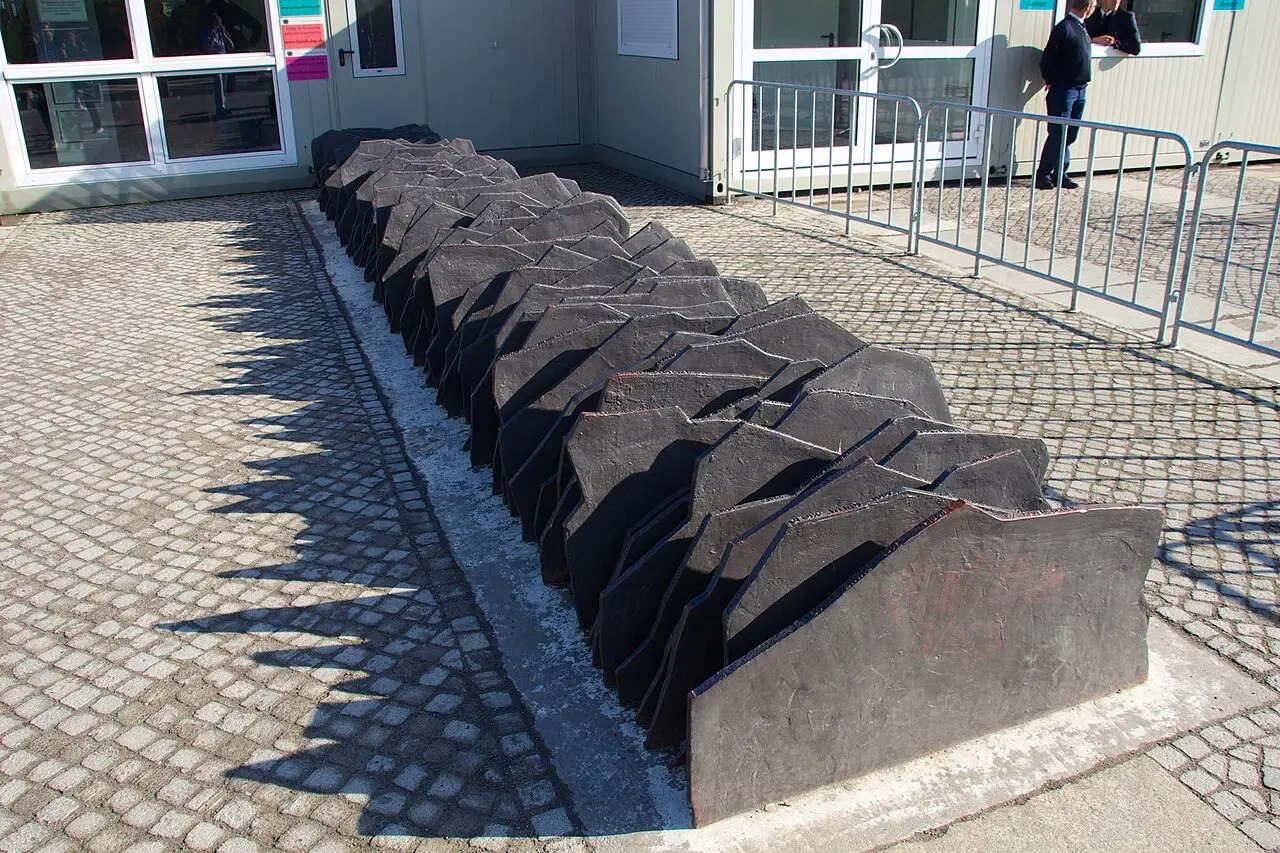
Memorial to the 96 Reichstag deputies murdered by the Nazis
Platz der Republik, corner of Scheidemannstraße, 10557 Berlin-Tiergarten
- Then
- Albert Funk, Communist member of the Reichstag from 1930 to 1932, died on 27 April 1933 after torture at Recklinghausen police headquarters.4,5
- Today
- Since 12 September 1992 a row of 96 cast-iron plates in front of the Reichstag has named the deputies of the Weimar Reichstag killed by the Nazis; one reads “Albert Funk *1894 +1933 Polizeipräsidium Recklinghausen KPD”.
More pictures


Sources
- LeMO Jahreschronik 1933 Deutsches Historisches Museum, entry for 27 April
- Eibenstocker Tageblatt, 28 April 1933 Deutsche Digitale Bibliothek, Zeitungsportal, p. 1, "Seldtes Übertritt zur NSDAP. Die Erklärung Seldtes" (Berlin, 27 April)
- Albert Funk (1894–1933) Stadt Recklinghausen
- Gedenktafeln in Berlin: Reichstagsabgeordnete – Opfer des Nationalsozialismus Aktives Museum Faschismus und Widerstand in Berlin, Gedenkstätte Deutscher Widerstand, Holger Hübner
- Mahnmal zur Erinnerung an die ermordeten Reichstagsabgeordneten Bundeszentrale für politische Bildung
- Biberacher Zeitung, 28 April 1933 Deutsche Digitale Bibliothek, Zeitungsportal, p. 2, Hitler's statement and the German–Dutch agreement; p. 3, the Stock Exchange rally and the Klepper seizure (all Berlin, 27 April)
- Dresdner neueste Nachrichten, 28 April 1933 Deutsche Digitale Bibliothek, Zeitungsportal, p. 3, "Der Direktor der Hochschule für Musik beurlaubt" (Berlin, 27 April)
- Marbacher Zeitung (Bottwartal-Bote), 29 April 1933 Deutsche Digitale Bibliothek, Zeitungsportal, p. 3, "Kind vom Bären im Berliner Zoo angefallen"
- Laupheimer Verkündiger, 29 April 1933 Deutsche Digitale Bibliothek, Zeitungsportal, p. 2, same report (Berlin, 28 April: "gestern abend")
- LeMO: Bücherverbrennung Deutsches Historisches Museum
Spotted a mistake? Send a correction.