Day 60 of 100
Streicher’s committee issues its boycott orders; SPD leader Wels quits the International
In Munich Julius Streicher’s boycott committee met for the first time and sent out its orders to local branches, while Nazi deputies in Prussia demanded that all Jewish teachers be removed from schools. Hindenburg received Hitler and Papen, the nationalist Ernst Oberfohren gave up his Reichstag seat and Otto Wels left the bureau of the Socialist International. Prussia tightened its rules for dance halls, and the government confirmed a national census for June.
_-_btv1b532688671.jpg)
Politics and power
Government, terror and persecution
-
Persecution Munich
Streicher’s committee meets and sends out its orders
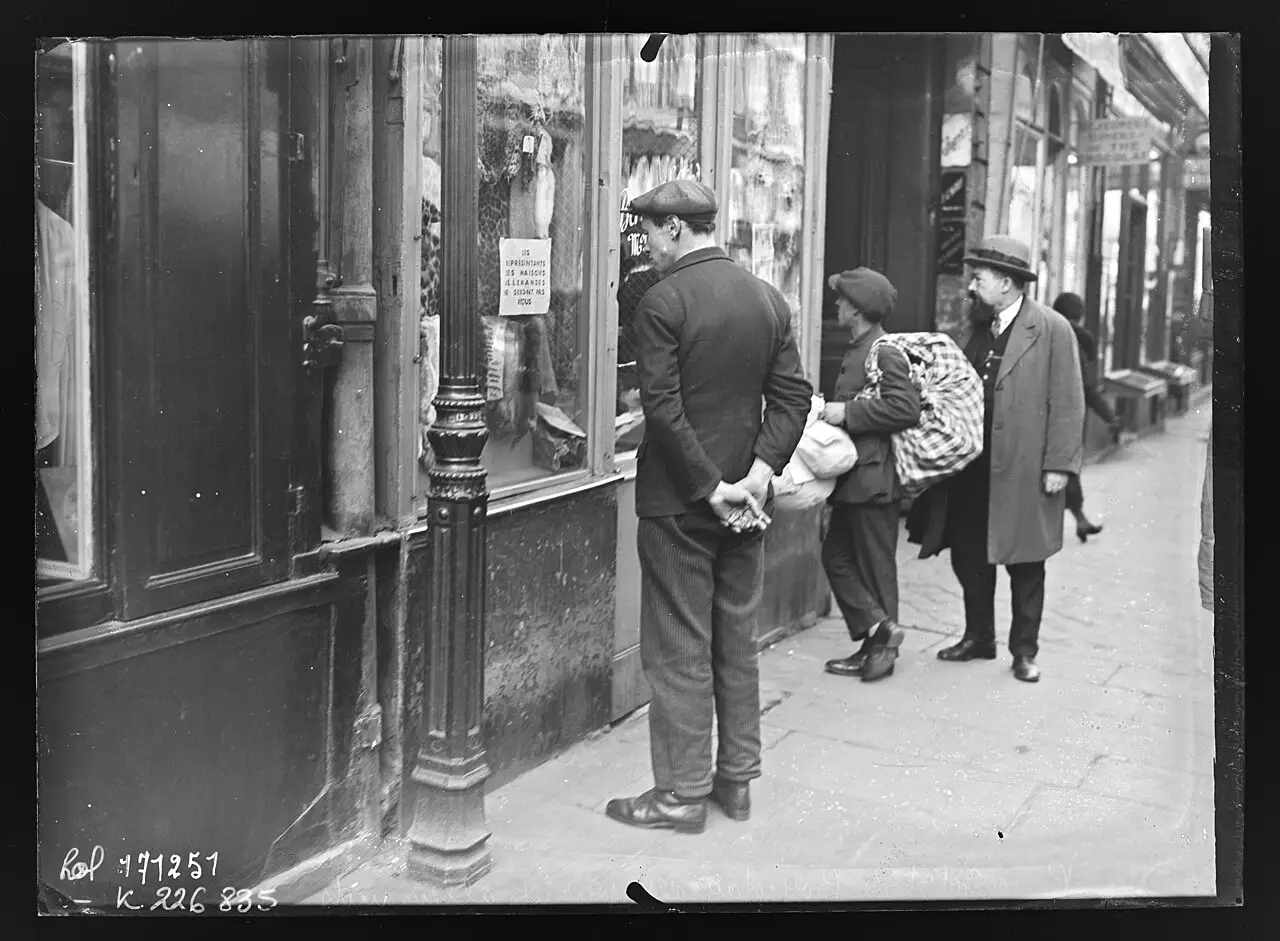
The ‘Central Committee for Defence against Jewish Atrocity and Boycott Agitation’ held its first session in Munich, where Streicher, according to the Völkischer Beobachter, said that National Socialism had been forced to ‘declare war’ on ‘Jewish world power’. Its orders told local action committees to make the press print its instructions prominently, to raise funds from German shopkeepers, and to spread slogans such as ‘The Jews are our misfortune’. It also called a mass rally on the Königsplatz for Friday evening.1,2
-
Persecution Berlin
Nazi deputies demand the removal of Jewish teachers
Four Nazi members of the Prussian Landtag, with the backing of their group leader Wilhelm Kube, wrote to Bernhard Rust, Reich Commissioner for the Prussian education ministry, that it was intolerable for Jewish teachers still to be working in Prussian schools. They asked for all of them to be removed at once and for a numerus clausus restricting the admission of Jewish pupils and students.4
-
Persecution Berlin
Wilfrid Israel arrested
Wilfrid Israel, who worked in his family’s N. Israel department store on Spandauer Straße, Berlin’s oldest and long its largest, was arrested on 30 March, two days before the boycott; it was the second time since January. He and his family held British passports, and the business was not wound up.3
-
Government afternoon, Berlin
Hindenburg receives Hitler and Papen
The Reich President received the Chancellor and Vice-Chancellor together on Thursday afternoon for a report on the political situation.5
-
Opposition Berlin
Wels leaves the International; Oberfohren gives up his seat
It became known that the SPD chairman Otto Wels had written to the bureau of the Labour and Socialist International in Zurich resigning his seat on it; whether the party itself would leave was still open. The German Nationalist Ernst Oberfohren, chairman of his party’s Reichstag group since 1928, also announced that he had given up his seat.5,6
Everyday life
What else was happening in Germany
-
Society Berlin
Dance halls told to mind their manners
Prussia changed its rules for dance licences so that police officers supervising a dance had to stop it at once if there were gross offences against public decency. Rudolf Hess, for the Nazi party, announced that the Horst Wessel song, like the national anthem, did not belong in cabarets and dance halls, and told party members to remind the owners.8
-
Society
A census for June
The government confirmed that the next census of population, occupations and businesses, the first since 1925, would take place in June 1933; the final talks with the states had already been held.8
-
Education
Railway jobs for Easter school-leavers
The Reichsbahn announced that it would take on about 320 young people with an elementary-school education, aged up to 16, as junior helpers, a route into the lower ranks of railway service. It was aimed especially at pupils leaving school on 1 April; applicants needed a good character and had to pass an aptitude test.9
-
Births and deaths Berlin
Death of the statistician Ernst Delbrück
Ernst Delbrück, who had headed the Reich Statistical Office from 1912 to 1923, through the war and the inflation, and had also served in wartime as Reich commissioner for imports and exports, died in Berlin at the age of 75.8
Elsewhere in the world
-
Soviet Union
Gareth Jones brings word of famine
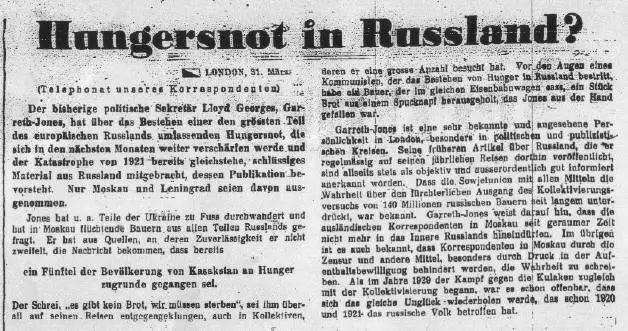
Reuters reported that Gareth Jones, formerly political secretary to David Lloyd George, had reached Berlin on his way from the Soviet Union to London after travelling on foot through Ukraine and other regions. He told the New York Evening Post that Russia faced a famine on a vast scale, as bad as the catastrophe of 1921 in which millions had died.7
More pictures

.jpg)
Sources
- General-Anzeiger (Bonn), 31 March 1933: orders of the Central Committee (CNB/WTB, München, 30 March) Deutsche Digitale Bibliothek, Zeitungsportal, p. 1
- Bautzener Nachrichten, 31 March 1933: ‘Der jüdischen Weltmacht den Krieg erklärt’ Deutsche Digitale Bibliothek, Zeitungsportal, p. 2
- Wilfrid Israel (Stolperstein, Spandauer Str. 26–32) Koordinierungsstelle Stolpersteine Berlin
- Hannoverscher Kurier, 31 March 1933: Nazi deputies’ letter to Rust on Jewish teachers Deutsche Digitale Bibliothek, Zeitungsportal, p. 2
- Gütersloher Volks-Zeitung, 31 March 1933: ‘Wels tritt aus der Zweiten Internationale aus’; ‘Hitler und v. Papen bei Hindenburg’ (TU, Berlin, 30 March) Deutsche Digitale Bibliothek, Zeitungsportal, p. 2
- Hamburger Fremdenblatt, 30 March 1933: ‘Oberfohren legt sein Mandat nieder’ Deutsche Digitale Bibliothek, Zeitungsportal, p. 1
- Neue Mannheimer Zeitung, evening edition, 30 March 1933: ‘Hungersnot in Sowjetrußland’ (Wolff/Reuter, London, 30 March) Deutsche Digitale Bibliothek, Zeitungsportal, p. 1
- Harburger Anzeigen und Nachrichten, 30 March 1933: dance licences, Hess on the Horst Wessel song, census, death of Delbrück Deutsche Digitale Bibliothek, Zeitungsportal, p. 3
- Sächsische Volkszeitung, 31 March 1933: ‘Reichsbahn stellt Schulentlassene ein’ (Berlin, 30 March) Deutsche Digitale Bibliothek, Zeitungsportal, p. 2
Spotted a mistake? Send a correction.