Day 91 of 100
Fritz Haber resigns rather than dismiss his Jewish staff
The Nobel chemist Fritz Haber, told to dismiss the “non-Aryan” members of his Kaiser Wilhelm Institute in Dahlem, asked instead to be retired; though exempt himself as a war veteran, he refused to choose staff by race. In the Reich Labour Ministry, Seldte proclaimed his “dictatorial” leadership of the Stahlhelm and its leaders pledged allegiance to Hitler. It was a showery Sunday in Berlin; 12,000 people watched Hertha BSC win a nine-goal match, and seven miners died in an explosion near Essen.
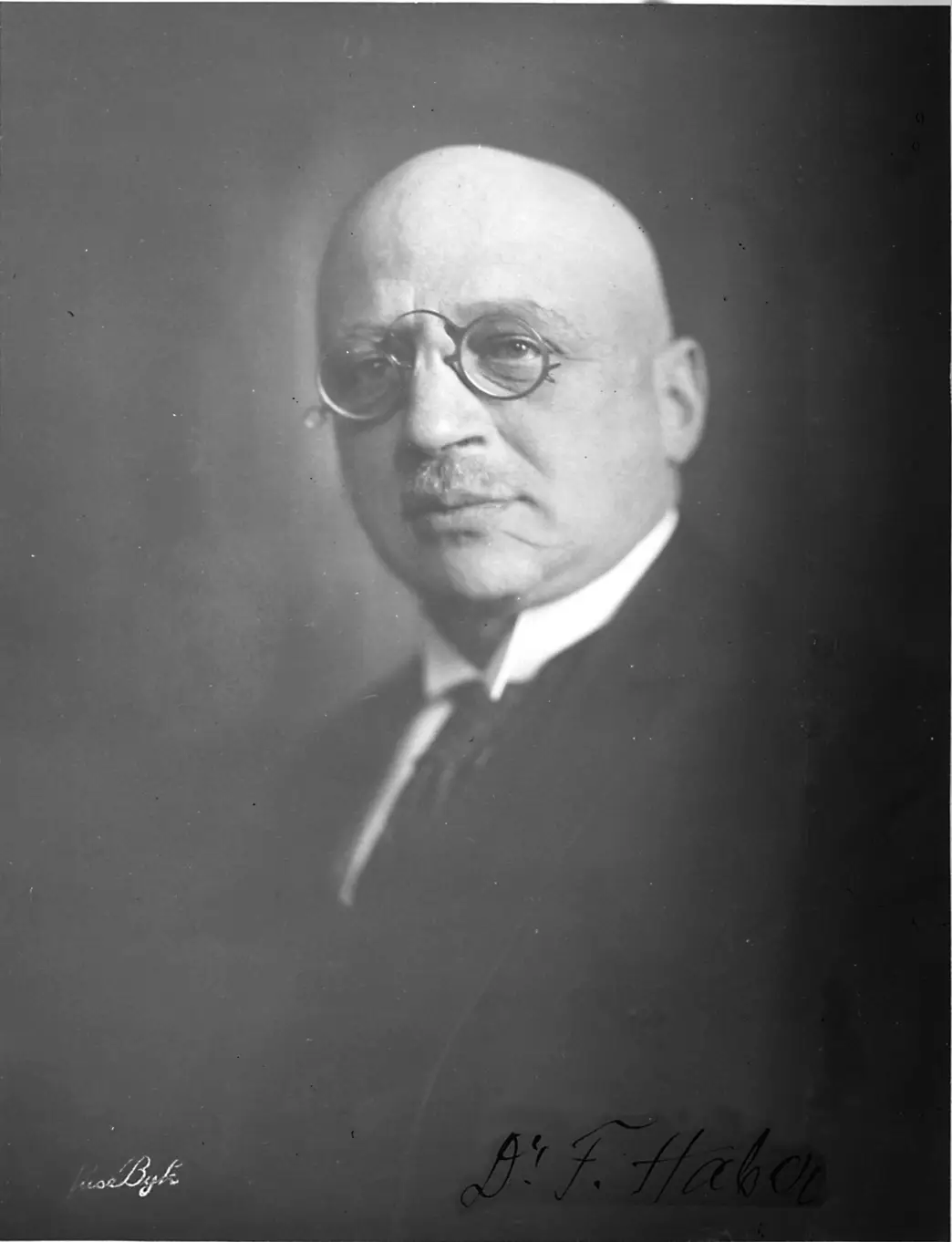

No institute of the Kaiser Wilhelm Society was hit harder by the civil service law than Haber’s: twelve of its 49 staff counted as “non-Aryan”. Haber, who had directed Germany’s first large-scale use of poison gas in 1915 and received the 1918 Nobel Prize in Chemistry for synthesising ammonia from atmospheric nitrogen, could have stayed. He chose to go. His department heads Herbert Freundlich and Michael Polanyi also resigned and left Germany. Haber emigrated to England in the autumn and died in Basel on 29 January 1934, two months after his 65th birthday.
Politics and power
Government, terror and persecution
-
Persecution Berlin-Dahlem
Haber asks to be retired
Ordered to dismiss the staff of his Kaiser Wilhelm Institute for Physical Chemistry and Electrochemistry who were “non-Aryan” under the civil service law, Fritz Haber wrote to the Prussian minister for science, art and education asking to be retired as director from 1 October. Because of his military service he was himself exempt from the law, but he would not accept a special status while his Jewish colleagues were dismissed.1,2
-
Opposition 13:00, Berlin, Reich Labour Ministry
Stahlhelm leaders swear allegiance to Hitler
At 13:00 Seldte held a parade (Appell) of the Stahlhelm’s leaders in the large hall of the Reich Labour Ministry. He announced a “law” of dictatorial leadership, binding on the whole league from then on, and appointed new officers. The league’s executive greeted Hitler and pledged him, with Seldte, loyal allegiance. Hitler had written to Seldte thanking him for his decision.3,4
-
Parliament Berlin
Nationalists ask Seldte to give up his seat
The German National (DNVP) group in the Reichstag, meeting the same day, was told of a letter from the party’s deputy chairman to Seldte, who had been elected on their joint list, expressing the expectation that he would now give up his Reichstag seat.4
Everyday life
What else was happening in Germany
-
Weather Berlin
Showers before the holiday
Rain showers in Berlin on Sunday raised fears that Monday’s “Day of National Labour” would be spoiled by bad weather.5
-
Sport Berlin
Hertha BSC 5, Berliner SV 92 4
Before 12,000 spectators Hertha BSC beat Berliner SV 1892 5–4 in the last round of the Brandenburg championship; Sobek scored twice. BSV 92 had needed only a draw to qualify as the region’s second team for the national championship, so a play-off against Viktoria 89 was set for Wednesday.6
-
Society overnight, Essen
Seven miners killed near Essen
During the night from Saturday to Sunday an explosion underground at the Mathias Stinnes I/II colliery near Essen killed seven miners and injured two.7
-
Society
Ebert stamps withdrawn from sale
Post offices stopped selling stamps and stamp booklets bearing the portrait of the former Reich President Ebert from 30 April; Hindenburg stamps replaced them, though the Ebert stamps remained valid for the time being.8
Voices
My tradition requires of me, in a scientific post, that in choosing my staff I consider only the professional abilities and character of the applicants, without asking about their racial make-up.
In Berlin today
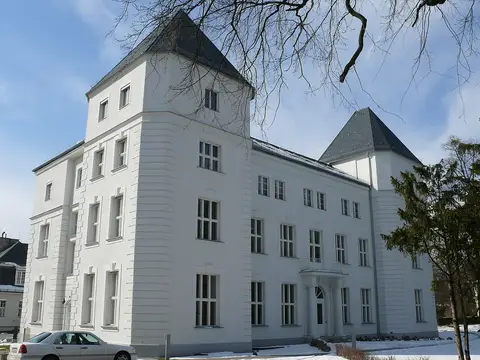

Fritz Haber Institute of the Max Planck Society
Faradayweg, 14195 Berlin-Dahlem
- Then
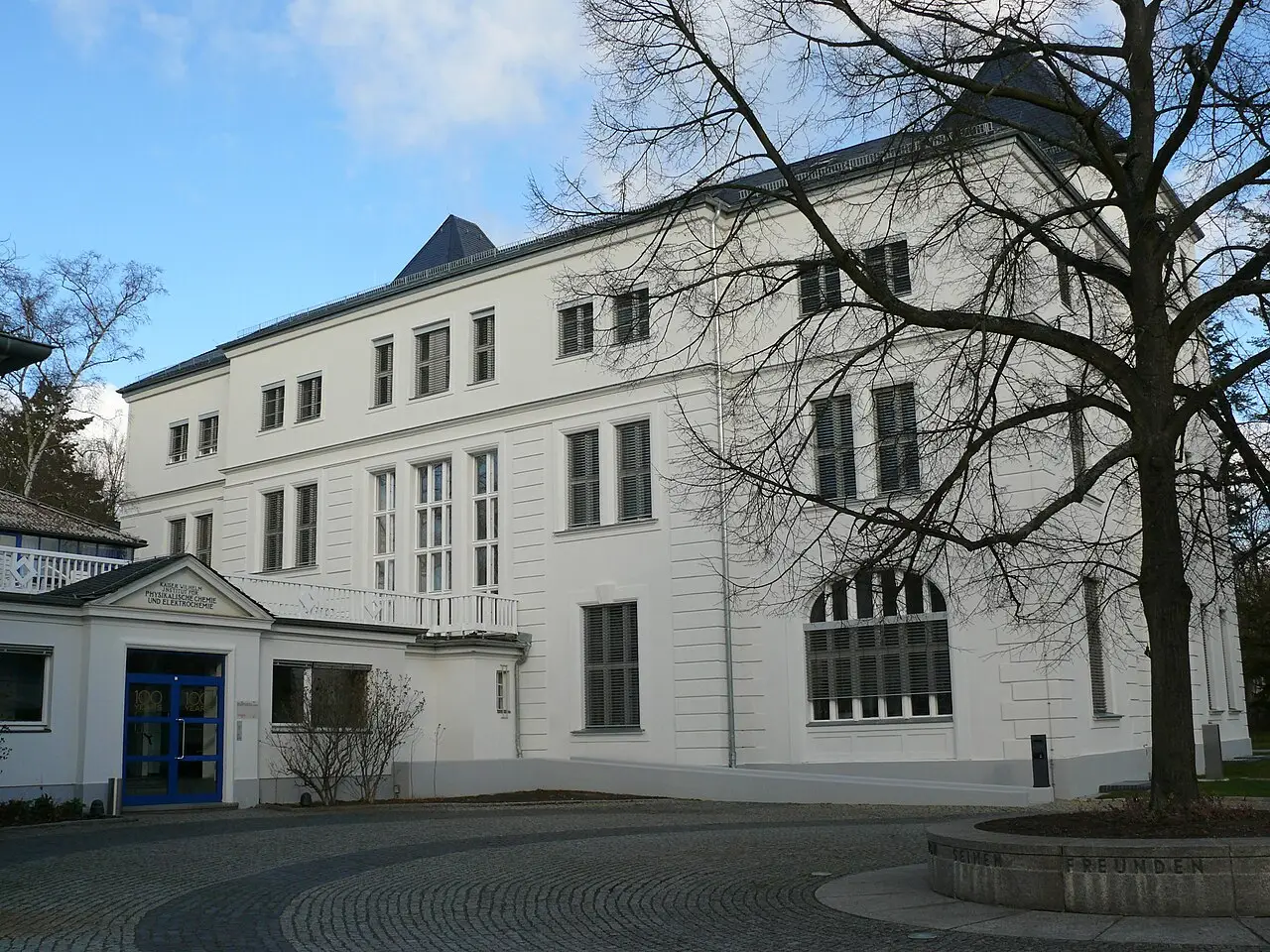
- As director of the Kaiser Wilhelm Institute for Physical Chemistry and Electrochemistry here, Fritz Haber asked on 30 April 1933 to be retired rather than carry out the dismissal of his Jewish colleagues.1
- Today
- Since 1953 the institute has carried Haber’s name as the Fritz Haber Institute of the Max Planck Society; Max von Laue unveiled a commemorative plaque to Haber there on 9 December 1952.
More pictures

Sources
- History: Historical Review of the Fritz Haber Institute Fritz Haber Institute of the Max Planck Society, sections "National Socialism and the Second World War" and "The early years after the Second World War"
- Wie Wissenschaft und Förderung „arisiert“ wurden Deutsche Forschungsgemeinschaft
- Westfälische Zeitung (Bielefelder Tageblatt), 3 May 1933 Deutsche Digitale Bibliothek, Zeitungsportal, p. 3, "Ein Appell der Führerschaft"
- Annener Zeitung, 2 May 1933 Deutsche Digitale Bibliothek, Zeitungsportal, p. 2, Hitler's letter to Seldte, "Appell der Führerschaft des Stahlhelm" and "Zur Mandatsniederlegung aufgefordert" (Berlin, 30 April)
- Dresdner Nachrichten, early edition, 2 May 1933 Deutsche Digitale Bibliothek, Zeitungsportal, p. 2, report from Berlin, 1 May
- Hamburger Fremdenblatt, Reichsausgabe, 2 May 1933 Deutsche Digitale Bibliothek, Zeitungsportal, p. 12, "Berliner Fußball-Meisterschaft"
- Hohenstein-Ernstthaler Tageblatt und Anzeiger, 2 May 1933 Deutsche Digitale Bibliothek, Zeitungsportal, p. 7, "Schwere Explosion unter Tage" (Berlin, 30 April)
- Bottwartal-Bote, 6 May 1933 Deutsche Digitale Bibliothek, Zeitungsportal, p. 2, "Kein Verkauf von Ebert-Briefmarken mehr" (Berlin, 5 May)
Spotted a mistake? Send a correction.