Day 93 of 100
SA and SS occupy the trade union offices across Germany; union leaders arrested
At ten in the morning, the day after the “Day of National Labour”, SA and SS men occupied every building of the free trade unions in Germany, together with their newspapers and their bank. Theodor Leipart, Peter Graßmann and other leaders were taken into “protective custody”, the unions’ property was seized and Nazi commissioners took over. In Duisburg four union officials were murdered. The Hoppegarten racecourse opened its season the same afternoon.
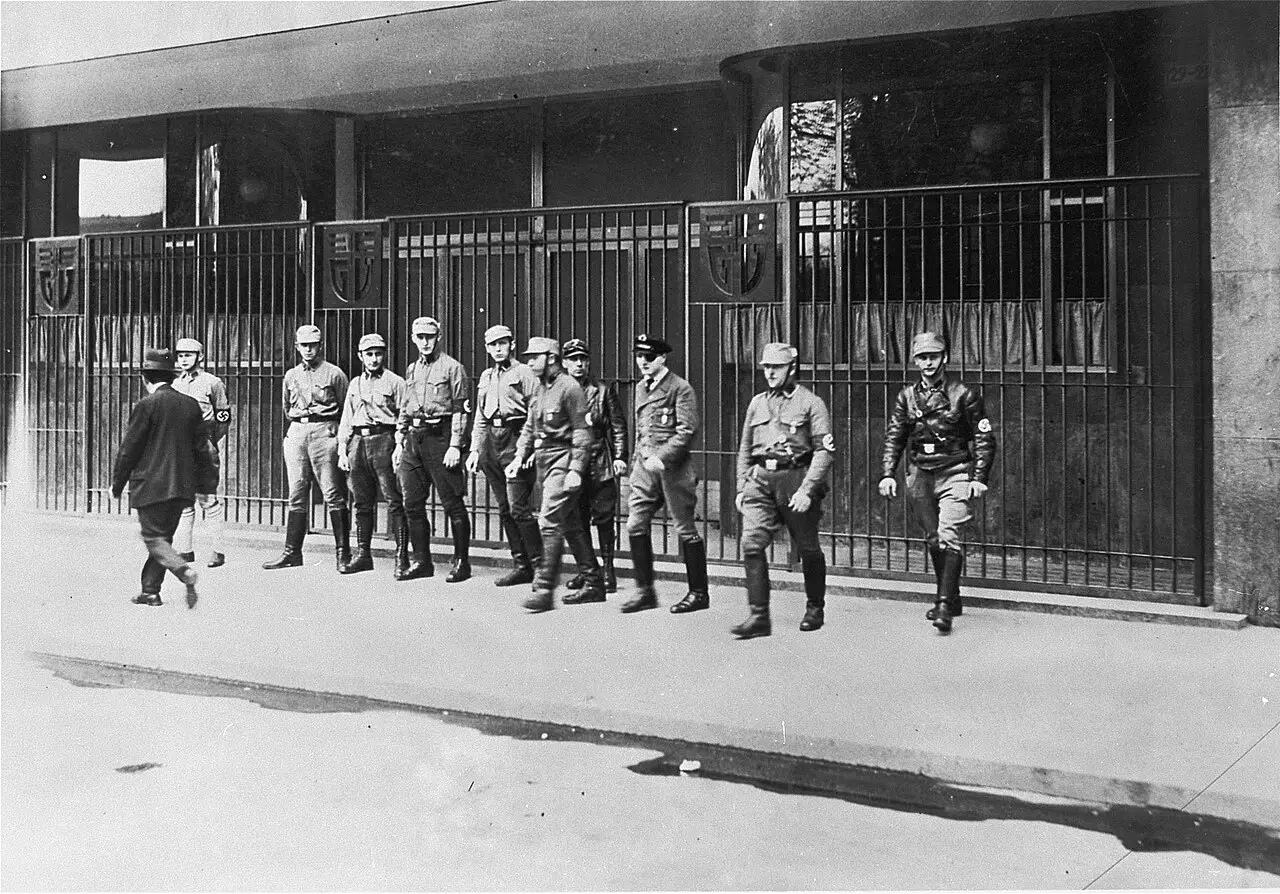

The action had been prepared in parallel with the May Day celebrations by an “Action Committee for the Protection of German Labour” under Robert Ley. At 10:00 on Tuesday SA and SS units, with men of the Nazi factory cell organisation (NSBO), occupied the buildings of the General German Trade Union Federation (ADGB), the salaried employees’ federation (AfA-Bund), all their member unions, the editorial offices of the union press and the branches of the Bank of Workers, Employees and Civil Servants. The unions’ property was seized and their accounts frozen; commissioners appointed by Ley took the places of the elected officials, and the staff were told to carry on working under NSBO supervision.
The free trade unions had tried to save themselves by distancing themselves from the SPD, declaring political neutrality and joining in the May Day celebrations. It did not help. The regime’s leaders had seen in the factory council elections of March 1933, where the NSBO won only about a quarter of the votes, how little support they had among workers in the big plants. Ley told the press that it was not enough for National Socialism that the union leaders professed their loyalty.
The arrests were planned. In Berlin Theodor Leipart, Peter Graßmann and Rudolf Wissell were taken into “protective custody”, as were the chairmen of the member unions, the directors of the workers’ bank and the editors of the union papers. Ley’s committee spoke of about fifty arrests. In Duisburg four union officials were murdered during the occupation of the union house: Julius Birck, Emil Rentmeister, Michael Rodenstock and Johann Schlösser.
The other union federations placed themselves “voluntarily” under Ley’s committee. In the weeks that followed the Nazis tried to justify the seizure with charges of corruption and waste in the union movement, none of which they could prove. By the end of June all the union federations had been forced into the German Labour Front, founded on 10 May.
Politics and power
Government, terror and persecution
-
Terror 10:00, Berlin and throughout Germany
Union buildings occupied across the Reich
In a single coordinated operation at 10:00, SA and SS units occupied all the buildings of the free trade unions, their federations and affiliated economic organisations throughout Germany, including the ADGB headquarters in Berlin. Their property was confiscated and Nazi commissioners installed.1,2,3
-
Persecution Berlin
Leipart, Graßmann and Wissell arrested
Leipart, Graßmann and Wissell, the last of whom according to the press happened to be in the building to check his account, were arrested in Berlin. Ley’s committee gave the number arrested as about fifty, among them the chairmen of 28 member unions, twelve leading ADGB officials, two directors of the workers’ bank and three union editors.1,3
-
Terror Duisburg
Four union officials murdered in Duisburg
During the occupation of the Duisburg union house, Julius Birck, Emil Rentmeister, Michael Rodenstock and Johann Schlösser were murdered by Nazis.1,4
-
Persecution Berlin
Nineteen teachers suspended at Berlin University
The Prussian culture minister Rust placed 19 teachers at Berlin University on leave with immediate effect under the civil service law and withdrew the teaching contracts of several lecturers; nine professors were suspended at Cologne.5
-
Propaganda Berlin
Nazi press chief heads the journalists’ association
The delegates’ assembly of the Reich Association of the German Press elected Otto Dietrich, the Nazi Party’s Reich press chief, as its chairman.5
Everyday life
What else was happening in Germany
-
Education Berlin, Unter den Linden
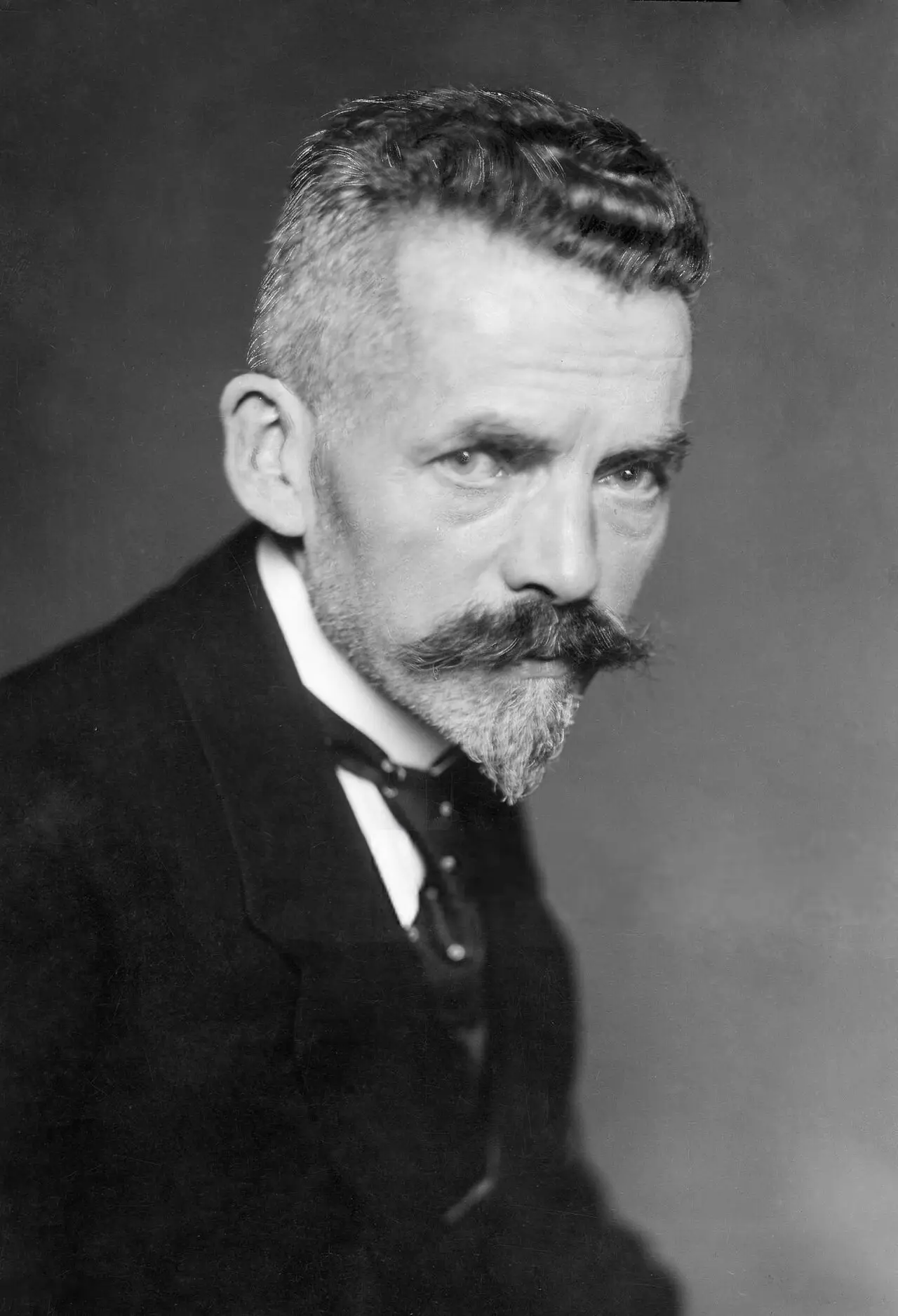
Eugen Fischer elected rector
Berlin University elected the anthropologist Eugen Fischer as its rector on the day the minister suspended nineteen of its teachers.5
-
Sport Hoppegarten
Hoppegarten opens its season
The Union Club’s course at Hoppegarten opened the flat-racing season. The Preis von Dahlwitz brought together the three leading horses of the Derby year and was won by Janitor, ridden by O. Schmidt.6,10
Voices
It is not enough for National Socialism that the leaders of the free trade unions profess their devotion.
In Berlin today
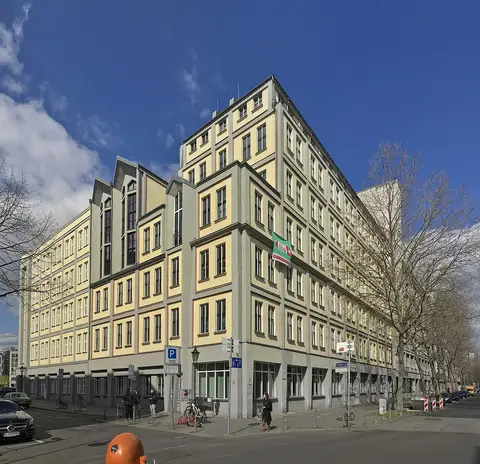

ADGB Bundeshaus (Hermann-Schlimme-Haus)
Wallstraße 61–65, corner of Inselstraße 6, 10179 Berlin-Mitte
- Then
- The headquarters of the General German Trade Union Federation, a model of the New Building movement by Max Taut and Franz Hoffmann (1922–23), was occupied in 1933 and the ADGB expropriated; on 2 May its leaders were taken into “protective custody”.1,7,8
- Today
- The listed building was restored in 1997–98 and is used by the IGBCE, the mining, chemical and energy workers’ union, and its foundation.
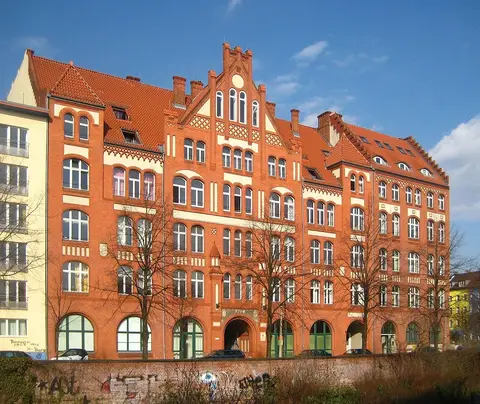

Former union house, Engeldamm 62–64
Engeldamm 62–64, 10179 Berlin-Mitte
- Then
- One of the first union houses in Germany, built in 1899–1900 with money from the physicist Leo Arons, it was occupied by the Nazis on 2 May 1933; Arons’s grave in the courtyard was destroyed.9
- Today
- A glass memorial plaque by Erika Klagge, unveiled in 2002, records that the destruction of the free trade union movement began with the occupation of this house on 2 May 1933.
More pictures
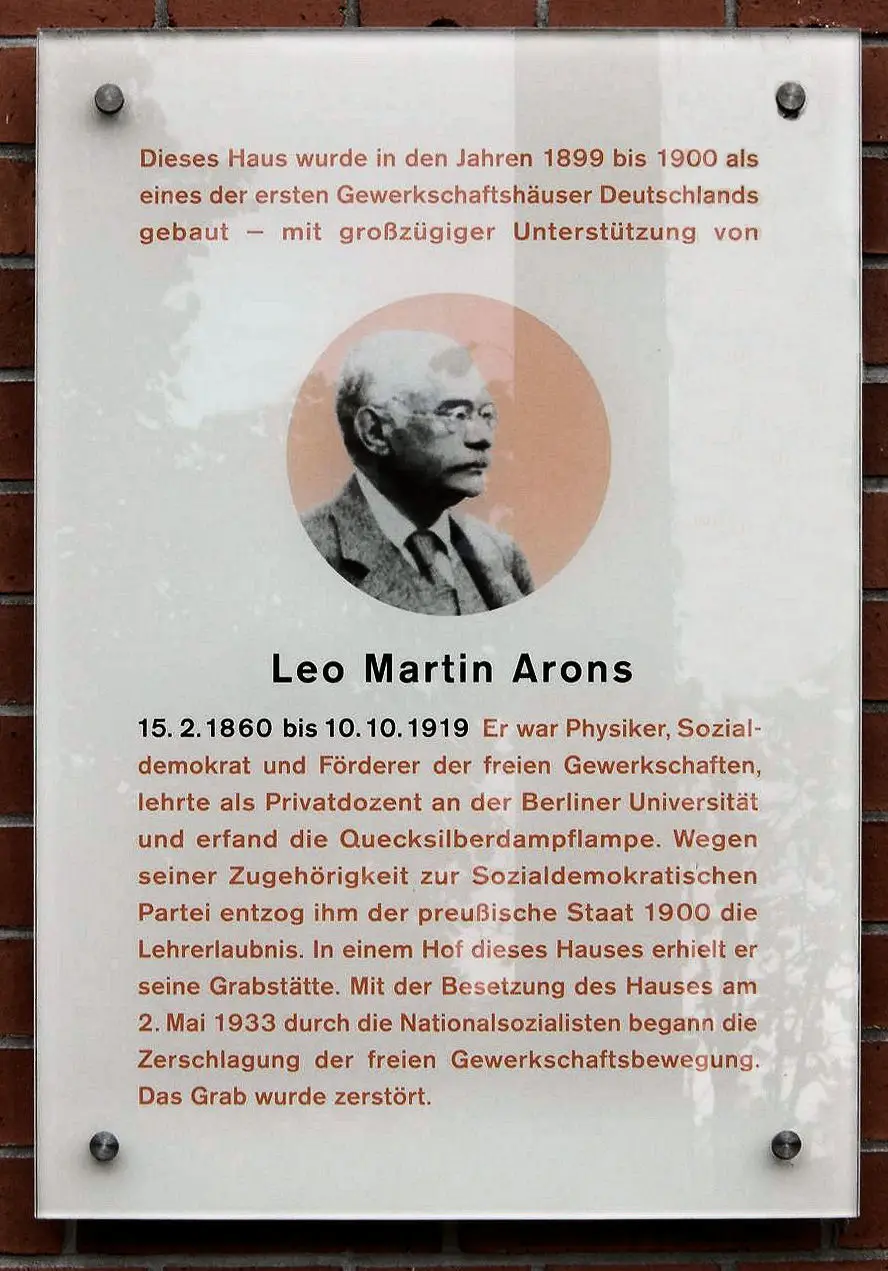
_Leo_Martin_Arons.jpg)

Sources
- Chronik der deutschen Sozialdemokratie, Band 2: Stichtag 2. Mai 1933 Franz Osterroth and Dieter Schuster; electronic edition, Friedrich-Ebert-Stiftung Library
- LeMO: Zerschlagung der Gewerkschaften Deutsches Historisches Museum
- Marbacher Zeitung (Bottwartal-Bote), 3 May 1933 Deutsche Digitale Bibliothek, Zeitungsportal, p. 1, report on the occupation of the union buildings (Berlin, 2 May)
- Mahnmal am DGB-Haus Stadt Duisburg, Kulturbüro
- Erzgebirgischer Volksfreund, 3 May 1933 Deutsche Digitale Bibliothek, Zeitungsportal, p. 3, items datelined Berlin, 2 May
- Hamburger Fremdenblatt, Reichsausgabe, 3 May 1933 Deutsche Digitale Bibliothek, Zeitungsportal, p. 10, "Janitor in großem Stil. Hervorragender Sport in Hoppegarten"
- Denkmaldatenbank: Bürohaus des Allgemeinen Deutschen Gewerkschaftsbundes, Hermann-Schlimme-Haus Landesdenkmalamt Berlin
- Gewerkschaftshaus der IGBCE Deutsche Stiftung Denkmalschutz, Tag des offenen Denkmals
- Gedenktafeln in Berlin: Leo Martin Arons (Gewerkschaftshaus) Aktives Museum Faschismus und Widerstand in Berlin, Gedenkstätte Deutscher Widerstand, Holger Hübner
- Westfälische Zeitung (Bielefelder Tageblatt), 3 May 1933 Deutsche Digitale Bibliothek, Zeitungsportal, p. 12, Hoppegarten results
Spotted a mistake? Send a correction.