Day 51 of 100
The Day of Potsdam: the new Reichstag opens in the Garrison Church
The new Reichstag was opened with a state ceremony in Potsdam’s Garrison Church, where Hindenburg and Hitler spoke above the tombs of the Prussian kings. In the afternoon the deputies met in Berlin’s Kroll Opera House and re-elected Göring as president, and in the evening a torchlight procession filled the city centre while Wagner’s Meistersinger was performed at the State Opera. The same day Hindenburg signed decrees creating special courts, punishing ‘malicious’ criticism of the government and amnestying crimes committed for the ‘national uprising’.
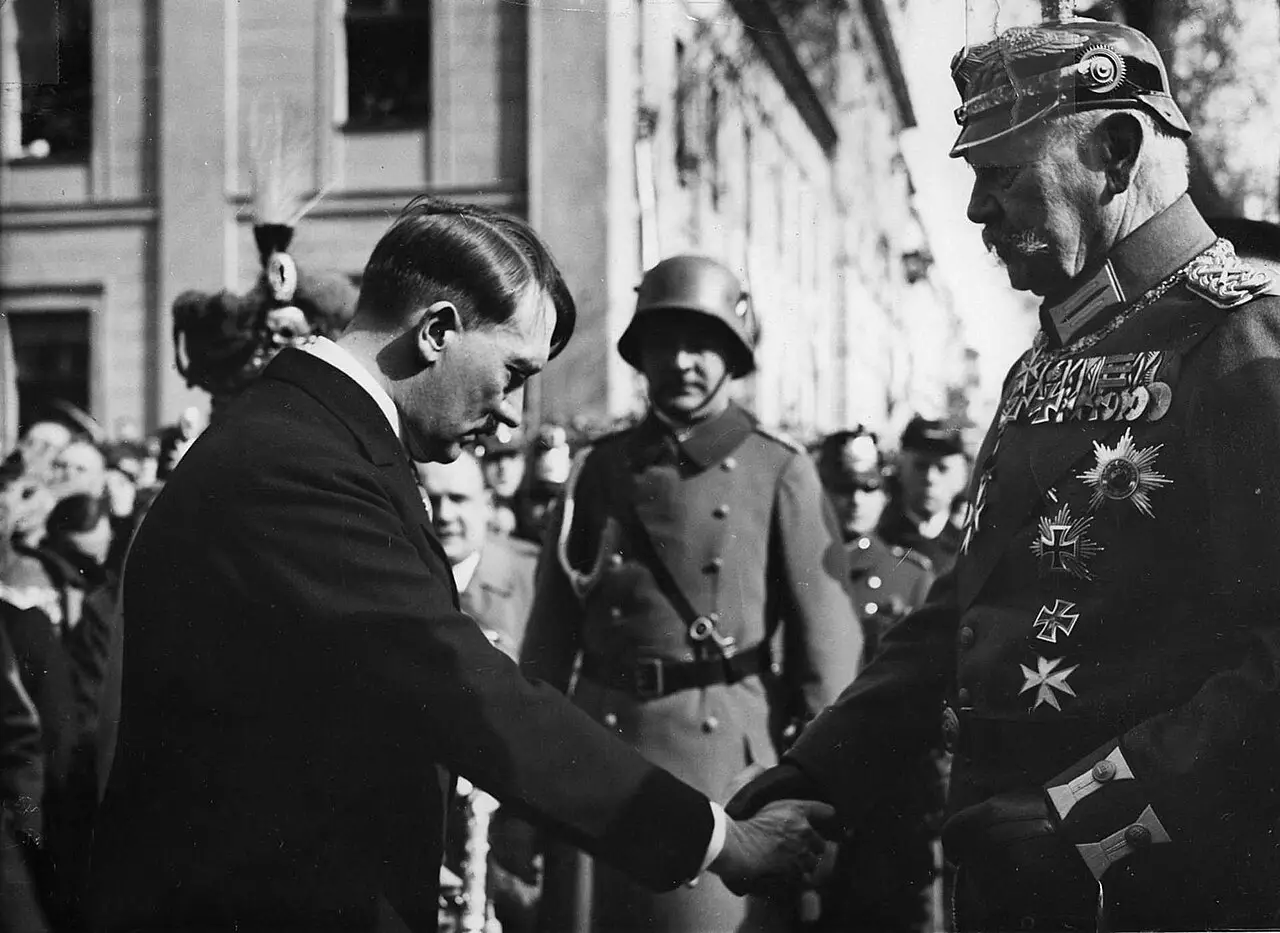

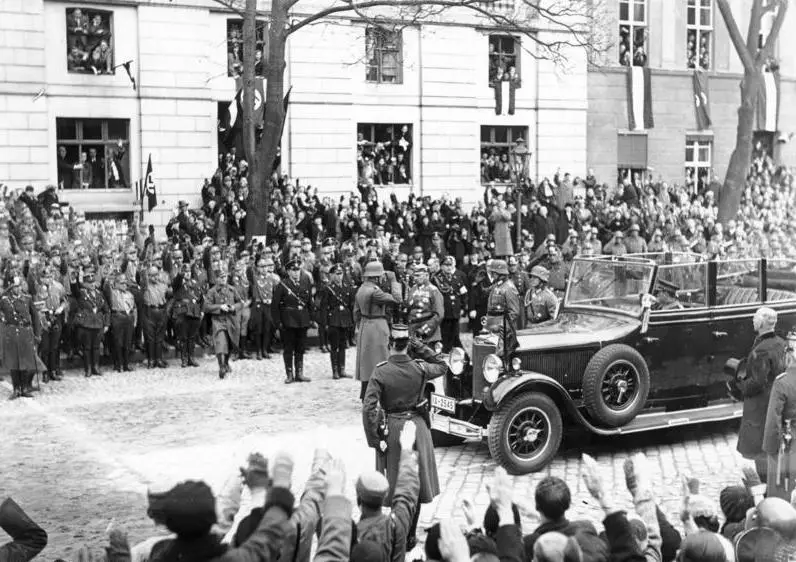
The Reichstag could not meet in its own building, burned on 27 February; Göring told the deputies at their first sitting that ‘a dreadful crime’ had driven them out. The government chose instead to open the new parliament in Potsdam’s Garrison Church, where Frederick William I and Frederick the Great lay buried, and to stage the occasion as a meeting of old Prussia and the new regime. The town was hung with black-white-red flags and swastika banners.
The day began with services. Hindenburg was received at the Nikolaikirche by the clergy led by Dr Dibelius; the crowd outside was so dense that the palace courtyard was opened and the service relayed by loudspeaker. Catholic deputies attended a solemn Mass in the church of St Peter and Paul. Hitler and Goebbels stayed away: an official statement said that Catholic bishops had declared Nazi leaders apostates, and that instead the Chancellor had laid a wreath on the graves of ‘murdered SA comrades’ at the Luisenstadt cemetery in Berlin.
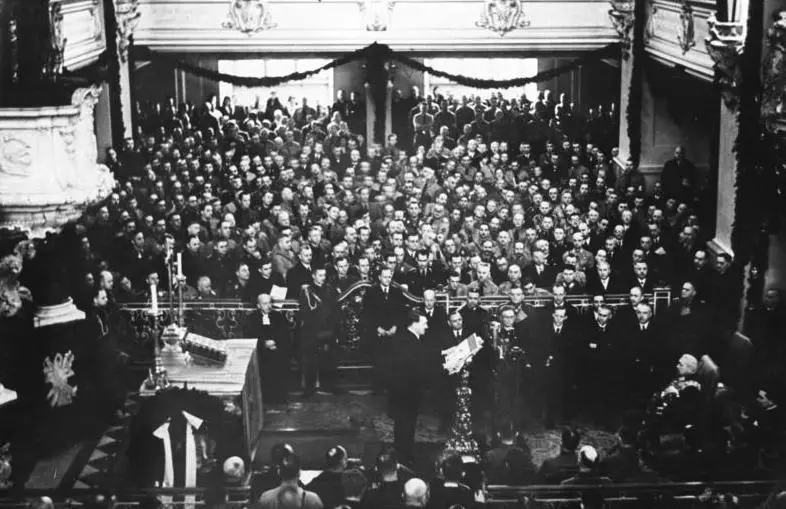
At noon the state ceremony began in the Garrison Church. Hindenburg greeted the Reichstag, invoked the ‘old Prussia’ that had grown great through fear of God and devotion to duty, and asked the deputies to stand behind the government. Hitler answered with a speech that spoke of a ‘marriage’ between the symbols of old greatness and young strength and ended with homage to the aged Field Marshal. Hindenburg then descended into the royal crypt and laid wreaths at the coffins of the two kings. The Social Democrats had stayed away.
At 17:10 the deputies met in the Kroll Opera House. Göring, re-elected president by acclamation against the votes of the Social Democrats, opened the sitting himself, the rule giving the oldest member that honour having been set aside. The Social Democrat Vogel moved that nine of his party’s deputies held in custody, among them Marum of Baden, be released at once; the motion was sent to committee.
The festive face of the day hid its legal content. Hindenburg signed three decrees: one made spreading ‘untrue’ statements that harmed the government, and the wearing of Nazi uniforms by non-members, criminal offences; a second created special courts (Sondergerichte) to try such cases without appeal; a third granted an amnesty for crimes committed ‘in the struggle for the national uprising’.
Laws and decrees
Verordnung des Reichspräsidenten zur Abwehr heimtückischer Angriffe gegen die Regierung der nationalen Erhebung
Reich President's decree for the defence against malicious attacks on the government of the national uprising
Made it a crime to spread untrue or grossly distorted statements liable to harm the Reich, a state government or the parties behind them (up to two years’ prison), and to wear the uniform of a pro-government organisation without being a member; crimes committed in such uniforms to spread fear carried penal servitude and, in especially serious cases, death.6
Verordnung der Reichsregierung über die Bildung von Sondergerichten
Reich government decree on the formation of special courts
Created a special court in each higher regional court district for offences under the Reichstag Fire Decree and the ‘malicious attacks’ decree: no preliminary investigation, three days’ notice (reducible to 24 hours), evidence could be refused, and no appeal.7
Verordnung des Reichspräsidenten über die Gewährung von Straffreiheit
Reich President's decree granting amnesty
Remitted sentences and ended pending proceedings for crimes committed ‘in the struggle for the national uprising of the German people, in preparing it or in the struggle for German soil’ before 21 March; in effect it benefited those who had used violence on the regime’s behalf.8
Politics and power
Government, terror and persecution
-
Propaganda 12:00, Potsdam, Garrison Church
State ceremony in the Garrison Church
Deputies arrived by Reichspost buses; Nazi deputies came in uniform. At noon Hindenburg opened the ceremony in the Garrison Church with a brief address, followed by Hitler’s speech. Hindenburg then laid wreaths at the coffins of Frederick William I and Frederick the Great in the crypt beneath the church. The Social Democrats did not take part.1,2,3
-
Churches morning, Potsdam; Berlin, Luisenstädtischer Friedhof
Hitler stays away from the Catholic service
While Catholic deputies heard Mass in St Peter and Paul’s church, Hitler and Goebbels visited the Luisenstadt cemetery in Berlin and laid a wreath ‘to my dead comrades’. An official statement justified their absence by saying that the Catholic bishops had in recent declarations called Nazi leaders apostates who could not receive the sacraments.3,4
-
Parliament from 17:10, Berlin, Kroll Opera House
Reichstag constituted at the Kroll Opera; Göring re-elected
In the packed Kroll Opera House, with the former Crown Prince in the diplomatic box and Schacht in the public gallery, Göring opened the first sitting at 17:10. He was re-elected Reichstag president by acclamation against the Social Democrats; the Centre’s Esser became first vice-president. The Social Democrat Vogel moved the immediate release of the arrested deputies Finke, Fleissner, Huth, Marum, Meyer, Buchta, Segger, Soldmann and Wagner; the motion was referred to the rules committee.2
-
Terror Berlin
Decrees on ‘malicious attacks’, special courts and amnesty signed
Hindenburg signed a decree against ‘malicious attacks on the government of the national uprising’ and an amnesty decree; the Reich government issued a decree setting up special courts in every higher regional court district to try offences under the Reichstag Fire Decree and the new decree, without appeal.6,7,8
Everyday life
What else was happening in Germany
-
Weather Berlin and Potsdam
Storm in the night, sunshine by morning
A night storm drove away the rain and the day dawned in bright sunshine over Berlin and Potsdam. Potsdam was a sea of flags, with banners strung across the main streets every twenty metres.3
-
Music evening, Berlin, Staatsoper Unter den Linden
Die Meistersinger at the State Opera
By order of the Reich government, Wagner’s Die Meistersinger von Nürnberg was performed in the evening at the State Opera Unter den Linden under Furtwängler, with Hitler, Hugenberg, Frick, Göring and other ministers in the state box and many SA and SS uniforms in the audience.5
-
Society 18:00–19:00, Berlin, Unter den Linden
Hundreds of thousands wait for the torchlight procession
From 6 p.m. crowds poured into the city centre to see the torchlight procession of the ‘national associations’. By 7 p.m. Unter den Linden, Wilhelmstrasse, the area between the Brandenburg Gate and the Tiergarten, Friedrich-Ebert-Strasse and Potsdamer Platz were packed and all traffic had stopped.5
-
Film
The day filmed for the newsreels
The Ufa-Tonwoche and Deulig-Tonwoche newsreels filmed the main events of the day, ending with the torchlight procession, for showing in cinemas from 22 March.4
Voices
The place where we have gathered today calls us to look back to the old Prussia, which grew great in the fear of God through dutiful work, never-failing courage and devoted love of the fatherland. May the old spirit of this place of glory inspire today’s generation too.
In Berlin today
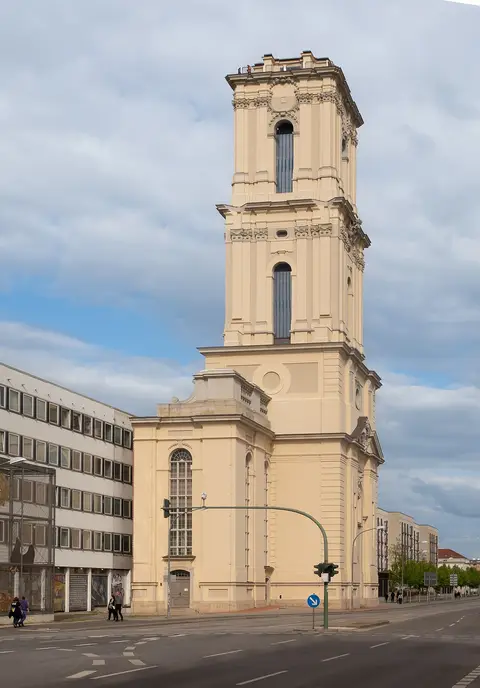

Garnisonkirche (Garrison Church), Potsdam
- Then
- Scene of the state ceremony opening the Reichstag: speeches by Hindenburg and Hitler, and wreaths laid at the coffins of Frederick William I and Frederick the Great in the crypt.2,9
- Today
- The church was left a ruin by the war, and its tower was blown up in the early summer of 1968. A rebuilt tower opened on 23 August 2024, together with an exhibition on the church’s history.
.jpg)
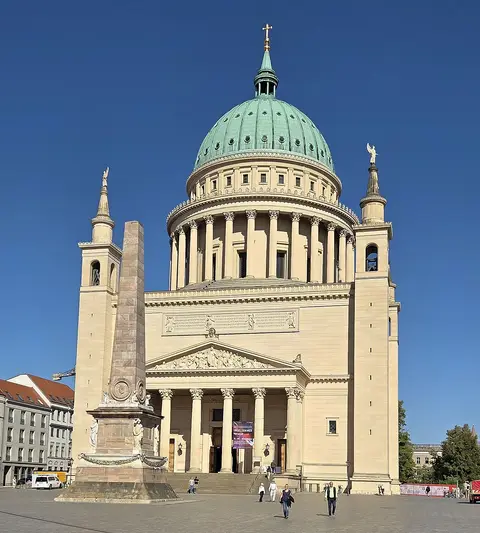
St. Nikolaikirche, Potsdam
- Then
- Protestant service for Hindenburg and the deputies before the state ceremony; the clergy led by Dr Dibelius received the Reich President at the door, and the service was relayed by loudspeaker to the crowd in the palace courtyard.3,10
- Today
- Schinkel’s domed church, whose dome and portico were destroyed or badly damaged at the end of the war, was rebuilt and reconsecrated in May 1981 and is open to visitors as a parish church with a busy cultural life.
More pictures


Sources
- Deutscher Reichsanzeiger und Preußischer Staatsanzeiger, 22 March 1933 Deutsche Digitale Bibliothek, Deutsches Zeitungsportal, p. 1, 'Der Staatsakt in Potsdam am 21. März 1933': text of Hindenburg's address and Hitler's speech
- Deutscher Reichsanzeiger und Preußischer Staatsanzeiger, 22 March 1933 Deutsche Digitale Bibliothek, Deutsches Zeitungsportal, p. 2: end of Hitler's speech; wreaths in the royal crypt; 'Deutscher Reichstag. 1. Sitzung vom 21. März 1933'
- Biberacher Zeitung, 22 March 1933 Deutsche Digitale Bibliothek, Deutsches Zeitungsportal, p. 1, reports from Potsdam: weather, arrival at the Nikolaikirche, Catholic service in St Peter and Paul
- Biberacher Zeitung, 22 March 1933 Deutsche Digitale Bibliothek, Deutsches Zeitungsportal, p. 4, official statement on Hitler's absence from the Catholic service; newsreels of the day
- Wittener Tageblatt, 22 March 1933 Deutsche Digitale Bibliothek, Deutsches Zeitungsportal, p. 2, the torchlight procession; 'Die Meistersinger' at the State Opera
- Verordnung des Reichspräsidenten zur Abwehr heimtückischer Angriffe gegen die Regierung der nationalen Erhebung (21.03.1933) documentArchiv.de, Full text; promulgated 22 March 1933; RGBl. 1933 I S. 135
- Verordnung der Reichsregierung über die Bildung von Sondergerichten (21.03.1933) documentArchiv.de, Full text; promulgated 22 March 1933; RGBl. 1933 I S. 136–138
- Verordnung des Reichspräsidenten über die Gewährung von Straffreiheit (1933) verfassungen.de, Full text; in force 23 March 1933; RGBl. 1933 I S. 134
- ‘Dieser Ort fordert uns heraus’: Die Festrede im Wortlaut Stiftung Garnisonkirche Potsdam, Speech at the opening of the rebuilt tower, 23 August 2024 (ruin after 1945, demolition in 1968)
- St. Nikolai – Allgemein Interessierte Evangelische St. Nikolaikirchengemeinde Potsdam
Spotted a mistake? Send a correction.