Day 52 of 100
First prisoners arrive at Dachau as the new Prussian Landtag meets
The first transports of prisoners reached the new concentration camp at Dachau, set up on the grounds of a disused powder and munitions factory. In Berlin the Prussian Landtag opened under its 84-year-old Nazi senior member, who called it ‘the Landtag of the Hitler spring’, and a Reichstag committee changed the rules so that absent deputies could be counted as present. The decrees on ‘malicious attacks’ and special courts were published, and the Deutschlandsender began using the Garrison Church carillon as its interval signal.

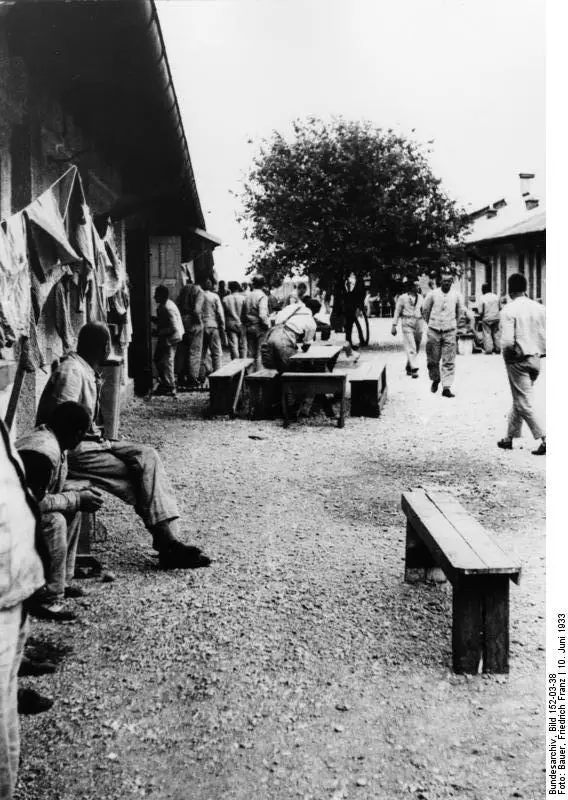
Two days after Himmler’s announcement, the Dachau camp began to receive prisoners. The Dachau Concentration Camp Memorial dates the first transports to 22 March 1933. It was one of the camps opened across the Reich for the mass imprisonment of the regime’s political opponents. In October 1933 its commandant, Theodor Eicke, introduced camp regulations with a harsh code of punishments that institutionalised the SS’s arbitrary rule over the prisoners.
In Berlin the parliamentary preparations for the Enabling Act were completed in committee. With the votes of the Nazis, the Centre and the Bavarian People’s Party, the Reichstag’s rules committee made attendance compulsory, threatened unexcused absentees with exclusion for up to sixty sitting days, and ruled that members who could be excluded on these grounds counted as present. A boycott of the sitting could therefore no longer prevent a quorum.
Laws and decrees
Verordnung des Reichspräsidenten zur Abwehr heimtückischer Angriffe gegen die Regierung der nationalen Erhebung
Reich President's decree for the defence against malicious attacks on the government of the national uprising
Promulgated on 22 March and in force from the following day: criticism judged ‘untrue’ and harmful to the government, and the unauthorised wearing of Nazi uniforms, became criminal offences.5,6
Verordnung der Reichsregierung über die Bildung von Sondergerichten
Reich government decree on the formation of special courts
Promulgated on 22 March and in force on the second day after promulgation: special courts without appeal for political offences in every higher regional court district.5,7
Politics and power
Government, terror and persecution
-
Terror Dachau
First prisoner transports reach Dachau
The first transports of prisoners arrived at the concentration camp set up on the grounds of a disused powder and munitions factory at Dachau near Munich. The camp was intended for political opponents held in ‘protective custody’ (Schutzhaft, imprisonment without trial).1
-
Parliament 15:15, Berlin, Prussian Landtag
Prussian Landtag opens as ‘the Landtag of the Hitler spring’
At 15:15 the new Prussian Landtag held its first sitting. Its senior member, the 84-year-old Nazi Litzmann, opened what he called ‘the Landtag of the Hitler spring’, declared that Nazis recognised no leader of the nation but Hitler, and gave the floor to the Nazi group leader Kube.2
-
Parliament Berlin, Reichstag building
Reichstag committee rigs the quorum rule
The Reichstag’s rules committee rejected, with Nazi votes against the Social Democrats and with the Centre and Bavarian People’s Party abstaining, a motion to release the eleven Social Democratic deputies in custody. It then abolished the office of senior member and adopted the government parties’ rules change: attendance became compulsory, unexcused absence could bring exclusion for up to sixty sitting days, and members liable to exclusion counted as present.3
-
Economy Berlin; Braunschweig
Department stores’ association taken over
The presidium of the Association of German Department and Chain Stores, whose members included Georg Bernhard and Salman Schocken, resigned, and a ‘commissarial’ leadership took over the association. In Braunschweig, Stahlhelm auxiliary police arrested Professor Lüning, a chemist at the Technical University and a member of the German Peace Society, during the night.4
Everyday life
What else was happening in Germany
-
Radio
The Garrison Church carillon becomes a radio signal
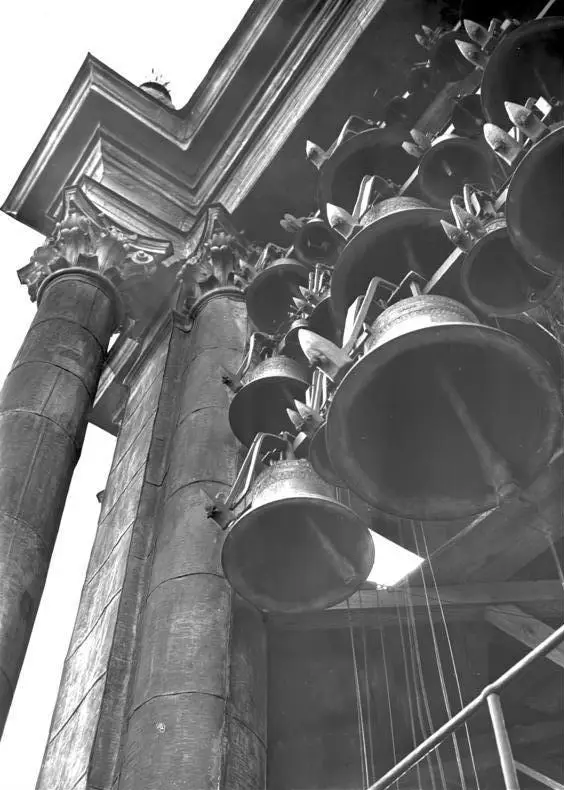
From 22 March the Deutschlandsender used the first notes of the carillon of the Potsdam Garrison Church as its interval signal, to remind listeners of the ceremonies of the day before.9
-
Crime afternoon, Berlin
Psychiatrist finds Hintze fully responsible
In the afternoon session of the Bindernagel manslaughter trial the hearing of witnesses ended. The medical expert, Dr Schlegel, testified that the banker Wilhelm Hintze suffered from no mental disorder that excluded responsibility, nor from a pathological state of intoxication; the trial was adjourned to Thursday morning.10
Voices
It is a special honour and joy for me to be allowed once more, as senior member, to open the Landtag, and this Landtag above all, which I should like to call the Landtag of the Hitler spring.
Elsewhere in the world
-
Austria
Vienna jury acquits Schutzbund members
A Vienna jury court acquitted sixteen members of the Social Democrats’ Republican Protection League (Republikanischer Schutzbund) who had been charged with shooting two National Socialists and a policeman during a political clash in the Simmering district; fights broke out at Vienna’s Technical University over the verdict.4
In Berlin today
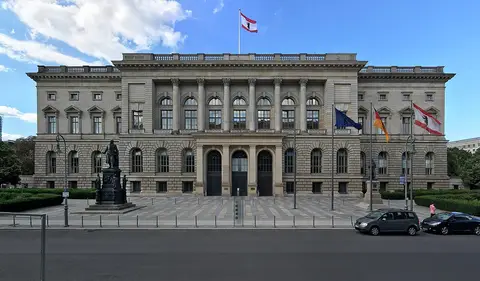

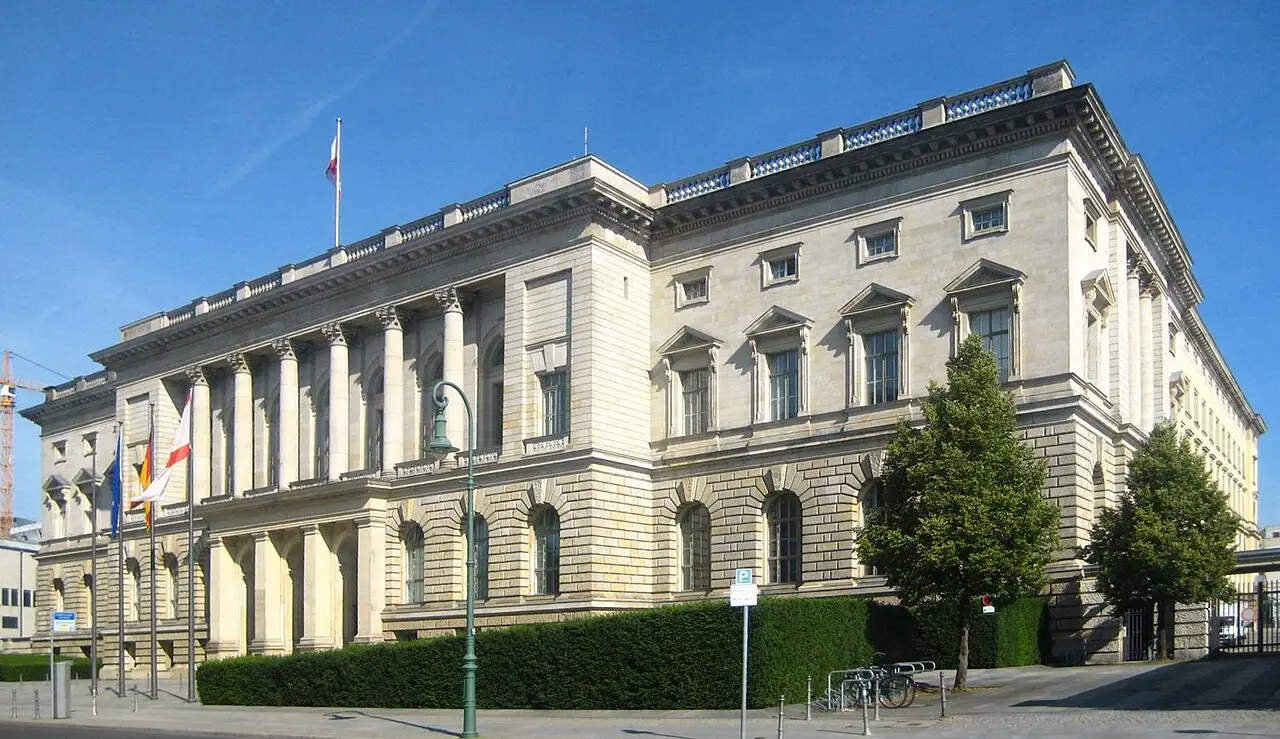
Former Prussian Landtag (Abgeordnetenhaus von Berlin)
Niederkirchnerstraße, Berlin-Mitte
- Then
- The Prussian Landtag elected on 5 March held its constituent sitting here, opened by its Nazi senior member, Litzmann.2,8
- Today
- Opened in 1899 for the Prussian House of Representatives, the building was converted for Göring in 1936 into the ‘Haus der Flieger’, an officers’ club. Since 1993 it has been the seat of Berlin’s state parliament, the Abgeordnetenhaus.
More pictures


Sources
- KZ Dachau 1933–1945 KZ-Gedenkstätte Dachau, Section '1933': first transports on 22 March 1933; Eicke's camp regulations of October 1933
- Dresdner Nachrichten (Frühausgabe), 23 March 1933 Deutsche Digitale Bibliothek, Deutsches Zeitungsportal, p. 2, 'Die Eröffnungsreden im Preußenlandtag' (Berlin, 22 March)
- Marbacher Zeitung, 23 March 1933 Deutsche Digitale Bibliothek, Deutsches Zeitungsportal, p. 2, first sitting of the Reichstag's rules committee
- Erzgebirgischer Volksfreund, 23 March 1933 Deutsche Digitale Bibliothek, Deutsches Zeitungsportal, p. 3, reports of 22 March: department stores' association; arrest of Professor Lüning; Vienna verdict
- Deutscher Reichsanzeiger und Preußischer Staatsanzeiger, 23 March 1933 Deutsche Digitale Bibliothek, Deutsches Zeitungsportal, p. 1, Reichsverlagsamt notice: contents of RGBl. I Nr. 24, issued 22 March 1933
- Verordnung des Reichspräsidenten zur Abwehr heimtückischer Angriffe gegen die Regierung der nationalen Erhebung (21.03.1933) documentArchiv.de, § 5 and note: promulgated 22 March 1933
- Verordnung der Reichsregierung über die Bildung von Sondergerichten (21.03.1933) documentArchiv.de, § 19 and note: promulgated 22 March 1933
- Geschichte Abgeordnetenhaus Berlin
- Wochenblatt für Zschopau und Umgegend, 22 March 1933 Deutsche Digitale Bibliothek, Deutsches Zeitungsportal, p. 7, new interval signal of the Deutschlandsender
- Dortmunder Zeitung, 23 March 1933 Deutsche Digitale Bibliothek, Deutsches Zeitungsportal, p. 2, Hintze trial, afternoon session of 22 March
Spotted a mistake? Send a correction.