Day 3 of 100
Reichstag dissolved and Hitler asks the nation for four years in his first radio address
At Hitler’s request Hindenburg dissolved the Reichstag and set new elections for 5 March. The cabinet agreed to make life harder for new parties, and at 22:00 every German station broadcast the government’s “Appeal to the German People”, read by Hitler. In Berlin a damp spell drove the flu epidemic higher, a new bus route opened to Lankwitz, and a landlord collecting rents in Pankow was shot dead by car-borne robbers.

The dissolution order, signed by Hindenburg, Hitler and Frick under Article 25 of the constitution, stated that a working majority had proved impossible to form and that the German people should now give its verdict on the new “government of national union”. A separate decree fixed polling day for 5 March 1933.
In the morning cabinet Hitler proposed “attack on Marxism” as the government’s election slogan. Göring complained that existing law did not allow the police to act firmly enough against the press and asked for the early enactment of the so-called drawer decree (Schubkastenverordnung), a draft prepared under Papen in November 1932 that included press restrictions and “protective custody” (Schutzhaft, imprisonment without trial). It became the basis of the decree signed on 4 February. The cabinet also agreed to raise the number of signatures required from parties not represented in the last Reichstag.
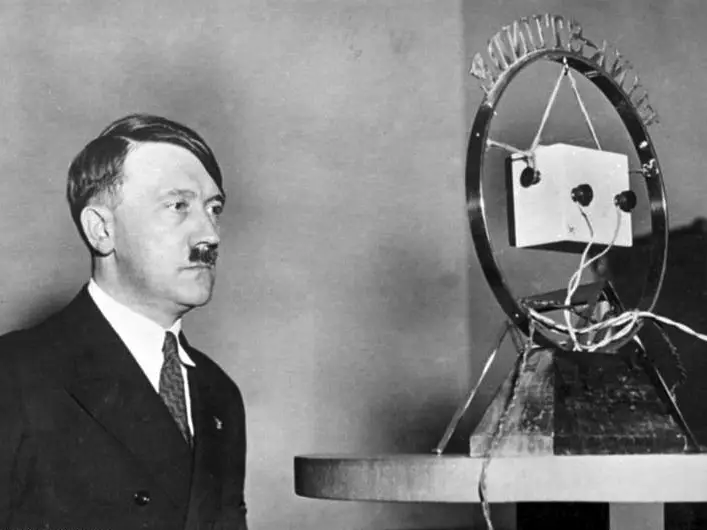
At 22:00 Hitler read the government’s “Appeal to the German People” (Aufruf an das deutsche Volk) over all German transmitters, his first broadcast as Chancellor; the stations had trailed it every half hour since 20:00. It blamed “fourteen years of Marxism” for Germany’s ruin, promised to reorganise the economy through two four-year plans, and closed by asking the German people for four years before passing judgement.
Laws and decrees
Verordnung des Reichspräsidenten über die Auflösung des Reichstags
Decree of the Reich President dissolving the Reichstag
Dissolved the Reichstag elected on 6 November 1932, stating that no working majority could be formed, so that the people could give its verdict on the new government by electing a new Reichstag.2
Verordnung über die Neuwahl des Reichstags
Decree on the new Reichstag election
Set 5 March 1933 as the date of the Reichstag general election under the Reich Electoral Law of 1924. It was published in the Reichsanzeiger on 3 February.3
Politics and power
Government, terror and persecution
-
Parliament Berlin
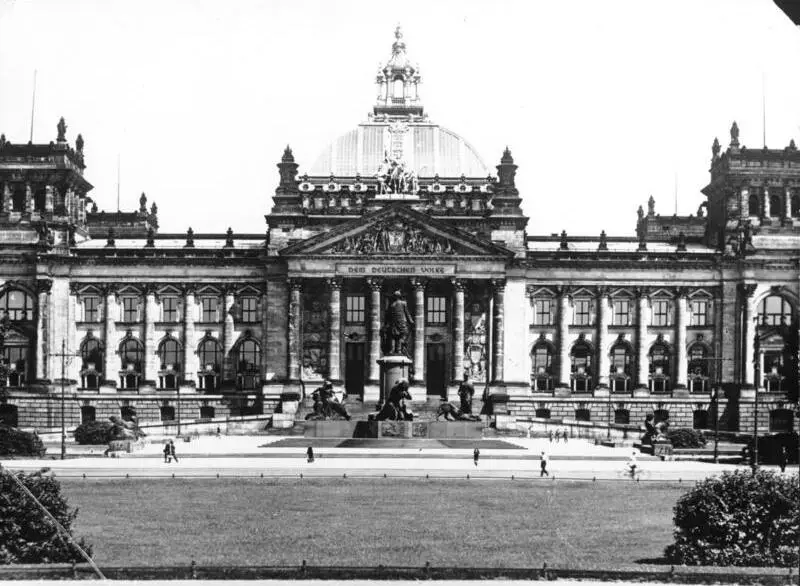
Reichstag dissolved; elections called for 5 March
Hindenburg dissolved the Reichstag on the ground that no working majority could be formed, so that the people could pronounce on the new government; a second decree, issued with Frick, fixed the general election for 5 March. On the motion of the NSDAP group, the Reichstag’s budget and housing committees adjourned indefinitely that afternoon.1,2,3,10
-
Government 11:30, Berlin, Reich Chancellery
Cabinet chooses its slogan: “attack on Marxism”
At the 11:30 cabinet Hitler warned of a united front forming from the trade unions to the KPD and proposed “attack on Marxism” as the campaign slogan. Göring claimed that Communist acts of terror were increasing and that the police had partly failed, especially in the west, and asked for new powers against the press. Frick reported an agreement that radio time in the campaign would be shared equally between the NSDAP and the German Nationalists.1
-
Propaganda 22:00, Berlin
Hitler’s “Appeal to the German People” broadcast nationwide
The cabinet approved the text at 19:00 and Hitler broadcast it at 22:00 on all German stations, with announcements every half hour from 20:00 and three repeats planned for the following day. The appeal blamed the Republic’s “fourteen years of Marxism” for Germany’s misery and asked for four years to carry out two four-year plans.4,5
-
The states Berlin, Prussian Ministry of the Interior
Göring warns Prussia’s civil servants
As Reich Commissioner for the Prussian Ministry of the Interior, Göring published an appeal to Prussian officials demanding cleanliness, thrift and devoted service. Those who did not believe they could sail “in the same direction” on the ship whose helm he had taken, he wrote, should leave his service before the voyage began.6
Everyday life
What else was happening in Germany
-
Society Berlin
Damp weather pushes the flu higher
The Berlin AOK recorded 759 new influenza cases between Tuesday and Wednesday midday. The Vorwärts put the continuing rise down mainly to the damp weather. A Socialist youth group in the city postponed a children’s puppet show because of the risk of infection.7
-
Transport Berlin, Steinplatz to Lankwitz
New bus route 18 to Lankwitz
A new bus route, line 18, began running from Steinplatz by way of the Zoo, Kaiserallee, Saarstraße, Bismarckstraße and Mariendorfer Straße to the Dreifaltigkeitskirche in Lankwitz.8
-
Radio evening
An evening schedule overtaken by the Chancellor
The printed schedules for the evening offered listeners in Berlin a talk on help for the unemployed at 19:10 and a symphony concert at 21:10, while the Deutschlandsender at Königs Wusterhausen had “Forty years of workers’ choirs” at 20:30. The Chancellor’s appeal was added at 22:00.4,8
-
Crime shortly after 16:00, Berlin-Pankow, Granitzstraße
Rent collector shot dead in Pankow
Shortly after 16:00 the house-owner and master painter Rudolf Koch of Steglitz, who had been collecting rents in his buildings in the Granitzstraße with his friend W. Krüger, was shot on the street by robbers who drove up in a blue-grey cabriolet and escaped with 12,500 marks. Koch died; Krüger was badly wounded. By 17 February the police had arrested the two men accused of firing the shots and five alleged accomplices.7,9
Voices
Now, German people, give us four years, and then judge us!
More pictures


Sources
- Akten der Reichskanzlei. Regierung Hitler 1933–1945, Bd. I, Nr. 3: Ministerbesprechung vom 1. Februar 1933, 11.30 Uhr Bundesarchiv / Historische Kommission bei der Bayerischen Akademie der Wissenschaften, R 43 I/1459, S. 255–260, item 1 with notes 3–6
- Verordnung des Reichspräsidenten über die Auflösung des Reichstags. Vom 1. Februar 1933 documentArchiv.de, RGBl. 1933 I S. 45
- Verordnung über die Neuwahl des Reichstags. Vom 1. Februar 1933 documentArchiv.de, RGBl. 1933 I S. 45; published in the Deutscher Reichsanzeiger Nr. 29, 3 February 1933
- Akten der Reichskanzlei. Regierung Hitler 1933–1945, Bd. I, Nr. 5: Ministerbesprechung vom 1. Februar 1933, 19 Uhr Bundesarchiv / Historische Kommission bei der Bayerischen Akademie der Wissenschaften, item 1 with notes 1–4
- Jahreschronik 1933 Deutsches Historisches Museum, LeMO, entry for 1 February; audio 'Adolf Hitler, Regierungserklärung' (Stiftung Deutsches Rundfunkarchiv)
- Akten der Reichskanzlei. Regierung Hitler 1933–1945, Bd. I, Nr. 1: Ministerbesprechung vom 30. Januar 1933, 17 Uhr Bundesarchiv / Historische Kommission bei der Bayerischen Akademie der Wissenschaften, note 8 (Göring's appeal of 1 February, MinBlPriV 1933, S. 89 f.)
- Vorwärts, Morgenausgabe Nr. 55, 2 February 1933 Deutsche Digitale Bibliothek, Zeitungsportal, p. 7, 'Grippewelle steigt'; p. 4, club notices; p. 3, report on the robbery in the Granitzstraße
- Vorwärts, Abendausgabe Nr. 54, 1 February 1933 Deutsche Digitale Bibliothek, Zeitungsportal, p. 4, transport notes and 'Rundfunk am Abend'
- Neue Mannheimer Zeitung, Abendblatt, 17 February 1933 Deutsche Digitale Bibliothek, Zeitungsportal, p. 1, 'Die Pankower Raubmörder' (Wolff report)
- Akten der Reichskanzlei. Regierung Hitler 1933–1945, Bd. I, Nr. 2: Ministerbesprechung vom 31. Januar 1933, 16 Uhr Bundesarchiv / Historische Kommission bei der Bayerischen Akademie der Wissenschaften, note 4 (committees adjourned on the afternoon of 1 February)
Spotted a mistake? Send a correction.