Day 16 of 100
Nazi deputies break up a Reichstag committee as farm foreclosures are halted
The cabinet approved, and Hindenburg signed, a decree stopping forced auctions of farms until the end of October. In the Reichstag, Nazi members drove the chairman of the committee that guarded parliament’s rights from his seat and Julius Streicher struck a People’s Party deputy; that evening the political police searched Communist rooms in the building. Neunkirchen in the Saar buried the victims of the gas-holder explosion, Göring opened a show of modern Italian painting and the geneticist Carl Correns died in Dahlem.

With the Reichstag dissolved, its standing Committee for the Protection of the Rights of the People’s Representation (Überwachungsausschuss) was one of the few parliamentary bodies still entitled to meet and to question the government. The scenes of 14 February showed how little that right now counted: the largest party simply refused to let the committee’s chairman speak, and the Reichstag’s President, Göring, who was also the minister responsible for the Prussian police, took no steps to protect the sitting. The same evening, with the permission of the Reichstag’s director, the police entered the building itself to check the papers of people attending a Communist lecture.
Laws and decrees
Verordnung des Reichspräsidenten über den landwirtschaftlichen Vollstreckungsschutz
Decree of the Reich President on protection of farms against enforcement
Until 31 October 1933 farm land could not be sold at forced auction and creditors could not seize a farmer’s movable working assets, subject to exceptions set out in an implementing ordinance that the Chancellor signed the same day. Within days associations of craftsmen, innkeepers and house-owners were petitioning for the same protection.1
Politics and power
Government, terror and persecution
-
Parliament midday, Berlin, Reichstag
Nazi members seize the chair of the Reichstag watchdog committee
When the committee’s chairman, Paul Löbe, opened the sitting at midday, Nazi members shouted him down for several minutes. The Nazi deputy Hans Frank (“Frank II”) then declared that the largest party would not tolerate “a Marxist and slanderer” in the chair, took over the chairman’s seat as deputy chairman, opened the sitting with a tribute to the dead of Neunkirchen and closed it at once. Social Democrats and Communists walked out under abuse. At the door the German People’s Party deputy Morath was struck in the back and in the face by the Nazi deputy Julius Streicher, who claimed Morath had smoked during the tribute; Morath denied it. The Social Democratic members protested that Reichstag President Göring had known of threats to prevent the committee meeting and had done nothing.2,3
-
Persecution evening, Berlin, Reichstag
Police search Communist rooms inside the Reichstag
In the evening, while the Communist deputy Ernst Torgler was giving a talk to about 100 people in the Reichstag building, criminal police appeared, made everyone present prove their identity and searched the Communist group’s room. The political police said they had acted, with the approval of the Reichstag’s director, on urgent suspicion of preparations for high treason, and that a large quantity of material had been seized and was being examined.3,4
-
The states Berlin
Göring’s men to speak for Prussia in the Reichsrat
The Reich Commissioners governing Prussia named themselves as Prussia’s plenipotentiaries in the Reichsrat: Papen, Göring, Popitz, Hugenberg, Rust and Hölscher, with senior civil servants as deputies. At the same time three ministerial directors, Badt, Brecht and Cossmann, were sent into provisional retirement; Arnold Brecht had until then spoken in the Reichsrat for the deposed Prussian government of Otto Braun.5,1
-
The states Rhineland and Westphalia
One police chief for the Rhineland and Westphalia
By a decree of 14 February Göring made the senior police commander in the west, Stieler von Heydekampf, special police commissioner for the provinces of Westphalia and the Rhineland, answerable to Göring alone and in charge of all state and municipal police and of the rural gendarmerie there, until after the elections.1,4
-
Propaganda evening, Berlin, Reich Chancellery
Hitler briefs the Nazi press, then the SA and SS leaders
In the evening Hitler received editors of the Nazi press from across Germany and told them that the press must stop chasing sensation and popularity and become a “faithful mirror” of German life and spirit. Afterwards the leaders of the SA and SS, under their chief of staff Ernst Röhm, gathered in the Reich Chancellery to receive their orders for deployment in the election campaign.4
-
Government 11:00, Berlin, Reich Chancellery
Cabinet backs the farmers and talks about war pensions
At 11:00 the cabinet approved the farm enforcement decree. Göring, outside the agenda, pressed for higher war pensions and for abolishing the 50-pfennig fee that insured workers paid for a sickness certificate; the matter was put off to a meeting on 16 February. Frick reported that Hindenburg had given money from his own fund for the victims of Neunkirchen, where a public appeal had also been opened.1
Everyday life
What else was happening in Germany
-
Births and deaths afternoon, Neunkirchen (Saar)
Neunkirchen buries the dead of the gas explosion
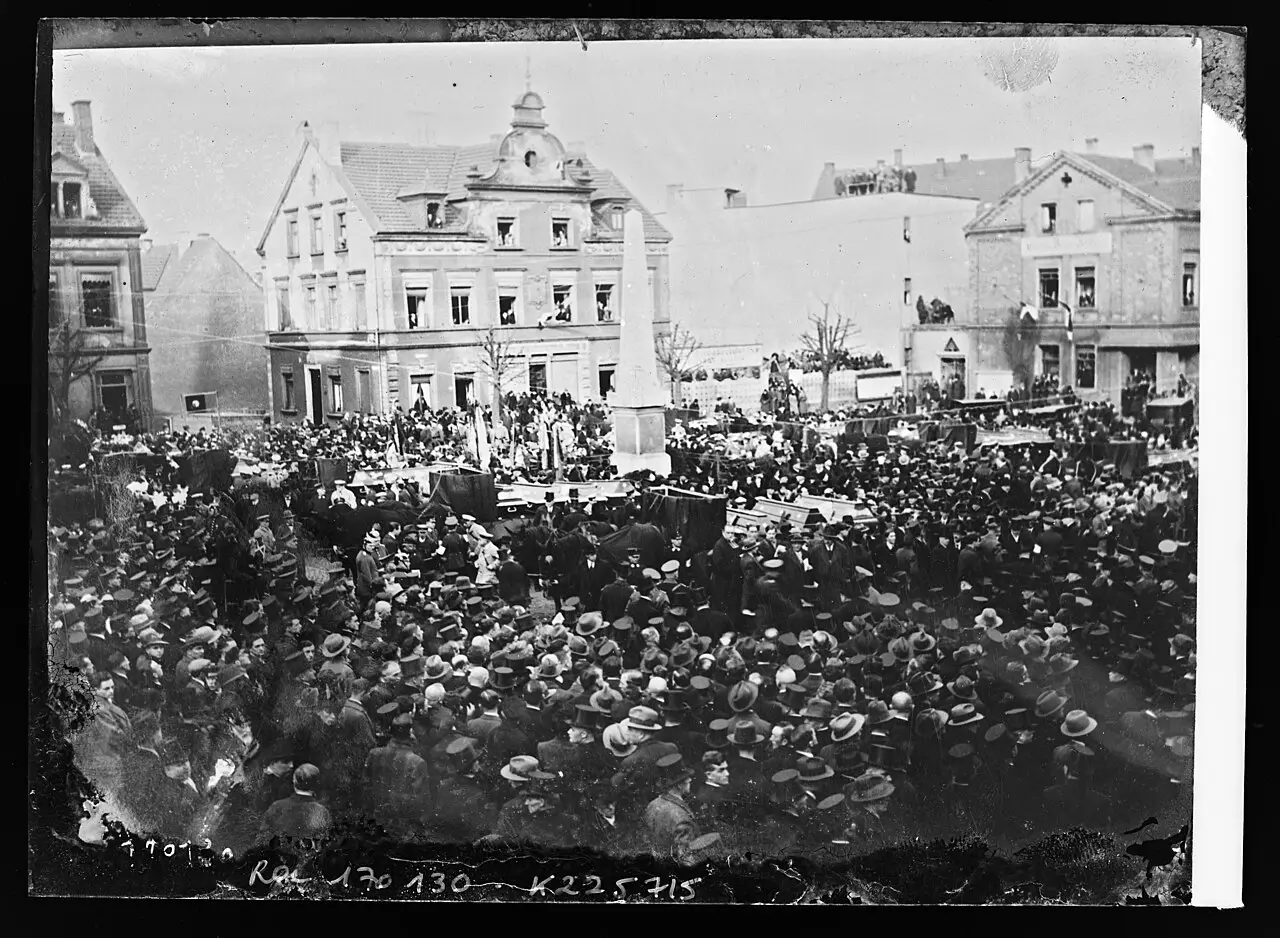
Four days after a gas holder exploded at the Neunkirchen ironworks in the Saar Territory, almost the whole town turned out for the funeral. After services in the churches, 61 plain coffins, heaped with flowers and set on 17 carts, stood on the lower market square for a public ceremony, and a long procession followed them to the cemetery, where the dead were laid in a common grave of honour. Flags flew at half-mast and black crêpe hung from the houses. Vice-Chancellor von Papen and Labour Minister Seldte attended for the Reich government, and a delegation of French officers was also present. The disaster eventually claimed 84 lives.6,1
-
Births and deaths afternoon, Berlin-Dahlem
Farewell to Carl Heinrich Becker
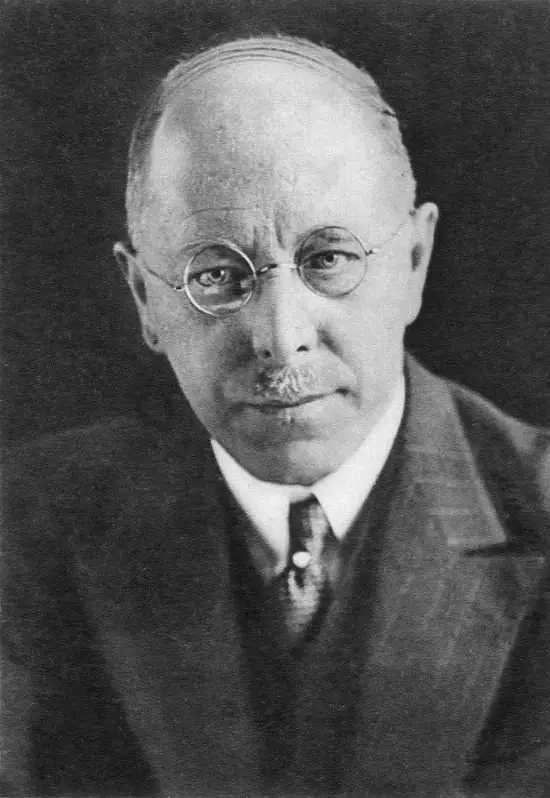
In Dahlem friends and colleagues said goodbye to Carl Heinrich Becker, the scholar who had for many years been Prussia’s Minister of Culture and who had died on 10 February. Among the mourners were the former Foreign Minister Julius Curtius, the deposed Prussian Prime Minister Otto Braun and Becker’s successor Adolf Grimme. The church leader Otto Dibelius spoke, and for Berlin University Professor Schaeder praised Becker’s closeness to the young.5
-
Art midday, Berlin, Kronprinzenpalais, Unter den Linden
Göring opens a show of new Italian painting
At midday Göring spoke to invited guests in the Kronprinzenpalais, where works of modern Italian painting recently bought by the National Gallery went on public show the next day. He told them that the governments of Germany and Italy were at one in protecting their peoples from Bolshevism, and that both outlooks wanted art above all to give expression to their “own blood”.7
-
Science Berlin-Dahlem
Death of the geneticist Carl Correns
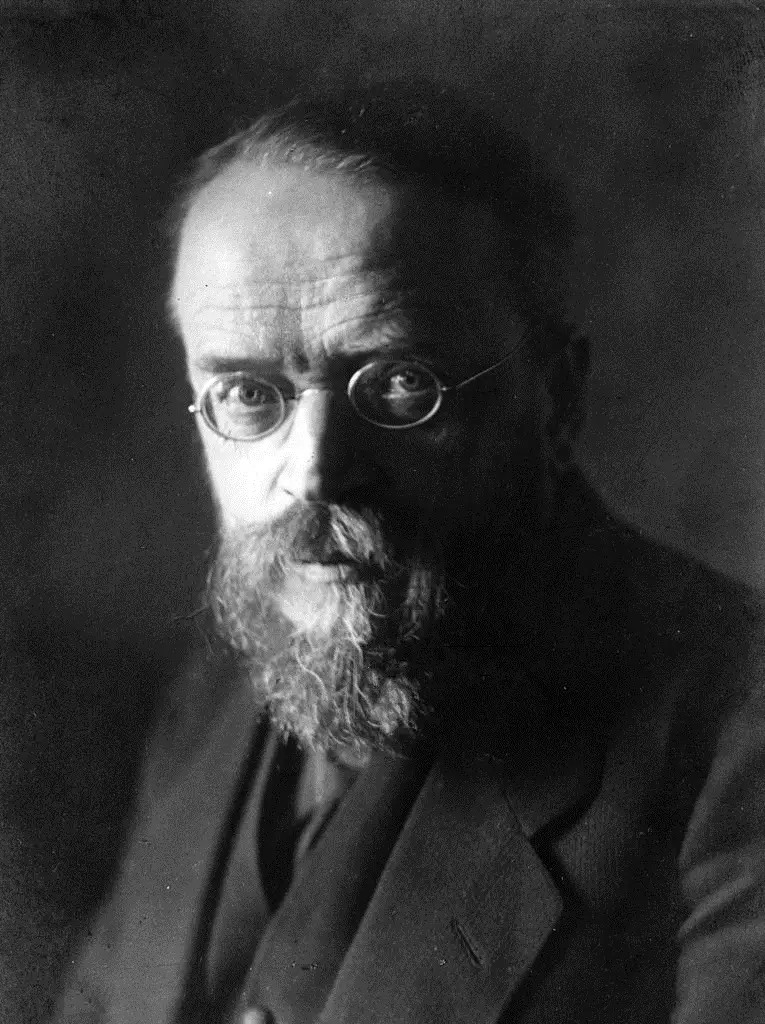
Carl Correns, one of the botanists who in 1900 rediscovered Gregor Mendel’s forgotten laws of inheritance, died of pneumonia in Berlin-Dahlem at the age of 68. Born in Munich in 1864, he had taught at Tübingen, Leipzig and Münster before becoming, in 1914, the first director of the Kaiser Wilhelm Institute for Biology in Dahlem, where he worked on plant development and on how sex is determined in plants and animals.9,10
Elsewhere in the world
-
United States
Michigan closes its banks
In the early hours the Governor of Michigan, the centre of the American motor industry, signed an eight-day bank moratorium after weekend talks with bankers, Federal Reserve officials and representatives of Ford and Chrysler had failed to save the Union Guardian Trust Company. German papers reported that savings of more than 650 million dollars were frozen in Detroit alone, and that cheques were being refused across the state.8
More pictures


Sources
- Nr. 21 Kabinettssitzung vom 14. Februar 1933, 11 Uhr (with notes on the decree’s signature and the Neunkirchen disaster); also Nr. 22, note 53, and Nr. 26, note 11 Bundesarchiv / Historische Kommission bei der Bayerischen Akademie der Wissenschaften, Akten der Reichskanzlei. Regierung Hitler, Band I, Dok. Nr. 21, P. 1–3 and notes 2, 4, 6–8; Dok. Nr. 22 (arh01d022) n. 53; Dok. Nr. 26 (arh01d026) n. 11
- Wieder aufgeflogen. Krach im Überwachungsausschuß Kölnische Zeitung, via Deutsche Digitale Bibliothek Zeitungsportal, 14 February 1933, p. 7
- Proteste beim Reichstagspräsidenten; Durchsuchung bei der KPD im Reichstag Dresdner Nachrichten, via Deutsche Digitale Bibliothek Zeitungsportal, 15 February 1933, p. 2 (reports dated Berlin, 14 February)
- Polizeiaktion im Reichstag; Hitler vor seiner Presse Neue Mannheimer Zeitung, via Deutsche Digitale Bibliothek Zeitungsportal, 15 February 1933, p. 2
- Preußens Vertreter im Reichsrat; Trauerfeier für Becker Kölnische Zeitung, via Deutsche Digitale Bibliothek Zeitungsportal, 15 February 1933, pp. 1–2 (reports dated Berlin, 14 February)
- Beisetzung der Explosionsopfer im Ehrengrab Annener Zeitung, via Deutsche Digitale Bibliothek Zeitungsportal, 15 February 1933, p. 1
- Kunst und Politik. Göring eröffnet Ausstellung italienischer Malerei Hamburgischer Correspondent, via Deutsche Digitale Bibliothek Zeitungsportal, 15 February 1933, p. 5 (report dated Berlin, 14 February)
- Bankenmoratorium für den Staat Michigan Süddeutsche Zeitung (Stuttgart), via Deutsche Digitale Bibliothek Zeitungsportal, 14 February 1933, p. 9
- Professor Karl Correns gestorben Gießener Anzeiger, via Deutsche Digitale Bibliothek Zeitungsportal, 16 February 1933, p. 2
- Carl Erich Correns (historical member) Berlin-Brandenburgische Akademie der Wissenschaften, membership record: born 19.09.1864 Munich, died 14.02.1933 Berlin
Spotted a mistake? Send a correction.