Day 83 of 100
Decree ends ‘non-Aryan’ doctors’ insurance practice; student law adopts ‘German descent’
Labour Minister Seldte signed a decree ending the work of ‘non-Aryan’ and Communist panel doctors with the health insurance funds, and the cabinet passed a Reich law limiting university student bodies to students of ‘German descent and mother tongue’, a law excluding Jews from the patent bar and a tenants’ protection law for farmers. Bavaria’s justice minister, Frank, was proposed as Reich Commissioner for bringing justice in the states into line. After the meeting Hitler and Goebbels flew to Munich for the party leaders’ conference, while in Berlin the Davis Cup candidates trained in cold rain and London counted the cost of a great fire in its docks.

The doctors’ decree applied the logic of the Civil Service law to a profession whose members were not civil servants but depended on contracts with the public health insurance funds. As in the Civil Service law, veterans, doctors who had served at the front or in epidemic hospitals, and those whose fathers or sons had fallen were exempt; doctors active ‘in the communist sense’ were excluded outright. The student law, passed the same morning, wrote ‘German descent’ into the constitution of every university’s student body three days before the law against the ‘overcrowding’ of German schools and universities.
Laws and decrees
Verordnung über die Zulassung von Ärzten zur Tätigkeit bei den Krankenkassen
Ordinance on the Admission of Doctors to Practice with the Health Insurance Funds
Ended the work of panel doctors (Kassenärzte) of ‘non-Aryan’ descent (the regime’s term for people with Jewish parents or grandparents) and of those who had been active ‘in the communist sense’, and barred new admissions of such doctors. Registration now required German citizenship and ‘Aryan’ descent, proved by documents for the applicant’s parents and grandparents. Doctors who had fought in the war, served at the front or in epidemic hospitals as doctors, or whose fathers or sons had fallen, were exempt from the ‘Aryan’ rule; Communists were not. In force the day after promulgation.4
Gesetz über die Bildung von Studentenschaften an den wissenschaftlichen Hochschulen
Law on the Formation of Student Bodies at Universities
Declared that the fully enrolled students ‘of German descent and mother tongue’, regardless of citizenship, formed the student body (Studentenschaft) of each university, which was to represent all students and help ensure they fulfilled their duties towards ‘people, state and university’. The official explanation said the university was ‘rooted in German national character’.1,4
Gesetz, betreffend die Zulassung zur Patentanwaltschaft und zur Rechtsanwaltschaft
Law on Admission to the Patent Bar and the Legal Profession
Passed by the cabinet on 22 April and closely modelled on the Civil Service law: patent agents of ‘non-Aryan’ descent who were not front-line veterans, and those who had been active as Communists, could be struck from the register until 30 September 1933.1,5,9
Zweite Verordnung über die vorläufige Regelung der Flaggenführung
Second Ordinance on the Provisional Regulation of Flags
Introduced a new standard for the Reich President and a Reich service flag in black, white and red with the eagle; Reich buildings could fly the black-white-red flag or the service flag together with the swastika flag, and Reich vessels were to fly the swastika flag as well where possible.6,9
Politics and power
Government, terror and persecution
-
Government 12:00–14:30, Berlin
Cabinet passes four laws and proposes Frank as justice commissioner
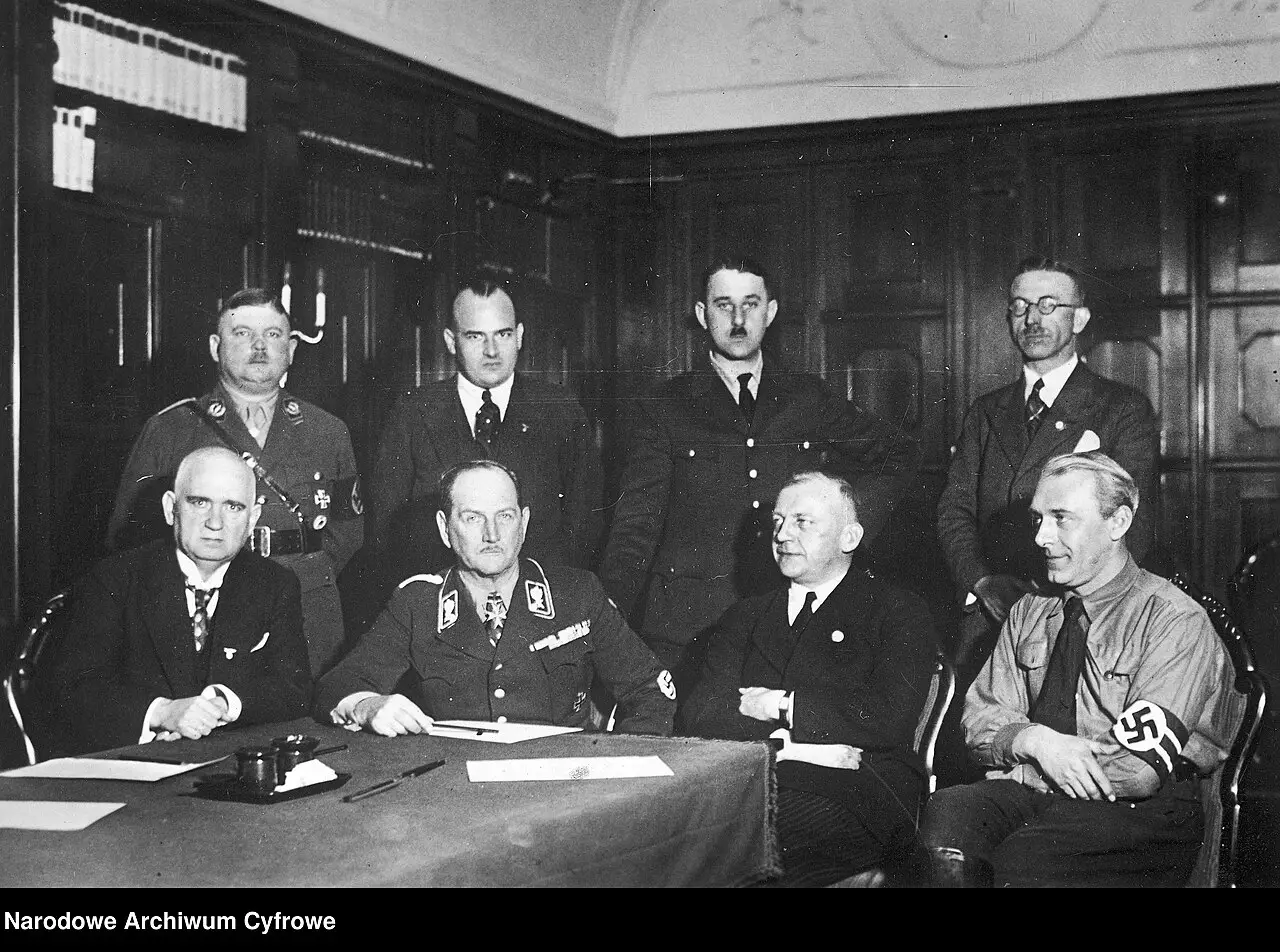
The Reich cabinet met from 12:00 to 14:30. After a report by Hugenberg on trade talks with the Netherlands, it passed laws on the protection of farm tenants, the formation of student bodies, the ‘coordination’ (Gleichschaltung, bringing into line) of tax committees at revenue offices and the admission of patent agents, and agreed to propose to the Reich President the Bavarian justice minister, Dr Frank, as Reich Commissioner for the ‘coordination’ of justice in the states and the renewal of the legal order. A bill against the ‘overcrowding’ of schools was held back for revision, and the appointment of the remaining Reich governors was postponed.1,2
-
Government Munich
Hitler flies to the party leaders’ conference
Straight after the cabinet meeting Hitler and Goebbels left for Munich for the NSDAP leaders’ conference. There Hess, as Hitler’s deputy, opened the Saturday session; the party’s chief arbitrator, Buch, spoke on the strictness with which party membership was being ‘sifted’, and Himmler, standing in for the SA chief of staff, called the SA and SS ‘the sword of the movement’.1,3
-
Propaganda Hamburg
The Hamburger Anzeiger taken over
Under an agreement between the Hamburg Senate, the NSDAP’s Hamburg leadership and the paper’s publishers, the Hamburger Anzeiger declared its unconditional support for the Reich and Hamburg governments. Gauleiter Karl Kaufmann installed Hans Jakoby, until then editor of the Nazi Hamburger Tageblatt, as its editor-in-chief with powers to change the editorial staff.1
Everyday life
What else was happening in Germany
-
Sport Berlin, Blau-Weiss tennis club
Davis Cup trials in the cold and rain
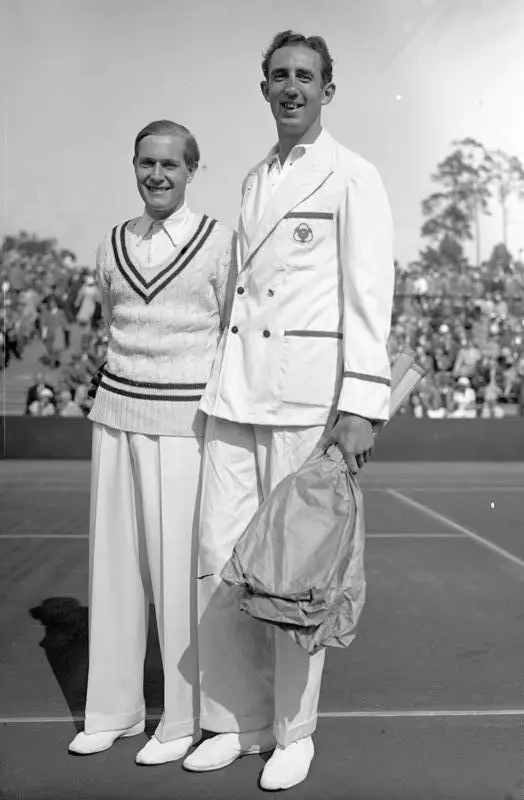
In cold, rainy weather the candidates for the German Davis Cup team continued their trials on the Blau-Weiss courts in Berlin, watched by officials of the Tennis Federation who had come for its board meeting the next day. Gottfried von Cramm and Nourney were clearly the best and seemed certain of the singles places, with Jaenecke, Kuhlmann and Wetzel competing for the rest. Daniel Prenn was not among the players named.7
-
Economy
Smaller silver coins on the way
The Reich Finance Ministry was preparing new silver coins for the summer: a one-mark piece of 22 millimetres, a two-mark piece of 25 millimetres and a five-mark piece of 29 millimetres, smaller even than the existing three-mark coin.8
Elsewhere in the world
-
United Kingdom
Rum warehouse burns in the West India Docks; Henry Royce dies
A fire that had broken out shortly before 10 pm the previous evening on the ‘Rum Quay’ of London’s West India Docks burned through the night and destroyed a warehouse holding about five million litres of rum, one of the largest fires the city had seen. The same day Henry Royce, designer of motor car and aero engines, died at his country house in Sussex.8
-
United States
MacDonald and Roosevelt begin their talks
Prime Minister MacDonald and President Roosevelt held a long first meeting in Washington, attended by British and American experts.3
More pictures
_NAC,_Poland_PD.jpg)
Sources
- Kölnische Zeitung, 23 April 1933 Deutsche Digitale Bibliothek, Zeitungsportal, p. 1 (cabinet meeting; Frank as Reich Commissioner; text of the student law; Munich conference); p. 2 ('Hamburg, 22. April': Hamburger Anzeiger)
- Dortmunder Zeitung, 24 April 1933 Deutsche Digitale Bibliothek, Zeitungsportal, p. 2 (cabinet: schools bill postponed; Reich governors)
- Hamburger Fremdenblatt, 23 April 1933 Deutsche Digitale Bibliothek, Zeitungsportal, p. 1 (MacDonald and Roosevelt); p. 2 ('Die Kabinettssitzung dauerte heute mehr als zwei Stunden')
- Deutscher Reichsanzeiger und Preußischer Staatsanzeiger, 24 April 1933 Deutsche Digitale Bibliothek, Zeitungsportal (Universitätsbibliothek Mannheim), pp. 1–2, 'Verordnung über die Zulassung von Ärzten zur Tätigkeit bei den Krankenkassen. Vom 22. April 1933' (full text); notice on Reichsgesetzblatt Part I No. 40
- Stadtanzeiger für Castrop-Rauxel, 24 April 1933 Deutsche Digitale Bibliothek, Zeitungsportal, p. 2 (content of the patent agents law)
- Zweite Verordnung über die vorläufige Regelung der Flaggenführung (22.04.1933) documentArchiv.de, Full text; source RGBl. 1933 I S. 217
- Kölnische Zeitung, 24 April 1933 Deutsche Digitale Bibliothek, Zeitungsportal, p. 3 ('Berlin, 22. April': Davis Cup trials)
- Hamburger Fremdenblatt, 22 April 1933 Deutsche Digitale Bibliothek, Zeitungsportal, Evening edition, p. 3 (London dock fire; Henry Royce); p. 11 (new silver coins)
- Deutscher Reichsanzeiger und Preußischer Staatsanzeiger, 25 April 1933 Deutsche Digitale Bibliothek, Zeitungsportal (Universitätsbibliothek Mannheim), p. 1, notice on Reichsgesetzblatt Part I No. 41, issued 24 April 1933 (flag ordinance; patent law; tax committees)
Spotted a mistake? Send a correction.