Day 26 of 100
The Karl-Liebknecht-Haus is closed and the auxiliary police decree made public
The police closed the Communist headquarters, the Karl-Liebknecht-Haus, “until further notice”, and the official Prussian press service released Göring’s decree creating an auxiliary police. Rudolf Diels took charge of the political police with its own new strike squads, and the jurist Robert Kempner was removed from the Prussian Interior Ministry. Hitler spoke to a huge crowd in Munich on the anniversary of the party programme. In Geneva the League of Nations condemned Japan’s actions in Manchuria and the Japanese delegation walked out; Max Ophüls’s Liebelei opened in Vienna.
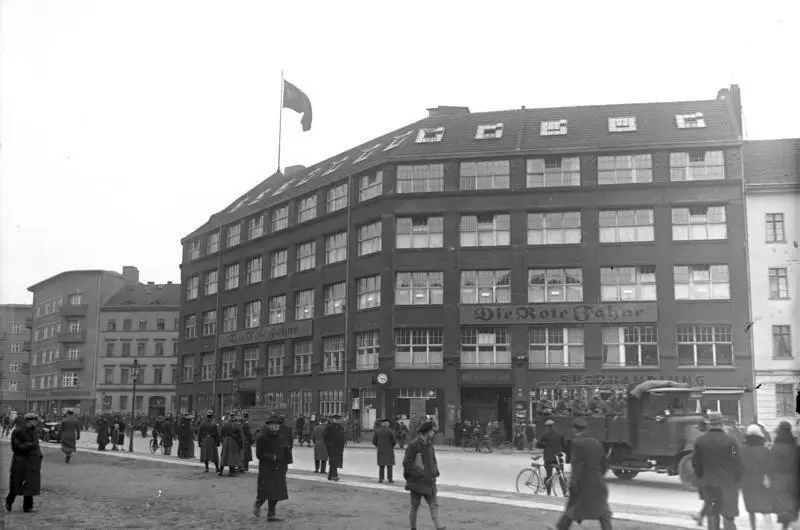

By the end of the week the instruments of repression that Göring had prepared since mid-February were all in view. The Communist headquarters was shut; the text of the auxiliary police decree was public; and the Berlin political police, Department I of the police headquarters, had a new chief in Rudolf Diels, a civil servant from the Interior Ministry, with special squads of uniformed police placed at its disposal under a police major who chaired the Nazi organisation of police officers. On the same day Robert Kempner, the ministry’s legal adviser on police matters, was sent on leave for good.
Laws and decrees
Erlass des Kommissars des Reichs für das Preußische Ministerium des Innern über die Einberufung und Verwendung von Hilfspolizei vom 22. Februar 1933
Göring's decree on the call-up and use of auxiliary police
Released through the official Prussian press service: allowed the Prussian police to enrol auxiliary policemen from “nationally minded” organisations, in practice the SA, SS and Stahlhelm, with full police powers while on duty and a white armband as their badge.3,1
Verordnung des Reichspräsidenten zur Förderung der Landwirtschaft
Emergency decree to promote agriculture
Published with its implementing ordinance: authorised Reich guarantees of up to 60 million marks to support the grain market and empowered the agriculture minister to limit the area under hops. The implementing ordinance printed alongside it required processed-cheese makers to use at least 95 per cent German cheese.12
Politics and power
Government, terror and persecution
-
Persecution Berlin, Karl-Liebknecht-Haus, Bülowplatz
The Communist headquarters closed
The Berlin police closed the Karl-Liebknecht-Haus, headquarters of the KPD, “until further notice” under § 23 of the decree “for the protection of the German people” of 4 February. The police said that in the City printing works in the building they had seized large numbers of KPD leaflets calling for high treason or acts of violence.1,2
-
Terror Berlin
The auxiliary police decree published
The official Prussian press service released the text of Göring’s decree of 22 February on the call-up and use of auxiliary police: “honourable”, voting-age Germans “standing on national ground”, wearing a white armband over their own clothes or organisational uniform, with full police powers while on duty, to guard meetings, marches and party premises and, in an emergency, public buildings and vital plants.3,1
-
Terror Berlin, Police Headquarters
Rudolf Diels takes over the political police
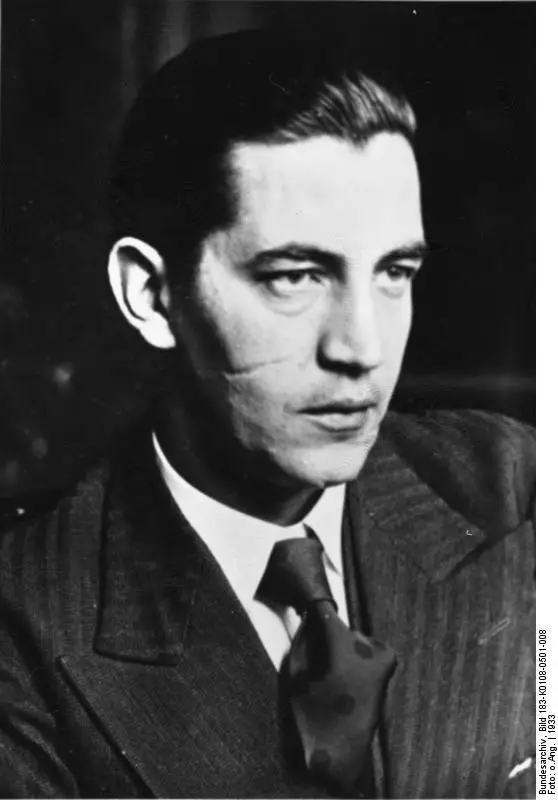
Rudolf Diels, a senior civil servant in the Prussian Interior Ministry, was appointed head of Department I, the political police, at Berlin’s police headquarters, with the task of reorganising it and bringing it closer to the ministry; the reorganisation had begun the day before. The political police were to get their own executive arm in the form of special-duty squads of uniformed police (Bereitschaften zur besonderen Verwendung), probably three, commanded by Police Major Wecke, chairman of the National Socialist association of police officers, whom Göring had brought into the ministry.4,1
-
Persecution Berlin, Prussian Ministry of the Interior
Robert Kempner removed
Robert Kempner, the senior legal adviser of the police department in the Prussian Interior Ministry, was sent on leave and, the Hamburger Fremdenblatt reported, would not return to his post. Since 1928 he had handled all the Prussian police’s lawsuits and was a co-author of the commentary on the Prussian Police Administration Act.5
-
Propaganda evening, Munich, Ausstellungshallen; Dortmund, Westfalenhalle
Hitler in Munich, Göring on every station
Thirteen years to the day after his first big speech in the Hofbräuhaus, Hitler spoke in the Munich exhibition halls, which held 20,000 people and had been closed by the police hours before the start, with thousands more in a neighbouring hall and outside. Answering talk of a “Main line” dividing the south from the Reich, he declared that as a Bavarian he would defend the unity of the Reich. The same evening Göring’s speech from the Westfalenhalle in Dortmund was broadcast on all German stations from 20:00.6,1
Everyday life
What else was happening in Germany
-
Film Vienna, Theater-Kino
Max Ophüls’s Liebelei opens in Vienna
Liebelei, Max Ophüls’s film of Arthur Schnitzler’s play about a love affair that ends in a duel, with Magda Schneider, Wolfgang Liebeneiner, Luise Ullrich and Gustaf Gründgens, had its world premiere at the Theater-Kino in Vienna. The German censors had passed it, closed to young people, the day before; its German premiere was set for Leipzig in March.7
-
Society morning, Berlin-Mitte, Ackerstraße
A police raid on a warming hall
Early in the morning the criminal police raided the public warming hall (Wärmehalle) in the Ackerstraße and checked everyone’s papers; about 300 people were taken to police headquarters.8
-
Theatre Magdeburg
A boycott call against Der Silbersee in Magdeburg
In Magdeburg the “national” associations, having demanded days earlier that the municipal theatre’s director, Götze, drop Georg Kaiser and Kurt Weill’s Der Silbersee as a play promoting class hatred, issued a public appeal calling on their members and supporters to stay away from the theatre until it was taken off.5
Elsewhere in the world
-
Switzerland (League of Nations)
The League condemns Japan; the Japanese walk out
In the Glass Hall of the League of Nations in Geneva the special Assembly, presided over by Paul Hymans, adopted the report of the Committee of Nineteen on the Sino-Japanese conflict, which upheld China’s sovereignty over Manchuria and called on members not to recognise Manchukuo. Japan alone voted against; after a sharp speech by its delegate, Yosuke Matsuoka, the Japanese delegation left the hall in a body.9,11
-
United Kingdom
Britain buried in snow
A snowstorm, described as the heaviest in fifty years, swept almost the whole of Great Britain, cutting road and rail links and telephone lines and leaving whole districts isolated; four people had died, and sixty schoolchildren from Wales were missing for more than a day after their bus stuck in deep snow.10
More pictures

Sources
- Karl-Liebknecht-Haus geschlossen; Hilfspolizei in Preußen; Bereitschaften z.b.V.; Göring heute im Rundfunk Kölnische Zeitung, via Deutsche Digitale Bibliothek Zeitungsportal, 25 February 1933, p. 1 (reports dated Berlin, 24 February)
- Karl Liebknecht-Haus geschlossen Sozialdemokrat (Prague), via Deutsche Digitale Bibliothek Zeitungsportal, 25 February 1933, p. 1 (report dated Berlin, 24 February)
- Die Einstellung von Hilfspolizei. Ein Erlaß Görings Der Landbote (Sinsheim), via Deutsche Digitale Bibliothek Zeitungsportal, 25 February 1933, p. 1
- Neuordnung der politischen Polizei Hamburger Fremdenblatt (Reichsausgabe), via Deutsche Digitale Bibliothek Zeitungsportal, 24 February 1933, p. 7
- Dr. Kempner geht; Boykott gegen Georg Kaiser Hamburger Fremdenblatt (Reichsausgabe), via Deutsche Digitale Bibliothek Zeitungsportal, 24 February 1933, p. 2 (reports dated Berlin and Magdeburg, 24 February)
- Hitler in München Jeversches Wochenblatt, via Deutsche Digitale Bibliothek Zeitungsportal, 25 February 1933, p. 1 (TU report, Munich, 24 February)
- Liebelei filmportal.de (Deutsches Filminstitut & Filmmuseum), Zensur (DE) 23.02.1933; Uraufführung (AT) 24.02.1933, Wien, Theater-Kino; Erstaufführung (DE) 10.03.1933, Leipzig
- Polizeirazzia in einer Wärmehalle Neue Mannheimer Zeitung, via Deutsche Digitale Bibliothek Zeitungsportal, 24 February 1933, evening edition, p. 2
- Der chinesisch-japanische Streit; Die japanische Erklärung Wittener Tageblatt, via Deutsche Digitale Bibliothek Zeitungsportal, 25 February 1933, p. 4 (TU reports, Geneva, 24 February)
- England im Schnee Vorwärts, via Deutsche Digitale Bibliothek Zeitungsportal, 26 February 1933, p. 7 (report dated London, 24 February)
- Die entscheidende Sitzung über den japanisch-chinesischen Streitfall. Bei der Abstimmung Japan allein Stadtanzeiger für Castrop-Rauxel, via Deutsche Digitale Bibliothek Zeitungsportal, 25 February 1933, p. 1 (report dated Geneva, 24 February)
- Der Verwendungszwang für inländischen Käse Hamburger Fremdenblatt (Reichsausgabe), via Deutsche Digitale Bibliothek Zeitungsportal, 25 February 1933, evening edition, p. 2 (WTB report, Berlin, 25 February)
Spotted a mistake? Send a correction.