Themes

Culture and science

Purges of universities and the arts, and the start of emigration.

53 days

  1. Day 4 Thursday 2 February 1933

    Göring bans Communist demonstrations as Hitler is reminded of his oath in the Reichsrat

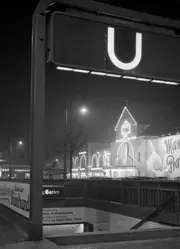
    Göring banned all Communist demonstrations in Prussia, and the cabinet discussed a sweeping emergency decree against the press and public meetings. In the Reichsrat, the chamber of the states, a Prussian official answered Hitler’s first address by reminding him of his oath to the constitution. Berliners paid sharply more for potatoes, and Ufa’s U-boat film Morgenrot opened at the Ufa-Palast am Zoo before an audience full of officers.
  2. Day 5 Friday 3 February 1933

    Hitler tells the army chiefs of “living space in the East” as the Vorwärts is banned

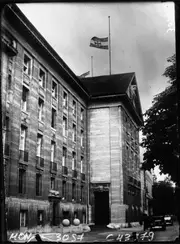
    At a dinner in the army commander’s residence in the Bendlerstraße, Hitler spoke for two and a half hours to the generals and admirals, naming rearmament, conscription and perhaps the conquest of “living space in the East” as his aims. The Berlin police banned the Social Democratic Vorwärts for four days, and the cabinet approved its emergency decree. Two new films opened, one a Frederick the Great epic, the other a Berlin underworld comedy by Richard Oswald.

  3. Day 12 Friday 10 February 1933

    Hitler’s Sportpalast speech goes out on every German radio station

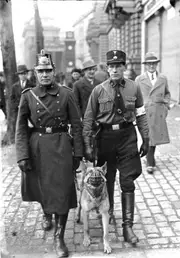
    Hitler opened the NSDAP’s election campaign in the Berlin Sportpalast, and every German station carried the speech, introduced by Goebbels, as a government broadcast. Tens of thousands attended the funeral of three murdered Communist workers at Friedrichsfelde, though the police banned the procession. Thomas Mann gave his last lecture in Munich, the former Prussian culture minister Carl Heinrich Becker died in Berlin, and a gasholder exploded in Neunkirchen in the Saar, killing dozens.

  4. Day 14 Sunday 12 February 1933

    “Bloody Sunday” in Eisleben: SA and SS storm Communist premises, killing three

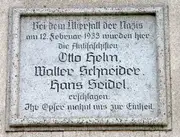
    In the mining town of Eisleben, in Prussian Saxony, some 600 SA and SS men on a “propaganda march” stormed the local Communist headquarters and a workers’ sports hall, killing three Communists; an SS man also died. In Berlin about 5,000 officials of the Iron Front heard the trade union leader Peter Graßmann warn that a war of annihilation had been declared on the Republic. Sunday crowds of 65,000 filled the motor show, and the radio carried Leipzig’s commemoration of Richard Wagner.

  5. Day 15 Monday 13 February 1933

    Göring widens the purge of Prussia’s republican police chiefs

    Göring, as Reich Commissioner for the Prussian Ministry of the Interior, sent more officials loyal to the Republic on forced leave, among them the police presidents of Dortmund, Oberhausen, Stettin, Frankfurt and Breslau. The Stahlhelm told its members the coming election was a plebiscite on the “national government”. Away from politics, Bayreuth marked the fiftieth anniversary of Richard Wagner’s death and Berlin radio filled the evening with his operas.

  6. Day 16 Tuesday 14 February 1933

    Nazi deputies break up a Reichstag committee as farm foreclosures are halted

    The cabinet approved, and Hindenburg signed, a decree stopping forced auctions of farms until the end of October. In the Reichstag, Nazi members drove the chairman of the committee that guarded parliament’s rights from his seat and Julius Streicher struck a People’s Party deputy; that evening the political police searched Communist rooms in the building. Neunkirchen in the Saar buried the victims of the gas-holder explosion, Göring opened a show of modern Italian painting and the geneticist Carl Correns died in Dahlem.

  7. Day 17 Wednesday 15 February 1933

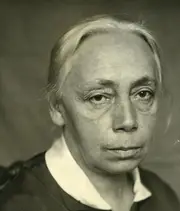
    Käthe Kollwitz and Heinrich Mann forced out of the Prussian Academy of Arts

    Under threat that the Academy would be dissolved, Käthe Kollwitz and Heinrich Mann left the Prussian Academy of Arts, and the Prussian commissioners confirmed a sweeping purge of police chiefs, naming a retired rear admiral as police president of Berlin. Vorwärts and the 8-Uhr-Abendblatt were banned for a week, and in Stuttgart someone cut the cable carrying Hitler’s speech to the radio. Abroad, Thomas Mann lectured on Wagner in Brussels and an assassin fired on Franklin D. Roosevelt in Miami.

  8. Day 19 Friday 17 February 1933

    Göring orders the Prussian police to shoot and promises to cover them

    Göring sent all Prussian police authorities a circular telling them to cooperate with the SA, SS and Stahlhelm, to act against “enemies of the state” with the harshest means and to use their firearms without hesitation, promising to cover any officer who did. The Bavarian People’s Party leader Fritz Schäffer warned Hindenburg against Reich commissioners in the states, and uniformed students broke up an examination at the State Art School in Schöneberg. In the evening 4,000 people watched boxing at the Sportpalast.

  9. Day 20 Saturday 18 February 1933

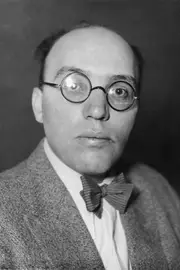
    Kurt Weill’s Der Silbersee opens in three cities as the Centre’s Germania is banned

    Hindenburg signed a decree softening the 1932 cuts to war-disability and insurance pensions, and the government published steep new duties on farm produce, fish and timber. Berlin’s police president banned Germania, the leading Centre Party daily, for three issues. In Leipzig, Magdeburg and Erfurt, Kurt Weill and Georg Kaiser’s play with music Der Silbersee had its premiere, the German ice hockey team opened the World Championship in Prague with a 6–0 win, and Prussia warned against eating undercooked duck eggs.

  10. Day 21 Sunday 19 February 1933

    Police break up the “Free Word” congress at the Kroll Opera

    More than a thousand writers, scholars and politicians met at the Kroll Opera to defend freedom of speech, the press, assembly and art; police dissolved the meeting when the former Prussian minister Wolfgang Heine mocked the regime. Frick told a Dresden rally that the government would not give up power even without a majority, Hitler spoke against the Centre Party in Cologne and the Reichsbanner marched in the Lustgarten. Berliners took sledges and skis to the snowbound Grunewald.

  11. Day 23 Tuesday 21 February 1933

    Rust suspends the head of the Karl-Marx-Schule; Frick bans Communist marches in Saxony

    Rust ordered the reorganisation of the Karl-Marx-Schule in Neukölln, one of the Weimar Republic’s leading reform schools, sent its head Fritz Karsen on leave and suspended three senior Berlin school officials. Frick used the decree of 4 February to ban Communist open-air meetings and marches in Saxony, and the trade union federation protested to Hindenburg against Göring’s police decree. In Berlin, thermometers on the city’s edge fell to 18 degrees below zero overnight, and the creditors of the theatre impresarios Rotter learned they would get nothing.

  12. Day 24 Wednesday 22 February 1933

    Göring makes the SA, SS and Stahlhelm an auxiliary police in Prussia

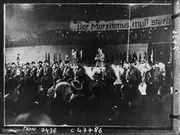
    Göring signed a decree allowing the Prussian police to call up “auxiliary police” from the ranks of “nationally minded” Germans: in practice men of the SA, SS and Stahlhelm, wearing a white armband over their own uniforms and holding full police powers while on duty. The Prussian commissioners pensioned off another wave of senior officials and began closing the secular schools, and Hitler told his followers that the enemy to be beaten on 5 March was “Marxism”. In Berlin the first film directed by Friedrich Hollaender, Ich und die Kaiserin, opened at the Gloria-Palast.

  13. Day 25 Thursday 23 February 1933

    Police search the Communist headquarters and break up the KPD’s Sportpalast rally

    In the afternoon the political police occupied and searched the Karl-Liebknecht-Haus, the Communist Party’s headquarters; in the evening a police officer dissolved the KPD’s rally in the Sportpalast while Wilhelm Pieck was speaking. Overnight men in Nazi uniform had shot a Reichsbanner leader in Großbeeren and burned down the poorhouse where he lived. Göring ordered tougher action against the opposition press. In Berlin the motor show closed after more than 400,000 visits, and Prussia relaxed its rules on men’s bathing trunks.

  14. Day 26 Friday 24 February 1933

    The Karl-Liebknecht-Haus is closed and the auxiliary police decree made public

    The police closed the Communist headquarters, the Karl-Liebknecht-Haus, “until further notice”, and the official Prussian press service released Göring’s decree creating an auxiliary police. Rudolf Diels took charge of the political police with its own new strike squads, and the jurist Robert Kempner was removed from the Prussian Interior Ministry. Hitler spoke to a huge crowd in Munich on the anniversary of the party programme. In Geneva the League of Nations condemned Japan’s actions in Manchuria and the Japanese delegation walked out; Max Ophüls’s Liebelei opened in Vienna.

  15. Day 28 Sunday 26 February 1933

    Uniformed police wear swastika armbands at a Nazi rally in the Lustgarten

    On the last Sunday of February uniformed Berlin police officers marched with swastika armbands at the first mass rally of the National Socialist factory cells in the Lustgarten, while police president Levetzow looked in to cheers. Police broke up a Social Democratic cultural rally in Neukölln and led the speaker Friedrich Stampfer away to the station; across the Reich, election marches ended in shootings and stabbings. Berliners went tobogganing on a second snowy Sunday, and in Prague the United States took the ice hockey world title from Canada for the first time.
  16. Day 31 Wednesday 1 March 1933

    Göring promises to ‘exterminate’ Communism as the treason decree is published

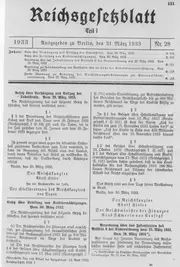
    On Ash Wednesday the decree against ‘treason against the German people’ appeared in the Reichsgesetzblatt, Frick asked every state to ban the Communist press and meetings, and the Prussian press service claimed that at least ten men had set the Reichstag fire. Göring told radio listeners that the government’s aim was the extermination of Communism, Hitler spoke to some 20,000 people in Breslau, and Cardinal Bertram begged Hindenburg to protect the freedom of the vote. In Berlin, Leopold Jessner bade farewell to the State Theatre with Billinger’s Rosse, while Max Reinhardt reopened the Deutsches Theater with Hofmannsthal’s Great Theatre of the World.

  17. Day 37 Tuesday 7 March 1933

    Hitler tells the cabinet the election was a ‘revolution’ and calls for an Enabling Act

    Two days after the election Hitler told his ministers that 5 March had been a revolution, that Marxism would disappear and that an Enabling Act with a two-thirds majority was needed; he and Frick demanded that van der Lubbe be hanged, retroactively if need be. At Hindenburg’s residence the Reichstag’s opening in Potsdam’s Garrison Church was planned in detail. In Dresden, Nazi supporters whistled the conductor Fritz Busch off the podium of the State Opera. Abroad, Dollfuss began governing Austria without parliament, and the Netherlands reinforced its border against German refugees.

  18. Day 38 Wednesday 8 March 1933

    Reich takes the police in Baden, Württemberg and Saxony; Hamburg gets a Nazi mayor

    Frick took over police powers in Baden, Württemberg, Saxony and Schaumburg-Lippe and installed Nazi commissioners, leaving Bavaria as the only large state not yet under Reich control. Hamburg’s parliament elected a Senate led by the Nazi Carl Vincent Krogmann, SA men occupied the trade union house in Breslau after a shooting, and Social Democratic deputies complained in vain about the beating of prisoners. The Reich Institute reported six million unemployed at the end of February. At the Cologne opera, Nazi hecklers disrupted Fidelio after the general music director stayed away for fear of Nazi demonstrations.
  19. Day 39 Thursday 9 March 1933
    Bavaria falls: General von Epp made Reich commissioner over Held’s refusal

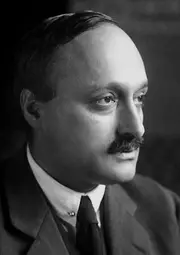
    After a day of pressure in Munich from Röhm, Gauleiter Wagner and Himmler, and with the Bavarian government refusing their demands, the Reich used the Reichstag Fire Decree to hand the powers of Bavaria’s government to General Ritter von Epp; Württemberg protested to Hindenburg against the same treatment. In Berlin the Reich Chancellery, on Hitler’s behalf, asked Frick to prepare ‘völkisch’ laws against Eastern European Jews. In Washington Roosevelt signed the Emergency Banking Act. Dresden’s opera, its music director just driven out, staged Graener’s Friedemann Bach.

  20. Day 45 Wednesday 15 March 1933

    Cabinet plans the Enabling Act; police and SA raid Berlin’s artists’ colony

    The cabinet discussed how to pass an enabling law: Interior Minister Frick counted the deputies needed for a two-thirds majority and suggested that Communists might be put in labour camps. Police and SA auxiliaries sealed off the artists’ colony in Wilmersdorf, searched flats and arrested fourteen people, while Goebbels told the press that its task was to ‘instruct’. In the auction rooms, Kändler’s Meissen porcelain birds went under the hammer at what a reporter called crisis prices.

  21. Day 46 Thursday 16 March 1933

    Schacht returns to the Reichsbank; Bruno Walter’s Leipzig concert is banned

    Hans Luther resigned as president of the Reichsbank and its General Council unanimously elected Hjalmar Schacht in his place. In Leipzig the police, on the orders of Saxony’s Interior Ministry, forbade the conductor Bruno Walter’s Gewandhaus concert that evening. In Berlin Max Ophüls’s film Liebelei opened at the Atrium and the Titania-Palast, and Hitler promised the organisers of the 1936 Olympic Games his support.

  22. Day 47 Friday 17 March 1933

    Berlin’s state commissioner orders the dismissal of Jewish doctors from city hospitals

    Julius Lippert, the Nazi state commissioner for Berlin, ordered that the contracts of doctors denounced as ‘Jewish Communists and Social Democrats’ be terminated at the city’s hospitals. Hugenberg suspended Ernst Wagemann, head of the Statistical Reich Office, and the decrees creating the Propaganda Ministry and the double flag were published. That evening Kurt Gerron’s comedy Heut’ kommt’s drauf an, starring Hans Albers, had its premiere at the Gloria-Palast.

  23. Day 50 Monday 20 March 1933

    Himmler announces the first concentration camp, at Dachau; cabinet adopts the Enabling Act

    At a midday press briefing in Munich, Heinrich Himmler announced that a concentration camp for 5,000 Communist, Reichsbanner and Social Democratic functionaries would open near Dachau on Wednesday. In Berlin Hitler met Centre Party leaders and the cabinet approved the final text of the Enabling Act, which went to the Reichstag as a bill. Berlin renamed Reichskanzlerplatz after Hitler, Jewish prosecutors were barred from courtrooms, Robert Siodmak’s last German film opened, and the publisher Louis Ullstein died.

  24. Day 55 Saturday 25 March 1933

    Goebbels tells the radio chiefs that broadcasting now belongs to the government

    At the Haus des Rundfunks in Berlin, Goebbels told the heads of all German radio companies that radio was the most important instrument for influencing the masses and that the government would give it its instructions. Göring told the foreign press that reports of atrocities were lies and blamed Jews and Marxists abroad. Berlin’s fire chief was suspended, a Berlin court upheld a Nazi defendant’s objection to a Jewish judge, and the plaque recalling the Weimar constitution was removed from the theatre in Weimar.

  25. Day 58 Tuesday 28 March 1933

    Nazi party orders a nationwide boycott of Jewish businesses from 1 April

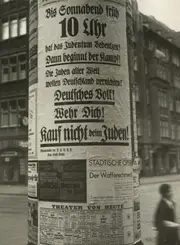
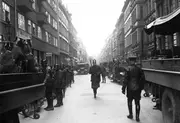
    From Munich the Nazi party leadership published its call for a boycott of Jewish shops, goods, doctors and lawyers, to begin ‘at a stroke’ on Saturday 1 April at 10:00 under a central committee led by Julius Streicher. The Catholic bishops withdrew their warnings against the Nazi movement, and Albert Einstein, landing in Belgium, broke with Prussia. In Berlin Goebbels told the film industry which films he admired.

  26. Day 59 Wednesday 29 March 1933

    Retroactive death-penalty law signed; Ufa resolves to part with its Jewish staff

    Back from Munich, Hitler told his ministers that the boycott of Jewish businesses had to be organised, and the cabinet discussed the bill to ‘coordinate’ the states. A law dated this day made the death penalty retroactive, clearing the way to hang the alleged Reichstag arsonist. In the film world the censors banned Fritz Lang’s Das Testament des Dr. Mabuse, and Ufa’s board decided in principle to end its contracts with Jewish employees.

  27. Day 61 Friday 31 March 1933

    First coordination law dissolves state parliaments; SA drives Jewish judges from courts

    The Reich government enacted the provisional law to ‘coordinate’ the states with the Reich, dissolving every state parliament except Prussia’s and refilling them by the Reichstag vote without new elections. In Berlin crowds and SA men forced Jewish judges and lawyers out of the courts, and that evening Kerrl ordered Jewish judges in Prussia to take leave. Goebbels announced that the boycott would start next morning. In the cinemas Lamprecht’s Spione am Werk opened, and Erich Pommer left Ufa.

  28. Day 62 Saturday 1 April 1933

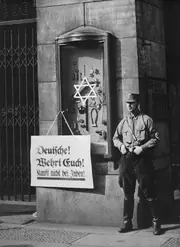
    Nazi boycott of Jewish shops, doctors and lawyers: SA pickets stand across Germany

    At 10:00 SA and SS men took up posts outside Jewish-owned shops, department stores, surgeries and law offices throughout Germany, carrying placards reading ‘Germans! Defend yourselves! Don’t buy from Jews!’. In Berlin some 60,000 to 70,000 SA men were deployed; Tietz, Wertheim and Israel shut their doors, and only a small quota of Jewish lawyers was readmitted to the courts. In Kiel the Jewish lawyer Friedrich Schumm was murdered in police custody. The flags also flew for Bismarck’s birthday, and Viktoria 89 won a football final.

  29. Day 63 Sunday 2 April 1933

    Boycott ‘suspended’ until Wednesday as the coordination law appears in the gazette

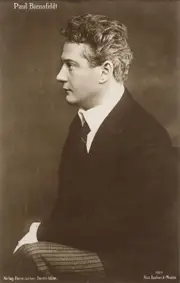
    From Munich Streicher’s committee announced that the boycott was suspended until Wednesday morning and told local committees to take down their posters. The coordination law appeared in the Reich Law Gazette, to take effect the next day, and the chairmen of 85 labour exchanges were suspended. Berlin mourned the actor Paul Biensfeldt, who had died overnight; Hertha BSC and BSV 92 drew 2–2 before 15,000 spectators, a tram rammed a Stahlhelm lorry in Neukölln, and an operetta ended in uproar at the Schiller-Theater.

  30. Day 64 Monday 3 April 1933

    Max Reinhardt ousted from the Deutsches Theater; Germans now need exit visas

    The management of the Deutsches Theater announced, after a meeting with a Prussian ministry commissioner, that Max Reinhardt would have no further part in its artistic direction. The coordination law came into force, and the Interior Minister required every German leaving the country to obtain an exit visa. The pro-Nazi ‘German Christians’ opened their first national conference in Berlin. Hindenburg presented the aviator Elly Beinhorn with the Hindenburg Cup.

  31. Day 65 Tuesday 4 April 1933

    Boycott called off; Hindenburg asks Hitler to spare Jewish war veterans

    The government announced that the boycott would not be resumed, claiming it had silenced the foreign ‘agitation’. Hindenburg wrote to Hitler that Jewish judges and lawyers who had been wounded in the war should not be dismissed, and the cabinet adopted a law extending the death penalty for political violence and a ban on slaughter without stunning. Police sealed off Berlin’s Jewish Scheunenviertel; the Jüdische Rundschau told its readers to wear the ‘yellow badge’ with pride. The rail Zeppelin ran to Hamburg at 130 km/h.

  32. Day 66 Wednesday 5 April 1933

    Hitler Youth takes over the youth associations; the Rotter brothers ambushed in exile

    The Hitler Youth occupied the offices of the Reich Committee of German Youth Associations in Berlin, and Baldur von Schirach took over its leadership. Einstein wrote to the Prussian Academy rejecting its charges; Hitler answered Hindenburg on the Jewish veterans and spoke to the farmers’ council; Kerrl told Jewish notaries to stop working. In Liechtenstein the Berlin theatre impresarios Alfred and Fritz Rotter were ambushed; Alfred and his wife fell to their deaths. Prussia ordered a strict Good Friday.

  33. Day 67 Thursday 6 April 1933

    Hitler tells doctors’ leaders he will purge ‘alien influence’ from Germany’s professions

    Receiving the newly ‘coordinated’ leadership of the medical profession, Hitler spoke of removing the ‘excess’ of Jewish intellectuals from German cultural life. In the evening he and Goebbels addressed the foreign press, with the papal nuncio at the head of the diplomatic corps. The civil servants’ federation dissolved itself and the Protestant church protested at Kube’s remarks to the German Christians. Duelling was legalised again in Prussia, and the Propaganda Ministry warned against ‘patriotic kitsch’.

  34. Day 72 Tuesday 11 April 1933

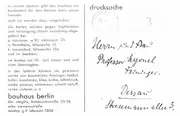
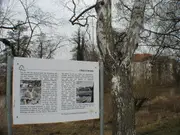
    Police and SA search and seal the Bauhaus in Berlin-Steglitz

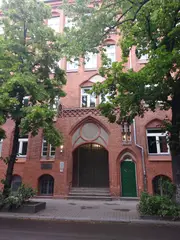
    Police and SA searched the Bauhaus school in its converted telephone factory in Berlin-Steglitz, sealed the building and arrested 32 students; the school never taught there again. The first implementing ordinance of the Civil Service law defined anyone with a single Jewish grandparent as ‘non-Aryan’, Göring was named Prussian Minister President, and the SS took over the Dachau camp. Newspapers printed Goebbels’s reply to the conductor Wilhelm Furtwängler, who had objected to artists such as Bruno Walter being driven from the platform, and most Jewish members of the Berlin club Tennis Borussia left it.

  35. Day 73 Wednesday 12 April 1933

    SS guards murder Jewish prisoners at Dachau, the camp’s first killings

    On the second day of SS control at Dachau, guards led away four Jewish prisoners and shot them: Rudolf Benario, Ernst Goldmann and Arthur Kahn died, Erwin Kahn survived for four days. The same day the German Student Union opened its month-long ‘Action against the Un-German Spirit’, Prussia ruled that only students of ‘German descent’ could belong to the student body, and Theodor Lewald stood down as head of German sport. In cinemas, Frank Wisbar’s film Anna und Elisabeth had its premiere.

  36. Day 74 Thursday 13 April 1933

    Students post the twelve theses ‘against the un-German spirit’; first professors suspended

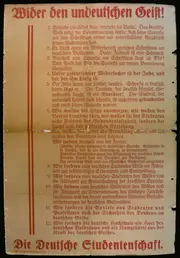
    From Maundy Thursday the German Student Union began posting its twelve theses ‘against the un-German spirit’, which declared the Jew the most dangerous enemy and demanded that Jewish writers publish only in Hebrew. Prussia suspended sixteen university teachers, among them Kelsen, Tillich, Horkheimer and Mannheim, and the main Jewish organisations founded a joint committee for help and reconstruction. In the House of Commons, Austen Chamberlain attacked the new regime, while restaurants learned they would have to post notices declaring whether they cooked with margarine.

  37. Day 75 Friday 14 April 1933

    Good Friday: Berlin protests to London over the Commons debate on Germany

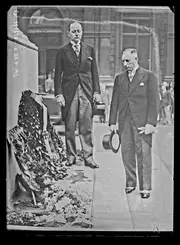
    On Good Friday the government instructed its ambassador in London to protest ‘most emphatically’ against the previous day’s Commons debate, while at noon Germany’s attachés laid a wreath at the Cenotaph. The Nazi ‘Fighting League for German Culture’ founded a national theatre-goers’ association with ministers as its founders, and Prussia ruled that only Nazi organisations and the Stahlhelm counted as ‘national associations’ for shortened law exams. With matches banned almost everywhere for the holy day, 6,000 people in Cologne watched Grasshoppers Zürich, and a balloon set off from Gelsenkirchen for Africa.

  38. Day 77 Sunday 16 April 1933

    Easter: Erwin Kahn dies of his Dachau wounds; Munich publishes its attack on Thomas Mann

    Early on Easter Sunday Erwin Kahn, the one survivor of the Dachau shootings of 12 April, died under guard in a Munich clinic, killed by force to his larynx. The Easter edition of the Münchner Neueste Nachrichten carried the ‘Protest of the Richard Wagner City of Munich’ against Thomas Mann, signed by more than forty people including Richard Strauss, and the satirical weekly Simplicissimus was brought into line. Protestant pulpits in Prussia read out a message welcoming the ‘new Germany’; in Berlin, burglars cleared out the C&A store on Königstraße, and a gusty wind troubled the Easter air show at Tempelhof.

  39. Day 78 Monday 17 April 1933

    Nobel laureate James Franck resigns his Göttingen chair in protest

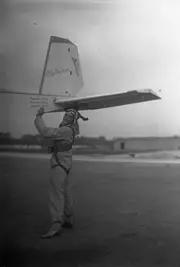
    On Easter Monday the physicist James Franck, a Nobel laureate protected from dismissal as a front-line veteran, asked to be released from his chair at Göttingen in protest at the treatment of Jewish Germans. In Berlin three directors of the Reichsbahn’s transport credit bank were arrested at home. At Tempelhof, holiday crowds at the Easter air show watched Ernst Udet’s aerobatics and then, unexpectedly, the aviator Hans Bertram landing at the end of his flight home from the Dutch East Indies, after his rescue in northern Australia the previous July.

  40. Day 81 Thursday 20 April 1933

    Hitler’s 44th birthday: flags across Berlin and the premiere of Johst’s ‘Schlageter’

    For Hitler’s 44th birthday Berlin put out flags almost as for the Day of Potsdam, a flag parade marched past the Interior Ministry on Unter den Linden, and Bavaria made Hindenburg, Hitler, Epp and Röhm honorary citizens; Hitler himself stayed in Bavaria. Prussia marked the day by turning three cadet schools into ‘national-political education institutes’ and by withdrawing Theodor Lessing’s research post, while the party announced a ban on new members from 1 May. That evening the State Theatre gave the premiere of Hanns Johst’s Nazi drama ‘Schlageter’ before Goebbels, Frick and Rust.

  41. Day 82 Friday 21 April 1933

    Kosher slaughter banned across the Reich; Hess named Hitler’s deputy in the party

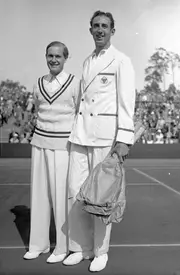
    A Reich law banning the slaughter of animals without prior stunning, and with it Jewish ritual slaughter, was signed and published, and Hitler named Rudolf Hess his deputy in the NSDAP. In Berlin the Reichskanzlerplatz became Adolf-Hitler-Platz, the university’s rector objected to the students’ anti-Jewish theses, and police officials put the number of Communists in custody at 18,000; in Freiburg, Heidegger was elected rector. On the Rot-Weiss courts the visiting King of Sweden played doubles with Daniel Prenn, Germany’s leading player, whom the press already expected to be replaced in the Davis Cup team.

  42. Day 83 Saturday 22 April 1933

    Decree ends ‘non-Aryan’ doctors’ insurance practice; student law adopts ‘German descent’

    Labour Minister Seldte signed a decree ending the work of ‘non-Aryan’ and Communist panel doctors with the health insurance funds, and the cabinet passed a Reich law limiting university student bodies to students of ‘German descent and mother tongue’, a law excluding Jews from the patent bar and a tenants’ protection law for farmers. Bavaria’s justice minister, Frank, was proposed as Reich Commissioner for bringing justice in the states into line. After the meeting Hitler and Goebbels flew to Munich for the party leaders’ conference, while in Berlin the Davis Cup candidates trained in cold rain and London counted the cost of a great fire in its docks.

  43. Day 84 Sunday 23 April 1933

    Tennis federation bars ‘non-Aryans’ from national teams, shutting out Daniel Prenn

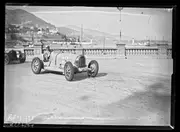
    After the Davis Cup trials in Berlin, the board of the German Tennis Federation resolved that ‘non-Aryans’ (the regime’s term for people of Jewish descent) could no longer be picked for the Davis Cup or other representative teams and that Jews should leave club boards, which shut out the Jewish player Daniel Prenn. In the plenary hall of the Prussian Landtag, the Nazi press chief Otto Dietrich told journalists the press must become a ‘sharply honed weapon’ of German politics, and Protestant leaders announced work on a new constitution for a single German Evangelical Church. Max Planck turned 75, and in Monaco Achille Varzi won the Grand Prix in record time.

  44. Day 86 Tuesday 25 April 1933

    Cabinet passes the “overcrowding” law capping Jewish pupils and students

    Hitler’s cabinet sat until after ten at night and passed a law that limited admissions to secondary schools and universities and capped the share of “non-Aryan” pupils and students. Prussia’s culture minister suspended 25 more professors, and Hitler named the army chaplain Ludwig Müller his liaison to the Protestant churches. The labour exchanges reported unemployment down by 69,000 in the first half of April, and Berlin’s university rector explained why he had objected to two of the students’ anti-Jewish posters.

  45. Day 88 Thursday 27 April 1933

    Seldte joins the Nazi Party; ex-deputy Albert Funk dies in police custody

    In an evening radio address the Stahlhelm leader and Reich Labour Minister Franz Seldte announced that he was joining the Nazi Party and placing himself under Hitler. In Recklinghausen the Communist former Reichstag deputy Albert Funk died after interrogation and abuse at police headquarters. Hitler asked towns to stop renaming historic streets after him, and at Berlin Zoo a small boy lost his forearm to a bear.

  46. Day 89 Friday 28 April 1933

    SA and SS given their own disciplinary law; Wolfgang Köhler’s protest appears in print

    The cabinet passed and published a one-sentence law putting SA and SS men under a disciplinary code to be issued by Hitler as supreme SA leader, approved the return of military courts and turned the aviation commissariat into a ministry for Göring. In the Deutsche Allgemeine Zeitung the psychologist Wolfgang Köhler defended his dismissed Jewish colleagues in what was later called the last openly anti-Nazi article published in Germany. Frick named von Tschammer und Osten Reich Sports Commissioner, and the Reichsbahn showed off a road trailer that could carry railway wagons to the door.

  47. Day 90 Saturday 29 April 1933

    Hindenburg watches Göring christen the giant Junkers airliner at Tempelhof

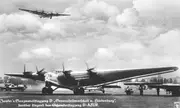
    In bright sunshine at Tempelhof airport, Göring christened a new four-engined Junkers airliner “Generalfeldmarschall von Hindenburg” in front of the President, on his first visit to the airport. The Interior Ministry ordered German merchant ships to fly the swastika flag from 1 May, the new Secret State Police Office took over the power to ban Berlin newspapers, and Göring founded an Air Defence League. Goebbels inspected the stands going up on the Tempelhofer Feld for Monday’s rally.

  48. Day 91 Sunday 30 April 1933

    Fritz Haber resigns rather than dismiss his Jewish staff

    The Nobel chemist Fritz Haber, told to dismiss the “non-Aryan” members of his Kaiser Wilhelm Institute in Dahlem, asked instead to be retired; though exempt himself as a war veteran, he refused to choose staff by race. In the Reich Labour Ministry, Seldte proclaimed his “dictatorial” leadership of the Stahlhelm and its leaders pledged allegiance to Hitler. It was a showery Sunday in Berlin; 12,000 people watched Hertha BSC win a nine-goal match, and seven miners died in an explosion near Essen.

  49. Day 97 Saturday 6 May 1933

    Students ransack Magnus Hirschfeld’s Institute for Sexual Science

    On Saturday morning about a hundred students of the Berlin College of Physical Education, with a brass band and SA students, occupied and wrecked Magnus Hirschfeld’s Institute for Sexual Science and carted off its books and archives for burning. Student squads went on to purge Berlin’s public lending libraries. The Centre Party elected the former Chancellor Brüning as its leader in place of Prelate Kaas, and the censors passed the Joseph Schmidt film “Ein Lied geht um die Welt”.

  50. Day 98 Sunday 7 May 1933

    Max Liebermann quits the Academy: art “has nothing to do with politics or ancestry”

    Max Liebermann, one of Germany’s most successful painters, gave up his honorary presidency of the Prussian Academy of Arts and resigned his membership after the Academy decided to exhibit no more works by Jewish artists. In Kiel the former Nationalist Reichstag leader Ernst Oberfohren shot himself, and in Berlin the former German tennis champion Nelly Neppach, excluded as a Jew, took her own life. Hitler addressed the SA in Kiel; Hindenburg attended the Berlin students’ semester service. Germans marked Brahms’s centenary, and Hertha BSC crashed out of the football championship 4–1 at Allenstein.

  51. Day 99 Monday 8 May 1933

    Goebbels tells Germany’s theatre directors what the “revolution” expects of the stage

    In the evening Goebbels spoke to theatre directors and actors from across Germany at the Hotel Kaiserhof, with Göring present; the upheaval, he said, was not only political but reached into every area of public life. In Breslau the left-wing lawyer Ernst Eckstein was murdered in the Dürrgoy concentration camp, and in Halle booksellers gave their “word of honour” not to sell blacklisted authors. The Reich Sports Commissioner spoke on all German radio stations, a gas explosion wrecked a house in Zehlendorf, and Gandhi began a three-week fast.

  52. Day 100 Tuesday 9 May 1933

    Frick tells the states that schools must form “the political human being”

    At a meeting of the states’ education ministers in the Reich Interior Ministry, Frick set out the principles of future school policy: schools were to teach race studies, warn against mixing German with “alien”, above all Jewish, blood, and prepare the young for military service. Rust handed sex education back to parents and stopped grants to Jewish trainee teachers. The Berlin guard troops mounted their first guard at the war memorial on Unter den Linden, two convicted murderers were executed at Plötzensee, Joseph Schmidt’s film “Ein Lied geht um die Welt” had its premiere, and from France Klaus Mann wrote to Gottfried Benn.

  53. Epilogue Wednesday 10 May 1933

    Books burn on the Opernplatz as the German Labour Front is founded

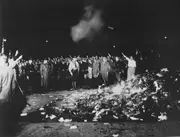
    Late on Wednesday evening Berlin students burned an estimated 20,000 to 25,000 books on the Opernplatz, in pouring rain and in front of newsreel cameras; the works of Marx, Heinrich Mann, Kästner, Remarque, Tucholsky, Ossietzky and many others went into the fire, and Goebbels declared the age of “Jewish intellectualism” over. Books were burned in 21 other university towns the same night. That afternoon Hitler had addressed the first congress of the German Labour Front, which took the place of the destroyed trade unions under Robert Ley, and it was announced that the assets of the SPD, its newspapers and the Reichsbanner had been seized.