Day 37 of 100
Hitler tells the cabinet the election was a ‘revolution’ and calls for an Enabling Act
Two days after the election Hitler told his ministers that 5 March had been a revolution, that Marxism would disappear and that an Enabling Act with a two-thirds majority was needed; he and Frick demanded that van der Lubbe be hanged, retroactively if need be. At Hindenburg’s residence the Reichstag’s opening in Potsdam’s Garrison Church was planned in detail. In Dresden, Nazi supporters whistled the conductor Fritz Busch off the podium of the State Opera. Abroad, Dollfuss began governing Austria without parliament, and the Netherlands reinforced its border against German refugees.
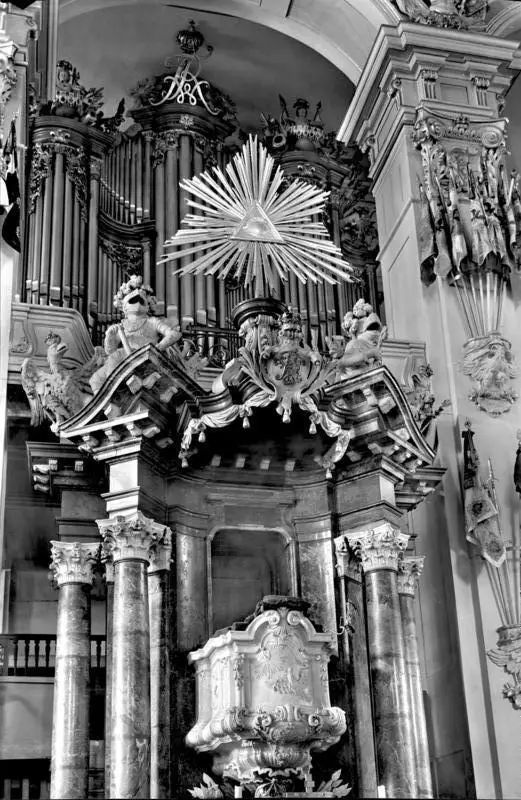

The cabinet meeting of 7 March sketched the programme of the following weeks. Hitler wanted the new Reichstag opened with a ceremony in Potsdam, a central office for propaganda so that political ‘lethargy’ would not set in, a bold settlement of the relationship between the Reich and the states, and an Enabling Act passed with a two-thirds majority; the Communist deputies, he noted, would not appear because they were in custody. Göring proposed to win the Catholic Centre’s votes by threatening to dismiss its officials. Frick and Hitler wanted the arsonist hanged even though the law in force did not allow a death sentence for arson; the so-called ‘Lex van der Lubbe’ of 29 March would extend the death penalty of the Reichstag Fire Decree back to crimes committed since 31 January and allow execution by hanging.
Politics and power
Government, terror and persecution
-
Government 16:15, Berlin, Reich Chancellery
‘The events of 5 March are a revolution’
Hitler told the cabinet that he regarded the events of 5 March as a revolution and that in the end there would be no Marxism left in Germany. An Enabling Act with a two-thirds majority was necessary, and he was sure the Reichstag would pass it; the Communist deputies would not appear because they were in custody. He wanted the composition of the Reichstag to determine the make-up of every state parliament, called Bavaria’s minister-president Held disloyal, and asked for a change at the head of the Reichsbank. Frick reported on the interventions in Hamburg, Bremen, Lübeck and Hesse and said Bavaria, Württemberg, Baden and Saxony needed new governments too.1
-
Government 16:15, Berlin, Reich Chancellery
Frick: van der Lubbe must hang, whatever the law says
Frick told the cabinet that van der Lubbe should be hanged at once, on the Königsplatz; arson carried only a prison sentence under the law in force, but it must be possible to impose death by hanging retroactively, and the principle ‘no punishment without law’ could not apply without limit. He read out an opinion to this effect by three law professors. Hitler agreed that van der Lubbe must be hanged and said the public expected it. Göring reported that he had confiscated the Karl-Liebknecht-Haus to house a special commission against the Communist party.1
-
Churches Berlin, Reich Chancellery
How to win the Centre’s votes
Papen reported that the Centre party’s Prelate Kaas had visited him the day before, offered to draw a line under the past and promised the party’s cooperation. Göring advised telling the Centre that all its officials would be removed if it did not vote for the Enabling Act, and otherwise ‘politely ignoring’ it. When the transport minister said many Catholics hesitated over point 24 of the Nazi programme, Hitler replied that the Church would accept the party when circumstances forced it to.1
-
Parliament Berlin, Reich President's residence
The Potsdam ceremony planned at Hindenburg’s
At a meeting with Hindenburg, Hitler, Papen, Frick, Blomberg and Göring settled the form of the Reichstag’s opening: a ceremony in the Garrison Church in Potsdam, with a short address by the President and a government statement by Hitler, after which Hindenburg would go alone into the crypt to lay a laurel wreath between the coffins of Frederick William I and Frederick the Great, wearing the uniform of a Prussian field marshal. The first working session would follow in the ‘Langer Stall’. The week of 3 to 8 April was envisaged. Reich offices were to fly the old black-white-red flag beside the national colours on Remembrance Day, 12 March.2
-
Propaganda Berlin
A plan for a Reich propaganda office
A memorandum dated 7 March proposed a ‘Reich Commissariat for Popular Enlightenment and Propaganda’ to end what it called the ‘appalling disorganisation’ of official publicity: the government press office, the radio commissioner, the Reich Centre for Home Service and the Reich art custodian would all be brought under it. The press reported the next day that the cabinet had agreed in principle to create such an office, probably a ministry, under Goebbels.3,4
Everyday life
What else was happening in Germany
-
Music evening, Dresden, State Opera
Fritz Busch driven from the podium in Dresden
When Fritz Busch, general music director of the Dresden State Opera, came to the podium to conduct Rigoletto in the evening, Nazi supporters in the audience whistled and shouted ‘Busch out!’ while others called ‘Long live Busch!’. After several minutes he handed the baton to the Kapellmeister Striegler, who conducted the performance without further disturbance. Nazi representatives had warned Busch of the protest at an afternoon rehearsal; the reason given was his frequent absences on guest-conducting tours. A Dresden paper noted that Busch had never joined a party or been politically active. That afternoon the actor Alexis Posse, the Nazi party’s regional ‘art warden’, had declared that he was taking ‘executive authority’ over the Saxon state theatres.9,10
-
Economy Berlin
Hitler warns against dearer margarine
Discussing plans to protect German farmers by making imported fats dearer, Hitler told the cabinet that a rise of 20 pfennigs in the price of margarine would be unbearable, since 13 million people had a monthly income of only 55 to 90 marks, and that dearer butter would only drive more people to margarine. The decision was postponed.5
-
Sport Monte Carlo
Von Cramm the only German winner at Monte Carlo
When the international tennis tournament at Monte Carlo resumed after a rain break, the German players had a poor day: the only German success was a 6–2, 11–9 win by von Cramm; the others lost.4
Voices
He could not recognise the doctrine that law must remain law if the whole life of the state had to perish by it.
Elsewhere in the world
-
Austria
Dollfuss governs without parliament
Three days after the National Council had been left without presidents, the Austrian government under Engelbert Dollfuss declared that it remained in office despite parliament’s incapacity and announced a ban on public assemblies, the beginning of authoritarian rule in Austria.6
-
Netherlands
Dutch border closed to German refugees
The Netherlands considerably strengthened its border police along the frontier with Germany in the province of Limburg to stop German political refugees from crossing, and increased the guard on state coal mines and a nitrogen works.7
More pictures
_(Gen%C3%A8ve,_S.D.N.)_-_btv1b90269069.jpg)
Sources
- Akten der Reichskanzlei. Regierung Hitler 1933–1945, Bd. I: Nr. 44, Ministerbesprechung vom 7. März 1933, 16.15 Uhr Historische Kommission bei der Bayerischen Akademie der Wissenschaften / Bundesarchiv, Band I, pp. 159–167
- Akten der Reichskanzlei. Regierung Hitler 1933–1945, Bd. I: Nr. 43, Vermerk des Staatssekretärs Meissner über eine Besprechung zur Gestaltung der Eröffnungsfeier des Reichstages am 7. März 1933 Historische Kommission bei der Bayerischen Akademie der Wissenschaften / Bundesarchiv, Band I, pp. 157–159
- Akten der Reichskanzlei. Regierung Hitler 1933–1945, Bd. I: Nr. 46, Denkschrift über die Errichtung eines Reichskommissariats für Volksaufklärung und Propaganda [7. März 1933] Historische Kommission bei der Bayerischen Akademie der Wissenschaften / Bundesarchiv, Band I, pp. 168–171
- Hamburger Fremdenblatt, Reichsausgabe, Nr. 67, 8 March 1933 Deutsche Digitale Bibliothek, Zeitungsportal, p. 1 (propaganda office); p. 11 ('v. Cramm gewinnt — sonst nichts als Niederlagen')
- Akten der Reichskanzlei. Regierung Hitler 1933–1945, Bd. I: Nr. 45, Kabinettssitzung vom 7. März 1933 Historische Kommission bei der Bayerischen Akademie der Wissenschaften / Bundesarchiv, Band I, pp. 167–168, item 1 (import quotas, margarine)
- Jahreschronik 1933 LeMO, Deutsches Historisches Museum, entry for 7 March
- Hamburger Fremdenblatt, Reichsausgabe, Nr. 66, 7 March 1933 Deutsche Digitale Bibliothek, Zeitungsportal, p. 1, 'Holländische Grenzpolizei verstärkt' (Amsterdam, 7 March)
- Reichsgesetz über Verhängung und Vollzug der Todesstrafe [Lex van der Lubbe] (29.03.1933) documentArchiv.de
- Dresdner Nachrichten, Abendausgabe Nr. 115, 8 March 1933 Deutsche Digitale Bibliothek, Zeitungsportal, p. 2, 'Zu den Vorgängen in den Staatstheatern'
- Dresdner neueste Nachrichten, 9 March 1933 Deutsche Digitale Bibliothek, Zeitungsportal, p. 2, 'Neuordnung bei den Staatstheatern — Zwischenfall in der Oper'
Spotted a mistake? Send a correction.