Day 6 of 100
Hindenburg signs a decree allowing bans on newspapers and political meetings
Hindenburg signed the “Decree for the Protection of the German People”, which let the authorities ban political meetings and newspapers and hold suspects in police custody for up to three months. The Prussian Landtag refused to dissolve itself, and the Reich’s commissioners in Prussia dissolved every municipal council instead. Two young Communists were shot dead in Berlin overnight, and that evening the Social Democratic mayor of Staßfurt was shot in front of his house. In Berlin, new flu cases passed a thousand a day.
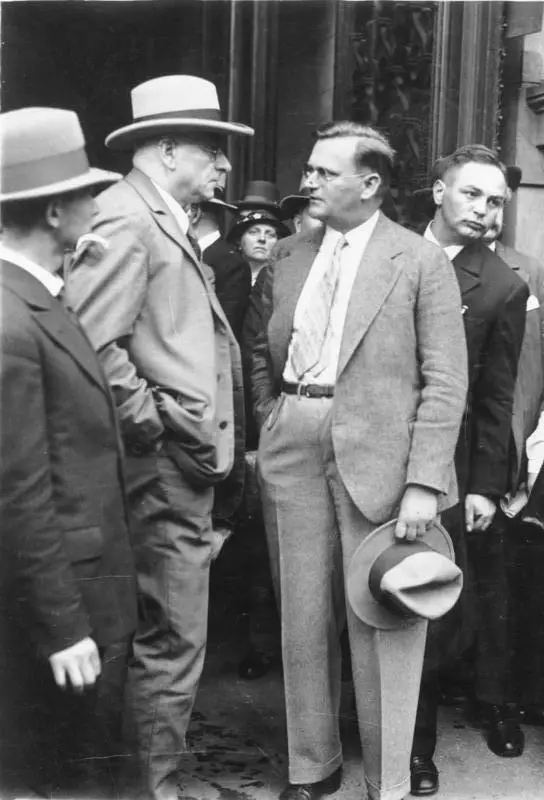

The decree signed on 4 February turned the draft that Göring had demanded into law. Open-air gatherings and public political meetings now had to be notified 48 hours in advance and could be banned where the police saw an immediate danger to public security; police officers could attend any public meeting and dissolve it if, among other things, state organs or leading officials were insulted. Newspapers could be banned for up to four weeks, magazines for up to six months, for calling for a general strike, for insulting the government or for spreading “obviously false news” endangering vital interests of the state. The police could hold people strongly suspected of treason or of offences with weapons for up to three months. Appeals against newspaper bans went to a senate of the Reich Court.
The government justified the decree by complaining of insults in the press and of rumours about its economic plans. The Reich Association of the German Press protested to Hindenburg the next day that it would make the press’s work impossible. Promulgated on 6 February and in force the following day, it was overtaken within weeks by the far wider decree that Hindenburg signed on 28 February, after the Reichstag fire.
In Prussia the battle was over its parliament. A Nazi motion for the Landtag to dissolve itself failed by 214 votes to 196, and the Landtag’s president, Kerrl, could not get the dissolution through the three-man body entitled to decide it, because Prime Minister Otto Braun and the president of the State Council, Konrad Adenauer, refused. The Reich’s commissioners, now governing Prussia, dissolved all the municipal and provincial assemblies instead and called new local elections for 12 March.
Laws and decrees
Verordnung des Reichspräsidenten zum Schutze des deutschen Volkes
Decree of the Reich President for the Protection of the German People
Required advance notice of political meetings and open-air gatherings and allowed them to be banned or dissolved; allowed printed matter to be seized and newspapers banned for up to four weeks (other periodicals six months, longer for repeat offenders) on broad grounds including insults to the government and “obviously false news”; allowed bans on political collections; and allowed police custody of suspects for up to three months. Promulgated on 6 February and in force from the day after.7,8
Erste Verordnung zur Durchführung der Verordnung zum Schutze des deutschen Volkes
First implementing ordinance to the Decree for the Protection of the German People
Defined the Reich Chancellor, the Reich ministers and the Reich state secretaries as the “leading officials” whose insult could justify dissolving a meeting or banning a newspaper, and told the authorities to consider a warning or a printed correction before banning a periodical in lighter cases.9
Verordnung über die Auflösung der Vertretungskörperschaften der Gemeinden und Gemeindeverbände; Verordnung über die Festsetzung des Wahltages für die kommunalen Neuwahlen
Prussian decrees dissolving municipal assemblies and setting the date of new local elections
Dissolved all provincial diets, district councils and municipal councils in Prussia, elected in November 1929, and set 12 March 1933 as the date for new elections, allowing the interior ministry to depart from the statutory four-year term.1
Politics and power
Government, terror and persecution
-
The states Berlin, Prussian Landtag, Prinz-Albrecht-Straße
Prussian Landtag refuses to dissolve itself
The NSDAP motion of 31 January for the immediate dissolution of the Prussian Landtag was defeated by 214 votes (Centre, SPD, KPD and State Party) to 196 (NSDAP, DNVP, DVP, Christian Social People’s Service and German-Hanoverians). Landtag president Kerrl then tried to dissolve it through the three-man college of Prussian Prime Minister, Landtag president and State Council president; Otto Braun and Konrad Adenauer refused.1
-
The states Berlin
All Prussian municipal councils dissolved
Meeting under Papen, the Reich’s commissioners for the Prussian ministries, including the newly appointed Göring, Hugenberg and Rust, approved Göring’s decrees dissolving every provincial diet, district council and municipal council in Prussia and setting new elections for 12 March. Göring said the councils elected in 1929 no longer reflected the will of the population. The commissioners also replaced the head of the Prussian State Ministry’s press office.1
-
Government 13:00, Berlin, Reich Chancellery
Chancellery plans the removal of Braun’s government
At a meeting at 13:00, Hitler, Papen, Frick and justice minister Gürtner discussed how to strip the deposed Prussian government of the rights the State Court had left it. Gürtner doubted that a special court for disputes over emergency powers would be recognised as lawful. Hitler said reasons of state stood highest, and the president of the Reich Court, Bumke, was invited to meet him on Sunday morning.2
-
The states Munich
Bavaria protests against plans for a unitary state
The Bavarian Prime Minister Heinrich Held wrote to Hindenburg of rumours, not clearly denied, that Reich commissioners would replace state governments and that plans aimed at destroying the sovereignty of the states. Bavaria rejected such plans in the sharpest terms. Hindenburg replied on 6 February that neither he nor the government intended anything of the kind.3
-
Terror after midnight, Berlin-Moabit and Berlin-Neukölln
Two young Communists shot dead in Berlin
Shortly after midnight four National Socialists fired on young Communists returning from a meeting in Moabit, at the corner of Emdener Straße and Wiclefstraße; Alfred Kollatsch was shot in the chest and died minutes later, and four men were arrested. At almost the same time SA men opened fire on Communists in the Fuldastraße in Neukölln, fatally wounding Erwin Berner, a member of the Antifa, and seriously injuring the KPD member Emil Sawinski; those shooting escaped.4,5,13
Sources disagree. Kollatsch’s age is given as 18 in regional press reports from Berlin and as 19 in a later Vorwärts report; Berner’s as 20 by the Vorwärts and as 21 in the regional press.
-
Terror shortly after 22:00, Staßfurt, Parkstraße
Staßfurt’s mayor shot outside his home
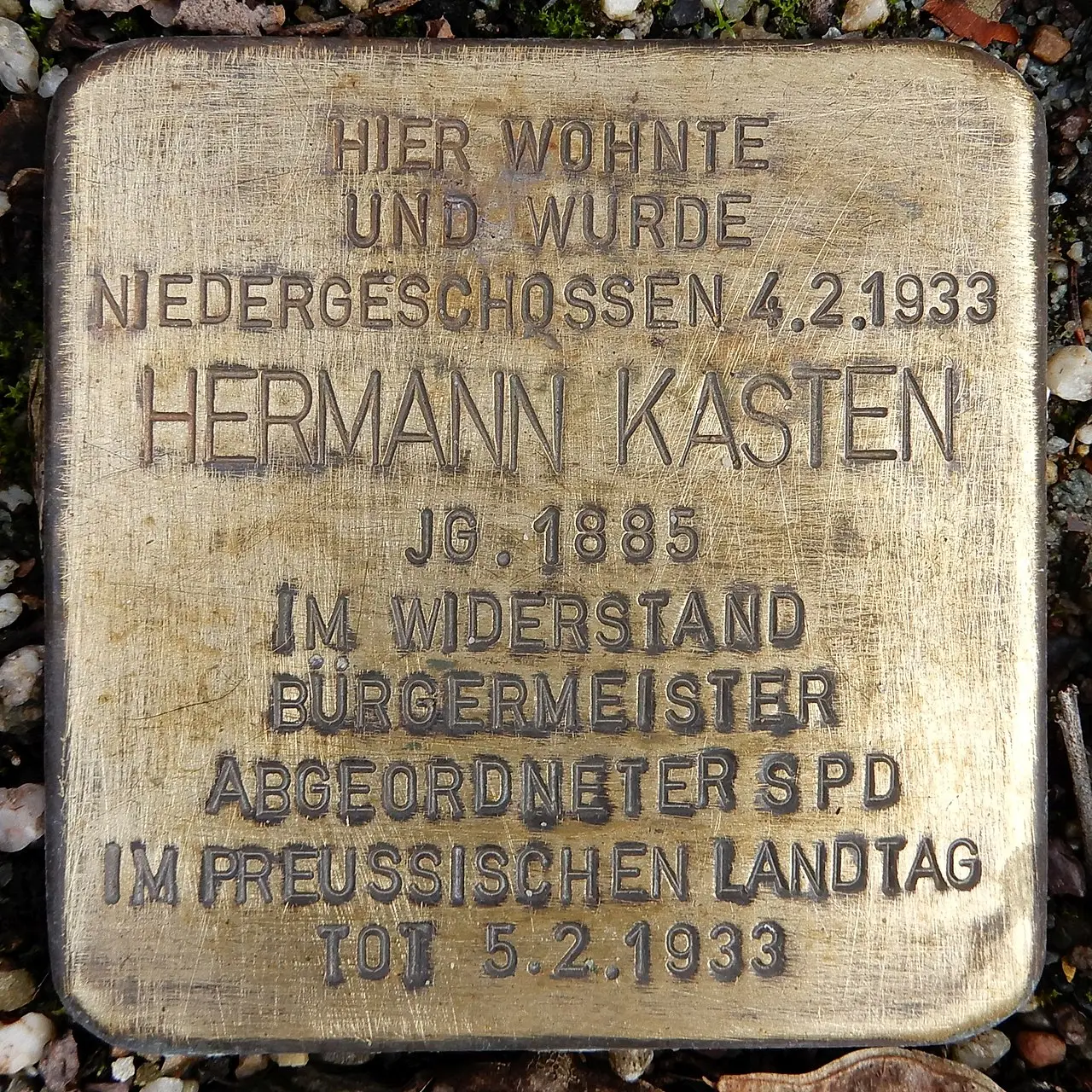
After an afternoon propaganda march by the NSDAP, the Stahlhelm and others in Staßfurt, at which the local NSDAP district leader reportedly said it was time to finish with the “bigwigs” of the SPD, the town’s Social Democratic mayor Hermann Kasten, also a member of the Prussian Landtag, was shot twice as he reached his house in the Parkstraße shortly after 22:00. A 17-year-old grammar-school pupil was arrested the next day; the case against him was dropped in March and the killing was never solved.6
Everyday life
What else was happening in Germany
-
Society Berlin
Flu epidemic at its height
Between Friday and Saturday midday the Berlin AOK registered 1,055 new influenza cases, and 270 flu patients were taken into the city’s hospitals on Saturday alone.4
-
Sport Berlin
Workers’ water polo in Berlin’s pools
In a league match of the workers’ swimming clubs, the young team of the Berlin club Freiheit beat Volkssport Weißensee 6:3 after trailing at half-time. Heavy, waterlogged pitches were meanwhile hampering the workers’ football clubs’ friendly matches that weekend.10
Voices
Rumours are circulating ... that plans are being pursued whose final aim is the destruction of the sovereignty of the states and the creation of a unitary state.
In Berlin today
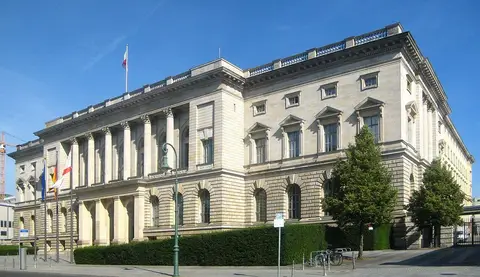

Former Prussian Landtag
Niederkirchnerstraße 5 (then Prinz-Albrecht-Straße), 10117 Berlin
- Then
- On 4 February the Prussian Landtag voted down a Nazi motion for its own dissolution by 214 votes to 196.1,11
- Today
- The building has been the seat of the Abgeordnetenhaus, Berlin’s state parliament, since 1993. In 1934 the Nazi People’s Court was founded in its plenary hall, and after the war it housed the first East German government.
More pictures

Sources
- Akten der Reichskanzlei. Regierung Hitler 1933–1945, Bd. I, Nr. 14: Sitzung der Kommissare des Reichs für Preußen, 4. Februar 1933 Bundesarchiv / Historische Kommission bei der Bayerischen Akademie der Wissenschaften, R 43 I/2288, Bl. 343–346, items 2–4 with notes 1–8
- Akten der Reichskanzlei. Regierung Hitler 1933–1945, Bd. I, Nr. 13: Chefbesprechung vom 4. Februar 1933, 13 Uhr Bundesarchiv / Historische Kommission bei der Bayerischen Akademie der Wissenschaften, R 43 I/2282, S. 57–59, with notes 1–5
- Akten der Reichskanzlei. Regierung Hitler 1933–1945, Bd. I, Nr. 15: Der Bayerische Ministerpräsident Held an den Reichspräsidenten, München, 4. Februar 1933 Bundesarchiv / Historische Kommission bei der Bayerischen Akademie der Wissenschaften, R 43 I/2282, S. 31–33, with note 3
- Vorwärts, Morgenausgabe Nr. 59–63, 7 February 1933 Deutsche Digitale Bibliothek, Zeitungsportal, p. 4, 'Politische Morde'; p. 3, 'Grippewelle geht zurück'
- Langenberger Zeitung, 4 February 1933 Deutsche Digitale Bibliothek, Zeitungsportal, p. 1, report from Berlin on the shootings in Moabit and Neukölln
- »… gefallen durch feigen Meuchelmord«. Hermann Kasten Stadt Staßfurt (J. Kleemann, T.-A. Matzke, T. Hoffmann, 2013), pp. 1–3
- Verordnung des Reichspräsidenten zum Schutze des Deutschen Volkes. Vom 4. Februar 1933 documentArchiv.de, RGBl. 1933 I S. 35–40; note 3 (promulgated 6 February 1933)
- Akten der Reichskanzlei. Regierung Hitler 1933–1945, Bd. I, Nr. 11: Ministerbesprechung vom 3. Februar 1933, 18.30 Uhr Bundesarchiv / Historische Kommission bei der Bayerischen Akademie der Wissenschaften, item 2, note 7 (official justification of 4 February; press association telegram of 5 February)
- Erste Verordnung zur Durchführung der Verordnung zum Schutze des deutschen Volkes. Vom 4. Februar 1933 documentArchiv.de, RGBl. 1933 I S. 41
- Vorwärts, Abendausgabe Nr. 64, 7 February 1933 Deutsche Digitale Bibliothek, Zeitungsportal, p. 6, sport: 'Wasserball-Serienspiele' and workers' football
- Geschichte: Ein Haus mit Geschichte Abgeordnetenhaus von Berlin
- Jahreschronik 1933 Deutsches Historisches Museum, LeMO, entries for 4 and 28 February
- Vorwärts, Morgenausgabe Nr. 71, 11 February 1933 Deutsche Digitale Bibliothek, Zeitungsportal, p. 3, report of the funeral of Kollatsch, Berner and Schulz
Spotted a mistake? Send a correction.