Day 58 of 100
Nazi party orders a nationwide boycott of Jewish businesses from 1 April
From Munich the Nazi party leadership published its call for a boycott of Jewish shops, goods, doctors and lawyers, to begin ‘at a stroke’ on Saturday 1 April at 10:00 under a central committee led by Julius Streicher. The Catholic bishops withdrew their warnings against the Nazi movement, and Albert Einstein, landing in Belgium, broke with Prussia. In Berlin Goebbels told the film industry which films he admired.

The party’s appeal presented the boycott as a ‘purely defensive measure’ against foreign ‘atrocity propaganda’ (Greuelpropaganda, the regime’s word for foreign reports of Nazi violence) and directed it explicitly at German Jews. Its eleven points ordered ‘action committees’ in every local party branch down to the smallest village, told the SA and SS to post guards outside Jewish shops, and demanded quotas limiting Jews in secondary schools and universities, medicine and the law to their share of the population. On the same day, ahead of the official start, party activists in several towns were already forcing Jewish shops and lawyers’ offices to close.
The same day showed how far accommodation with the new government had already gone. The Catholic bishops, meeting in Fulda, decided that their general prohibitions and warnings against Nazism need no longer apply, citing Hitler’s assurances to the churches. In Braunschweig, by contrast, the Nazi interior minister turned on the government’s own nationalist allies, dissolving the Stahlhelm veterans’ league after it took in former Social Democrats.
Politics and power
Government, terror and persecution
-
Persecution Munich
Party leadership publishes its boycott order
The Nazi party’s press service in Munich published the leadership’s appeal to all party organisations and an eleven-point programme. Action committees were to be formed at once in every branch to boycott Jewish shops, goods, doctors and lawyers; doubtful cases were to be referred to a central committee in Munich chaired by Julius Streicher. The boycott was to start simultaneously everywhere on Saturday 1 April at exactly 10:00, with SA and SS guards warning the public not to enter Jewish shops, and to continue until the party leadership called it off.1,2
-
Persecution
Boycotts begin early in several towns
Even before the official start, party activists staged boycott actions on Tuesday in Gleiwitz, Glogau, Schwerin an der Warthe, Eberswalde, Augsburg and elsewhere. Owners of department stores, Jewish shops and lawyers’ offices were told to close and to pay their employees’ salaries in advance. The agency report claimed there had been no incidents.3
-
Churches Fulda
Catholic bishops lift their warnings against Nazism
The Fulda Bishops’ Conference declared that, after the Reich Chancellor’s public assurances about Catholic teaching and the rights of the Church, it believed its earlier general prohibitions and warnings against the Nazi movement need no longer be regarded as necessary, while not withdrawing its condemnation of ‘religious and moral errors’. The Völkischer Beobachter welcomed the step as a withdrawal of all measures against the party.4
-
The states overnight and morning, Braunschweig
Braunschweig’s Nazi minister dissolves the Stahlhelm
After police and SS and SA auxiliaries raided the local Stahlhelm headquarters in Braunschweig’s health-insurance building from about 22:00 the previous evening, holding some 200 Stahlhelm men and 1,150 current or former Social Democrats and Communists, interior minister Dietrich Klagges disarmed the Stahlhelm auxiliary police and dissolved the veterans’ league throughout the state, accusing it of taking in ‘Marxists’ en masse.5
-
Government Berlin; Tegernsee
Frick sends the draft coordination law to the Chancellery
Reich Interior Minister Wilhelm Frick sent the Reich Chancellery the draft of the law to ‘coordinate’ (gleichschalten) the states with the Reich, which would dissolve the state parliaments and refill them according to the Reichstag election result. Hitler stayed on in Munich and in the afternoon drove to Tegernsee to discuss Bavarian affairs with General Franz von Epp, acting head of the Bavarian government, and State Secretary Hermann Esser.6,2
-
Opposition Belgium
Einstein breaks with the Prussian Academy
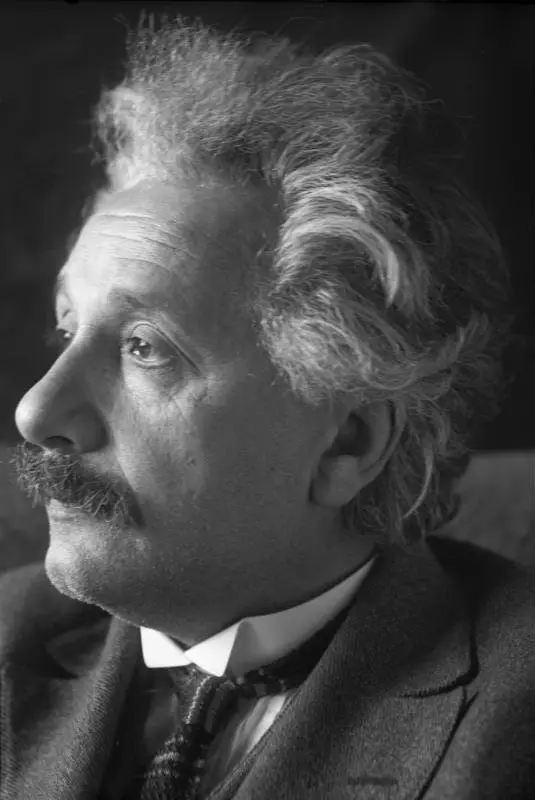
Returning from the United States aboard the liner Belgenland, Albert Einstein stayed in Belgium rather than go back to Germany. While still on board he wrote to the German legation in Brussels asking what he had to do to give up the Prussian citizenship he had acquired through his post at the Prussian Academy of Sciences, and he announced his resignation from the Academy.7,8
Everyday life
What else was happening in Germany
-
Film evening, Berlin
Goebbels tells the film industry what he admires
Speaking on Tuesday evening to the umbrella organisation of German film-makers, Goebbels said the cinema was in a spiritual rather than material crisis and needed thorough reform. As models he cited Eisenstein’s Battleship Potemkin, which he called a work of art despite its politics, Greta Garbo’s Anna Karenina, Fritz Lang’s Die Nibelungen and the nationalist Der Rebell, and he mocked the merely ‘patriotic’ films of recent years.9
-
Transport Berlin
Reichsbahn board backs lorries and electrification
Ending a two-day meeting in Berlin, the Reichsbahn’s administrative board noted that 280 million marks of work-creation contracts had been placed and welcomed the hiring of 70,000 men for track maintenance and 20,000 more by contractors. It authorised the general director to buy lorries for door-to-door goods delivery and approved the immediate electrification of the Halle to Köthen line.10
Voices
The chief shepherds of the dioceses of Germany have for weighty reasons taken a negative attitude towards the National Socialist movement in recent years through prohibitions and warnings. It must now be acknowledged that the highest representative of the Reich government, who is at the same time the authoritarian leader of that movement, has made public and solemn declarations.
Sources
- Bonner Zeitung, 29 March 1933: ‘11 Programmpunkte’ of the NSDAP leadership Deutsche Digitale Bibliothek, Zeitungsportal, p. 2
- Durlacher Tagblatt, 29 March 1933: ‘11 Programmpunkte zur Abwehr der Greuel- u. Boykottpropaganda’ (T.U., München, 28. März) and Hitler’s meeting with Epp Deutsche Digitale Bibliothek, Zeitungsportal, p. 1
- Bottwartal-Bote, 29 March 1933: ‘Boykottaktionen in verschiedenen Teilen des Reiches’ Deutsche Digitale Bibliothek, Zeitungsportal, p. 1
- Iserlohner Kreisanzeiger und Zeitung, 29 March 1933: ‘Eine Kundgebung der Fuldaer Bischofskonferenz’ Deutsche Digitale Bibliothek, Zeitungsportal, p. 2
- Kölnische Zeitung, evening edition, 28 March 1933: ‘Stahlhelm in Braunschweig aufgelöst’ Deutsche Digitale Bibliothek, Zeitungsportal, p. 7
- Gleichschaltung der Länder, 31. März 1933 (with Frick’s letter of 28 March 1933, BArch R 43-II/1309) Bundesarchiv
- Jahreschronik 1933 Deutsches Historisches Museum, LeMO, entry 28.3.
- Sozialdemokrat (Prague), 30 March 1933: ‘Einstein verzichtet auf die preußische Staatsbürgerschaft’ Deutsche Digitale Bibliothek, Zeitungsportal, p. 3
- Gießener Anzeiger, 29 March 1933: Goebbels on the tasks of German film Deutsche Digitale Bibliothek, Zeitungsportal, p. 1
- Bergedorfer Zeitung, 29 March 1933: ‘Reichsbahn im Kampf mit dem Kraftverkehr’ Deutsche Digitale Bibliothek, Zeitungsportal, p. 6
Spotted a mistake? Send a correction.