Day 65 of 100
Boycott called off; Hindenburg asks Hitler to spare Jewish war veterans
The government announced that the boycott would not be resumed, claiming it had silenced the foreign ‘agitation’. Hindenburg wrote to Hitler that Jewish judges and lawyers who had been wounded in the war should not be dismissed, and the cabinet adopted a law extending the death penalty for political violence and a ban on slaughter without stunning. Police sealed off Berlin’s Jewish Scheunenviertel; the Jüdische Rundschau told its readers to wear the ‘yellow badge’ with pride. The rail Zeppelin ran to Hamburg at 130 km/h.
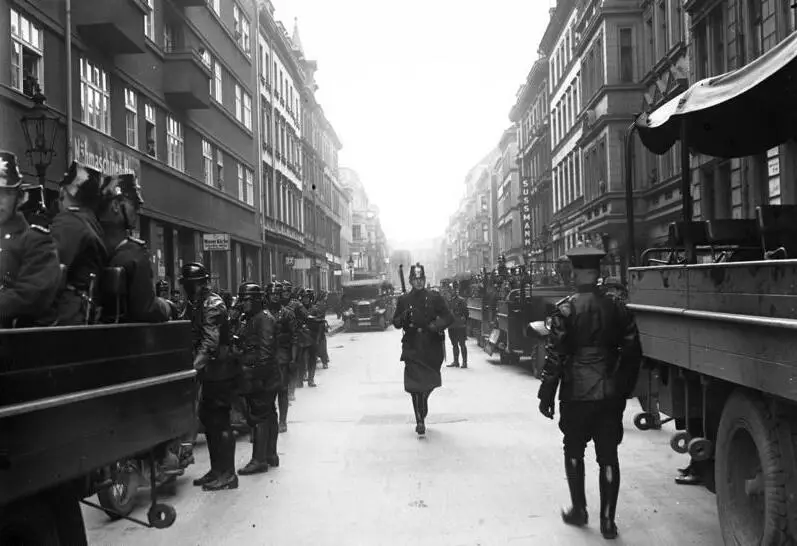

Three days after the boycott the two faces of the regime’s anti-Jewish policy showed side by side. The street action was declared a success and ended. At the same time the work of driving Jews out of public life was moving into the ministries. Hindenburg’s letter shows that the coming civil service law was already common knowledge: he objected not to the principle but to its application to wounded front-line veterans. Hitler replied on 5 April that the planned law would make allowances for Jews who had served or been wounded in the war.
Laws and decrees
Gesetz zur Abwehr politischer Gewalttaten
Law for the Prevention of Political Acts of Violence
Allowed sentences of death, life imprisonment or up to fifteen years in a penitentiary, where milder penalties had applied, for crimes under the explosives law, arson or bombing of public buildings or arson meant to spread fear, poisoning, flooding and damage to railways; such cases went to the special courts set up on 21 March. It was promulgated on 5 April.1,7
Gesetz über das Schlachten von Tieren
Law on the Slaughter of Animals
Required warm-blooded animals to be stunned before bleeding began, in effect banning Jewish ritual slaughter throughout the Reich; some states had already introduced such bans.7
Politics and power
Government, terror and persecution
-
Persecution Berlin
Government: the boycott will not be resumed
An official statement said the Reich government noted ‘with satisfaction’ that the boycott had achieved its effect abroad: apart from small remnants, which it blamed on Communists, the ‘agitation’ had stopped everywhere, and the boycott would therefore not be resumed on Wednesday. This was the regime’s own assessment.2
-
Government Berlin
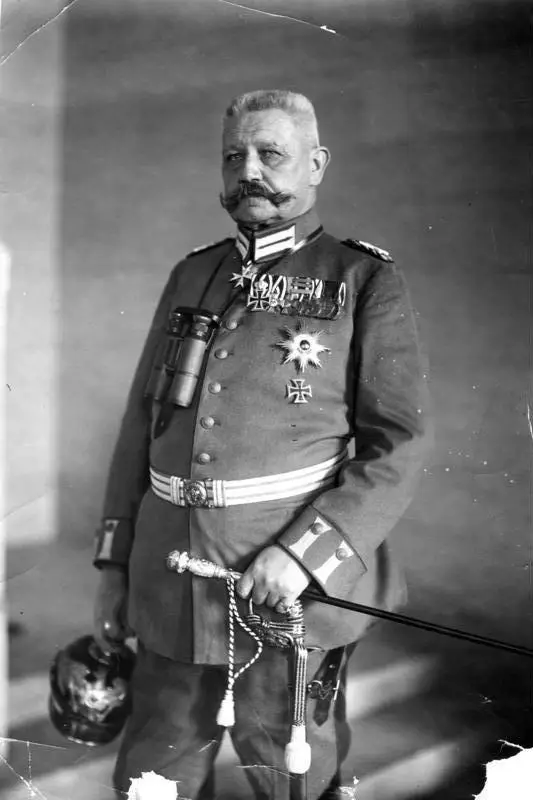
Hindenburg intervenes for Jewish war veterans
The Reich President wrote to Hitler that he had been told of judges, lawyers and judicial officials who were disabled war veterans with spotless records being forced on leave and facing dismissal solely because they were of Jewish descent. He called this personally intolerable and asked that officials, judges, teachers and lawyers who had been wounded, had fought at the front, were sons of the war dead or had lost sons in the war should keep their posts.3
-
Terror Berlin
Cabinet extends the death penalty for political violence
At the cabinet meeting, the first attended by Hjalmar Schacht as the new Reichsbank president, ministers adopted a law allowing the death penalty for bombings, arson of public buildings or arson intended to spread fear, poisoning and sabotage of railways, and placing such cases before the special courts. They also adopted a law requiring warm-blooded animals to be stunned before slaughter, which banned Jewish ritual slaughter (Schächten).1,7
-
Persecution morning, Berlin-Mitte, Scheunenviertel
Police raid Berlin’s Scheunenviertel
Shortly after 8 in the morning the political police, with a motorcycle squad and about a hundred auxiliary police, sealed off the old Scheunenviertel near Alexanderplatz, a district inhabited mainly by Jews, and searched the flats around the former Karl-Liebknecht-Haus, the Communist headquarters now renamed after Horst Wessel. They reported finding illegal leaflets and weapons and detained ten people who could not identify themselves. The authorities insisted the raid had nothing to do with the boycott and claimed the Jewish residents had been treated ‘considerately’.5,6
-
Terror about 16:00, Düsseldorf
Communist Robert Bäßler shot ‘while trying to escape’
In Düsseldorf SA men arrested the Communist functionary Robert Bäßler at his flat at about 4 in the afternoon. According to the police statement, he tried to flee on the way to the police station, ignored warning shots and was shot in the back; he died soon after reaching hospital. The police claimed dynamite had been found in his flat and that he belonged to a group planning bomb attacks.10
Sources disagree. Only the police account is available; it was not independently confirmed.
-
Government Berlin; Cologne
Disciplinary proceedings against Konrad Adenauer
Göring, as commissioner for the Prussian interior ministry, ordered the regional president in Cologne to open formal disciplinary proceedings against Konrad Adenauer, the Lord Mayor of Cologne removed from office some weeks earlier.5
Everyday life
What else was happening in Germany
-
Press Berlin
‘Wear it with pride, the yellow badge’
Three days after the boycott, Robert Weltsch, editor of the Zionist Jüdische Rundschau, published an editorial under the headline ‘Tragt ihn mit Stolz, den gelben Fleck!’. Referring to the yellow marks on black ground daubed on Jewish businesses, he urged Germany’s Jews to treat this branding as a badge of honour and to stand together.4
-
Technology Berlin–Hamburg line
The rail Zeppelin runs to Hamburg
With the Reichsbahn’s test institute in Charlottenburg, Franz Kruckenberg’s rebuilt rail Zeppelin made a trial run on the Berlin–Hamburg line with its designer aboard. Driven by a 600-horsepower BMW engine, it reached up to 130 km/h, stopped at Wittenberge shortly before 9 and went on to Hamburg; it was due back in Berlin at 18:24 from Altona.5
-
Theatre Berlin, Deutsches Theater
Ewiges Volk opens at the Deutsches Theater
The day after Reinhardt’s removal was announced, the new management of the Deutsches Theater staged the premiere it had scheduled for Tuesday: Ewiges Volk, a ‘German drama’ by Kurt Kluge, the sculptor and bronze-caster who taught at the Prussian art academy. Despite a promising first night, it was taken off after five days because barely a dozen paying spectators came each evening.8,9
-
Crime Berlin
The Seiffert fraud trial resumes with a new bench
The trial of the banker Willi Seiffert over the collapse of the Berlin Bank für Handel und Grundbesitz, adjourned on 27 March because its reporting judge was of Jewish descent, resumed after the court had been reconstituted.5
Voices
If they were worthy of fighting for Germany and bleeding for Germany, then they must also be considered worthy of continuing to serve the Fatherland.
Wear it with pride, the yellow badge!
Elsewhere in the world
-
United States
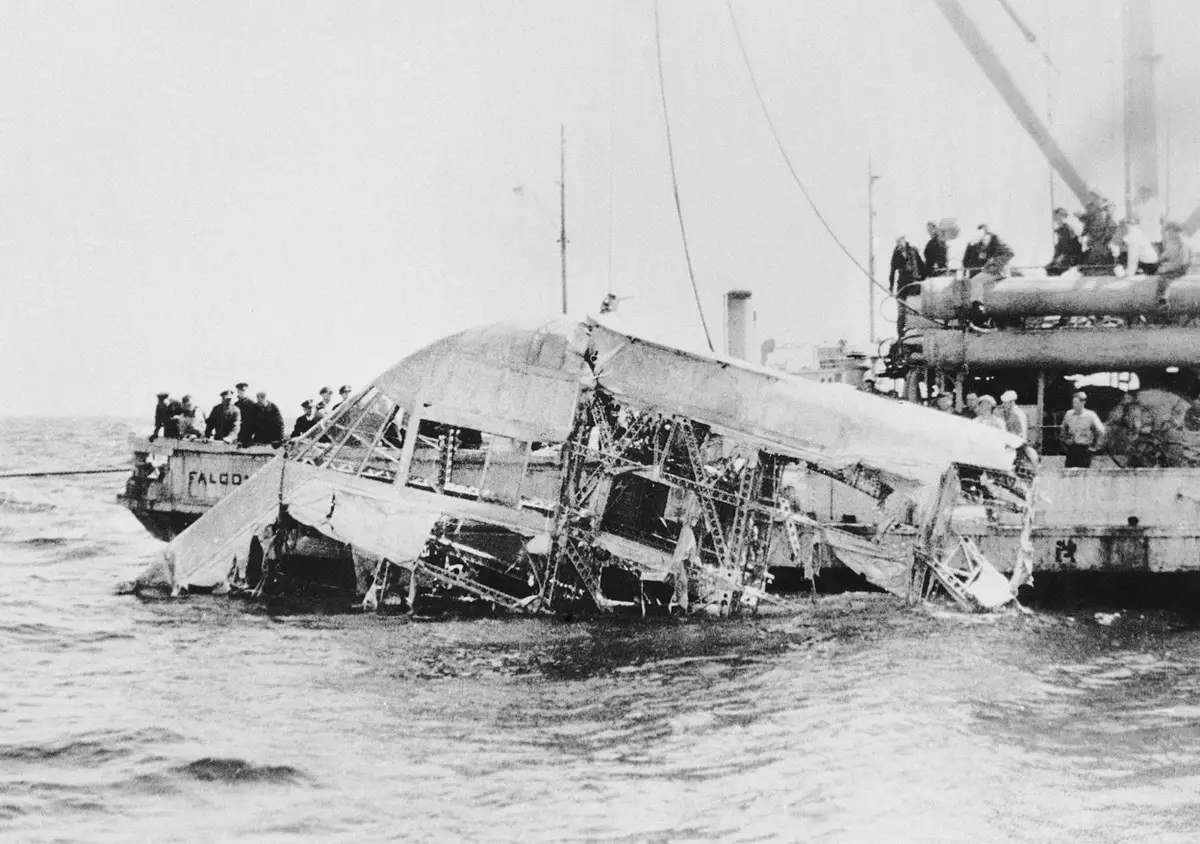
Airship Akron lost in a storm
The US Navy airship Akron, the largest in the world, crashed into the Atlantic off the New Jersey coast during a thunderstorm; of 76 men aboard only a few were rescued.2
More pictures


Sources
- Gesetz zur Abwehr politischer Gewalttaten (04.04.1933) documentArchiv.de, RGBl. 1933 I, S. 162; promulgated 5 April 1933
- Hamburger Fremdenblatt, 4 April 1933: ‘Keine Wiederaufnahme des Boykotts’; ‘Luftschiff Akron im Gewittersturm abgestürzt’ Deutsche Digitale Bibliothek, Zeitungsportal, p. 1
- ‘Restoring’ Germany’s Civil Service (reading with the Hindenburg–Hitler letters of 4 and 5 April 1933, after Arad, Gutman and Margaliot, eds., Documents on the Holocaust) Facing History & Ourselves
- Der ‘Judenstern’ Bundeszentrale für politische Bildung
- Dortmunder Zeitung, 4 April 1933: Scheunenviertel raid, rail Zeppelin trial, Seiffert trial, proceedings against Adenauer (Berlin, 4 April) Deutsche Digitale Bibliothek, Zeitungsportal, p. 2
- Kölnische Zeitung, 6 April 1933: ‘Razzia im Berliner Scheunenviertel’ Deutsche Digitale Bibliothek, Zeitungsportal, p. 3
- Badischer Beobachter, 5 April 1933: ‘Kabinettsbeschlüsse: Schächtverbot, Todesstrafe für politische Gewalttaten’ (Berlin, 4 April) Deutsche Digitale Bibliothek, Zeitungsportal, p. 2
- Biberacher Zeitung, 4 April 1933: Deutsches Theater announcement (Berlin, 3 April) Deutsche Digitale Bibliothek, Zeitungsportal, p. 3
- Hamburger Fremdenblatt, 10 April 1933: ‘”Ewiges Volk” – abgesetzt. Umschichtung des Publikums’ Deutsche Digitale Bibliothek, Zeitungsportal, p. 3
- Wurzener Tageblatt, 5 April 1933: ‘Kommunistischer Funktionär auf der Flucht erschossen’ (police statement, Düsseldorf) Deutsche Digitale Bibliothek, Zeitungsportal, p. 3
Spotted a mistake? Send a correction.