Day 13 of 100
Hitler opens the Berlin motor show, promising tax relief and a road-building plan
Walking past ranks of SA men, Hitler opened the International Automobile and Motorcycle Exhibition at the Kaiserdamm, the first Chancellor, the industry noted, ever to do so, and promised motorists lower taxes, a great road-building plan and support for motor sport. That evening the radio carried Hugenberg’s speech to the new German Nationalist and Stahlhelm alliance in the Sportpalast. In a Berlin dairy shop, a milkman told a customer that half the street was living on potatoes.
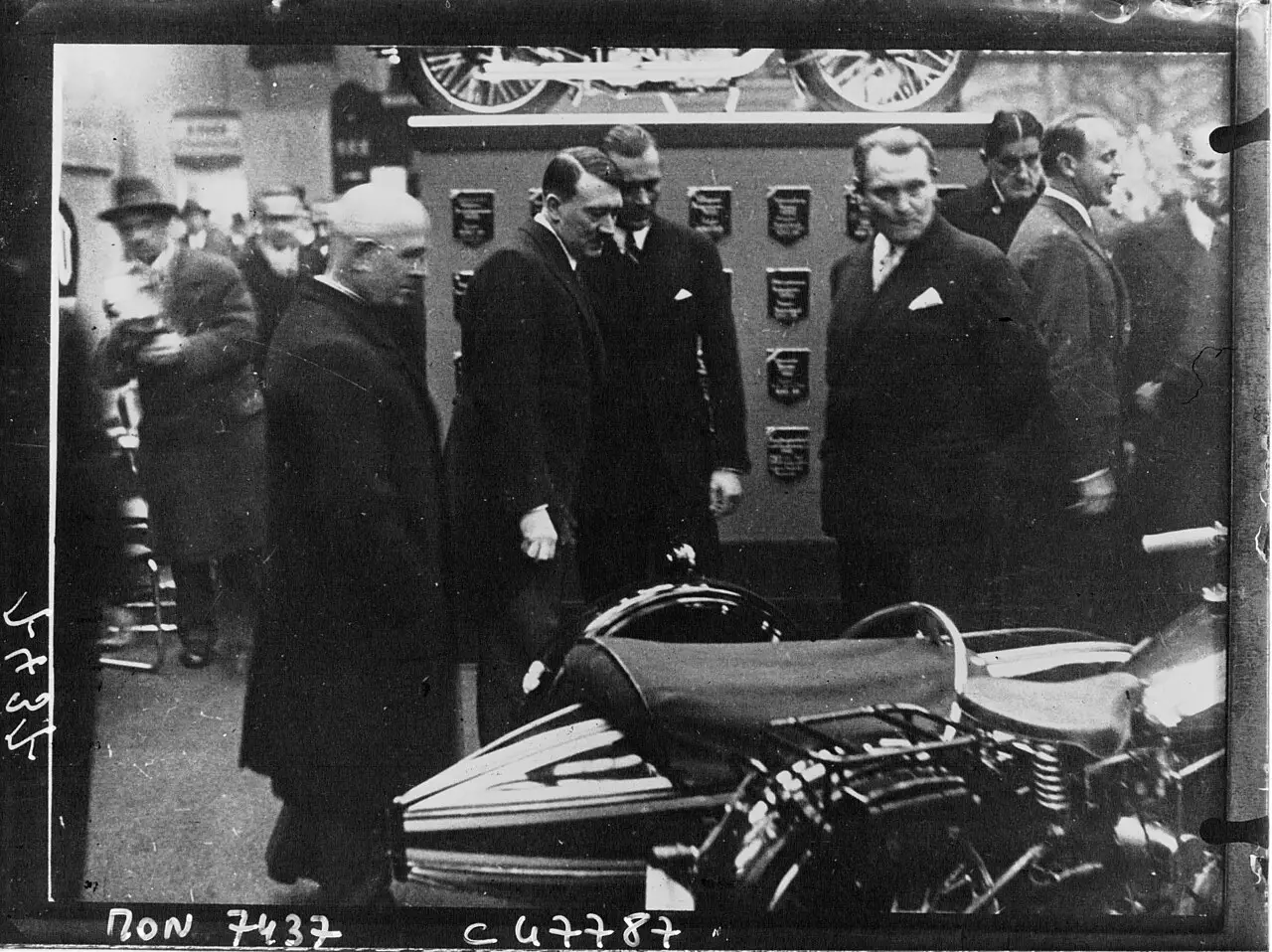

The motor show was the government’s first chance to address an industry in deep crisis, and Hitler used it to sketch the motorisation policy the regime would make its own. The motoring clubs had cancelled their rally to the show three days earlier because no tax relief had been granted; now the Chancellor named four aims: a separate government voice for motor transport, gradual tax relief, a large road-building plan and the promotion of motor sport. The Vorwärts set the scene differently, contrasting the SA honour guard at the opening with the poverty of the districts to which the SA men returned.
Politics and power
Government, terror and persecution
-
Economy Berlin, exhibition halls at the Kaiserdamm
Hitler opens the International Automobile Exhibition
At the opening in the exhibition halls on the Kaiserdamm, the industry’s opening speaker complained that motor vehicles were taxed beyond endurance and that the Transport Ministry did not even have a department for motoring, and noted that this was the first time a Reich Chancellor had opened the show. Lord Mayor Sahm spoke of Berlin’s road-building. Hitler, thanking the exhibition on behalf of its patron, Hindenburg, named his four points and declared the show open.1,2
-
Election 20:30, Berlin, Sportpalast
Hugenberg speaks for the “Combat Front”; Papen on its list
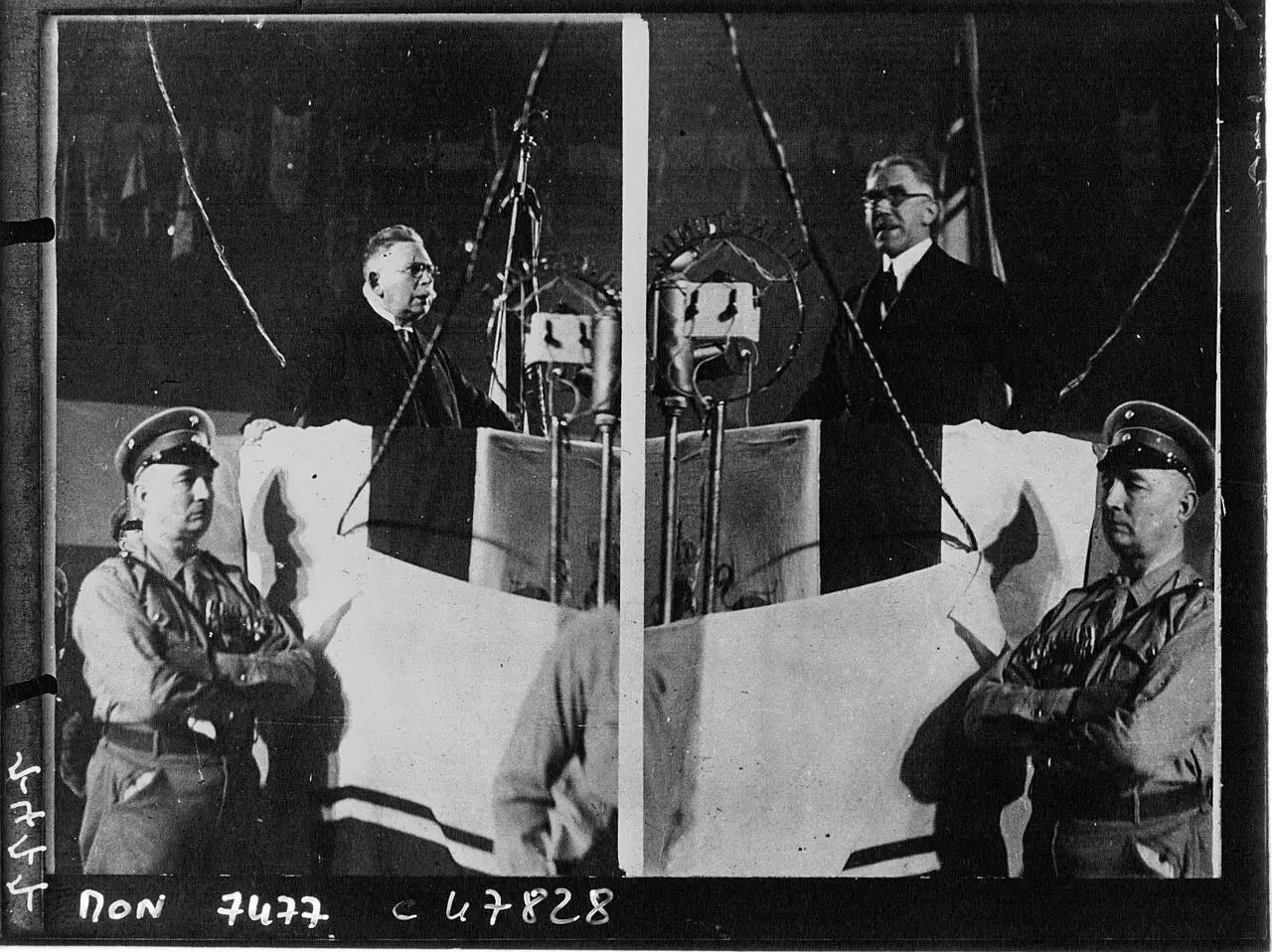
The DNVP and Stahlhelm alliance founded the day before resolved to contest the Reichstag election in support of the Hitler cabinet. Its list was to be headed by Field Marshal von Mackensen, followed by Vice-Chancellor Papen and a third Reich minister, Seldte. That evening the radio carried Hugenberg’s speech to the alliance’s rally in the Sportpalast as a compulsory government broadcast, as it had carried Hitler’s the night before.3,2,4
-
The states Berlin
Bavaria protests against party broadcasts
On instructions from Munich, the Bavarian legation in Berlin wrote to the Chancellery that while official speeches by the Chancellor and ministers could be broadcast even from party events, relaying party meetings or reports on their atmosphere as compulsory programmes broke the principle that radio served no party.5
Everyday life
What else was happening in Germany
-
Transport Berlin, exhibition halls at the Kaiserdamm
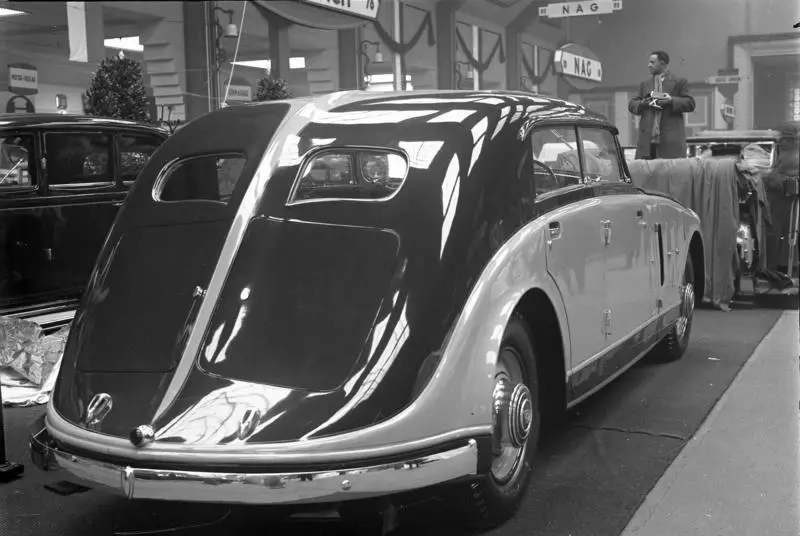
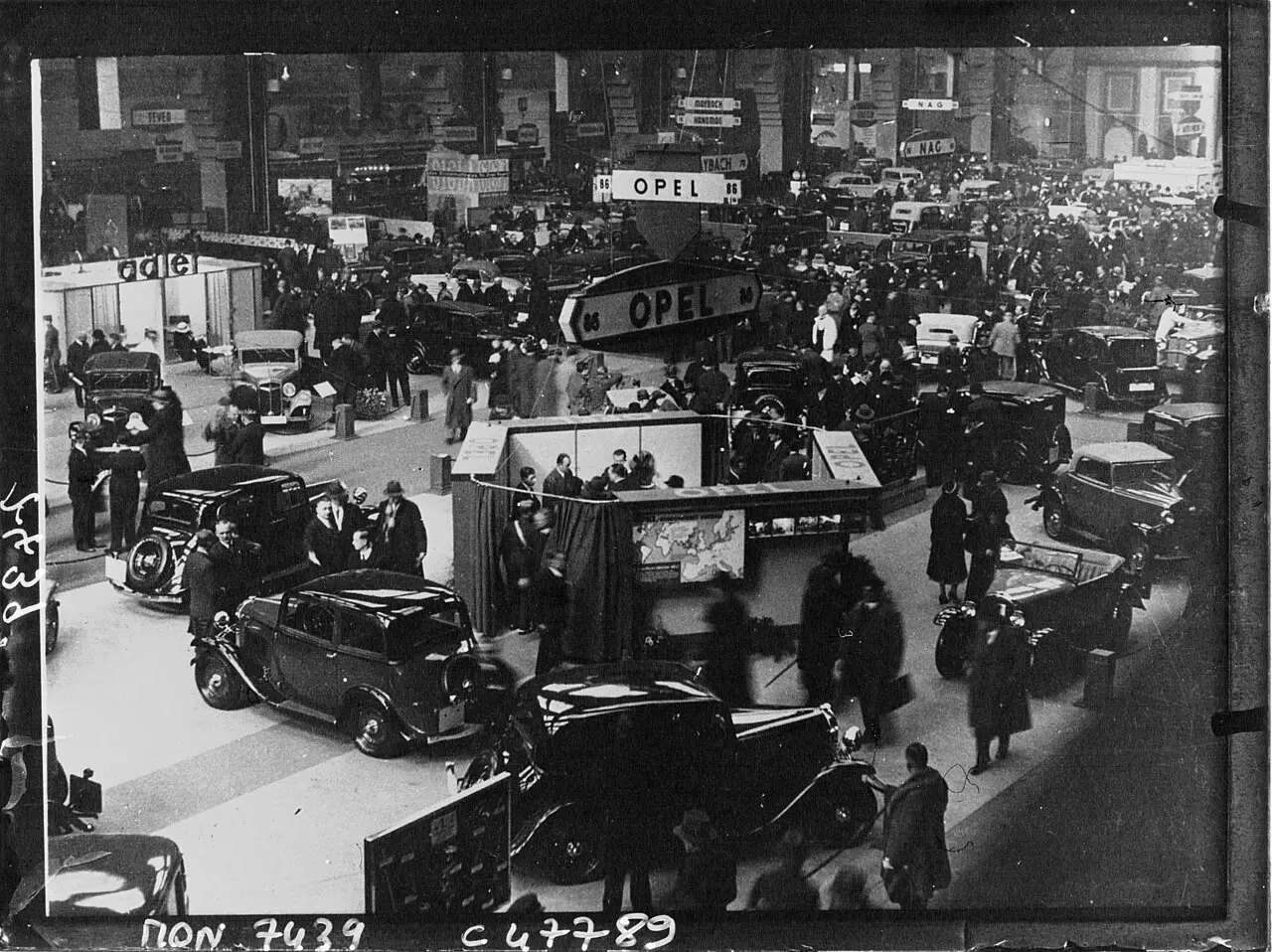
Small cars rule the motor show
The Vorwärts found luxury cars rare at the show and small cars dominant: where in 1931 only the Goliath works had offered a weatherproof three-wheeler, licence- and tax-free and priced like a good motorcycle, there were now about a dozen such three-wheeled mini-cars, costing between 1,100 and 1,600 marks. Car sales in the last quarter of 1932 had at last been somewhat higher than a year earlier, but with over six million unemployed the paper doubted a real revival.6
-
Economy morning, Berlin
Half a street living on potatoes
On Saturday morning a Vorwärts reporter overheard a worker’s wife tell her milkman that she no longer knew how long she could buy bread. The paper estimated that about a million Berliners on benefits and pensions, two million with their families, now lived mainly on potatoes, and that a rise of just five pfennigs in the potato price meant a cold room or no breakfast rolls.2
-
Radio evening
Saturday night on the Berlin radio
The Funkstunde’s Saturday evening offered an orchestral concert, a Brahms piano trio and a light entertainment programme, the “Funkkarussell”, before the government broadcast from the Sportpalast at 20:30.4
Voices
You’re not telling me anything new, neighbour. Nobody comes to buy milk any more, and now I order less bread from week to week; I know half the street here lives only on potatoes.
In Berlin today
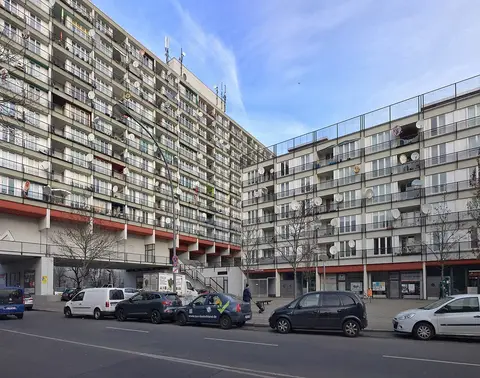

Site of the Sportpalast
Potsdamer Straße 170 / Pallasstraße, 10783 Berlin-Schöneberg
- Then
- On 11 February the German Nationalists and the Stahlhelm held the rally of their new “Combat Front Black-White-Red” here, and Hugenberg’s speech was broadcast nationwide.7,8
- Today
- The Pallasseum housing complex of 1975–77 stands on the site of the hall, which was demolished from 1973; a bronze plaque of 1993 recalls its history.
More pictures


_et_M._Von_Papen_faisant_leur_discours_%C3%A0_une_r%C3%A9union_%C3%A9lectorale_-_btv1b9034941d.jpg)
Sources
- Münsterländische Volkszeitung, 12 February 1933 Deutsche Digitale Bibliothek, Zeitungsportal, p. 2, report on the opening of the Automobile Exhibition and Hitler's four points; 'Mackensen, Papen und Seldte Spitzenkandidaten'
- Vorwärts, Morgenausgabe Nr. 73, 12 February 1933 Deutsche Digitale Bibliothek, Zeitungsportal, p. 3, 'Das Elend wartet auf . . .'
- Jahreschronik 1933 Deutsches Historisches Museum, LeMO, entry for 11 February
- Vorwärts, Abendausgabe Nr. 72, 11 February 1933 Deutsche Digitale Bibliothek, Zeitungsportal, p. 4, 'Rundfunk am Abend'
- Akten der Reichskanzlei. Regierung Hitler 1933–1945, Bd. I, Nr. 20: Das Württembergische Staatsministerium an das Reichsministerium des Innern, Stuttgart, 9. Februar 1933 Bundesarchiv / Historische Kommission bei der Bayerischen Akademie der Wissenschaften, note 8 (Bavarian legation to the Chancellery, 11 February 1933)
- Vorwärts, Morgenausgabe Nr. 71, 11 February 1933 Deutsche Digitale Bibliothek, Zeitungsportal, p. 3 (small cars at the show); p. 8, 'Auto und Volkswirtschaft'
- Historische Orte – Sportpalast und Pallasseum Gedenktafeln in Berlin
- Sportpalast (Gedenktafel, Potsdamer Straße 170) Gedenktafeln in Berlin
Spotted a mistake? Send a correction.