Day 87 of 100
Göring’s Prussia creates the Secret State Police Office, the Gestapo
A Prussian law dated 26 April set up the Secret State Police Office (Geheimes Staatspolizeiamt, Gestapa) under Göring as interior minister, separating political policing from the ordinary administration; Rudolf Diels led it. The same day the Social Democrats held a Reich conference in their group’s rooms in the Reichstag building and elected Otto Wels and Hans Vogel as chairmen. Goebbels toured the Ufa film studios at Neubabelsberg, and in Munich Arno Penzias, a future Nobel laureate, was born into a Jewish family.
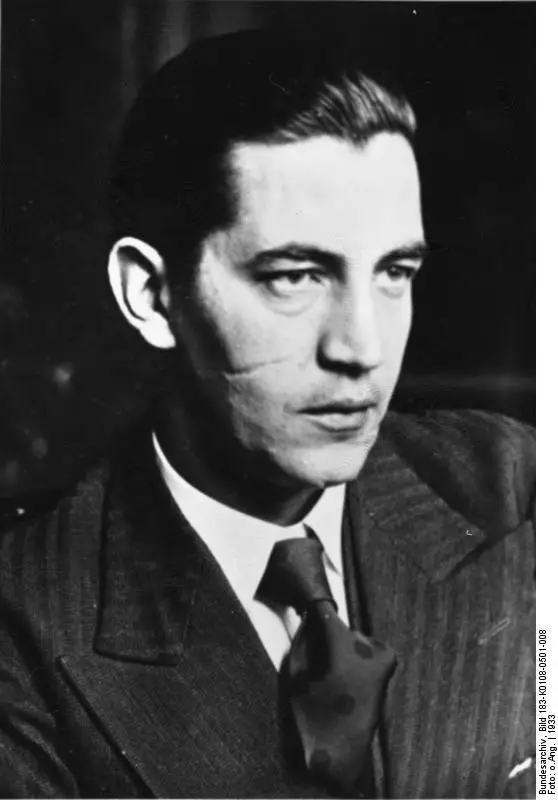

Before 1933 almost every German state had a political police, and in Prussia it sat inside the ordinary police administration. Göring, who ran the Prussian interior ministry and had been Prussian prime minister since 11 April, wanted something else: a secret police detached from the administration and answerable to him. Rudolf Diels, who headed the political department (IA) of the Berlin police headquarters, prepared it. The law dated 26 April 1933 made the new Secret State Police Office a state police authority directly under the interior minister and allowed it to call on every police authority in Prussia for action within its remit. From 29 April it also took over the power to seize printed matter anywhere in Prussia and to ban periodicals appearing in Berlin.
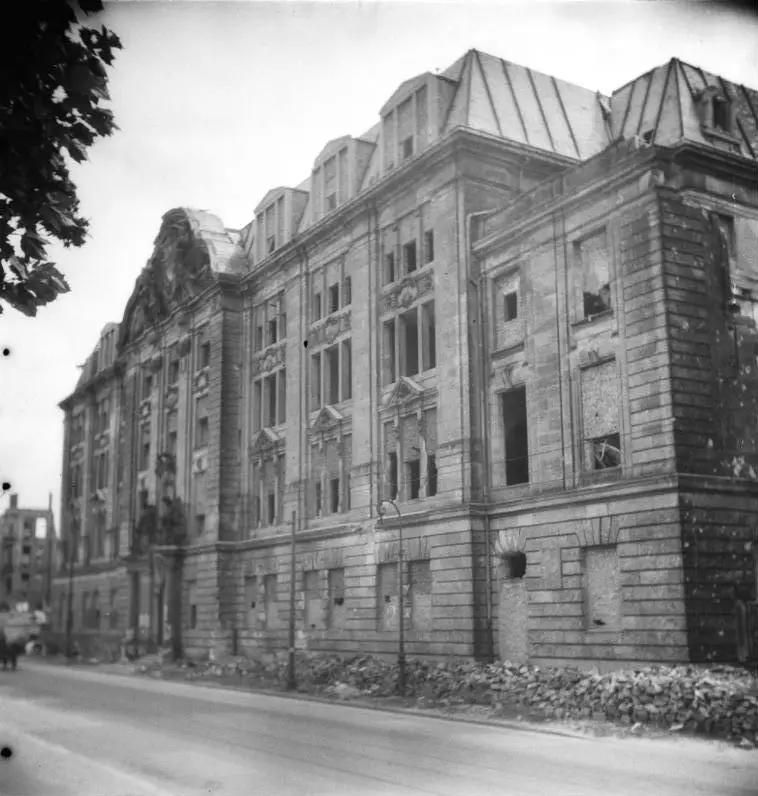
Its weapon was already in place. Under the Reichstag Fire Decree of 28 February, the police could hold people indefinitely in “protective custody” (Schutzhaft, imprisonment without trial or judicial review). The new office set up its headquarters in the former School of Applied Arts at Prinz-Albrecht-Straße 8, and from August 1933 it had its own prison in the basement, where many prisoners were interrogated and tortured.
The law of 26 April was a beginning. A second Prussian Gestapo law in November 1933 made it an independent branch of the administration; Heinrich Himmler took over as its inspector in April 1934, with Reinhard Heydrich running it. By January 1934 the Berlin office had 645 officials and employees and the 33 regional state police posts in Prussia 1,025. Historians now stress that it was never all-seeing: in 1937 the city of Essen, with 650,000 inhabitants, had 43 Gestapo officers. It worked through other authorities, party informants and denunciations from the public.
The same day, in the fire-damaged Reichstag building, the Social Democrats held a Reich conference of their party. Otto Wels refused any “intellectual submission” to the new rulers, the conference resolved to keep using the legal possibilities that remained, and the executive stood down so that a new one could be elected. Several of its best-known members, among them Breitscheid and Hilferding, had already gone into exile.
Laws and decrees
Gesetz über die Errichtung eines Geheimen Staatspolizeiamts
Law on the establishment of a Secret State Police Office (Gestapa)
Created the Secret State Police Office as a state police authority directly under the Prussian interior minister, empowered to request measures from all police authorities. Press reports of the day added that press seizures for all Prussia and bans on Berlin periodicals would pass to the new office from 29 April; the law itself does not mention them.1,2
Politics and power
Government, terror and persecution
-
Terror Berlin
Secret State Police Office created in Prussia
The Prussian law establishing a Secret State Police Office made the political police a separate state authority directly subordinate to Göring as Prussian interior minister. It could request police measures from all other police authorities. Rudolf Diels was its head. The local political police departments in the large Prussian cities remained, for the moment, under the provincial administration.1,2
-
Opposition Berlin, Reichstag building
SPD conference elects Wels and Vogel
Delegates from every Social Democratic district except Hessen-Kassel met in Berlin. Otto Wels gave the main speech. The conference resolved that there could be no real socialism without intellectual freedom and civic equality and that the party would hold to its principles while using the legal means still open. The executive resigned and a new one was elected with Wels and Hans Vogel as chairmen; Breitscheid, Crispien, Dittmann and Hilferding had already emigrated.4,5
Sources disagree. A wire report printed on 28 April put the conference on Thursday 27 April; the historian Erich Matthias, using the party’s own report, established that it met on 26 April.
-
Opposition Berlin
Seldte removes Duesterberg from the Stahlhelm leadership
The Stahlhelm veterans’ league announced that its first leader, the Reich Labour Minister Franz Seldte, had relieved its second leader, Lieutenant-Colonel (retd) Duesterberg, of his post and taken sole command, citing the need for unity of leadership.6
-
The states Berlin
Prussian State Council elects Ley president
The newly constituted Prussian State Council held its opening session after a speech by Göring. It elected the Nazi deputy Ley its president, with two Nazi vice-presidents, and withdrew the old council’s lawsuit at the Leipzig State Court against the dissolution of the municipal assemblies.6
-
Churches Berlin, Reich Chancellery
Hitler receives the Catholic bishops’ envoy
In the afternoon Hitler received Bishop Wilhelm Berning of Osnabrück, representing the bishops’ conference, and the vicar general and cathedral provost Steinmann for talks on pending church questions.7
-
Persecution Berlin
Former Lord Mayor Böß arrested
On the strength of the investigation so far, the Berlin police president ordered the provisional arrest of Böß, the former Lord Mayor of Berlin.7
Everyday life
What else was happening in Germany
-
Film Potsdam-Babelsberg
Goebbels at the Ufa studios
Goebbels toured the Ufa studios at Neubabelsberg and spoke to the Nazi factory cell organisation (NSBO) of the studio, the Ufa head office and its Tempelhof works. The “national revolution”, he said, would not disrupt German film-making, but its precondition was absolute alignment with the ideas of the new state. He announced that a national prize for the best German film would be founded on 1 May.8
-
Education Berlin
Eduard Spranger asks to give up his chair
It became known in Berlin that the philosopher and educationist Eduard Spranger had asked the Prussian culture minister to release him from the duties of his chair of philosophy and education at Berlin University.7
-
Births and deaths Munich
Arno Penzias born in Munich
Arno Penzias was born in Munich into a Jewish family. In 1939, aged six, he and his younger brother were put on a train to England; the family reached New York in January 1940. In 1978 he shared the Nobel Prize in Physics for the discovery of the cosmic microwave background radiation.9
Voices
There must be no intellectual submission or conformity for us. … No system of government has ever lasted for ever.
In Berlin today
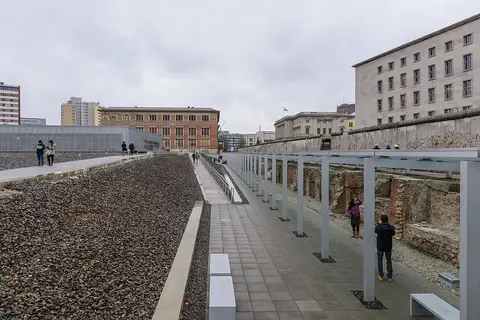

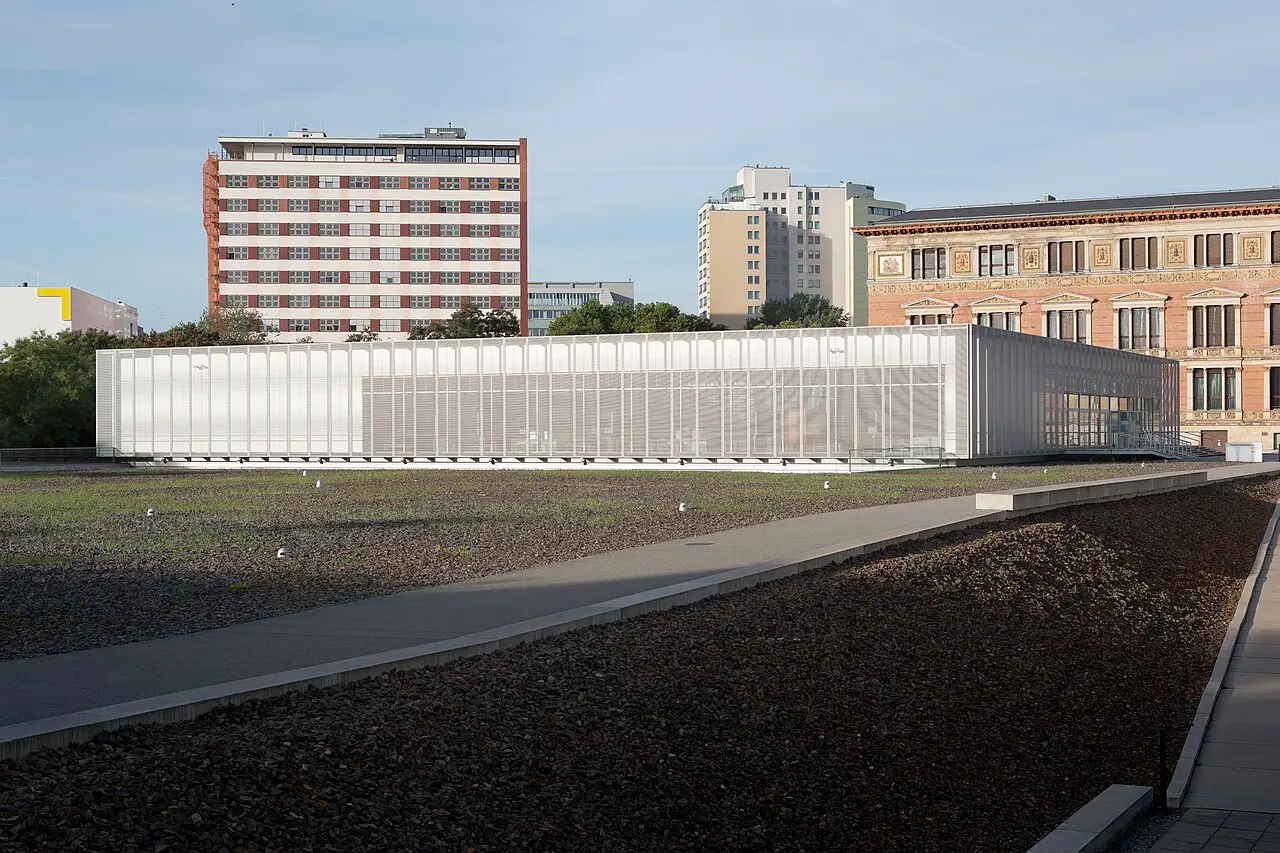
Topography of Terror (former Prinz-Albrecht-Straße 8)
Niederkirchnerstraße 8, 10963 Berlin-Kreuzberg
- Then
- The Secret State Police Office created by the Prussian law of 26 April 1933 set up its headquarters in the former School of Applied Arts at Prinz-Albrecht-Straße 8, with a house prison in the basement from August 1933.3
- Today
- The site is the Topography of Terror documentation centre, whose permanent exhibition documents the Gestapo, the SS and the Reich Security Main Office in Wilhelmstraße and Prinz-Albrecht-Straße.
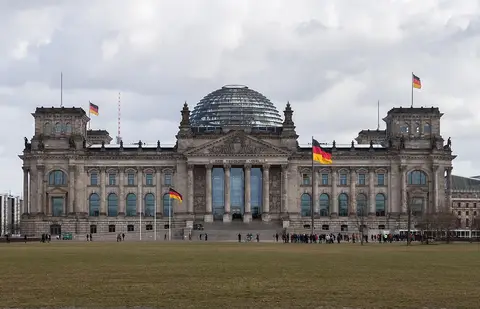

Reichstag building
Platz der Republik 1, 11011 Berlin
- Then
- Two months after the fire that destroyed its plenary chamber, the SPD held its Reich conference in its parliamentary group’s rooms here on 26 April 1933 and elected Wels and Vogel as chairmen.5,10
- Today
- Rebuilt by Norman Foster with a new dome, the Reichstag building has been the seat of the German Bundestag since 19 April 1999; traces of the 1933 fire and the war were left visible.
More pictures


Sources
- Das Vollzugsorgan des nationalsozialistischen Polizeisystems. Zur Geschichte der Gestapo. Teil 1: Entstehung und Konsolidierung Hartmut Rübner, Sozial.Geschichte Online 31 (2022), DuEPublico, Universität Duisburg-Essen, pp. 19–24 and notes 25–33
- LeMO: Gestapo Deutsches Historisches Museum
- Geschichte des Ortes vor 1945 Stiftung Topographie des Terrors
- Chronik der deutschen Sozialdemokratie, Band 2: Stichtag 26. April 1933 Franz Osterroth and Dieter Schuster; electronic edition, Friedrich-Ebert-Stiftung Library
- Der Untergang der alten Sozialdemokratie 1933 Erich Matthias, Vierteljahrshefte für Zeitgeschichte 4 (1956), Heft 3, Institut für Zeitgeschichte, pp. 269–270 and note 61
- Marbacher Zeitung (Bottwartal-Bote), 27 April 1933 Deutsche Digitale Bibliothek, Zeitungsportal, p. 1, "Rücktritt Düsterbergs"; p. 2, "Wahlen im preußischen Staatsrat" (both Berlin, 26 April)
- Laupheimer Verkündiger, 27 April 1933 Deutsche Digitale Bibliothek, Zeitungsportal, p. 2, "Der Bischof von Osnabrück beim Reichskanzler"; p. 3, items on Spranger and Böß (all Berlin, 26 April)
- Marbacher Zeitung (Bottwartal-Bote), 28 April 1933 Deutsche Digitale Bibliothek, Zeitungsportal, p. 3, "Ein Nationalpreis für den besten deutschen Film"
- Arno Penzias: Biographical; Facts Nobel Prize Outreach (nobelprize.org)
- 19. April 1999: Bundestag bezieht das umgebaute Reichstagsgebäude Deutscher Bundestag
Spotted a mistake? Send a correction.